Columns

Ukip isn’t a national party. It’s a Tory sickness

It can happen that something ought to feel wrong yet somehow doesn’t; and you wonder whether this means that in some deep way it could be right. Take for example a discussion on BBC Radio 4’s Today programme on Saturday last week. The subject was the rise of the ‘Teflon’ United Kingdom Independence Party. I ought to have found the programme’s handling of this to be inappropriate; yet it felt both appropriate and natural. In this column I shall discuss why. Radio presenters do not give explanatory headlines to political interviews. At about 8.20 a.m.


Revealed: George Osborne’s plan to become Foreign Secretary

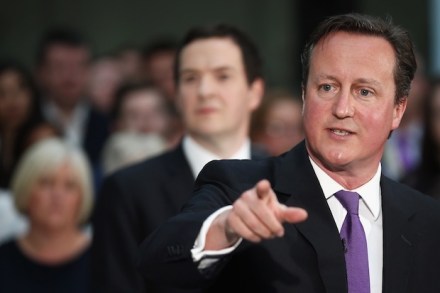
[audioplayer src="http://traffic.libsyn.com/spectator/TheViewFrom22_1_May_2014_v4.mp3" title="James Forsyth and Isabel Hardman discuss Osborne's Foreign Secretary aspirations" startat=646] Listen [/audioplayer]Confidence is coursing through Downing Street at the moment. The economy is growing at a good clip and senior Tories feel more optimistic than ever about the result of the next general election. With this belief in retaining office comes more thought about what a second-term Cameron government would have to do. Minds are also turning to the question of how the top team should be reshaped after the general election. Politically, one issue towers above all others: Europe.

The Dickin Medal is a morally dubious piece of nonsense

Apparently, mice think that women are useless. I don’t mean that they think women mice are useless — they’re keen enough on them, all right. I mean women women, like Rachel Reeves, the shadow secretary of state for work and pensions, and the R&B singer Rihanna, and the European Union’s High Representative for Foreign Affairs and Security, Baroness Ashton. And so on. All women, everywhere. Some scientists in Canada carried out a study about what mice think of women, and this is what emerged.

If Ukip aren’t racist, how come so many racists seem to like them?

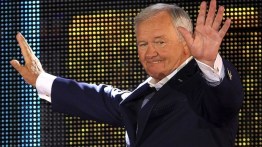
The most thought-provoking discussion about racism I ever heard took place five years ago on Channel 4’s Celebrity Wife Swap. No, it did. On the one side they had the former TV pundit and football manager Ron Atkinson and his wife Maggie, and on the other they had the former Olympic javelin thrower Tessa Sanderson and her husband Densign. Maggie Atkinson was the star. ‘Ron’s not a racist,’ she kept saying, with all the sincerity in the world. ‘He’s not. He’s just not.’ That’s all. Possibly I oversold it. The point was, this was about five years after Ron’s TV work had pretty much dried up, due to the way he had called Chelsea’s Marcel Desailly a ‘lazy nigger’ live on air.

David Cameron must tackle the optimism deficit

[audioplayer src="http://traffic.libsyn.com/spectator/TheViewFrom22_24_April_2014_v4.mp3" title="James Forsyth and Alex Massie explain why we need more optimism in Scotland and Westminster" startat=1538] Listen [/audioplayer]There is an optimism deficit in British politics. Politicians seem incapable of making a positive argument for anything, including the country itself. The British government’s case in the Scottish independence referendum has been almost entirely negative. Those looking for an uplifting defence of the United Kingdom have been left sorely disappointed as the government has instead stuck to technocratic arguments about why Scotland would be worse off on its own.

Is there any part of human life that hasn’t been turned into a medical condition?

When Greg, my old uni pal, came to stay from NYC he brought with him an extra bag for his pills: vitamins A, B, C, D, zinc, magnesium, selenium, ginseng. They decamped to the kitchen, the pills, and stood in rows beside the kettle awaiting their morning ritual. They were bigger than British versions, I noticed, and more violently coloured. Come breakfast, Greg requested pomegranate juice, not for taste but for antioxidants, and orange juice for electrolytes. Then there was lunch. We’d be nearing the end of a trek round some royal palace when suddenly Greg’s voice would flatten: ‘You know, I think my blood sugar’s getting low?’ Then, in a dangerous monotone: ‘I need to eat.’ At first I didn’t take much notice.

The lefty liberals may be losing their hold over the arts world

If you happen to be reading this column at breakfast, I’d recommend you skip to something more agreeable like Dear Mary and save mine till a bit later. It concerns the ugly details of one of the most revolting mass murderers in US history. His name is Kermit Gosnell — a doctor who ran a particularly dodgy clinic in Philadelphia specialising in late-term abortions for mostly poor black women. When police raided it in 2010, they encountered a scene of quite appalling horror. In a flea-ridden, blood- and faeces-stained basement, Gosnell had been operating on women using unsterilised equipment, killing babies well over the legal term limit, sometimes by sucking out their brains with a machine.

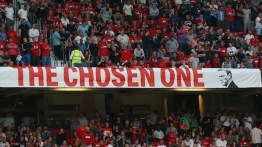
David Moyes was a victim of the pomposity of Manchester United

I took my youngest son to a football match on Easter Monday. It used to be something I wryly called a ‘treat’ when the kids were younger, but we usually lost in such depressing circumstances each time that I would then feel the need to give them another treat immediately afterwards, to alleviate the misery. Bowling or pizza or something. Not any more. They are old enough to know what they’re likely to be in for and conscious that their allegiance to the team, Millwall, is inescapable and probably genetic, like ginger hair or a susceptibility to Parkinson’s Disease. Actually, I say inescapable — the older one escaped by insisting that he had revision to do for his GCSEs.

I’m fascinated by our censorious fascination with other people’s sex lives. And I sense something shifting

I liked the generic title ‘Another Voice’ that The Spectator used to give this column, because it seemed to loosen the shackles imposed by more rigorous classification. The sort of journalism I tend to go in for is usually classified as ‘comment’ or ‘opinion’; but all too often these days my strong interest in what’s going on is not matched by any strong opinion about it, while my commentary amounts more to curiosity than comment. For a few years now I’ve felt like this about our era’s weirdly censorious fascination with other people’s — and especially famous people’s — sexual behaviour.

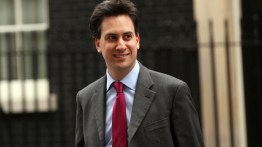
If Ed Miliband can’t be our first Jewish prime minister, he can still be our first atheist Jewish prime minister from Primrose Hill

Last weekend, in a small New Jersey suburb, I found myself in a liquor store. Never been anywhere like it. The walls were lined with single malts of rare and impressive varieties, and the clientele both knew their whisky and spoke of little else. Yet they were all, also, to a man (and they were all men) ultra-orthodox Jews. Properly ultra, as well. There’s a website you might have come across called ‘Amish or Hipster’ and it shows pictures of young folks in beards and hats and braces, and asks you to vote on which particular cult you reckon you are looking at. This lot were like that. The beards were full and bushy, the shirts were all white and tieless and the top buttons were all done up.

How David Cameron does God (even when his Chancellor wishes he wouldn’t)

[audioplayer src="http://traffic.libsyn.com/spectator/TheViewFrom22_16_April_2014_v4.mp3" title="James Forsyth and Fraser Nelson discuss politics and religion" startat=636] Listen [/audioplayer]If Ed Miliband wins the next election, he’ll be Britain’s first atheist Prime Minister. It is a sign of how social attitudes have changed that Miliband feels comfortable wearing his atheism on his sleeve. He has not received the kind of criticism that Michael Foot and Neil Kinnock did when they professed that they did not believe in God. Atheism doesn’t seem as dangerously counter-cultural as it did in the 1980s. Nick Clegg is also a self-declared atheist. This leaves David Cameron as the only major party leader who believes in God.

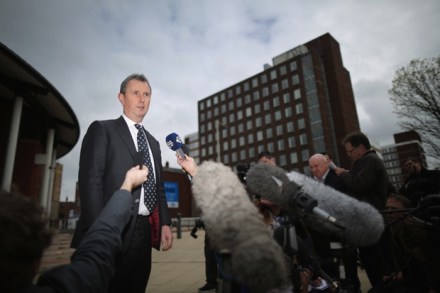
The Nigel Evans case proves that juries are smarter than our liberal elite

You may remember this little gem of a story from a month or so back. Justifiably worried at the ramping up of rhetoric by western politicians over the crisis in Ukraine, Blackpool ‘beauty technician’ Gemma Worrall took to a social media site to ask the — presumably rhetorical — question: ‘Why is our President Barraco Barner getting involved with Russia, scary.’ Why indeed, Gemma? The scorn and hilarity was of course immediately forthcoming at this fantastic level of pig ignorance, and lots of people, including me, wrote spiteful things about Gemma’s IQ level. Gemma was indignant at being publicly reviled as the most stupid woman who has ever walked the earth and revealed to sniggering reporters that, in fact, she possessed 17 GCSEs.

Could Jeremy Browne be the anti-Nigel Farage?

Conviction politics is back. The two men making the political weather at the moment, Alex Salmond and Nigel Farage, both serve their politics neat. They have no interest in any ‘third way’. They stand for big, simple, defining ideas. They are both far closer to success than the establishment ever imagined they would be. Now the Liberal Democrat Jeremy Browne is trying to apply this outsiders’ formula to mainstream politics. Sacked as a minister six months ago by Nick Clegg, he is setting out the case for pure, unadulterated liberalism. His new book, published this week, is a deliberately bracing read. It is full of dire warnings about what will happen to Britain in ‘the Asian century’ if it does not reform.

I’m sick of weak women being praised as ‘strong’

When I heard that the television pundit and all-round nepot Kelly Osbourne had gone into ‘food rehab’ upon gaining weight, I fair choked on my cronut. Crumbs! Is there any pleasure, weakness or habit that isn’t pathologised these days, even stuffing oneself out of sheer molten gluttony? I read on; incredibly, people were praising ‘strong’ Kelly and ‘brave’ Kelly. I made a memo to myself to mention to the svelte checkout girl at my local Tesco how brave and strong I was next time she raised an eyebrow at the amount of sweets and crisps I was giving a good home to. Every woman seems to be strong and brave at the mo. Those who make themselves vomit after eating, those who starve themselves, those who slash at themselves.

Theresa May’s right: the police need radical reform. Here’s why

One fine morning early this year I had tea with Stephen Greenhalgh, Boris’s pleasant if perspiring deputy mayor for policing, and discussed the two great crime mysteries of the 21st century. First: the weird fall in crime. For the past 15 years, all manner of crimes have been on the wane, even violent ones: carjacking, vandalism, burglary, murder — but why? Mr Greenhalgh was admirably quick to credit the Met, but given that it’s a global phenomenon, stretching across Europe and America, that seems unlikely. The truth is probably prosaic: better security and cheaper goods mean young thugs can’t be fished. It’s almost disappointing how apathetic evil turns out to be.

For my family, the Vikings exhibition was about as much fun as being raped and pillaged

[audioplayer src="http://traffic.libsyn.com/spectator/TheViewFrom22_10_April_2014_v4.mp3" title="James Delingpole and Peter Robins discuss the Vikings exhibition" startat=1656] Listen [/audioplayer]Have you managed to book tickets to the Viking exhibition at the British Museum yet? If you haven’t, my advice is: don’t bother. I know what the critics have been saying: that it’s an unmissable treat. But it’s only an unmissable treat if you visit under the privileged conditions of a previewing journalist. Go as an ordinary punter on the other hand — as the Delingpole family discovered to their cost last week — and you’ll find it about as much fun as being pillaged, raped and having your ribcage torn open to form a ‘spread eagle’.

Two coming revolutions: in election tactics, and in Whitehall

[audioplayer src="http://traffic.libsyn.com/spectator/TheViewFrom22_3_April_2014_v4.mp3" title="James Forsyth and Isabel Hardman discuss how electioneering is changing" startat=1229] Listen [/audioplayer]This is a unique moment in British politics. All three major parties have a realistic prospect of being in power after the next election, but they are all acutely aware that they’re won’t be swept to power. Success will have to be eked out constituency by constituency — so the expensive business of polling specific constituencies, normally left until much closer to the election, is under way for all three. And that’s not all. The Liberal Democrats know that an election that followed the national swing would be a disaster for them.

Time for the King of Spain to save his country again

Might there ever be in this century, anywhere in Europe, a case for serious political interference by an hereditary monarch? Spaniards can surely imagine it. In 1981 the (then) recently crowned King Juan Carlos II decisively rebuffed an attempted right-wing coup and in doing so secured the country’s newly instituted post-Franco democracy: a transition in which he had been deeply personally involved. The king did more than decline to support those who would overthrow democratic government; he took a lead in demanding that they be stopped.

University tuition fees are a tax. It’s time to admit it

Regardless of how many brains David Willetts has got, it’s not surprising that tuition fees are a mess. They’re a mess because they are a tax, and intended to do the sort of job for which taxes were invented, yet are also pretending not to be one. It’s like needing a dog but buying a cat, and then expecting it to catch a stick. It’s madness. This pretence exists because a Conservative-led government did not want to be the progenitors of a stonking great new tax. Least of all one targeted at precisely the sort of graduate professionals who Conservatives so badly need to vote Conservative, in order for there to go on being any Conservatives at all. Taxing graduates for being graduates feels statey and Milibandy and downright foreign.

I’ve found the perfect compromise on breastfeeding

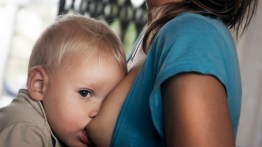
What attitude should we take towards women who wish to breastfeed their babies in public? Older, more conservative readers may feel a little squeamish about this sort of thing and would prefer mothers to do their breastfeeding in private; it is as much the hideous slurping noise as the sight of a female breast which offends, I think. At the other extreme, the modernist view is that they should be allowed to breastfeed when and where they want, without argument or hindrance, and that’s an end to it. As ever, I stalk what we might call the middle ground, the area where some sort of compromise can be found between these two diametrically opposed schools of thought.