Columns

Two shops. Two philosophies. Which side are you on?

Are you Lush or are you Aldi? Me, I’m Aldi all the way. So much so that when someone — usually my daughter — tries to drag me anywhere near one of Lush’s painfully ubiquitous high street cosmetics shops, I respond a bit like the Antichrist does in the ‘it’s just a church, Damien’ scene in The Omen, writhing and shrieking like I’m about to be dissolved in acid. (Which, funnily enough, is rather how my skin feels when I’ve treated myself to one of Lush’s fizzing bath bombs) Not, it must be said, that there is anything remotely Antichrist-like about hating Lush. On the contrary, it is the perfectly natural response of any civilised, intelligent, moral human being. What’s wrong with Lush?
Why the Lib Dems aren’t scared of this election (and why they should be)

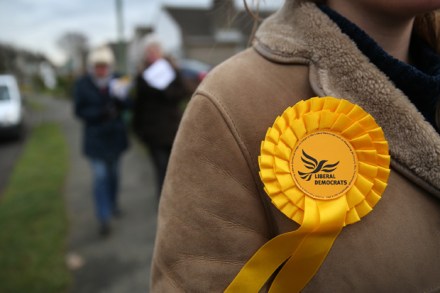
[audioplayer src="http://traffic.libsyn.com/spectator/Viewfrom22-19Feb2015.mp3" title="James Forsyth and Isabel Hardman discuss the disappearing Lib Dems" startat=937] Listen [/audioplayer]One of the most remarkable features of this parliament has been the sangfroid of the Liberal Democrats. Nothing seems to shake them. The mood of the two main parties is often dictated by the latest opinion polls, but the Liberal Democrats simply laugh off each record low. They weren’t even rattled by the British Election Study, which claimed that on its current performance the party will only win one seat. What explains this calmness under fire? First, the Lib Dems are determined not to give the media the pleasure of seeing them squeal.

It’s not Netanyahu’s fault that Jews in Europe are afraid

Have you seen the prices for houses in Israel? Astronomical, mate. You wouldn’t believe it. An arid and perpetually embattled country which everyone has recently decided to hate, and with a bloody great big wall topped with razor wire running through the middle of it — I’d have expected the cost of a nice four-bed would be comparable to what you’d pay in Rwanda, say, or Myanmar. Not a chance. Down south, in Eilat, it’s millions and millions and millions of quid, just to be oven-basted by the extremist sun and then eaten by a shark. It’s not much better in the nicer parts of Tel Aviv, either, such as Jaffa — more than a million pounds for 150 square metres of living space, without a view of the torpid Med.

Of course you can choose to get up early (and maybe you can choose to be gay)

‘Oh, I’m an owl,’ said my friend Nick. ‘You’re probably a lark.’ I raised an eyebrow. He explained. Apparently all human beings are either owls or larks, being genetically predisposed to stay up late or get up early, and to be at their best after sundown or dawn. Nonsense, of course, complete nonsense. Nick just likes partying and his career does not demand his availability much before ten in the morning. The woman friend he had just consigned to the larks section of the human aviary has land and horses, needs to be up before dawn, and not unnaturally begins to flake out after about 9p.m. None of this has anything to do with genes.

The Tories are coming to believe in David Cameron’s election hunch

‘You did this,’ David Cameron repeatedly declared to Tory donors as he reeled off a list of the government’s achievements at the Black and White ball on Monday night. Three months before the general election, the atmosphere at this lavish fundraiser at the Grosvenor House Hotel was self-congratulatory and more upbeat than perhaps it should have been, considering the polls. As guests made ever larger bids in the fundraising auction, the mood was one of confidence that the Tories would be in office again after May. By the end of the evening, there was heady talk of a Tory majority. But it is not the donor class who will determine whether the Tories have the seats to govern alone.

The delicious cant of the Guardian is such a treat on a Saturday morning

One of the highlights of my week comes on a Saturday morning, when I make myself a cup of fair-trade coffee and settle down to read the letters page of the Guardian. My wife usually joins me — it’s a sort of date thing, romantic in its own way — and we sit there cackling, our cares and woes forgotten for a while. Sometimes it is the smug little commendations of some earnest article that has uncovered the suffering of an hitherto unreported minority of the population — that stuff is quite funny. But then all newspapers print letters from readers telling them how good they are.

The Master of the Universe who taught me that life is about much more than money

God it’s nauseating when an exact university contemporary of yours turns out to have become a hugely successful investor with a fund worth many millions. The bit during our meeting where I most wanted to throw up my ravioli was when this fellow — Guy Spier his name is; read PPE at Brasenose with my old mucker Dave Cameron at the same time I was at Christ Church — told me how he’d once paid nearly £250,000 in a charity auction just for the privilege of having lunch with Warren Buffett. A quarter of a million quid. Imagine all the things you could do with that.

How Labour lost Scotland (and could lose the Union)

[audioplayer src="http://traffic.libsyn.com/spectator/TheViewFrom22_5_Feb_2015_v4.mp3" title="James Forsyth and Alex Massie discuss Labour's problems north of the border" startat=1118] Listen [/audioplayer]Just four months ago Scotland was the scene of great cross-party co-operation — unprecedented in peace-time politics. Gordon Brown was offering advice on David Cameron’s speeches, Douglas Alexander and the Scottish Tory leader Ruth Davidson turned themselves into a formidable debating duo, and Charles Kennedy was being hailed by Labour strategists as the man who would save the Union. Even George Galloway got in on the act.

Here’s my rule: If the word ‘he’ will offend, then always use it

Isn’t it about time the English language got itself a gender-neutral pronoun? This was the clarion call from the Guardian last week — and when that particular clarion sounds, we must all stand to attention and cut out the sniggering. I assume the writer of the piece was moved to action having seen photographs of members of Isis pushing gay people from the tops of large buildings — and was deeply worried that each of the victims, tumbling to their deaths, might have been unhappy about being referred to as ‘he’ by wilfully unprogressive western journalists.

How Alex Brooker made political interviews interesting again

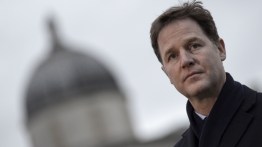
The other night on Channel 4, I watched the best political interview I’ve seen all year. It was with Nick Clegg, and conducted by a guy called Alex Brooker. And it gave me, if only for a few moments, a glimpse of a better world. You’ll know who Nick Clegg is. Brooker, though, might have passed under your radar: he was only just on mine. He’s one of three hosts on a comedy show called The Last Leg, which launched during the Paralympics of 2012. Disability features heavily in the premise of the show, so I probably ought to mention that he has a prosthetic leg and something up with his hands. Although really that isn’t relevant at all. What matters is what he did with Nick Clegg. They don’t do a lot of political interviews on The Last Leg.

To reform the NHS, use the politics of envy

‘Let’s make the rich pay more.’ Does that sound so right-wing? To me it has a positively socialist ring. It should appeal to egalitarians: to those who call themselves socially concerned and seek new ways to redistribute wealth. So why not apply it for the NHS? Let’s make the rich pay more for health care. I’m no health policy wonk. I chip in with just this one small suggestion, which is not really about market-based reform of our health service, but about how to sell the idea to a deeply reactionary electorate. The British are positively neuralgic on health. They shudder at the use of words like ‘profit’. Expressions such as ‘privatise’, ‘charge’ or ‘insurance’ are incendiary in our health politics.

‘Black,’ ‘coloured’, ‘BME’ – any kind of label is essentially racist. It’s time to move on

How should we refer to non-white people, and foreigners in general, given that of course we do sometimes need to mention them, perhaps over dinner in White’s or when mulling over where to go on our holidays? This is an important question, because the approved terminologies seem to shift by the day, if not the minute, and we could find ourselves in a lot of trouble. I remember the late US politician George Wallace, when he was governor of Alabama, being ticked off for having used the word ‘negroes’. Quite unacceptable, he was admonished — the correct term is ‘blacks’, and there’s an end to it. ‘Sheesh,’ Wallace replied, ‘we jes’ got used to calling ’em negroes.

The hottest year on which record?

Did you know that 2014 was the hottest year ever recorded in the entire history of the world? Probably you did because it’s been all over the papers. Not only that but President Obama slipped it into his State of the Union address and the president of the World Bank quoted it at Davos and the singer and rap producer Pharrell Williams is so concerned that he plans to stage a series of Live Earth concerts with Al Gore to emphasise the seriousness of the problem. And these luminaries must know what they’re talking about, right? After all, it’s not just one distinguished scientific institution which has endorsed the ‘2014: hottest year on record’ claim, but a whole clutch of them.

Do I really care about Ebola? Do you? Does Oxfam?

It’s strange how quickly we all forgot about Ebola. Speak for yourself, you might say — and I will. Until a friend sent me a report this week on the progress of the epidemic, Ebola had, I’m sorry to say, almost faded from my mind. The report contains good news: where the outbreak was worst, in Liberia, there are now just five cases left. Ebola treatment centres are shutting down, unneeded — and I was delighted but also ashamed. I have been to Liberia and written about it and I had thought last year that I cared tremendously about its fate, more than others, perhaps. My heart bled even as my mind ran rat-like to my kitchen to make an inventory of canned goods. I thought I cared — but did I?

George Osborne’s 13 tests for an election victory (and how many he’s passed)

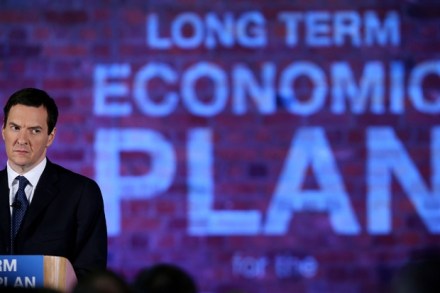
These days George Osborne is rarely seen in public without a hard hat and a hi-vis jacket. But he used to take pride in being recognised as a political insider through and through — a member of the guild of politicians, in his own phrase. He revelled in writing detailed articles about the lessons Westminster could learn from American politics. Several of these were written for The Spectator when Boris Johnson was the editor, which shows how far back the relationship between the Chancellor and the Mayor of London goes. (Osborne was at Oxford as the same time as Johnson’s younger brother Jo, now an MP and the head of the Downing Street policy unit). One of them, written in 2004, set out what Osborne thought were the ‘13 keys to No. 10’.

It’s all kicking off in the Islamic world. Nothing at all to do with Islam, of course

They have been burning churches and murdering Christians again in Niger. You’d think that they’d have more immediately pressing concerns than worrying about a cartoon, Niger regularly winning the award for being the worst country anywhere on God’s earth, and the poorest. But nope, it’s kill-a-kuffar time once more. Some 45 churches set alight and at least five people killed and 50 injured. Adherents of the Religion of Peace (© all UK politicians) included in their pyromania a Christian orphanage, which was thoughtful of them. There have also been massed rallies and protests and the usual effigy-burning business in the vast and dusty Islamic desert rat-holes next door, Mali and Algeria.

Maybe it’s a problem when all artists are like James Blunt. But it’s worse when Labour MPs are like Chris Bryant

What should we do with James Blunt? This is what I have been asking myself. And I am not looking for comedy answers here, such as ‘Lock him in a shipping container and force him to listen to songs by James Blunt’ or ‘Allow him to become a properly recognised bit of Cockney rhyming slang’. No. It’s a genuine question. I refer, of course, to the enjoyable spat conducted this week via open letters to the Guardian, between the singer (private school and Bristol University), and the shadow culture secretary, Chris Bryant (private school and Oxford), over whether people in the arts are too posh. I don’t know why, even now, it is only people who went to private school and fancy universities who get to write open letters to the Guardian.

The Stonewall dinner left me with one question: why are volunteers so horrible to one another?

I watched the video with some trepidation. Stonewall (the campaigning gay and lesbian equality organisation) had just sent me the YouTube link. This was to a short film of the dinner that Stonewall’s founders attended last year to celebrate the quarter-century anniversary of our existence; and most of us had been there. Now we were but wrinkled reminders of the young revolutionaries we had once been. So this could have been a rather mellow occasion. We had started the organisation as a defiant response to what came to be known as ‘Section 28’: a small measure that was part of a sprawling local government bill and intended to stop the ‘promotion’ of homosexuality in schools and by local authorities.

Why the Greek election could decide Britain’s next government

Before the eurozone crisis, Greek elections didn’t receive much attention in Westminster. At the moment, however, the polls from Athens are being studied by every politico from the Prime Minister down. How Greece votes on the 25 January could determine the result of our election. If anti-austerity Syriza triumphs, the eurozone crisis will move from a chronic phase into another acute one. For the second election in a row, the backdrop to a British poll and possible coalition negotiation would be talk of debt defaults and bank runs, as Athens struggles with the eurozone straitjacket. Syriza does not want Greece to leave the euro. But it does want the ‘fiscal waterboarding’ to stop, as its leader Alexis Tsipras puts it.

Standing firm is the price of civilisation. Are we still ready to pay it?

Reading Memoirs of a Fox-Hunting Man, as I have recently, you cannot help but be struck by what a perfectly idyllic place rural England must have been (at least for a young man of independent means) in the run-up to the first world war. Sassoon wrote it, of course, in middle age after he’d served his time in the trenches. But none of his wartime experiences are allowed to colour the innocent tone of his fictionalised memoir. As far as his narrator George Sherston is concerned, the bliss is going to last for ever. Because the first world war is now very familiar history, the mistake I think we’re inclined to make with the benefit of hindsight is to assume that, for those who took part in it, it was all a fait accompli.