Classical

Portrait of the Royal Liverpool Philharmonic – Britain’s oldest and ballsiest orchestra

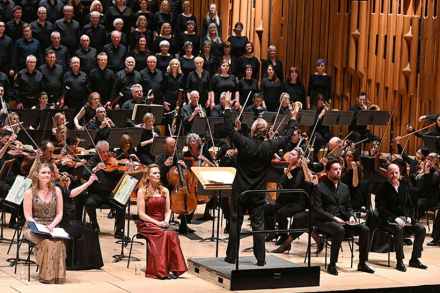
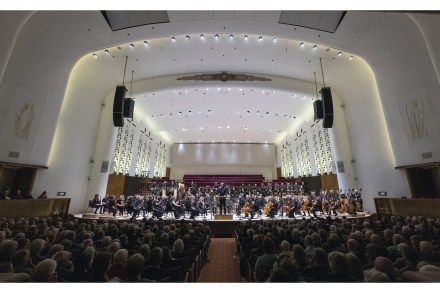
Liverpool’s last ocean liner lies half a mile inland, on the crest of a hill. The Philharmonic Hall, home of the Royal Liverpool Philharmonic Orchestra, sits between two cathedrals on Hope Street, its towers jutting over the city like twin prows. It’s an unavoidable metaphor: when you enter the Hall on a concert night, the first thing you see is a bronze memorial to the musicians of the Titanic. Everything about the Hall — the grand staircase; the long curving corridors; the art deco auditorium that looks like something from Alexander Korda’s Things to Come — suggests that you’re about to steam off on some fantastic voyage. I’ve heard concerts all over the world, but when I dream about music, it’s always at the Liverpool Phil.
The musical event of the year: Wigmore Hall BBC Radio 3 Special Broadcasts reviewed

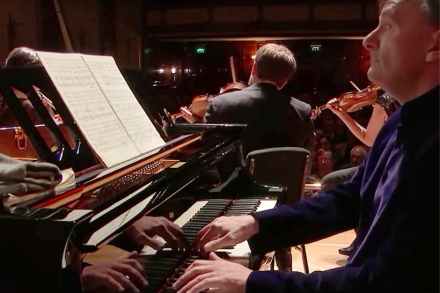
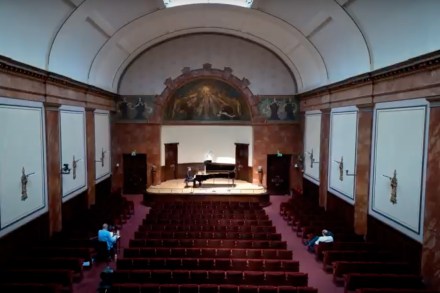
Remember when 2020 was going to be Beethoven year? There were going to be cycles and festivals, recordings and reappraisals; and if you weren’t actively promoting old Ludwig Van there was money to be made whinging about overkill. So was Stephen Hough’s decision to end his Wigmore Hall recital last Monday with Schumann’s Fantasie in C — a work conceived at least partly in homage to Beethoven, which opens with a fragmented musical landscape that Schumann at one point called ‘Ruins’ — a conscious reflection of the musical world’s changed circumstances? Or would that be reading too much into a situation in which a once-routine lunchtime concert suddenly feels like the musical event of the year?

I’m still not wholly convinced by Kirill Petrenko: Berlin Phil’s Digital Concert Hall reviewed

At the start of Elgar’s Second Symphony the full orchestra hovers, poised. It pulls back; and then, like a dam breaking, the music surges forward in wave upon wave of golden sound. ‘Rarely, rarely, comest thou, Spirit of Delight!’ writes Elgar, quoting Shelley, at the top of the score, and you won’t hear that spirit captured more exuberantly than in a performance from May 2009 by the Berlin Philharmonic under its future music director Kirill Petrenko. The violins gleam, the horns swell and every player is audibly leaning into the music. Under Petrenko, Elgar’s leaping compound rhythms almost seem to dance.

The marvel of Mozart’s letters

It’s 1771, you’re in Milan, and your 14-year-old genius son has just premièred his new opera. How do you reward him? What would be a fun family excursion in an era before multiplexes or theme parks? Leopold Mozart knew just the ticket. ‘I saw four rascals hanged here on the Piazza del Duomo,’ wrote young Wolfgang back to his sister Maria Anna (‘Nannerl’), excitedly. ‘They hang them just as they do in Lyons.’ He was already something of a connoisseur of public executions. The Mozarts had spent four weeks in Lyons in 1766 and as the music historian Stanley Sadie points out, Leopold had clearly taken his son (ten) and daughter (15) along to a hanging ‘for a jolly treat one free afternoon’.

The joy of Haydn’s string quartets – here are the best recordings

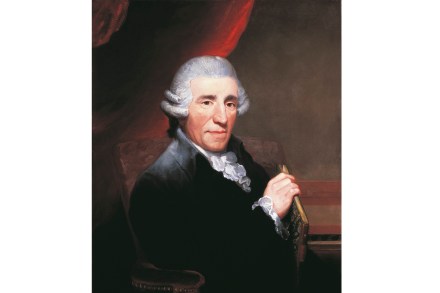
As Joseph Haydn was getting out of bed on the morning of 10 May 1809, a cannonball landed in his back garden. Napoleon’s armies were closing on Vienna, and Haydn’s suburban home was in the line of fire. His valet recorded that the bedroom door blew open and every window in the house rattled. Shaking violently, the 77-year-old composer’s first thought was for his household, which at that point comprised six servants and a talking parrot who addressed him as ‘Papa’. ‘Children, don’t be afraid, for where Haydn is, nothing can happen to you,’ he shouted. This was nothing particularly new. Over a long life Haydn survived smallpox, saw his house burn down (twice) and narrowly escaped castration at the hands of an overenthusiastic choirmaster.

Bleak humour, resourcefulness and wit: Budapest Festival Orchestra’s Quarantine Soirées reviewed

There’s a certain merit in bluntness. ‘Quarantine Soirées’ was what the Budapest Festival Orchestra called its response to the crisis, and if the name conveyed a certain bleak Magyar humour, the resourcefulness couldn’t be faulted. Elsewhere, orchestras were still talking optimistically about broadcasting concerts from empty halls, and (even more optimistically) about persuading online viewers to pay for them. Realising that any activity that brings 90 musicians into close proximity was probably running out of road, the BFO’s music director Ivan Fischer announced that ‘this is not the time for orchestral music’ and launched a programme of chamber recitals by the orchestra’s players, livestreamed from their rehearsal hall.

Bigamists, lunatics and adventurers: the raucous world of 19th century British music

For a patriotic German in the decades before Bismarck, Britain’s power was an object of envy. But there was one thing, at least, that you could always hold over the Anglo-Saxons on their foggy little island. On 1 January 1837, Robert Schumann sat down in Leipzig to hear a new piano concerto by the 20-year-old William Sterndale Bennett. ‘An English composer; no composer,’ commented his neighbour, smugly, before the music started. Few 19th-century German music-lovers failed to point out that the land of Shakespeare had somehow failed to produce a single really significant composer since the late 17th century. We know how that story ended; and if you want to explore the flowering of the British musical renaissance, it’s never been easier.

Inspired programming and a proper celebration: Barbican’s Beethoven Weekender reviewed

Beethoven wears a feather boa and pink shades. He wrangles an electric guitar. A red lightning flash streaks across that familiar, scowling face. ‘Genius before Elton. Radical before Prince. Iconic before Bowie’ proclaimed the posters for the Barbican’s Beethoven Weekender, and apparently there’ve been complaints about them, which probably means that they’ve got the tone about right. Two hundred and fifty years after his birth, Beethoven still has a way of driving all the right people round the bend. US campus musicologists have called for his music to be suppressed (you’d think that champions of inclusion would support a year-long celebration of a disabled composer, but it seems not. Wrong chromosomes).

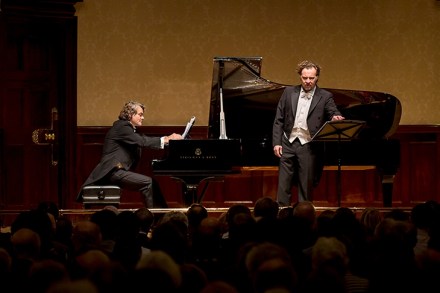
The audience were in tears: Christian Gerhaher/Gerold Huber at the Wigmore Hall reviewed

‘Popular’ classical music is a relative term. Show me someone who thinks Beethoven is surefire box office, and I’ll show you someone who’s never tried to sell tickets for the Op. 9 string trios. Even Mahler, the blockbuster concert phenomenon of the past four decades, has his limits. Audiences love him, sure. But in 2011, when several orchestras performed complete Mahler cycles, the limits of that love became embarrassingly clear. The Second and Eighth symphonies — roof-raising choral spectaculars — promptly sold out. The gentle Fourth and the knotty, reconstructed Tenth: not so much. As for his songs, forget it. Well, that’s lieder for you.

Warmth, energy and gripping momentum: Stephen Hough’s Wigmore Hall residency reviewed

In the summer of 1878 Johannes Brahms finally succeeded in growing a beard. It was his third attempt. ‘Prepare your wife for the grisly spectacle, for something so long suppressed cannot be beautiful,’ he wrote to a friend, and by all accounts he wasn’t wrong. Clara Schumann pleaded with him to shave it off. She’d have remembered Brahms as the golden-haired 20-year-old who had arrived on her doorstep in September 1853, glowing with genius; in the words of her husband Robert, ‘a young blood at whose cradle graces and heroes stood guard’. For modern listeners, though, the beard has long since conquered — as if, like one of Philip Pullman’s daemons, it somehow embodies Brahms in his gruff and hairy definitive form.

The joy of Malcolm Arnold’s optimistic, hummable tunes

Never meet your heroes, they say. But if you grew up with classical music in the 1980s, there was fat chance of that. Stravinsky, Britten, Shostakovich, Walton: you’d just missed them. Which is why, in 2001, and finding myself duty-managing an 80th birthday concert for Sir Malcolm Arnold, I inched past his minders and delivered a few trite, polite but entirely sincere words of gratitude and admiration. No response: Sir Malcolm stared blankly ahead. Then he gripped my hand, and started shaking. And kept shaking, faster and faster, his grip tightening like a vice. Raising his head slightly, and pumping my hand with increasing force, he growled: ‘I’m not letting go until you call me Sir.

‘Ashtray’ Annie Fischer was a piano giant. Why didn’t more people realise this?

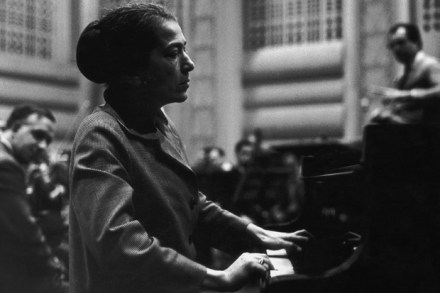
This year marks the centenary of a pianist whom London orchestral players nicknamed ‘Ashtray Annie’. Only at the keyboard did she have a cigarette out of her mouth. Annie Fischer (1914–1995) was one of those female pianists who, despite their spinsterish appearance, possessed far richer imaginations than splashy male virtuosos. Clara Haskil and Marcelle Meyer also come to mind. Of the three, only Haskil — a physically frail Romanian celebrated for her purity of line — is today given the recognition she deserves: Pope Francis recently named her as his favourite Mozart pianist. Meyer, who as a young woman played for Debussy, had a technique of such refinement that she could liquefy trills and arpeggios without any loss of accuracy.