Cinema

Riveting and heartbreaking: Sound of Metal reviewed

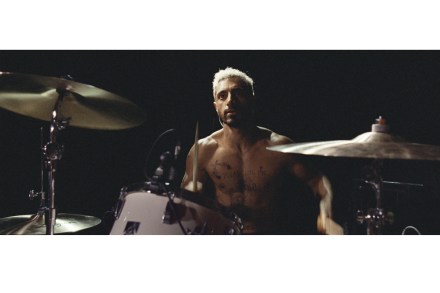
The multi-Oscar-nominated Sound of Metal stars Riz Ahmed as a heavy-metal drummer whose life is in freefall after losing his hearing. Ahmed learned to play drums for the part. And he learned American Sign Language. And he learned to perform with white noise in his ears. However, he did not have to learn how to be riveting because, if you’ve followed his career, you’ll know he’s been that since day one, and he is magnificently, powerfully, heartbreakingly riveting here. If he doesn’t win the Oscar I’ll be furious. That counts for nothing, I know. But it had to be said. It is directed by Darius Marder, who co-wrote the screenplay with his brother, Abraham Marder. At the outset Ruben (Ahmed) plays in a band with his girlfriend, Lou (Olivia Cooke).
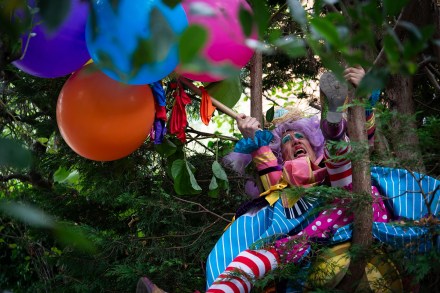
Buttercup the cow was so convincing I felt quite moved: Jack and the Beanstalk reviewed

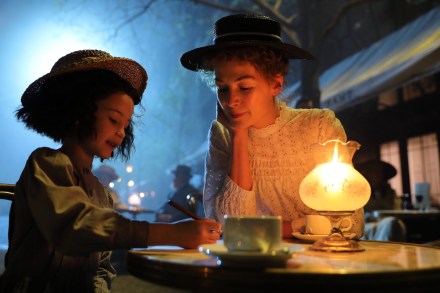
This pantomime was filmed by ‘legendary Blue Peter presenter’ Peter Duncan in his back garden over the summer. It was intended for online release only but it’s also gone into cinemas because this is the world we now live in. Oh no it isn’t. Oh yes it is. Oh no it isn’t. Seriously, it is. Why are you arguing like this? Stop it. As many theatres are still closed, and as most pantomimes have been cancelled, it makes sense to show it in cinemas and for cinemas to have something to show. During normal times the Christmas period is The Favourite and Portrait of a Lady and, while we’re at it, have David Copperfield and Little Women too.

A hard watch, but ultimately a rewarding one: County Lines reviewed

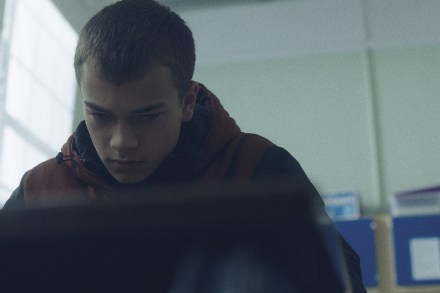
County Lines is the kind of social realism that the British do so well, if not too well. In other words, a hard watch. In fact, at times it’s so unbearable you might find yourself pressing pause because you’ve suddenly remembered the fridge needs a clean, say. Or the hall: couldn’t it do with a tidy-up? But this tale of a young boy caught up in transporting drugs has to be tough. And there is sympathy, tenderness and hope, too. As for the kid, who is a sort of modern-day Billy from Kes, you will certainly take him to heart. The film is written and directed by Henry Blake, a one-time actor who was a youth worker in London for 11 years.

A gripping portrait: Billie reviewed

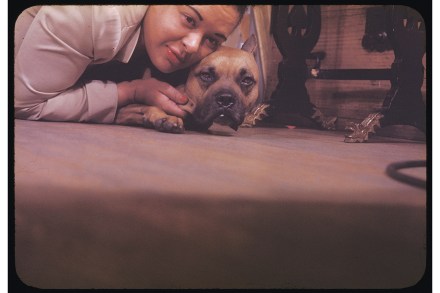
This documentary about Billie Holiday is transfixing. Not just because it’s about Billie Holiday — I am not into jazz yet her version of ‘Strange Fruit’ is obviously incredible — but for the previously unheard audio tapes recorded by Linda Lipnack Kuehl in the 1970s with the people who knew her. This includes, for instance, Billie’s cousin, John Fagan, who chucklingly says he pimped her out as a child — ‘girls started young’ — and that women who ‘step out of line’ like to be knocked about and are proud of having a black eye as it shows ‘someone loves them’.

Every scene Sophia Loren isn’t in feels like a wasted one: The Life Ahead reviewed

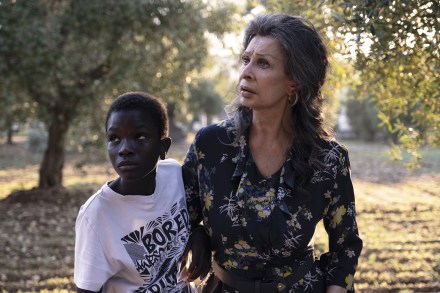
The Life Ahead stars Sophia Loren, and if there is one reason to see The Life Ahead it is this: Sophia Loren. And if you need a second reason, it is this: Sophia Loren. Also, it is the third, fourth, fifth, sixth and seventh reason. And probably the eighth. She is magnificent, truly. Directed by Edoardo Ponti, Loren’s son, the film is based on the 1975 novel The Life Before Us by Romain Gary. It was filmed in 1977 as Madame Rosa, starring Simone Signoret, and won the Oscar for best foreign film. Here, the action has been transposed from France to Italy and the port city of Bari which is, from what we see of it, rough and poverty-stricken rather than picturesque. And our Madame Rosa is Loren, in her first proper film role for 11 years.

You won’t be able to look away: Shirley reviewed

This week, two electrifying performances in two excellent films rather than two mediocre performances in the one mediocre film — see: Rebecca — so things are looking up. Firstly, Mogul Mowgli, starring Riz Ahmed, directed by Bassam Tariq and co-written by the pair. Ahmed plays Zed, a British-Pakistani rapper who has lived in New York for two years and is on the brink of stardom when he returns home to his family in London. It’s intended as a brief visit but then he is struck down by an autoimmune disease that is never named but is something like multiple sclerosis. The point is, I think, even his body doesn’t recognise him any more.

You’re not going to get a better spin on bromance – brobably: The Climb reviewed

The Climb is, essentially, a bickering bromance as two longtime pals bicker bromantically down the years, and it doesn’t sound like a film you’d especially wish to see and it didn’t sound like a film I’d especially wish to see. Bromances are bad enough, so God save us from a bickering one. But it’s actually quite the marvel: original, sometimes absurdist, touching, funny, and it also takes male friendship seriously, which is a novelty. So you do wish to see it. You just didn’t know till now. It was written by Michael Angelo Covino and Kyle Marvin, directed by Covino, produced by Covino and Marvin (among others) and stars Covino and Marvin who play characters called Mike and Kyle.

Like a weird episode of Downton – with less sexual chemistry: Rebecca reviewed

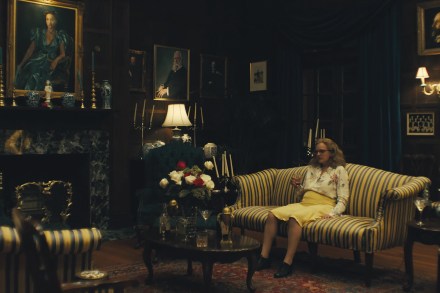
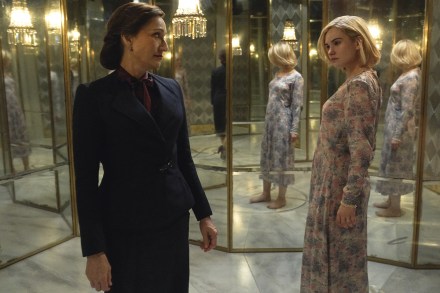
Rebecca is a new adaptation of Daphne du Maurier’s gothic, twisted, never-out-of-print tale of sexual jealousy. It’s directed by Ben Wheatley, with a script by Jane Goldman, and stars Lily James, Armie Hammer and Kristin Scott Thomas. High hopes? Me too. But though it’s perfectly watchable, it’s not at all daring. Would the second Mrs de Winter be more fully formed and less of a pallid, round-shouldered meek little thing? Would sinister Mrs Danvers have more substance? Would it be a modern interpretation for modern times? No, is the short answer. And also it just isn’t sexy enough. Meanwhile, I forgot to start this with: ‘Last night I dreamt I went to Manderley again…’ as it’s how every other review will begin, I’m sure.

Gripping high gothic psychological horror: Saint Maud reviewed

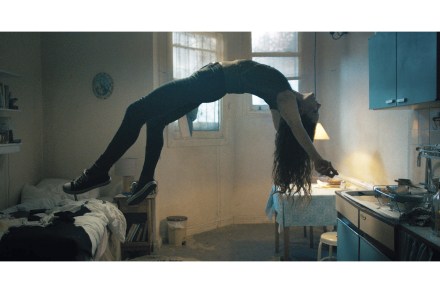
Saint Maud is a first feature from writer-director Rose Glass and it’s being billed as a horror film. But it’s not your common-or-garden horror film. There are no chases through woods. No one watches a doorknob being twisted from inside the room. Also, there are no maypoles. (Always bad news, maypoles.) Instead, it’s more of a character study, as well as a study of religious fervour, told in the high gothic style, grippingly, with wonderful originality and no dilly-dallying. Eighty minutes, and that’s it. (Sorkin, Nolan, Scorsese, Tarantino… please take note.) The film stars the terrific Morfydd Clark who, I think, you cast when you can’t get Molly Windsor who, in turn, you cast when you can’t get Morfydd Clark.

One zinger after another – but it’ll leave you cold: Trial of the Chicago 7 reviewed

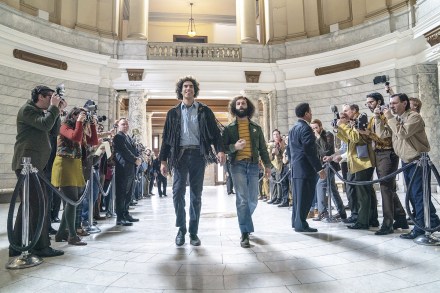
Aaron Sorkin’s The Trial of the Chicago 7 — don’t worry, you haven’t missed six earlier films — is a courtroom drama based on true events featuring a stellar cast: Mark Rylance, Frank Langella, Sacha Baron Cohen, Eddie Redmayne, Jeremy Strong. You may be wondering: hang on, no Michael Keaton? But he tips up too! What, no Joseph Gordon-Levitt? Don’t worry. He’s here. But while the performances are ace and the script is one of those Sorkin scripts where the dialogue is one zinger after another — zinger ping pong, I call it — it will leave you cold emotionally. This is a film to admire, in some respects, but it will never make you feel. I wasn’t bothered who did or didn’t go to prison in the end.

Would be much better without Bill or Ted: Bill & Ted Face the Music reviewed

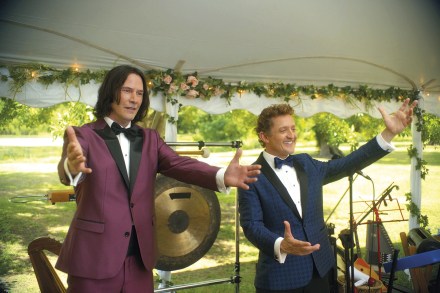
I think I am supposed to say that Bill & Ted Face the Music, the third in a franchise about two Californian morons who time travel to save the world, is a harmless satire on American teenage good-naturedness and stupidity. I’m not sure about that: I think it is more likely evidence of what American cinema has done to the American mind since Jaws turned the B-list film into the A-list film, and vice-versa. Its heinous. The premise is: creatures of the future decided long ago (in 1989) that Bill and Ted would one day write a song that would heal reality.

Horrifyingly beautiful – but I will never watch it again: Painted Bird review

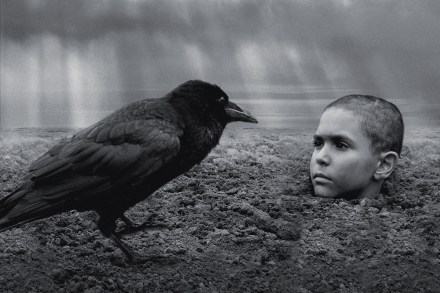
The Painted Bird opens with a young boy (Jewish) running through a forest and clutching his pet ferret. He is being chased by some other boys (not Jewish) who beat him to the ground, douse his ferret in petrol and set it on fire. The boy watches as his pet burns alive and I don’t know if you’ve ever witnessed a ferret being burned alive, but my God, I’m not going to get those high-pitched cries out of my head any day soon, just as I’m not going to get this film out of my head any day soon. You’d think, after those opening few minutes, things could only get better. But they don’t. They really, really, really don’t. And there are still two hours and 47 minutes to go.

A James Bond film with added physics no one understands: Tenet reviewed

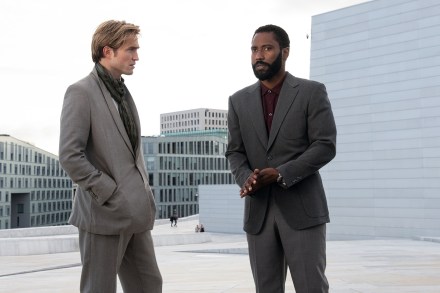
Tenet is the latest high-concept, time-bending blockbuster from Christopher Nolan and it’s the film that (unofficially) reopens cinemas in the UK. It has everything that fans of Inception or Interstellar might want. There are spectacular set pieces. There’s time going forwards and then reversing, so it’s bullets flying back into the gun as crashed cars right themselves. There is a relentlessly pounding soundtrack. There is Sir Michael Caine playing Sir Michael Caine — his character is called Sir Michael Crosby but I wasn’t fooled — and as for the plot? Incoherent. Which fans seem to like. (‘I can’t explain any of it but it’s genius,’ I heard one say on the radio the other day. ‘A masterpiece.

Why have they made Pinocchio look like Freddy Krueger?

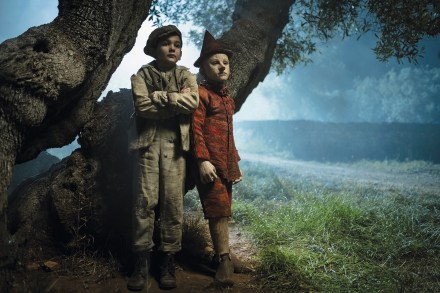
Matteo Garrone’s live-action version of Pinocchio is visually sumptuous and there are some enchanting characters (my favourite: Snail). And unlike Disney’s version (1940) this is, apparently, far more faithful to the darker, original 1883 tale by Carlo Collodi, even if the Disney version was quite dark enough for some of us. (I screamed so much when Pinocchio turned into a donkey I had to be taken from the cinema, says my mother.) But while this may be more authentic it’s not narratively powerful for some reason. It should be. It’s a terrific (if twisted) story, after all. But it’s so episodic, and this Pinocchio is so unendearing, that the film itself never properly comes to life.

I want to support cinema but I have my work cut out with Love Sarah

Some cinemas have reopened, with the rest to follow by the end of the month, thankfully. But the big, hotly anticipated films — Christopher Nolan’s Tenet, for example, or A Quiet Place II — won’t be out for a while yet, as opening schedules are adjusted. However, there is a new film that is cinema-only: it’s British, and it’s called Love Sarah. It stars Celia Imrie and is about three generations of women who seek to overcome grief by founding a bakery in London’s Notting Hill rather than running away to join Isis, say. (Is it always a bakery in Notting Hill or does it just feel like that?) I want to be kind as I want to support cinema. But I have my work cut out here.

Gorgeous and electrifying: And Then We Danced reviewed

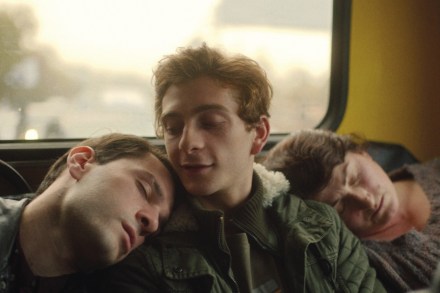
The film you want to see this week that you mightn’t have seen if you weren’t stuck at home is And Then We Danced, a gay love story set in Tbilisi, Georgia, and it is truly wonderful and gorgeous. Every cloud and all that. However, in my area the demand on broadband is so high that all I get is buffering, buffering, buffering, like it’s 1996, so the only way I could watch this in its entirety was by getting up at 5 a.m. And if it was an absolute pleasure then, it’ll be an absolute pleasure anytime. It passed the 5 a.m. test, you could say.

The director of Persepolis talks about her biopic of Marie Curie: Marjane Satrapi interviewed

The problem with making an accurate film about science is that science is rarely exciting to watch, explains director Marjane Satrapi. Movie convention tends to insist on the climax of the eureka moment and the fiction of the solitary male genius, who doggedly closes in on his discovery in the same way that a detective might doggedly close in on a killer. ‘It doesn’t happen this way,’ says Satrapi. ‘It’s a result of lots and lots of work, which most of the time is repetitive and most of the time you know you don’t know where you’re going, and it’s lots of collaboration.’ Satrapi studied mathematics in her birthplace of Iran, and has a scientist’s intolerance for dramatic licence.

Catherine Deneuve at her most Deneuve-ish: The Truth reviewed

To tell you the truth about The Truth, even though it stars Catherine Deneuve at her most Catherine Deneuve-ish (i.e. campily grand) and I was so looking forward it — it’s the first non-Japanese production from Hirokazu Kore-eda, who made the very lovely Shoplifters — it is now quite hard to concentrate on anything in films beyond the fact that they already feel like social history. My God, there was a time when people just went out and about willy-nilly? And they hugged and kissed and weren’t always washing their hands while singing ‘Happy Birthday’? So that gets in the way, as does having to watch films at home rather than on a big screen, now that cinemas have closed. But we will try our best — here to serve and what have you.

What is driving the rise in extreme cinema?

Why do we watch films like The Painted Bird? The movie tracks a young Jewish boy, an unclaimed innocent, wandering Eastern Europe as the second world war rages around him, drifting from village to village, encountering rape, paedophilia, mass murder and one spectacularly grisly scene where a miller gouges out his love rival’s eyes with a spoon — before tossing them to the cat. In the current climate you might want something more restorative than a film reminding us of forgotten civilian monstrosities. But increasing numbers are lapping up this kind of cinematic experience. This isn’t just cinema for people sick of Marvel. This is extreme cinema, endurance viewing for audiences keen on experiences that are viscerally unsettling.

Astonishing to think Miss World ever existed: Misbehaviour reviewed

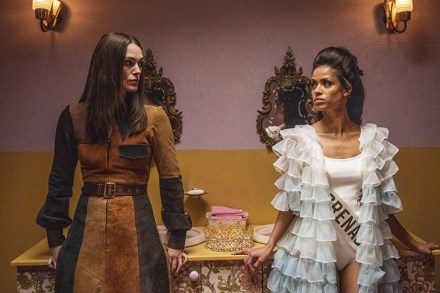
Misbehaviour is a film about the 1970 Miss World contest that was disrupted by ‘bloody women’s libbers’ — that’s what my dad always called them, anyhow — throwing flour bombs and shouting ‘we’re not cattle!’ as Bob Hope fled the stage in a panic and our televisions temporarily blacked out.Marvellous, I think now, although at the time I was probably as annoyed as my dad. I loved this show when I was growing up and wouldn’t have known there was anything amiss, as it was all so normalised, watched by a global audience of 100 million. Great family entertainment, I’d have said, now get out my way so I can see the contestants parade with actual numbered discs on their wrists as Michael Aspel pervs all over them.