Any other business

Why AstraZeneca’s new factory has gone to Dublin

‘Great news, Prime Minister, Astra-Zeneca has decided to site a new £320 million factory on Mersey-side. Your vision of the UK as a science superpower is becoming a reality.’ What a moment that would be for a Downing Street intern in search of the positive for an otherwise grim morning briefing; almost up there with ‘Great news, Prime Minister, Boris Johnson has joined a Trappist monastery’. But no, AstraZeneca decided some time ago to put its next factory in Dublin. This is the pharma multinational that was a corporate hero of the Covid vaccine rollout and is a descendant of ICI, Britain’s greatest 20th-century science company; the very model of the kind of investor Rishi Sunak hopes to attract.


Time for cautious optimism, not FTSE jubilation

What comfort can we draw from the FTSE 100 Index’s all-time high of 7905 last Friday? Yes, in a limited sense, it’s a reason to be cheerful: first, because it’s a boost to the value of pension and tracker funds; second, because it fits the current narrative of gloom receding, in which inflation has probably peaked, interest rates look set to follow soon and the Bank of England says the coming recession will be shallower than first thought. But the new top is less than a thousand points above the ‘dotcom bubble’ record of 6930 at the turn of the millennium, so no spectacular reward for long-term equity holders.

Is corporate ‘purpose’ falling out of fashion?

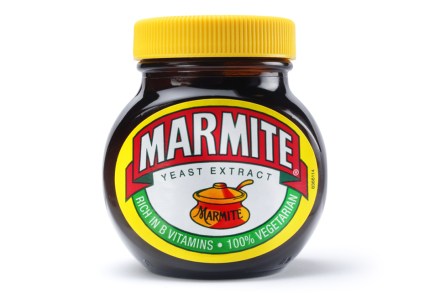
Does a change of chief executive at Unilever, the British-based shampoo-to-Marmite multinational, signal the demise of the fashion for corporate ‘purpose’? Alan Jope, who steps down in July, drew scorn when he declared that every brand in his portfolio should ‘stand for something more important than just making your hair shiny… or your food tastier’. His reputation was also dented by the failure of a £50 billion bid for the consumer arm of the pharma giant GSK – but it was his preaching about sustainability and purpose while Unilever’s performance continued to flag that ultimately cheesed off his shareholders.

Where Britishvolt went wrong

As a scattering of snow settles on the desolate site at Blyth in Northumberland that might have become the £3.8 billion Britishvolt battery factory, differences of opinion over the failure of this would-be flagship of the UK’s electric vehicle revolution become clearer. For Andrew Orlowski in the Daily Telegraph, it’s ‘a surprising success’, ministers having rightly declined to inject public funds into a venture with no market-ready technology, no customers and an executive team with a taste for private jets: at least ‘we know we won’t have another DeLorean to rue’.

What Boris Johnson should do next

If you were rich, foreign and globally mobile, would you choose to move to the UK? The trend, it turns out, is the other way: according to migration consultants Henley & Partners, we’ve seen a net outflow of 12,000 millionaires since 2017, with 1,500 departures last year. And it’s pretty obvious why. If tax is your top concern, a tightening of non-dom rules and the near-certain prospect of a Keir Starmer government abolishing non-dom status altogether would loom large. If you’re Asian, you may think Australia looks more welcoming. If you’re European and offended by Brexit, you might prefer Ireland or fashionable Portugal. But actually we’d be mad not to make an effort to attract well-heeled incomers, unless they’re Russian.

Early retirees: your country needs you

Bank of England chief economist Huw Pill had an unusually hard act to follow when he was appointed – after stints at Goldman Sachs, the European Central Bank and Harvard – to succeed the free-thinking Andy Haldane in 2021. Pill’s face is still not one most of us recognise, but he’s an interesting speechmaker and his latest, delivered in New York, is worth reading for its analysis of the UK’s labour market problem and its potential to prolong the current inflation. In essence, he observed, the US has a tight labour market because its economy has surpassed pre-pandemic levels and may even be ‘overheating’.

My property market predictions for 2023

How bad can it be? Predictions for 2023 have been universally miserable. Even if inflation and interest rates stop rising, there’s no pundit out there who believes consumers, homebuyers, investors or business owners will be cracking open the Mayerling brut rosé recommended below in 12 months’ time and saying: ‘Phew, that was tough but I feel great about 2024, so pull my cracker and I’ll put my paper hat on.’ And I’m not here to buck the trend. We’re in for a long haul of budgets squeezed and projects deferred. Let me nevertheless rebut one doom strand with a plea for common sense, provoked by a Telegraph piece headed: ‘Why house prices will nosedive in 2023… Property experts predict a plunge as buyers are priced out and sellers panic.

The joy of fulfilling my youthful ambition

Half a century ago this week, I left school in Scotland and travelled to Worcester College, Oxford for an interview to read politics, philosophy and economics. I can still picture the trio of scary dons who quizzed me: the grumpy political historian ‘Copper’ LeMay; the deeply obscure philosopher Michael Hinton; and Dick Smethurst, a jovial left-leaning economist, in and out of Downing Street in Harold Wilson’s years, later a popular provost of the college. It was Smethurst who kicked off with ‘What makes you mad?’, to which I gave the 1972 equivalent of a full-woke answer about human injustice – though the truth, then and now, is that I’m rarely moved to anger; more often to quizzical regret, whether at financial folly, executive greed or state incompetence.

The weakness of the Russian oil price cap

Will a price cap on Russian oil sales be a winning move in the Ukraine war? Since the invasion began, Russia has continued exporting crude and refined oil products at barely less than pre-war volumes and at rising prices that have replenished Putin’s coffers. From this week, however, the EU and G7 have imposed a ban on seaborne Russian crude imports and a $60-per-barrel price cap to be enforced by banning western shipping and insurance firms from handling Russian shipments sold above the price cap. But as I write, $60 is actually the market price of Urals crude – which has lately been trading at 25 per cent below Brent crude – so the cap won’t make much immediate difference to Moscow.

We should never have tried cosying up to Chinese investors

I can’t read ‘China rocked by protests’ and ‘Zero Covid could be the end of Xi Jinping’s rule’ without recalling 4 May 1989, when I watched chanting students march into Tiananmen Square and overheard the British ambassador Sir Alan Donald declare: ‘There, you see how liberal China is becoming.’ I was a banker back then and had just visited the People’s Bank of China to discuss its appetite for investing in UK government debt – having flown up from Hong Kong, where business was booming under the reassurance that the British-run outpost’s way of life would remain unchanged for 50 years after the forthcoming handover to Beijing.

The welcome death of the ‘my truth’ investment boom

A colourful selection of news items this week seem to have a central thread. Elizabeth Holmes, founder of the Theranos fake blood-test venture once valued at $9 billion, was sentenced to 11 years in prison for fraud. Sam Bankman-Fried, founder of FTX, the collapsed crypto exchange once valued at $32 billion, was holed up in the Bahamas awaiting extradition to face US justice. Despite continuing crypto mayhem, Binance – the Cayman-based rival exchange that declined to rescue FTX – announced the auction of ‘seven animated NFT statues’ celebrating the triumphs of footballer Cristiano Ronaldo.

Why we should pray for crypto’s survival

Note to self: don’t sound smug about the sudden collapse of FTX – the Bahamas-based crypto exchange whose valuation has been zapped from $32 billion to zero – because however much it plays to I-told-you-so instincts about the mug’s game of crypto, the episode may herald a wave of wealth destruction that’s the last thing the financial world needs when there’s already so much bad stuff going on. Still, smugness is a strong temptation here – and what could be more provoking of that sentiment than a photograph in the Daily Telegraph of Sir Tony Blair and Bill Clinton on an FTX-badged stage alongside the firm’s 30-year-old founder Sam Bankman-Fried in his shorts and scruffy trainers?

Made.com is a dotcom parable from an earlier era

‘Reparations’, much bandied about at Cop27, is a dangerous word. It speaks of an admission of historic guilt, which no one can deny has a place in public discourse. But its intention is to put a punitive price on guilt itself, rather than to advance collaborative work needed to rectify damage that can be traced back to bad acts, whether committed through greed, prejudice, aggression or ignorance. It says, in short: ‘Don’t send us your supposedly superior expertise and your lectures about how to improve ourselves. Just send cash. And keep sending it until your tortured conscience is assuaged.’ But in relation to climate impacts, the argument over who pays, who receives and how much would rage for decades while the damage gets worse and the repair costs rise.

The morality of begging for trade with Saudi and Qatar

Cop27? Me neither. Barring a last-minute call to join Boris Johnson’s Sharm El Sheikh entourage, I’ll be minding my carbon footprint at home. But I’m sorry not to be reporting firsthand from a more controversial Middle Eastern gathering of the global elite: the Future Investment Initiative in Riyadh, or ‘Davos in the Desert’. A ticket to Cop27 is a virtue signal in itself. But attendance at last week’s FII, an annual showcase for progressive sovereign spending within Mohammed bin Salman’s otherwise medieval Saudi state, is a moral conundrum.

After the Truss-Kwarteng crash, a tentative welcome for Sunak

Let’s hope Tuesday’s partial eclipse of the sun was a good omen for the return of Rishi Sunak to Downing Street, this time as Prime Minister. Understandably, he looked more earnest than triumphant. Business leaders and financial markets gave him a positive welcome but – understandably also after months of turmoil, with huge challenges ahead – rather a tentative one. Ten-year gilt yields dropped from a panic-driven 4.5 per cent to a still worried 3.8 per cent, double their recent lows; the pound blipped up, then settled back to its recent benchmark of $1.13. A ‘dullness dividend’ is what money men are hoping for, we’re told, after Johnson’s narcissistic inattention and the crackpot Truss-Kwarteng entr’acte.

The truth about corporate taxes

I’ve chosen to write about corporate tax rates this week not because they’re the sexiest subject available but because – unlike the government’s frontbench, the value of the pound and the scale of winter fuel bills – they’re unlikely to change dramatically during the shelf-life of this column. An increase in corporation tax from 19 per cent to 25 per cent, originally announced by Rishi Sunak, will go ahead in April, despite new Chancellor Jeremy Hunt’s own leadership campaign pledge to cut the rate to 15 per cent, which would have placed the UK between Ireland and Singapore in competitive tax tables. The uplift will, we’re told, tip £19 billion (based on HMRC’s reckoner of £3.

A house-price crash won’t be the only effect of the Kwarteng calamity

Where next for house prices? Clearly, they’re going down as mortgage rates go up – and my forecast in May that they would shed ‘recent froth’ and then stagnate rather than plunge, has been entirely overtaken by events, or at least by Kwasi Kwarteng’s calamitous ‘fiscal event’ last month. Reverberations from the Chancellor’s debut continue apace, with more emergency bond-buying by the Bank of England despite news that the OBR-assessed forecast missing from his September speech will now be unveiled on 31 October instead of on 23 November.

Is Credit Suisse the tornado on the banking horizon?

Headlines about ‘alarm over CreditSuisse’ might be read as a sign of normality in financial news, rather than the reverse. The second-ranked Swiss bank (behind UBS) has slipped on so many banana skins in recent years that, as I wrote in February: ‘I sometimes wonder how and why it survives.’ As a recognised basket-case, its difficulties are not usually seen as harbingers of systemic trouble. But in the Kwarteng-induced febrile mood of London’s markets, the question has to be asked. This is October, the devil’s favourite month for provoking crashes. Could Credit Suisse be the tornado on banking’s horizon? Amid rumours of critical balance-sheet weakness, Credit Suisse’s shares have fallen 60 per cent this year.

City slickers’ reaction to Kwarteng’s unfunded plan is entirely rational

‘Fury at the City slickers betting against UK plc,’ shouted the Daily Mail on Tuesday, after Monday’s mayhem saw the pound hit an all-time low of $1.03. A more accurate corporate metaphor, though less punchy as headline material, would have been something like this… Activist mavericks seize boardroom control of giant sluggish utility. Novice finance director slashes prices, raises dividends for rich shareholders, shuns in-house forecasters and says he’ll borrow whatever it costs. To which markets reply: ‘Blimey, mate, that’s bonkers. So we’re dumping your shares and the cost of your debt just doubled.’ And that, I’m afraid, is an entirely rational response, not a wickedly speculative one.

Is this really the moment to scrap bankers’ bonuses?

Chancellor Kwasi Kwarteng – keen to sharpen the City’s competitive edge, we’re told – wants to remove the legislative cap, imported from Brussels in 2014, that limits bankers’ bonuses to 100 per cent of their base salary, or up to 200 per cent with shareholder approval. That raises interesting questions. Was the cap a good idea in the first place? If not, why wasn’t it binned as soon as we left the EU? Is now the ideal moment to do so? And are bankers still a breed of greedy bastards? The answer to the first question is certainly not. This column called the cap a ‘boneheaded’ measure that would merely provoke wily moneymen to find ways of gaming an unwelcome restraint on their wealth.