Books & Arts

Books and Arts

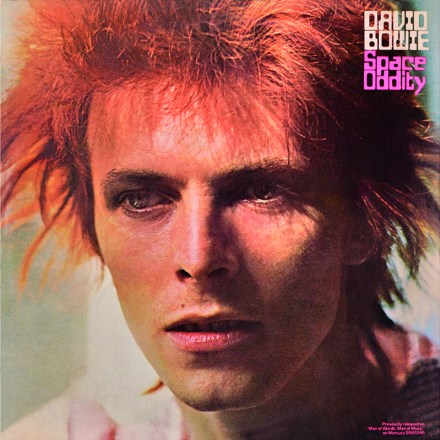
David Bowie is bigger than ever

On Sunday, November 10, 1991, the band Tin Machine played a gig at Brixton Academy in south London. Brixton then was far from the gentrified area it has become; it remained a hotbed of simmering social and racial unrest. The notorious riots of a decade before were still a recent memory, and those who ventured to the Academy did so in the knowledge that fights and aggravation were highly likely, especially after alcohol had been consumed. But if on-street scuffles were a price that gig-goers had to pay to see their musical idols, the world of Tin Machine was a much less happy one. At the beginning of the Nineties, David Bowie had to consider, for the first time since the success of the single “Space Oddity” in 1969, that he might be a spent force.
bowie
lohan

The return of Lindsay Lohan

Falling for Christmas has a ridiculous logline: “Newly engaged, spoiled hotel heiress gets into a skiing accident, suffers from total amnesia and finds herself in the care of a handsome, blue-collar lodge owner and his precocious daughter in the days leading up to Christmas.” The Netflix romp is notable only as it marks Lindsay Lohan’s return to a genre that made her famous. “It’s such a refreshing, heartwarming romantic comedy and I miss doing those kinds of movies,” Lohan told Netflix, in earnest, while describing her character as, “Extravagant. Temperamental. Glamorous.” You could build a campy slasher flick or porno off such plot scaffolding; none would be great cinema. And yet Falling for Christmas is more complicated than that. Why?

The shock value of Lena Dunham

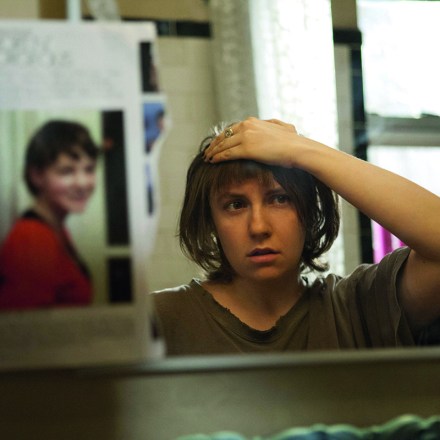
I'm watching Girls. Hannah (Lena Dunham) is tweeting in her bedroom: “My life has been a lie, my ex-boyfriend dates a guy.” She deletes this and types: “All adventurous women do.” She stands up, shakes her hair, swings her tattooed arms and dances to Robyn’s “Dancing on My Own.” I was this person once, I think to myself, as another girl (Marnie) walks into the room and laughs maniacally as the two discuss the shocking reveal that Hannah’s boyfriend, Elijah, is gay (“he seemed gay”). They dance together like white girls on Ellen. I tweet the video: “White girls with tote bags.” I realize that what felt relatable in 2012 now comes off like a camp-cringe spectacle that’s oblivious and dumb. It’s shocking. It’s perversely millennial.

Dunham
Murillo

Murillo the masterful

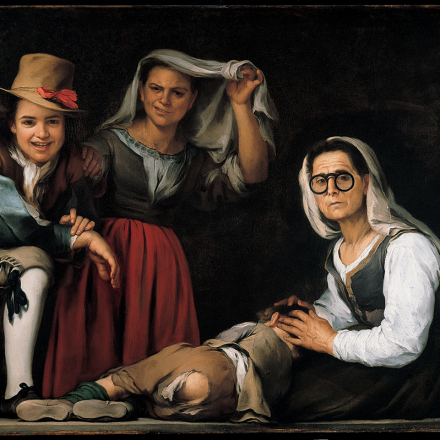
Murillo: From Heaven to Earth, an exhibition at the Kimbell Art Museum in Fort Worth, Texas, is, at its core, a cunning display of institutional braggadocio. How much better to amplify a mainstay of the permanent collection — that would be “Four Figures on a Step” (c. 1658-60) — than to mount a show dedicated to the artist responsible for it? “Four Figures on a Step” is, if not Murillo’s masterpiece, then a distinctive painting all the same. It is distinctive because it is odd: though attempts have been made to peg the image as some-or-other lesson in morals, the canvas has consistently resisted explication. The title, a bland descriptor superimposed by an outside source, points up how the picture’s thematic basis remains firmly contained within its own peculiar logic.

Joyce Carol Oates, a woman for all seasons

Midway through my conversation with the eighty-four-year-old Joyce Carol Oates, one of the most prolific writers America has ever seen (fifty-eight novels, plus plays and children’s books), and now one of its more unpredictable tweeters, with over 226,000 followers, I ask what it’s like being having been one of the country’s “major” literary figures for so long. Oates’s classic 1966 short story “Where Are You Going, Where Have You Been?” about the kidnap and possible murder of a sixteen-year-old girl, and her 1992 Pulitzer-nominated novella Black Water demonstrate her grasp on the dark side of the twentieth-century American psyche.

Oates
autofiction

Think autofiction is easy? Think again

"No, Lisa." As rejection letters go, it was admirably concise. I’d made an attempt at “autofiction,” that amorphous genre which inhabits the space between autobiography and fiction, and this was the entirety of my editors’ response. Any writer who has been at it for any length of time will have received Dear Johns from publishers, but is two words a record? It was something to cling to, at least, during the five further years it took for the book to find a home. Eventually, a French house took it, and Les Femmes de mes amants staggered unobtrusively into print in June this year. Obviously, I should have set my sights on Paris from the first.

The return of Cormac McCarthy

After sixteen years of silence, Cormac McCarthy has literally written a novel and a half. That’s the good news. Perhaps less-good news is that about half the longer novel depicts conversations between a mad person and an imaginary deformed imp called The Thalidomide Kid, while all of the half-novel is a dialogue between the same mad person and her psychiatrist. The unequivocal bad news is that quite a lot of both is about quantum physics, by way of ruminations on the Manhattan Project and a JFK conspiracy theory: an unholy trinity of literary red flags. I do not mean to dissuade anyone from reading a rare new work by one of America’s finest living writers. Parts of The Passenger and its “coda,” Stella Maris, are very funny. Parts are even brilliant.

cormac McCarthy
books

The Spectator’s 2022 Books of the Year

William Boyd Writing effective comedy is very difficult. True comic genius, the ability to create a unique tone of voice — deadpan, perfectly timed, self-deprecating, abjuring all whimsy (the British disease) and grandstanding — is extremely rare. One thinks of S.J. Perelman, Peter de Vries, the Grossmiths and P.G. Wodehouse amongst very few others. One name that can be added to this tiny and exclusive club is Theo Fennell who has published, this year, his memoir I Fear For This Boy: Some Chapters of Accidents (Bloomsbury, $35). It relates incidents in Fennell’s life where everything that could go wronnd Catholic Churches as he veered between them.

Ebony and ivories

In the early going of The Piano Lesson (1987) there’s mention of a merchant buying up musical instruments in the black neighborhoods of 1930s Pittsburgh. When offers for the titular family piano are rejected by its current proprietor, Berniece, her brother Boy Willie, who has arrived from the south, hopes to sell it to him behind her back. It’s a coy reference to that great Broadway salesman of band equipment, Meredith Willson’s Music Man (1957), and the reversal gives you some idea of playwright August Wilson’s method. Where Meredith built a full musical around a musical zero (Harold Hill is tone-deaf), August composed a stage play from the music of the blues, which he called the “sacred book” of black literature.

piano