
Place

Place

The majesty of Siena’s Palio

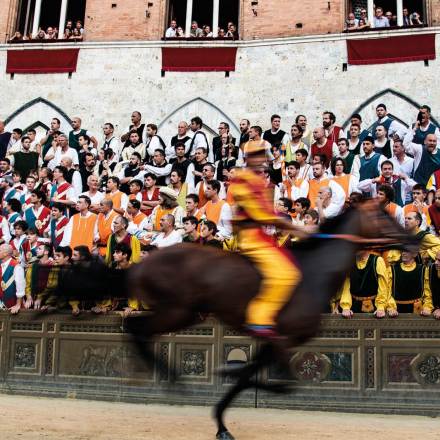
Twice a year, an almost deathly silence falls on the Tuscan city of Siena. It is the moment just before the rope drops in the Piazza del Campo to signal the start of the Palio, the city’s ancient horse race and fiercest rivalry. Siena’s Palio is as mad as it is old. Ten horses and ten riders, representing ten of Siena’s seventeen contrade, or districts, race three laps of the city’s main square at breakneck speed before thousands of screaming spectators, in a tradition dating back to 1633 — the year Galileo was convicted of heresy for insisting that the Earth revolved around the Sun. Every summer, two palii are held: one on July 2, in honor of the Madonna di Provenzano, and one on August 16, the Palio dell’Assunta during the feast of the Assumption. What’s at stake?
Palio
la varna

A pilgrimage to St. Francis’s holy sanctuary at La Verna

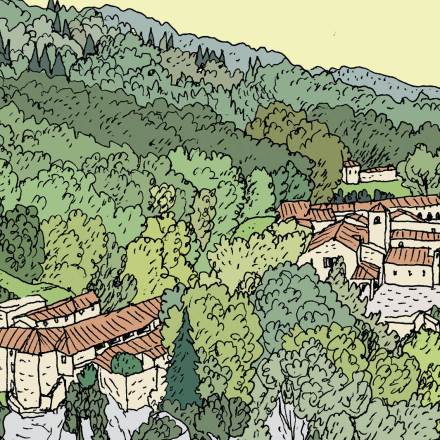
Beneath a stunning Della Robbia Crucifixion a lone candle burns on the floor of the Holy Stigmata Chapel in the sanctuary of La Verna. The immense tranquility belies the astonishing events that occurred in 1224 on this rocky outcrop in central Italy’s Umbrian hills. The chapel marks the spot where, two years before his death, Saint Francis, retreated to fast and pray with two of his brother friars. After some weeks, Francis saw a six-winged Seraphim, apparently crucified, who appeared and imposed the five wounds of Christ’s Passion on his body — in paintings the angel appears to be “lasering” St. Francis, who is often depicted as a sort of Franciscan version of Willem Dafoe getting it at the end of the film Platoon — including the nails protruding. Heady stuff.