Books & Arts

Books and Arts

The free market can’t stop AI actress Tilly Norwood

The British actress Tilly Norwood began appearing in viral videos and short films across the internet earlier this year. She is young, fresh-faced, with girl-next-door vibes. She will be signed by a major talent agency soon. But Tilly Norwood is not real. She is an artificial-intelligence synthetic. She is not in the real world, not embodied. She is not a person or an actress. She is a digital Frankenstein’s monster of video software and ChatGPT. Tilly was created by Particle6 Productions, an AI studio founded by Dutch comedian and actress Eline Van der Velden. Tilly is her project. Van der Velden moved to the UK when she was 14 to study drama and musical theater – and Tilly is fairly clearly her idealized self. Tilly, and by extension Van der Velden, is increasingly famous.
virginia roberts

Don’t take Virginia Giuffre’s memoir at face value

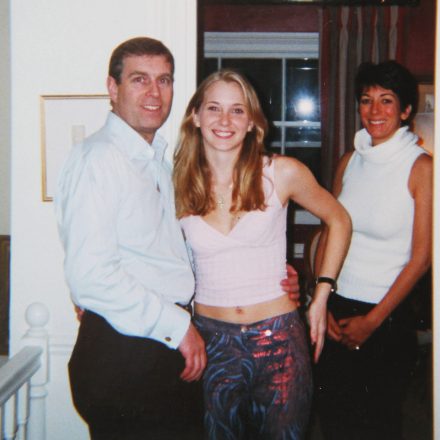
Six months after she took her own life aged 41, Virginia Roberts Giuffre’s “memoir” Nobody’s Girl, written with her professional collaborator Amy Wallace, has been published. It is bound to evoke distinct and intensified feelings in readers because the account of her suffering, coupled with the manner of her death, increases the emotional impact of the narrative.  The writing style and tone of the book feel authentic. Giuffre, who was born in 1983, uses words like “rad,” meaning awesome or cool, and “stoner dude,” to describe someone who smokes a lot of weed plus her constant reliance “on music to make the world make sense” seem very “Xennial” as late Generation Xers or early millennials are sometimes called.

Thomas Pynchon’s Shadow Ticket is transcendent and exhausting

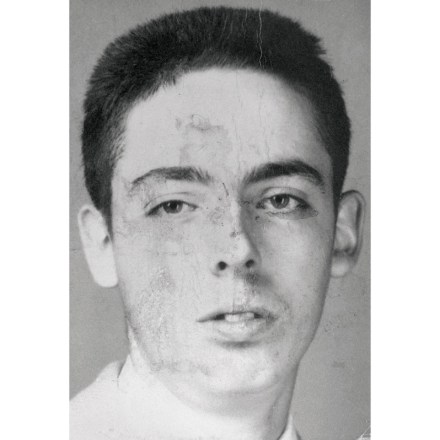
And just like that, after an excruciating 12-year hiatus, the literary world’s answer to Harry Houdini is back. Thomas Pynchon, that notorious recluse, has resurfaced with Shadow Ticket, a tricksy Prohibition-era detective caper that is by turns exhilarating, exasperating and inimitably Pynchonian. A new Pynchon novel is simultaneously a reviewer’s wet dream and feverish nightmare. There’s so much to unpack, you’re never going to do it full justice after a single reading. This is, after all, the writer famous for Byzantine, convoluted plots which zigzag their way across entire continents, ideologies and historical epochs, brimming with mysterious entities and delightfully nutty characters. Shadow Ticket is no different.

thomas pynchon shadow ticket
woody allen

Woody Allen’s first novel takes on cancel culture

Say what you like about the actor, director and writer Woody Allen – and people have undeniably been known to – but it takes a certain amount of gall to publish your first novel at the age of 89. Not that Allen doesn’t have form in this regard: he has brought out five collections of short stories, most recently 2022’s Zero Gravity and a 2020 memoir, Apropos of Nothing, which was greeted with horror by the publishing industry and literary critics alike. The New York Post described it as one of “the most tone-deaf, disgusting, bitter, self-pitying, horrifically un-put-downable memoirs since Mein Kampf.

Sam Shepard’s life was as dramatic as his theater

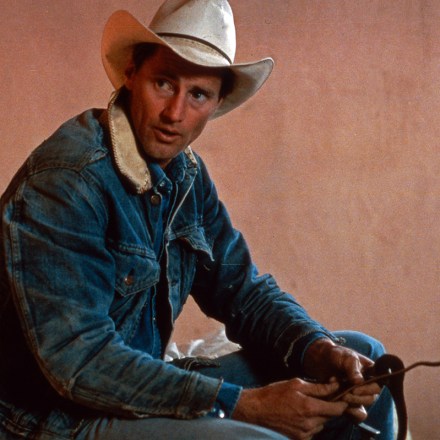
Sam Shepard and I crossed paths several times when we were both living near Charlottesville, Virginia, he with Jessica Lange and their family, and me as a student at the University of Virginia. He towered over passersby on the Downtown Mall, walking as if invisible spurs should be clinking on his bootheels, mane of dark floppy hair pushed back off his forehead and behind his ears, keen eyes above a quick grin. I last saw Shepard 20 years later, having a coffee and reading the Daily Racing Form in a Greenwich Village restaurant; he looked even better then. He was a true Renaissance man. There he was, on Bob Dylan’s Rolling Thunder Revue tour in 1975, charged with writing a screenplay for a movie somehow set in the concert tour.

sam shepard

Uncovering Brian Wilson’s real genius

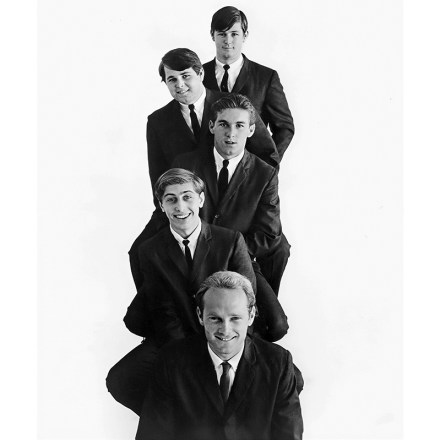
The death earlier this year of Brian Wilson, aged 82, was marked by the usual tributes to a man who was not only a pioneer of popular music, but also a sadly troubled genius whose early years of wild success were quickly overtaken by decades of drug addiction and mental health problems. A recurring theme in the obituaries was what might have happened in the aftermath of the Beach Boys’ masterpiece, 1966’s Pet Sounds, if Wilson, by then the band’s producer and lead songwriter, had not descended almost immediately into narcotic-induced torpor. It has commonly been suggested that Paul McCartney – who revered Wilson – was also jealous of the achievement of Pet Sounds, which arguably overshadowed the Beatles’ Revolver, and that Sgt.

Sixties Surreal at the Whitney is a bad trip

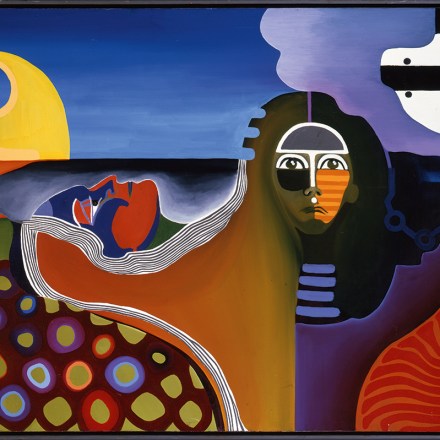
The Whitney’s Sixties Surreal is not about Surrealism. I spent about a week trying to figure out what it might actually be about, before I gave up. The show claims to seek to answer a simple question: what if Surrealism, rather than Cubism, had been the dominant thread in modern American art? This is funny to me, as Dalí’s melting clocks are far better known in America than any Cubist painting. Regardless, the museum never provides an answer. Instead, the Whitney jumps right to its agenda: reviving what it deems an overlooked thread of countercultural art. Ah, yes, the woefully neglected subject of… counterculture in the 1960s.

sixties surreal
met kinky

Why is the Met making medieval art perverse?

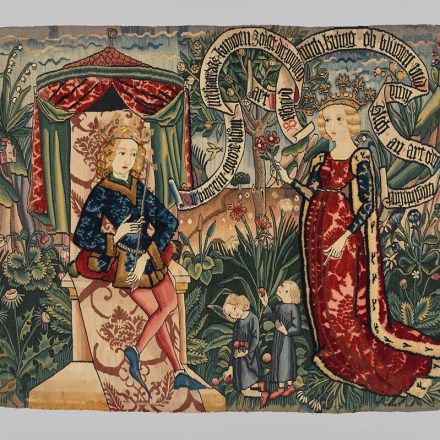
Unwitting historians often reveal just as much – if not more – about their own time and place than the time and place they claim to describe. The curators of Spectrum of Desire: Love, Sex, and Gender in the Middle Ages, a new exhibition at the Met Cloisters, are prime examples. Gathering manuscript illustrations, paintings, sculptures, jewelry and more from the 13th to 16th centuries, the exhibition promises to uncover “the hidden sexuality and sensuality of medieval art.” The intent is “queering the past,” and the objects were chosen to show expressions of “desire” in as many forms as possible – a saucy premise that appeals to contemporary trends. But many of the new interpretations range from the woolly to the laughable.

Drowning in the neon swamp of Tron: Ares

Sitting in the nearly empty movie theater at which I saw Tron: Ares, I found myself swamped by neon. Its hues are unappealing in real life – redolent of dive bars, arcades and other unsavory venues – but neon is downright unbearable when experienced in a movie theater, where you have no choice but to stare at the screen unless you want a perfectly good $21.51 to go to waste.

tron ares
black metal

Are black-metal bands going Christian?

In his youth, Emil Lundin became obsessed with the idea of recording the world’s “most evil album.” The lanky, long-haired Swede formed a black-metal band and set to work. He faced an immediate obstacle. In making history’s most nefarious musical creation, he could hardly use Swedish, with its singsong tones. English was also out of the question: he didn’t want to sound like ABBA. That left Latin, the native tongue of the occult and, it is said, of demons. In a quest for suitably devilish lyrics, he pored over arcane texts. That led him to Latin editions of the Sayings of the Desert Fathers – badass early Christian monks – and St. Augustine’s Confessions.