Life

Life

Letters from the politically homeless

Americans aren’t just fleeing liberal strongholds like California, Chicago and New York in droves. We are moving politically, too. As I often find myself caught in the crossfire of the culture wars, I also find myself at the crossroads of this migration. Since my last column, headlined ‘Why I won’t vote’, I’ve received hundreds of emails from others who feel politically homeless. I’ve also heard from many who have voted Democrat or Republican their entire lives and, for the first time, in 2020 will vote for the opposite party. Lifetime conservatives are voting for Biden. Independents are being radicalized to vote red or blue. People who didn’t vote for Donald Trump in 2016 are enthusiastically voting for him now.

voting politically homeless
antifa

Antifa made me Christian

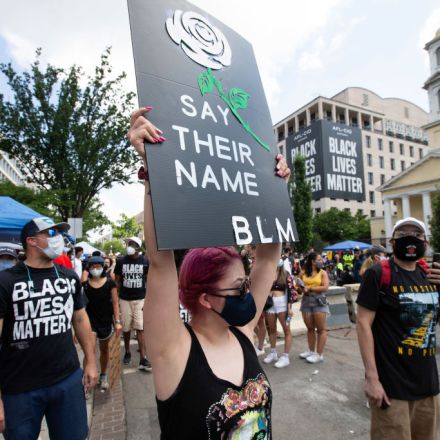
It’s a putrid August night in Brooklyn, with hazy orbs floating around the orange light from streetlamps lining a block of bars and restaurants. A dull murmur drifts up the avenue from young drunks limping along toward last call. For S. and me, chain-smoking over pints at our favorite pub, it’s a night like any other we’ve spent together over the past five years or so. S. is a Black Lives Matter stalwart and budding antifa sympathizer. He’s also burdened with severe angst and around this time of night the gloom really sets in. He becomes angry and only wants to talk about love, or, more accurately, heartache. It’s only in hindsight I realize that, back when I traveled in progressive circles, all my friends were as miserable as S.

The most locked-down couple in Eastern Europe

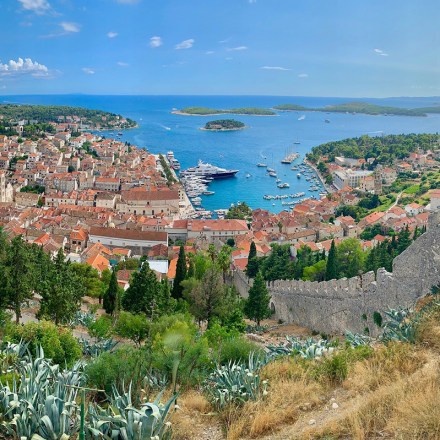
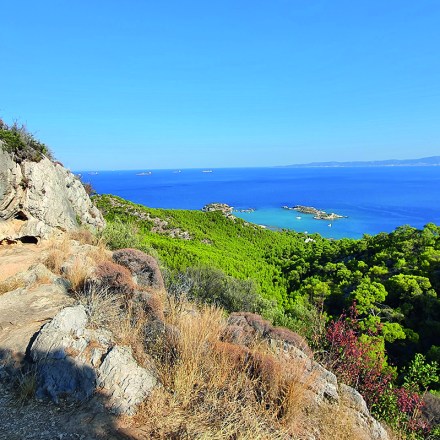
We had lost the habit of checking the national statistics of infections and deaths from COVID-19. They didn’t mean much in Budapest as the summer wound down and the city visibly revived, with heavier traffic and more restaurants open. But then there was a spike in cases in next-door Croatia, and the Hungarian government pondered closing the borders. That threatened our hope — desperation, really — for a beach vacation. We were the most locked-down couple in town. My wife had broken her heel and been confined to our apartment for four months, and I’d been stricken with sciatica and moved like a glacier. To our relief, the Croatian statistics were not too alarming and the Hungarians postponed restrictions. We still had to work out how to get to Hvar, though.

hvar
churches

The new crusaders

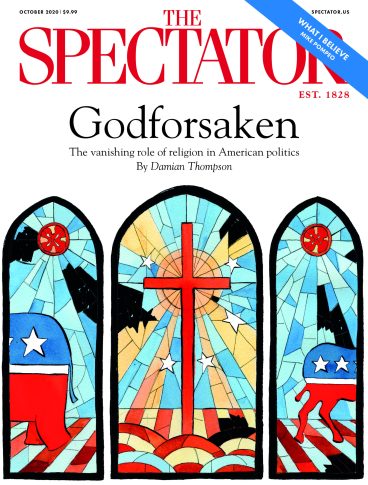
In July, the world’s most powerful man tweeted the words ‘There Is A War On Christianity’. Donald Trump’s tweet referred, somewhat cryptically, to an interview on the One America News Network with a man the President identified as ‘Dr Taylor Marshall, author’. Marshall told the interviewer, Jack Posobiec, that the protests that erupted after the killing of George Floyd had spawned a movement seeking to ‘erase Christian civilization’ through mob violence. ‘The goodness that we have experienced in our nation emerged from a Christian culture,’ Marshall said. ‘And these atheists, these socialists, these Marxists, they know that and they are attacking it.’ Marshall is a prominent figure in the US Catholic online subculture.

The coming stitch-up

To look upon a freshly painted wall is to behold a smooth surface; to look at it through a magnifier is to see a rough and irregular landscape — but turn the magnification up sufficiently and see it become regular again, a geometric matrix of atoms held in molecular bonds. Keep magnifying and you enter the unimaginably messy realm of the subatomic, a weird place of eldritch geometries and smeared-out, probabilistic motion. The world is smooth and rough, orderly and messy, all at once, depending on how closely you look.

tangled web
new york

New York has turned ugly

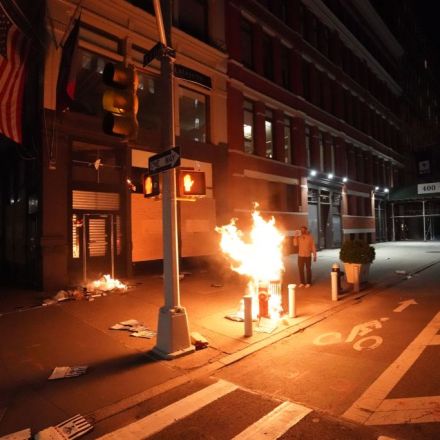
New York City In grim times such as these, New Yorkers tend to flatter themselves for possessing special reserves of moxie, an outdated word that connotes courage, brio and a kind of raffish know-how. Think of Humphrey Bogart as Rick, a nightclub owner in the film Casablanca, when he jousts with Major Strasser, the German bully who thinks he can outsmart and intimidate him. Pressed to reveal his background and political beliefs, the poker-faced Rick replies: ‘I was born in New York City, if that’ll help you any.’ Asked if he could imagine the Germans occupying New York, Rick retorts, with a little extra moxie, ‘There are certain sections of New York, Major, that I would not advise you to try to invade.

My debt to Royaumont

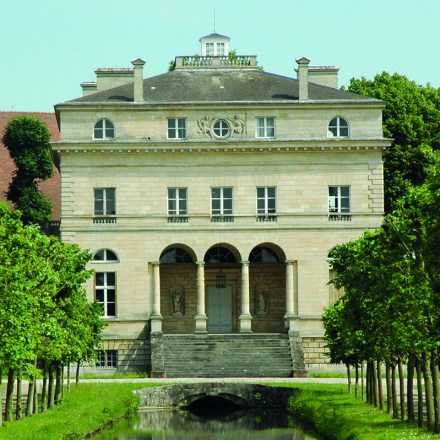
As ruins go, Royaumont is as good as any. French roads also being what they are, Royaumont is about 45 minutes from Saint-Denis, the cathedral in Paris where the kings of France are buried, and perhaps 20 minutes from Chantilly, where as much English as French is spoken on the racecourse. Beginning his reign in the 13th century, King Louis IX chose Royaumont as the site of one of the Cistercian abbeys he was building. Dying while on crusade in North Africa, he probably never saw what was reputed to be the most magnificent of all Cistercian abbeys in the whole country, the rival of Mont Saint-Michel or Fontevrault. Royalty notwithstanding, the Vatican singled him out for canonization.

royaumont
civil war

The next so-called civil war

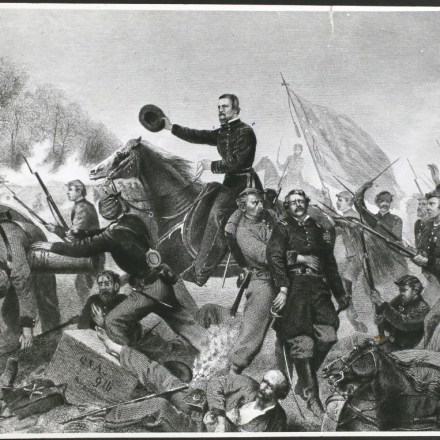
Batavia, New York On a brutally hot and wasp-swarming late summer mid-afternoon I walk our town’s old cemetery, as is my wont — hey, if I’m gonna live here for eternity I may as well get to know the neighbors. Walt Whitman swooned over one of this boneyard’s residents, and I have come to read the relevant passages to the boy who rests under the sod. His name was Stewart Glover, and he appears in Whitman’s diaristic Specimen Days to illustrate ‘the terrible and tender realities’ of war-death. Glover, Whitman tells us, grew up in Batavia with his father, John Glover, ‘an aged and feeble man’. (I dunno: his gravestone says Pop lived to the ripe age of 83, dying in 1873.

Salamis tactics

The 2,500th anniversary of the Battle of Salamis — the decisive naval battle of 480 BC in which the Greek fleet, vastly outnumbered, devastated the invading Persian armada in the straits near Athens — fell on September 29. So we went to take another look at the nautical objects in the Piraeus Archaeological Museum. It is not exactly a small museum — it is housed in a high-ceilinged, two-story building in the port of Piraeus, next to the remains of a Hellenistic theater — but it receives few visitors. Even Piraeus taxi drivers don’t always know where to find it. Tourists usually give Piraeus a miss; they tend to be ‘museumed-out’ from the big museums up the road in Athens.

piraeus salamis
dickie

Dickie and me

New York Hullo, readers. Many thanks for the kind notes and well-wishes. I’ve fully recovered from my bout with the plague and am only a little worse for wear. I’m desperate for a bit more time on the water, but I’m convinced my palate hasn’t yet recovered. I’ve been reduced to taking brandy in the evenings. Still, though far from splendid, isolation hasn’t been all bad. I’ve spent a great deal of time on the phone with my brother Richard. We’re not naturally expressive people, and I’m more than a bit embarrassed about the state of my marriage. But our respective sheltering-in-place, his in Boston and mine in New York, has turned us into talkers. Like the rest of the family, I’ve always called him Dickie.

Bring back robber barons

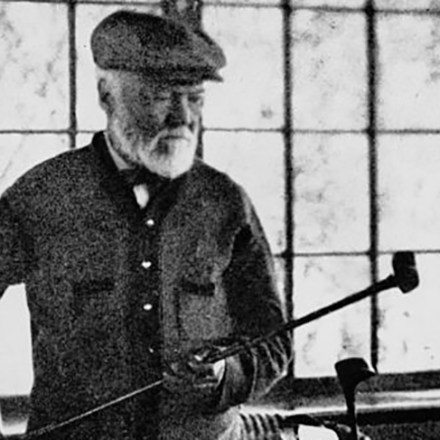
Like almost every American schoolchild, I was taught to despise the robber barons of the Gilded Age. Rockefeller, Astor, Vanderbilt: they lived in opulence while their businesses abused workers, compromised their health, ignored their rights and sucked our nation’s abundant natural resources dry. They bought off politicians with promises of special favors and lobbied hard for low taxes and minimal regulation. Can you believe major corporations once behaved this way? Now that we’ve learned from the mistakes of the Gilded Age, we have more enlightened companies, like Facebook, Google, and Amazon. Right? I’m not so sure. The coronavirus crisis has revealed the terrifying grip our modern barons hold over less fortunate Americans.

robber barons