Books & Arts

Books and Arts

The eyes have it

Art historians do not generally become household names, as Kenneth Clark did later in life after embracing television, most famously with Civilisation (1969). They can, however, acquire legendary or semilegendary status within the profession and among amateurs. One such was Leo Steinberg (1920-2011), who taught for many years at the City University of New York and the University of Pennsylvania. Academic art historians are expected to ‘publish or perish’: college texts, monographic studies on individual artists, or down-the-rabbit-hole treatises on arcana that seem to require more pages of footnotes than text. Steinberg mainly wrote for professional journals. He also lectured widely, testing ideas that later might make their way into print.

steinberg
martin amis

Mart and marketing

George Orwell once proposed that the specimen literary career takes the form of a parabola in which the downward curve is implied in the upward. You can see immediately how this theory might work with a major-league titan such as Thackeray (promising early sketches leading to Vanity Fair, then downhill to the trackless waste of The Virginians) or James Joyce (peaks in the early stretches of Ulysses before descending to the dream language of Finnegans Wake). But how does it apply to the 71-year-old former enfant terrible and, to borrow another useful French phrase, one-time jeune premier of English fiction, Martin Amis?

Out of Nam’s way

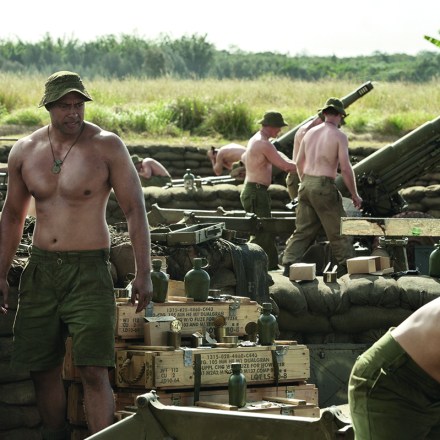
When I was a teenager whiling away the endless hours with VHS video rentals, Vietnam movies were pretty much the only game in town. I must have watched The Deerhunter a dozen times, and the scene in the rat-infested river cage well over a hundred times. Even now, I can’t watch it without being surprised at how De Niro manages to pull off that extraordinary escape stunt. My, how I covet those tiger-stripe Special Forces camouflage fatigues. The problem is, The Deerhunter has loads of boring non-war stuff either side of the good bits. That’s why I much prefer Platoon — controversial choice, Oliver Stone being a pinko — all of which takes place in-country.

nam
art presidency

The art of the presidency

The Obamas loved Hamilton. It was the biggest show to hit Broadway since Cats or Rent, with ticket prices reaching four digits. Michelle, who urgently needs to read Buddenbrooks or visit the Sistine Chapel, called Lin-Manuel Miranda’s musical the ‘best piece of art in any form that I have ever seen in my life’. Hamilton was present at the dawn and eclipse of the Obama years. Miranda first publicly shared material from the musical at the White House’s inaugural Spoken Word evening in 2009. Seven years later, Lin-Manuel joined Barack for a cringe-inducing freestyle rap in the Rose Garden.

Modern English

A decade ago — eheu fugaces labuntur anni — Stuart Evers’s debut story collection, Ten Stories About Smoking, was one of the first books I ever reviewed, and I’ve kept tabs on his career ever since, in that spirit of comradely competitiveness one feels for a writer of a similar age launching at the same time. I spoke warmly of his first novel If This Is Home and enjoyed his second collection, Your Father Sends His Love, when it appeared in 2015. But there was nothing in those earlier works to prepare me for the scale and ambition of The Blind Light. This extraordinary novel about Britain and Britishness spans six decades and uses the stories of two men and their families to delve revealingly into complex questions of class, fate and history.

stuart evers
doors

The perception of doors

The architectural historian Andrew Alpern has for decades done the dirty work when it comes to pre-war New York apartments. Others have presented glossy coffee-table books full of newly commissioned professional photographs. Alpern has focused on the practical details of apartment design, especially floor plans, which tell us so much about how people actually live in their apartments, or at least were originally meant to. His Apartments for the Affluent (1975), Historic Manhattan Apartment Houses (1996) and New York Apartment Houses of Rosario Candela and James Carpenter (2002) are essential compendia; anyone with an interest in New York residential architecture, especially of the magnificent variety, must have them. The more industrious uptown real estate agents also find them useful.

Still painting after all these years

On March 14, 1847, Eugène Delacroix made a trip to the studio of his colleague and countryman Camille Corot. Later that day, Delacroix recorded in his journal a feeling of newfound appreciation for the painter’s landscapes: ‘Corot is a true artist. One has to see a painter in his own place to get an idea of his worth.’ The Corot paintings that Delacroix had recently viewed at the Paris Salon seemed to hold new meaning after his seeing the site of their creation. As to exactly what had changed, or what he saw that changed it, Delacroix does not — perhaps could not — tell us. Few modern painters can claim as close a kinship to the spirit of Corot as Paul Resika.

resika
dolly parton

Morals and mortality

There is a moment in the first episode of Dolly Parton’s America when you think the sainted songstress may have made the worst mistake of her career. ‘Do you think of yourself as a feminist?’ asks host Jad Abumrad. ‘No, I do not,’ Dolly says. There is a pause as wide as the gap between those who have four-year degrees and those who don’t. After Dolly says she thinks feminism means hating men, Abumrad cuts to an interview with feminist, Heartland author and Dolly superfan Sarah Smarsh. They grasp for a reason why Dolly would think so non- progressively. The interview starts to feel like a wake.

Monumental Mahler

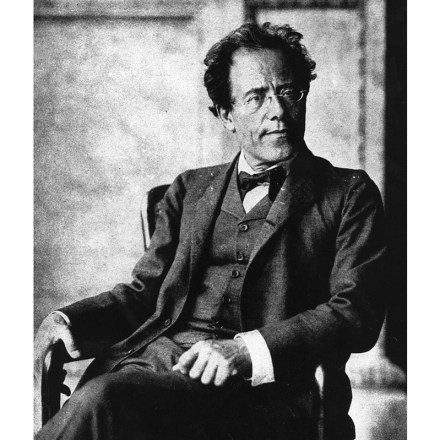
A kind of gigantism took hold of the European mind in the years before World War One. It shaped everything, from empires to poetry. In the confidence of new technology and new ideas, things could be attempted on a larger scale than ever before. The mental power of the age could be measured in the sheer size of the things it produced. This might be ‘Jacky’ Fisher’s Dreadnought of 1906, which set off a European arms race in huge battleships, or a great construction — the Victoria memorial in front of Buckingham Palace is nothing to the one built in Kolkata.

mahler