Previous magazine Next magazine

Latest issue

Welcome to Kushner Island

Browse past issues

Books and Arts

Books and Arts

Where is liberalism heading?

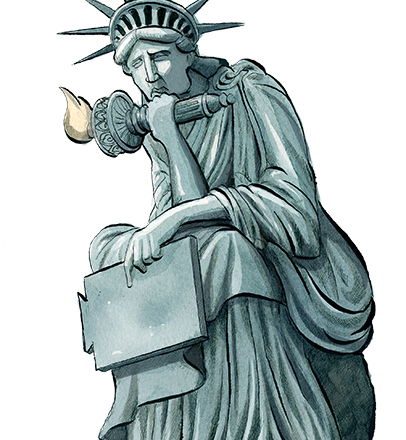
“The Republic divides us least.” So said Adolphe Thiers, a shapeshifter of 19th-century French politics in the Marco Rubio mold. By the early 1870s, the various factions in French society had exhausted themselves fighting. Since 1814 there had been two restorations of the Bourbon dynasty, a liberal Orléans dynasty, a socialist commune, waves of clericalism and anti-clericalism, two periods of military dictatorship and a second Bonaparte. Out of this exhaustion came the Third Republic, the creation of Thiers and Léon Gambetta. The Third Republic was a triumph of liberalism: the recognition that France was now a plural society over which no one social force could gain a permanent mastery.

How Miles Davis and John Coltrane changed jazz forever

Why does the jazz world still feel so bedazzled by trumpeter Miles Davis and saxophonist John Coltrane? This year marks the centenary of their births, and even those who consider jazz marginal to their interests are likely to know Davis classics such as Sketches of Spain and Kind Of Blue, while Coltrane has almost become deified: there’s even a fully functioning Saint John Coltrane African Orthodox Church in San Francisco. The jazz industry, meanwhile, is gorging on their centenaries with recordings, new and reissued, and books, new and repackaged.

The spellbinding power of the du Maurier family

“We can never go back again,” wrote Daphne du Maurier in her bestselling novel Rebecca (1938). “The past is still too close to us.” Yet back she went, in book after book, to the past of her remarkable family. In 1934, six months after the death of her father, the matinée idol Gerald du Maurier, Daphne wrote his biography, portraying him as a spoiled man-baby with a “stable” of mistresses. Gerald’s own father, George du Maurier, was the celebrated book illustrator and Punch cartoonist whose characters such as Mrs. Ponsonby de Tomkyns and Lady Gatheremall skewered the Victorian nouveaux riches.

Will this century see the end of books?

Anyone proposing to publish a polemic between hard covers about the decline of literacy and reading will, of course, find themselves preaching to the choir. If you read books, you will agree with this one; if you don’t, your negligence will not be touched by its fervor. I won’t say that it is a useless object, merely how unhelpful it would be simply to agree with its main point. The decline of reading practices is quite convincingly demonstrated in surveys. Fewer and fewer people in the US and Britain read habitually, by their own admission. In one celebrated case, an entire cohort of English literature students in America was unable to make anything at all of the first page of Bleak House.

A world full of artifice: Life of M, by Rachel Cusk, reviewed

The twin themes of Rachel Cusk’s latest novel are truth and fame. In fact it’s not quite accurate to call it a “novel”: there are two main characters, but there is no plot; and although you start to understand each woman, it’s through observation of their behavior in a series of vignettes rather than a conventional story. The titular “M” is an actress of beauty and renown, reportedly based on Natalie Portman. Her friend, the unnamed narrator, wants to write her biography. “Would you just make it up?” M suggests airily, giving us a notion of how fabrication is sewn into her life.

Renoir was a master – let no one tell you otherwise

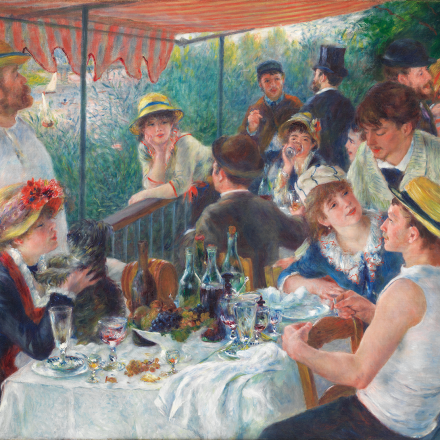
It was summer 1874 at Claude Monet’s house in Argenteuil on the Seine just outside Paris. Édouard Manet arrived from his house at Gennevilliers, on the opposite bank, and began painting Monet’s wife and young son in the garden. Auguste Renoir turned up and started to paint the same scene alongside Manet. The little masterpiece he created is in the forthcoming exhibition Renoir and Love at the National Gallery. In 1924, Monet recalled that day half a century earlier: Manet, seduced by the color and the light, decided to paint a picture en plein air of people under the trees… Renoir arrived… He asked me for my palette, a brush and a canvas, and there he was, painting away beside Manet.

A perfect little exhibition on the Isles of Scilly

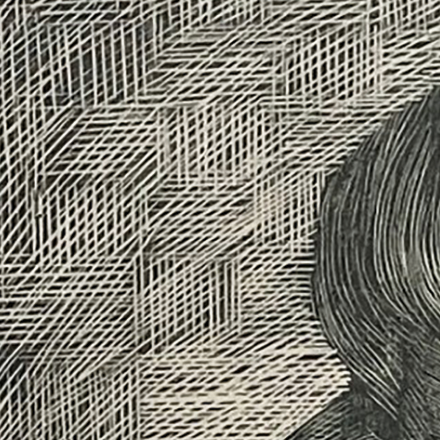
I was in the most southwesterly pub in Britain, the Turk’s Head, on the Scilly island of St. Agnes (population: 75) when I noticed a poster advertising a local exhibition of the work of “renowned artist and birdwatcher Hilda Quick, 1895-1978.” I had stumbled upon an artist with a wonderfully sharp line and an even sharper eye I had never heard of her, but her work on the poster, “The Pursuit of Art,” was compelling. A stylish wood engraving from the 1920s, it showed female art students drawing a male life model. This was the new equality Hilda Quick would have discovered when she left her native Penzance to attend the Central School of Arts and Crafts in London in 1919.

A true visual spectacle: Edinburgh’s The Galloping Cure reviewed

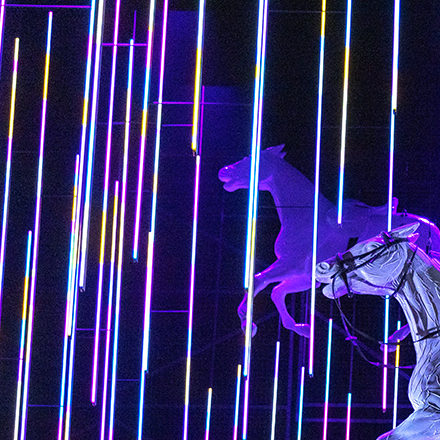
Those lights! Thinking back on The Galloping Cure, Missy Mazzoli’s new opera for the Edinburgh International Festival, that’s what lingers: cascades of lights, shimmering and flickering in every hue that modern LED technology can supply. At first the effect is almost Zen – soothing washes of pinks and blues and ochers, with carousel horses rising and weaving among them. Then, as the action intensifies and the characters succumb to collective mania, they’re brighter, faster, more aggressive: a frantic sensory overload, flashing to the rave-derived backbeat of Mazzoli’s score. Lucy Carter’s lighting designs are meant to transfix you, and they really do. Hardly the point of an opera, you might say.

The terror of Russian prisons

The competition must be pretty stiff for “World’s worst airport to be caught with drugs in your baggage”: Bogota? Miami? Singapore? Ciudad de la Paz? Gatwick? But Moscow would surely have to be a strong contender. I’ve been detained there myself, only for an hour. But you’re never told why you’re being kept waiting, how much longer it will be, or whether this is routine or serious. The young men and women in those oversized peaked hats are perfectly civil but apart from the impenetrable language barrier you’re dealing with several centuries’ worth of culturally-inbred opacity and bureaucracy. And the prisons don’t bear thinking about.

An agreeable new 2D fighter

Grade: B The final boss of Marvel Tokon: Fighting Souls, called the Champion (they could have tried harder), is up front about his philosophy. “Actions are worth more than any word,” he says. “And the greatest action is... to fight!” Well, that’s Proust told, the big biscuit-dunking jessie. Here’s a very competently made, agreeably hectic new entry in the lineage of that most apparently basic of computer games, the 2D fighter. Ever since the heady days of Yie Ar Kung-Fu, gamers have known there’s fun to be had in having a couple of cartoon characters square off and slap each other upside the face. This one is an anime-style battler featuring an initial roster of 20 well-beloved Marvel superheroes (Wolverine, Deadpool, Captain America, etc.