Features

Features

The end of the Orbán era

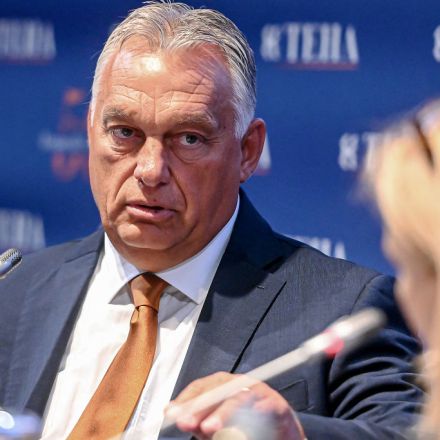
Over the headline “Peace Mission,” a recent cover from the conservative Hungarian periodical Mandiner shows an awkwardly photoshopped Viktor Orbán mediating between a bemused-looking Vladimir Putin and a grim Volodymyr Zelensky. Behind Orbán, a map of the world connects Kyiv, Moscow, Beijing, Washington and Budapest. One of these capitals, as they say, is not like the others. Even before Ukraine’s Kursk offensive, the chances of Orbán’s July trips to Kyiv and Moscow producing a peace settlement were slim. The Mandiner cover, however, is a revealing window into the mindset of Orbán’s conservative fans. The idea of a Hungarian prime minister mediating between squabbling great powers is both attractive and plausible to many of Orbán’s fervent supporters.
Orbán
Fallujah

‘Blood! Blood! Blood!’: the Battle of Fallujah twenty years on

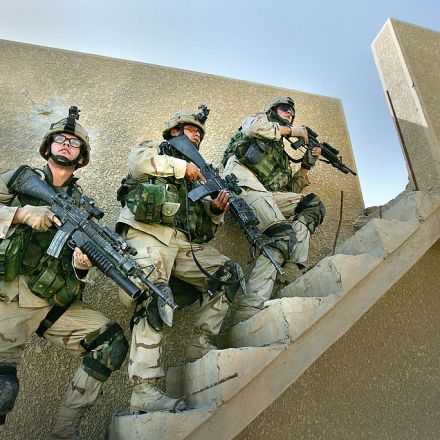
The National Museum of the Marine Corps has built a replica of a street in Fallujah, the Iraqi city that American forces half-destroyed in order to save it, in a battle twenty years ago next month. The exhibit promises visitors an “interactive experience that puts them in the boots of a Marine as he kicks down the door of a suspected insurgent stronghold.” If you have a games console, you can play Six Days in Fallujah, a video game where you take the role of a Marine who narrates the action of a firefight that really happened. Fallujah has become a symbol of gritty heroism and sacrifice — or for critics of the Iraq war, occupation and war crimes. Either way, the battle is deeply lodged in the popular imagination.

Black Sunday: reckoning with October 7 a year later

October 7 was the bloodiest day in Jewish history since the Holocaust. Some refer to it as Israel’s 9/11, though proportionally it was like fifteen 9/11s. However, numbers rarely tell the full story and here they fall devastatingly short. I was awake when it started. I’ve always been a night owl but staying up until six in the morning is unusual for me. On that bright fall morning I heard sounds like a thunderstorm and went outside to see what was going on. I live on a hill overlooking Gush Dan, the informal megalopolis that’s home for almost half the population of this stamp-sized country. When something big happens I can often see it.

October 7
pro-life

The pro-life problem

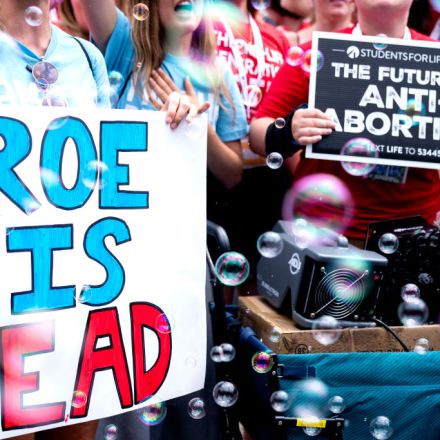
The pro-life movement has reason to be grateful to Donald Trump, even as it has reason to feel exasperated as well. For forty-nine years, overturning Roe v. Wade was its highest immediate policy priority. Thanks to Trump’s Supreme Court appointments, pro-lifers achieved their aim. But even in 2016, Trump often distanced himself from the pro-life cause — and now he insists that abortion will remain a question for states to decide, a legalistic argument which doesn’t fit with the principle that human life and the rights that come with personhood begin at conception. His campaign — even Trump himself — issued statements touting his support for “reproductive rights,” usually a euphemism for legal and readily available abortion.

Letters from Spectator readers, October 2024

The Californication of the Democratic Party At the risk of taking a Marxian perspective, California has become exactly what could have been predicted in 1993, with the loss of its manufacturing base to the 1990s defense cuts and much of its agricultural base to environmental regulation and foreign competition under the WTO. The state’s economy is now based on some of the most unequal industries on the planet: software, entertainment and hospitality. Plus, in the case of entertainment, an industry that has always tolerated and quietly celebrated what may politely be called decadence, or less politely, degeneracy. Just look at who has all the discretionary money and how they got it, and almost everything else follows. — M.

letters
hope

There is always Hope

After a two-year battle with cancer, we had to put our beloved boxer, Hope, down. These are the first days in nine and a half years that I’ve woken up and haven’t had a dog. The world feels completely different. Flat. Dull. I’m deep in grief, but writing is how I process and I wanted to memorialize her in print. Print is corporeal; you can touch it and smell it. Physical presence is what death takes from us and the loss of a pet’s physical presence is all-consuming. Their sounds are the background soundtrack you take for granted — until they are gone. The silence is the first thing that strikes me when I walk in the door. It’s suffocating. It’s an emptiness so vast I want to scream into the void she left. My stomach is in knots and I want to crawl out of my skin.

What does Appalachia mean?

The selection of J.D. Vance as Donald Trump’s running mate has made Appalachia the regional epicenter of America’s political universe. But above the social media sniping and political gamesmanship lies a message of diversity, identity and internal conflict at the very heart of what it means to be an American. J.D. Vance, a native of Middletown, Ohio and the bestselling author of Hillbilly Elegy, was immediately criticized by Kentucky governor Andy Beshear as a phony who acts “like he understands our culture” when “he ain’t from here.

Appalachia
assassination

Forget about the Trump assassination attempt

Someone attempted to kill a former president of the United States. Live on camera. The would-be assassin failed, but the moment did produce one lasting, indelible image: Donald J. Trump, fist raised, blood streaming down his face, an American flag soaring triumphantly overhead. The effort to minimize the assassination attempt started moments after the shots rang out. CNN’s initial headline was “Secret Service rushes Trump off stage after he falls at rally.” Why did he fall, out of the blue? Who knows! NBC described Trump being evacuated “after popping noises [were] heard” at the rally. The Los Angeles Times said Trump was “whisked off stage after loud noises rang through the crowd.” USA Today said it was after “loud noises startle[d] [the] former president.

Inside the unlikely success of Patrick Bet-David

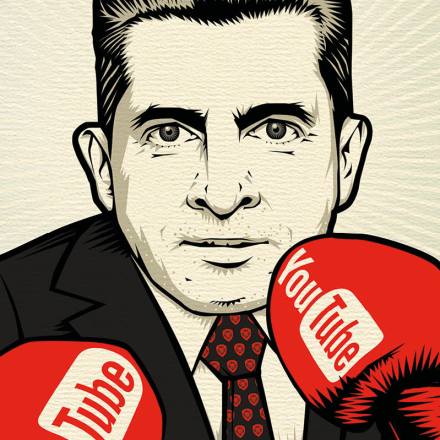
A right turn off Montauk Highway onto a leafy street in the Hamptons town of Water Mill brings you to a wooden gate, behind which sits a 12,000-square foot modernist estate that rents, with staff, for $75,000 a week. At the moment it’s the vacation home of Patrick Bet-David, an unlikely character to find in this area of New York. Over the last two years, Bet-David has improbably emerged as one of the most prominent voices in right-wing media. His prodigious influence is belied by the fact that around here, he’s more undercover heretic than acclaimed celebrity.

Bet-David
Walz

Tim Walz’s Minnesota vibes

The first thing a Minnesota political activist tells me when I ask about Tim Walz is this: when he gets mad, he tends to spit when he talks. The blue-state governor’s version of Minnesota Nice leans hard on the aggressive side of passivity, with an abiding predilection for taking offense at questions that fall into the category of what most politicians expect. His superior on the Democratic ticket, Kamala Harris, responds to such queries with awkward laughter in an attempt to buy time for an answer. But for Walz, the very act of questioning is felt as an insult to his character, leading to an unleashing of bitter invective founded in righteous anger that will absolutely lead to a follow-up call from his staff, as it did for multiple people over his years in Minnesota politics.

The academic legacy of Donald J. Harris

Kamala Harris is a master shapeshifter — whether through codeswitching, pandering or just being phony. One moment she’s rolling up masala dosa with Mindy Kaling on live TV; the next she’s FaceTiming the BET Awards, declaring, “Girl, I’m out here in these streets.” Donald Trump’s bumbling attempts to highlight her cultural inconsistencies briefly shifted the election focus to Harris’s race and ethnicity — and away from far more important qualities. Perhaps it’s because her actual policy ideas have been so scant and vague that attacking them directly has proven difficult. Perhaps her chameleonic history has made anything beyond a surface-level attack difficult.

harris
BlueAnon

The rise of BlueAnon

Someone call the disinformation police! Left-wing conspiracy theories and attempts to manipulate the media are spiraling out of control ahead of the 2024 election. From tall tales about former president Donald Trump staging his own assassination attempt to the lower-stakes speculation that Republican vice presidential candidate J.D. Vance is wearing guyliner, “BlueAnon” has reemerged in a big way. BlueAnon is a blanket term coined by some conservatives to describe liberal and left-wing conspiracy theories. It intentionally rhymes with QAnon, the arguably better-known right-wing conspiracy, and mostly arose in response to what many regard as the Russian collusion hoax, the idea that Trump colluded with the Russian government to win the 2016 presidential election.

Facing down the Democratic legal tsunami

Sydney Smith (1771-1845), the great English wit and Anglican divine, once said that he never read a book before reviewing it because he found that “it prejudices a man so.” (He also confided that his idea of heaven was “eating pâté de foie gras to the sound of trumpets.”) I have nothing to add to Smith’s soteriological dictum. In partial defense of his announced journalistic practice, however, I will note that while it might compromise his reliability as a literary cicerone, there are plenty of situations for which such lack of exposure is a beneficial prophylactic. I write during the Democratic National Convention. I have sat down to watch none of it. Like Smith, I know that doing so would prejudice me.

Democratic
election

The meme election

Each subsequent election seems to get more and more online. The Kamala Harris campaign, armed with a strategy devised by a few twenty-five-year-old women in a Bushwick coffee shop, thinks the election will be won by hiding the candidate away and replacing her with a string of memes and cringe slogans. Unfortunately, they may be right. When you have a candidate that has a problem stringing three unscripted sentences together into something coherent, you must find some other way to shove her across the finish line. That means spiriting her away from the press as much as possible, limiting speeches to only those with a teleprompter and changing your policy positions so many times that no one has any idea what you’re actually running on. Hey, it worked for Joe Biden.