Features

Features

Inside the cult of Equinox

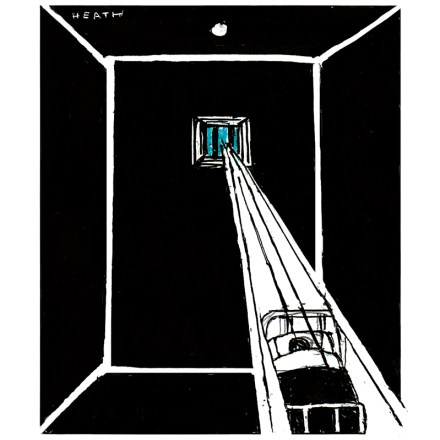
Scratch the surface of Silver Age Rome and what do you find? Most likely, a tight subterranean vault built as a meeting room for the followers of Mithras. This Persian mystery cult was everywhere in the early Anni Domini, coming to prominence between the decline of Hellenism and the rise of Christianity, filling that gap between the gods of Olympus and the God of Moses. The cult’s dark temples, the Mithraea, squeezed devotees into opposing benches designed to make them uncomfortable, all while in communion with their fellow initiates. Today, sociologists might call a Mithraeum a “third place.” Here was the kind of space where Roman men who had become disillusioned with Jupiter Stator could go between work and home to be purified together in a shower of bull’s blood.

Equinox
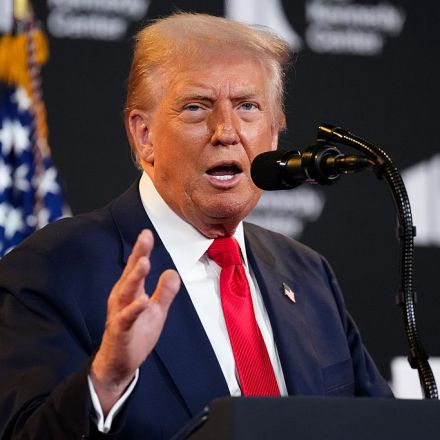
Trump

Magnificent – but is it war?

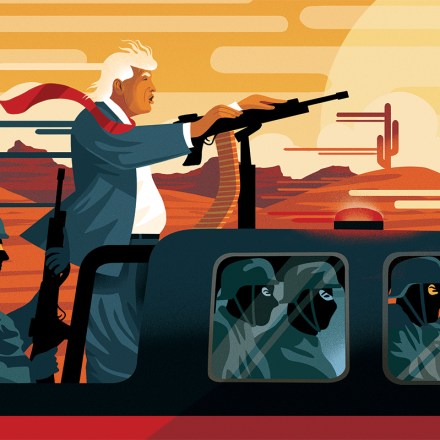
When Donald Trump made building a “big, beautiful” wall along the southern US border a priority in his first term, he was widely derided. There wasn’t enough concrete or steel to build such a structure. Anyway, it was futile because migrants would find some way over or around it. It was a heartless and evil project being promoted to distract from other failures. When shutting off immigration from Mexico became an unrealized project from that first term, Trump’s critics enjoyed themselves. Campaigning for his second term, Trump hardly mentioned the wall. Yet something remarkable has happened. Undocumented migration across the border has all but ceased.

The day I ate a royal love letter

Our very own Roger Kimball made it possible. I am referring to The Last Alpha Male, the greatest book ever written except for the Bible, as a Greek critic by the name of Taki put it. It is written by yours truly and owes a lot to Harry Stein, himself a terrific writer, whose father happened to write a musical play by the name of Fiddler on the Roof. My problem was how to justify Don Giovanni behavior while married to a Penelope-like beauty. Roger put me in touch with Harry, who came to my rescue. Presto, the wars in Gaza and the Ukraine stopped overnight. Fighters put down their weapons and read about the last alpha male and his ladies. My spies tell me even the Donald asked for a copy thinking it was about him, but then threw it out as Air Force One took off from Palm Beach.

letter
cartels

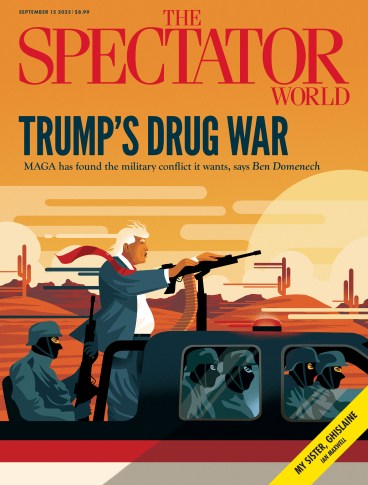
Inside Trump’s war on the cartels

To deal with big problems, the second presidency of Donald Trump adopts a three-step approach. First, the declaration of authority: in this case, the designation announced in February of multiple Mexican and South American cartels as international terror organizations, opening up new avenues for legal, intelligence and potential military responses. Next, eye-popping kinetic action: this came with SOUTHCOM’s deployment in August of eight warships to the Caribbean and Pacific Oceans, including three Aegis guided-missile destroyers parked off the coast of Venezuela along with a landing dock, amphibious assault ships and a fast-attack nuclear submarine.

Elon Musk is in exile

Elon Musk is in exile. He’s forgotten by friends, embattled by enemies. He now quietly (for him) goes about his business, fighting non-government battles after those strange few months he spent standing behind the President’s desk with his toddler son X, who punched Musk in the face while he was seemingly running the country. Musk’s fate is a case study in what happens when Donald Trump rolls up the red carpet. Trump operated his first term as President more like a season of The Apprentice and less like an administration. It was a revolving door of exile. Reality-show worthy characters like Omarosa Manigault Newman and Anthony Scaramucci came and went with drama that fell just short of an episode-ending boardroom ceremony.

Musk
liberalism

Liberalism is a lost cause

The worst book title of the modern age actually belongs to a superb work: The Strange Non-Death of Neoliberalism, which the English sociologist Colin Crouch wrote in 2011. The title was meant to play off the historian George Dangerfield’s 1935 book about the politics of the United Kingdom before World War One, The Strange Death of Liberal England. Alas, after almost a century, not many people remember Dangerfield. A larger problem is that it is hard to say what liberalism is, neo- or paleo-, dead or alive. In Europe, it mostly means the free market. In the United States, it mostly means various movements for social betterment pushed by those skeptical of the free market. Liberalism thus comes to mean every political tendency and its opposite.

What is Charles Kushner doing in Paris?

When Charles Kushner took up his appointment as American ambassador to France this summer, his first official visit was to the Shoah Memorial in Paris. As a child of Holocaust survivors, he tweeted, “fighting anti-Semitism will be at the heart of my mission.” So it has proved. Last month, Kushner published a letter in the Wall Street Journal in which he accused Emmanuel Macron of insufficient action in the face of soaring anti-Semitism in the Republic. The ambassador was summoned for a dressing down. He didn’t attend as he was on vacation Kushner also castigated the French President for his imminent recognition of Palestinian statehood.

Kushner
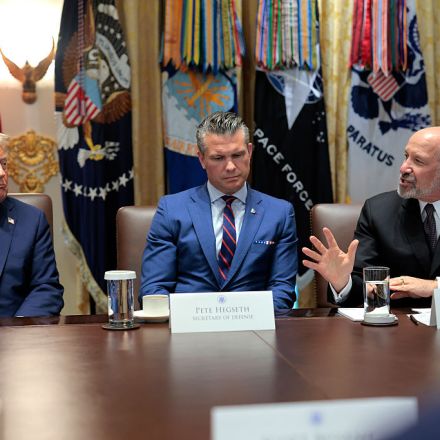
defense

The defense industry and the US government are inextricably linked

Fresh on the heels of news that the government will take a 10 percent stake in failing chip company Intel, Commerce Secretary Howard Lutnick has floated the possibility of commanding a direct stake in Lockheed Martin and other large defense corporations. Speaking on CNBC, and extolling the “exquisite” proficiency of Lockheed products, he claimed “my Secretary of Defense and Deputy Secretary of Defense are thinking about it.” The proposal obviously fulfills a key requirement, which is to appeal to the transactional proclivities of the boss. Donald Trump had greeted the Intel arrangement as a “good deal” criticized only by “stupid people,” and suggested that there will be more such investments.

Trump’s battle against the tyranny of lawfare

A buzzword of the moment is “lawfare.” What is lawfare? It’s one of those portmanteau words that Lewis Carroll taught us about. A combination of “law” and “warfare,” “lawfare” is distinctly less clever an invention than “chortle” – one of Carroll’s coinages, my beamish boy, which combines the words “chuckle” and “snort.” The word “lawfare” apparently dates back to the late 1950s, though the phenomenon – using and abusing the law in order to conduct political warfare – has come into its own only in the past couple of decades. The fact that there is now an eponymous website devoted to the subject is but one patent of its currency.

lawfare
Altman

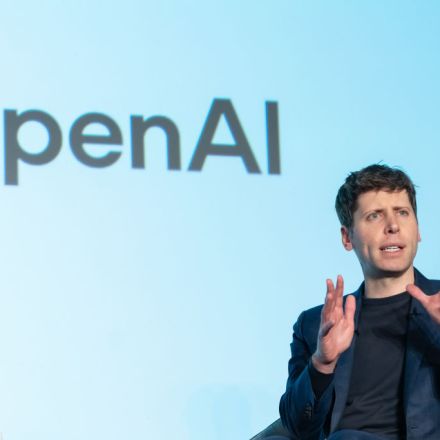
Why do journalists go easy on Sam Altman?

As legacy journalism continues its downward slide – in influence, quality and revenue – I have two possibly dubious temptations. One is to cut my fellow old-timers some slack. After all, they’ve been crippled by Google’s and Facebook’s massive robbery of everything we write and publish, and it’s hard enough to survive by practicing the traditional scribbling and reporting trade. Why criticize the work of the remaining few publications that are still trying to eke out an honest existence in the grand tradition of serious investigation and clear-sighted exposure of wrongdoing and corruption? So they’ve dumbed down the content a little, so the online reader is constantly interrupted by advertising, so what? My other temptation is to give in to the digital age.

How the right learned to love the state

These are dark days for free-market conservatives. A socialist, Zohran Mamdani, leads most polls in the race to become the next mayor of New York. The Republican President, meanwhile, is not only a “tariff man,” he’s lately been directing the federal government to take a stake in ownership of companies such as US Steel and Intel. Even before the rise of Donald Trump, the Republicans were increasingly becoming the preferred party of America’s working class. But before Trump, the free-market right could imagine the GOP’s blue-collar voters were only interested in social conservatism and wouldn’t demand a change in the party’s economic orientation. Now, things look very different.

Right
oil

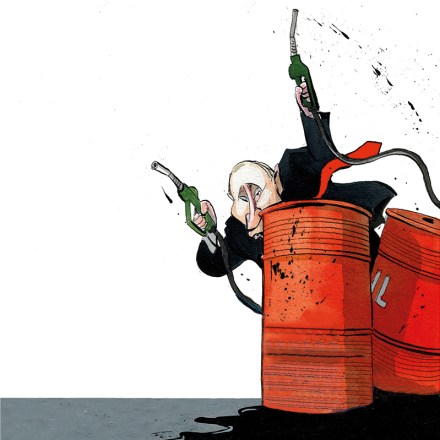
The West can’t afford to shun Russian oil

Donald Trump is a radical foreign-policy innovator. Over the past few decades, the US has tried a range of non-military means to nudge, squeeze and occasionally strangle its adversaries. These range from travel bans and banking restrictions, to export controls and trade limitations. But never has the US – or indeed anyone – tried to use import tariffs as a species of economic sanction. Trump has threatened Vladimir Putin with introducing “secondary sanctions” against countries that import Russian oil – a threat intended to strike at the heart of Russia’s war economy. And on August 4, Trump appeared, for the first time, to make good on that threat.

How powerful is the China-Russia alliance?

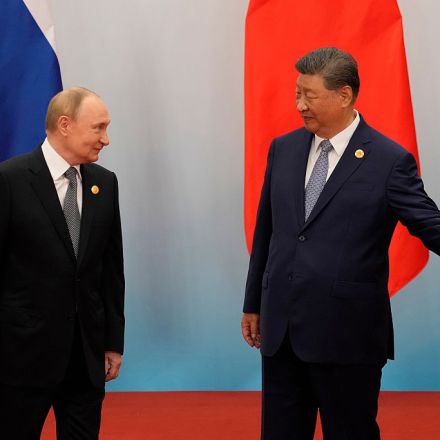
This summer’s big security summit in Tianjin, followed by the military parade in Beijing on September 3, has been widely interpreted as a sign of a new global realignment. At a time of growing friction within the US alliances in East Asia and Europe, President Xi Jinping of China, President Vladimir Putin of Russia and about 20 leaders mostly from Central Asia have not just reaffirmed their nations’ close ties. They sought to strengthen the emerging multipolar system, which they see as a rejection of the US-dominated global order. This idea is hardly new.

China
Ghislaine

How my sister Ghislaine beat the Epstein conspiracy theories

The nine-hour interview of my sister Ghislaine, conducted under limited immunity by Deputy Attorney General Todd Blanche over two days in late July, generated an all-too predictable uproar. The reaction became still more intense following the release of the associated transcripts and audio late last month. Having held Ghislaine in torturous conditions of solitary confinement in the run-up to her trial – including waking her up every 15 minutes during the night for 30 months at the same time as they deliberately deprived her defense of exculpatory “Brady” material – prosecutors ensured both Ghislaine and her legal case were effectively hollowed out. Under the circumstances, she could not and did not take the stand. The rest is history.

Nationalizing America will cost us dearly

“I have the right to do anything I want to do,” Donald Trump told reporters in the White House cabinet room last month. “I’m the President of the United States.” Other branches of the federal government might disagree, but their representatives are strangely mute. “What Trump wants, Trump gets” is the motto that has defined the first eight months of the President’s second term. The overhaul of global trade? Sorted with an executive order and a pen. Poor job numbers? Fire the messenger, hire your own. Feeling the acute absence of a ballroom? Take “a little walk” on top of your White House, look out at your vast kingdom, and decide where the marble floor and golden beams will go. But domination of the federal government is simply not enough.

nationalization
space

Russia, China and the US are preparing for battle in orbit

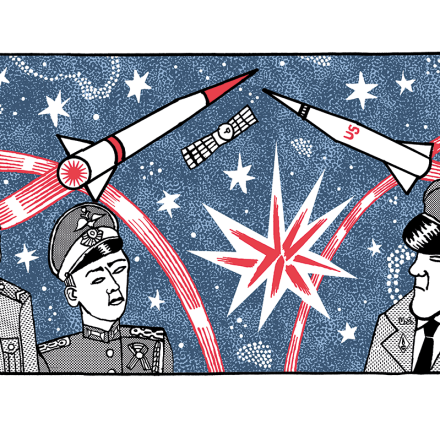
Russia is playing a dangerous game in space. Despite its history it’s a declining space power, having abandoned many of its long-term projects due to lack of money and technology. It effectively crippled much of its space activity when it attacked Ukraine, which was the source of many of its high-tech components. This year has seen its lowest launch rate since 1961 – the year Yuri Gagarin became the first person to go into space. Yet significantly, three of Russia’s eight orbital launches this year (the US has launched more than 100) could be potential anti-satellite weapons. On May 23, Russia launched the Cosmos 2588 satellite from the Plesetsk launch site situated 500 miles north of Moscow. The Cosmos designation is a general term used to obscure the satellites’ purpose.

AI is revolutionizing the film industry

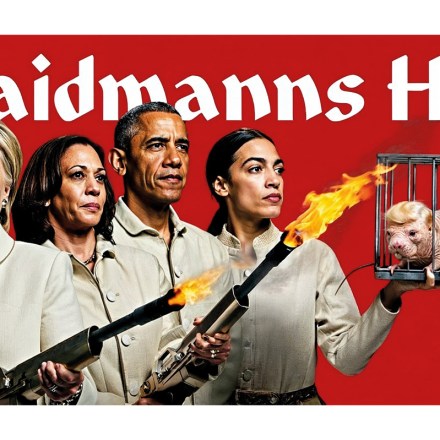
“It won’t be long,” says Yonatan Dor, “before screen actors are a thing of the past.” Dor is the creative force behind the astonishing Dor Brothers videos, in which AI versions of world leaders appear as criminals in action-packed short films set to music and broadcast online. In a recent Dor Brothers’ outing – Waidmanns Heil – Kamala Harris, Elon Musk, Hillary Clinton and others dressed as huntsmen pursue an unstoppable rodent with Donald Trump’s distinctive hair through an Alpine fairytale. They wreak destruction as they try to squash the Trump-rat, which seems to be the film’s point. In recent weeks the studio’s dystopian comic creations have lit up the internet.

AI