Books & Arts

Books and Arts

The demands and joys of contemporary art 

The career of artist Alberto Guerrero has been driven by an overarching desire to look for what is behind everything that we merely, and only dimly, perceive at present. The work of the forty-something Madrid-based Guerrero ranges from abstract, highly textured canvases and three-dimensional images which he calls “spherical paintings” to realistic presentations of daily life — such as his illustrated book Diary of a Quarantine showing life in the Guerrero household during Covid — and deeply reflective images of sacred art. There are few contemporary artists who have such a broad range and vision.

Guerrero
superman

The death of Superman

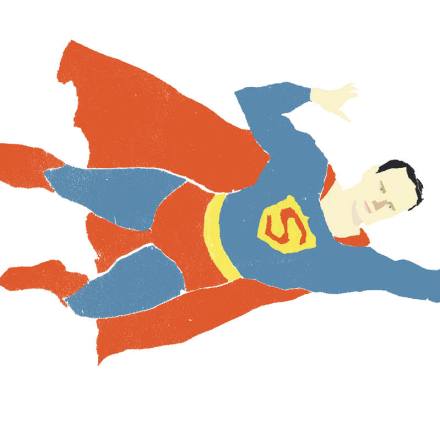
In 2003, the Scottish comic book writer Mark Millar penned a three-part illustrated series for DC Comics titled Red Son. In it, he creates an alternate Superman universe that hypothesizes what would have happened had the Kryptonian orphan’s rocket landed in Soviet-occupied Ukraine, instead of Kansas, in 1953. Superman becomes a state agent for Joseph Stalin’s Kremlin. Instead of saving the world in the name of “truth, justice and the American Way,” he fights as “the champion of the common worker,” for socialism and the expansion of the Warsaw Pact.

Here Lies Love is too scared to be serious

Imelda Marcos allegedly wants three words inscribed on her tombstone: Here Lies Love. It’s a poetic expression made grimly baleful by the reality of the Marcos regime: Imelda and her husband Ferdinand ruled the Philippines with an increasingly iron fist from 1965-86, committing countless human rights abuses as they robbed the country’s coffers. Yet the phrase has been borrowed by David Byrne and Fatboy Slim as the title of their musical about the Marcoses, Here Lies Love, now playing on Broadway (it premiered off-Broadway in 2013). Whether the phrase is used in earnest or irony is never quite clear in a show that apparently positions itself as a fun and fabulous karaoke dance party.

Here Lies Love
Hitchcock

Finding the warmth in Alfred Hitchcock’s filmography

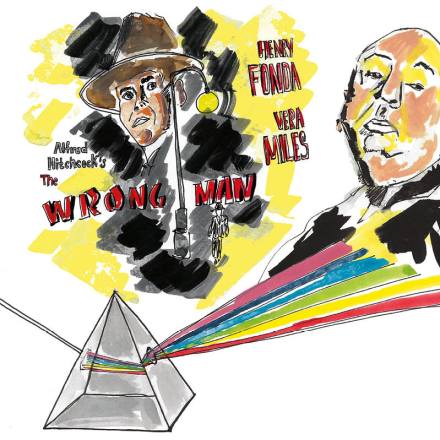
Alfred Hitchcock: the master of suspense. We grew up seeing his entertaining thrillers on TV, beautifully made movies about elegant people in danger. The glamour of To Catch a Thief; Cary Grant as the wrong man on the run in North by Northwest; Tippi Hedren looking chic with her chignon, brutally attacked in The Birds by the titular avian menace. Don’t look for heart, though. These were emotionally detached films, weren’t they? In his publicity Hitchcock joked about murder. He said that Psycho was a dark comedy. His TV programs were full of gallows humor. Critics said he had an ironic Englishness. Chilling and chilly. Maybe it’s the Celt in me, but I don’t quite see the films like that. Yes, I spot the irony, and that’s part of their appeal.

Apple’s foray into streaming

On September 9, 2014, Apple users found an unrequested gift in their iTunes: a new U2 album. Songs of Innocence was supposed to jump-start a new wave of engagement with Apple’s music products, introducing their enormous user network to it for free. And it worked: Apple announced that it was “the largest album release ever.” But just because something’s free doesn’t mean people will use it. The following Monday, Apple released instructions for how to remove the album. Bono has subsequently, and repeatedly, apologized. Five years later, in March 2019, Apple announced its entrance to the streaming game: Apple TV+.

apple
faust

Drew Gilpin Faust, a rebel with a cause

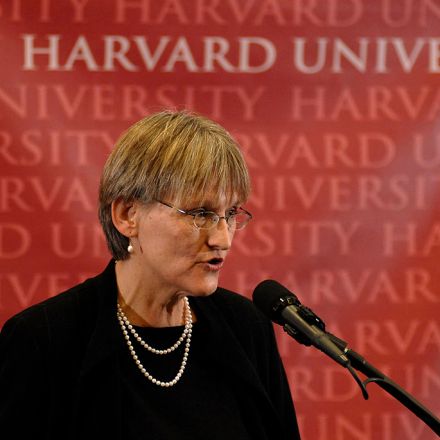
In 1957, when Drew Gilpin Faust was nine years old and growing up in the Shenandoah Valley, she learned from the car radio that in Virginia, black children were forbidden by law from going to school with white children. Disturbed by this egregious instance of Jim Crow segregation, she sent a letter to the president. “Please Mr. Eisenhower,” she wrote, “please try and have schools and other things accept colored people.” Young Drew’s sense of what was and wasn’t fair lay at the heart of her childhood rebelliousness, as well as her battle, as a young woman coming of age in the 1960s, against unjust social hierarchies.

Maureen Ryan exposes the Hollywood horror show

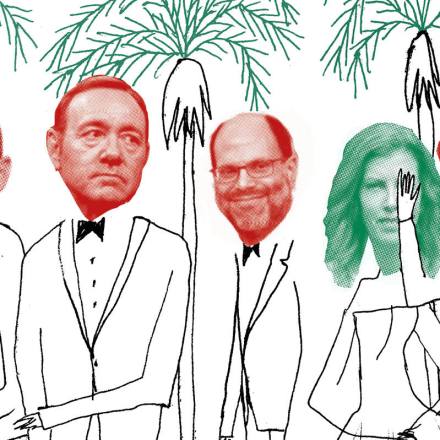
In late July, the actor and director Kevin Spacey was acquitted of a range of sexual offenses against young men, some dating back the best part of two decades. Spacey’s acquittal was greeted with a mixture of relief by his admirers, who are now keen to see a great actor resume his career, and dismay by those who believe that Spacey, and others like him, are powerful figures who have not been held to sufficient account. It is salutary to look at the court case — and indeed the media frenzy surrounding it — and ask what it’s saying about contemporary Hollywood mores, which, in the post #MeToo climate, show few signs of becoming more socially acceptable.

Ryan
Lankford

How missing persons cases work in the wild

The Pacific Crest Trail is one of the world’s great long-distance hikes, running 2,650 miles from Mexico to the Canadian border. It's a chance to see some of North America’s most majestic scenery, encompassing desert and mountain, and millions of people visit parts of it each year, to hike or run. But only a very few ever walk the whole thing. Completing the entire trail — a “thru-hike” — takes five months. The challenge breeds a kind of camaraderie among hikers, who acquire “trail names” (the 2022 finishers included individuals known as “Sparkle Lizard,” “Milkshake” and “Squiggles”) and become part of a select group. Like its Eastern counterpart, the Appalachian Trail, it is a badge of honor for those who make it through.

Zadie Smith’s latest novel is glittering, grand and powerful

Zadie Smith’s ambitious latest novel, The Fraud, is loosely based on the life of the little-known nineteenth-century novelist William Harrison Ainsworth. He was, at one point, as popular as Charles Dickens, his novel Jack Sheppard even outselling Oliver Twist. But Ainsworth’s fortunes and talents declined, and his forty-odd novels vanished, going out of print soon after his death. Throughout The Fraud, as he sits groaning at his desk, he is an arch reminder not only of the vagaries of literary fame, but the pains of fiction-writing. As his cousin Eliza Touchet observes: “God preserve me from that tragic indulgence, that useless vanity, that blindness!” Ainsworth’s actual writing is redolent of educated middle-class male privilege. (“‘Zounds!

fraud
Rowling

The roots of J.K. Rowling’s contrarianism

Like his creator J.K. Rowling, Harry Potter says unspeakable things. He teases his cousin Dudley, the prince of his aunt’s suburban kingdom. He calls the Dark Lord Voldemort by his name. He even speaks to snakes. In other words, if Potter were a real person, he’d likely write a Substack, present a podcast and empathize with his creator’s recent public controversies. You are probably familiar with Rowling’s protests against trans activists’ demands to use women’s restrooms.