Books & Arts

Books and Arts

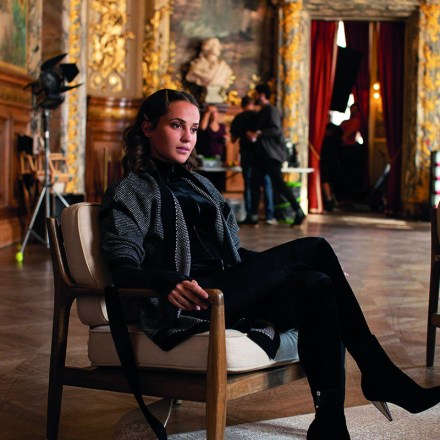
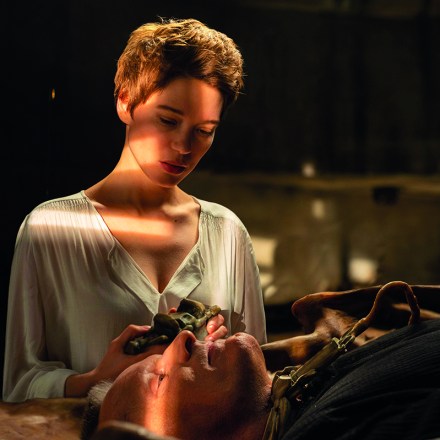
Crimes of the Future is David Cronenberg at his best

Canada’s all-time greatest writer-director has come a long way since his film Videodrome proclaimed “Long live the New Flesh” nearly forty years ago. Because his films are often horrifying, many mistake David Cronenberg for a purveyor of horror films, and to be sure he singlehandedly invented the now-fashionable “body horror” genre. But only a few of his films are horror movies per se, and they are way in the past. The subsequent fifteen aren’t so much scary as disturbing: think the experimental gynecological implements in Dead Ringers. And a couple are unapologetically transgressive: think the death-by-car-accident fetishists in his 1996 adaptation of J.G. Ballard’s Crash.
cronenberg
norm

Closing the curtain on Norm Macdonald’s comedy

The biggest threat to the comedian of yesteryear was penury, but today even the most famous must dodge slaps, tackles and professional ruin. As a result, many have assumed a defensive posture. But on September 15, 2021, the court jesters were more defensive than ever. Norm Macdonald had perished twenty-four hours earlier, defeated by leukemia, and a chorus of his peers donned headsets to reassure the podcast world they’d “had no idea he was sick.” The one who spoke loudest was Conan O’Brien. Three months before O’Brien had wrapped his three-decade run on late night without a peep from the best guest he ever had: the man who gave us the Moth joke, “b-o-r-e-d,” Swedish-German and “that means he had sex with Madonna without a condom.

Not your average Jo

She appears in one of the most beloved paintings in Washington’s National Gallery of Art — “Symphony in White, No. 1: The White Girl” (1862) — but few people know her name. No longer. Joanna Hiffernan is now at the center of The Woman in White, an exhibition at the NGA that explores the close working relationship between James McNeill Whistler and his Irish model and mistress that produced some of the most beautiful and enigmatic paintings of the 1860s. “The White Girl” is a haunting full-length portrait of a young woman, with large blue eyes and Titian-red hair, in a white linen dress. She stands on a rug made from the pelt of a wolf (or is it a bear?

white
chroma

Chroma chameleon

"Who knew the Greeks had such bad taste?” This comment was overheard at the preview for Chroma: Ancient Sculpture in Color, a head-turning exhibition at the Metropolitan Museum of Art. This slight wasn’t targeted at the current denizens of Greece, but, rather, their ancestors of yore. You remember the type: chiton-clad Athenians — let’s not forget the ladies in their peploi! — sauntering through the agora, pondering the nature of reality or, perhaps, the role of hoi polloi within a democratic society. They’re the folks whose aesthetic sensibilities were found wanting, at least to one denizen of twenty-first-century museum culture. What most of us know about life in antiquity is, I dare say, as broadly conceived as the above description.

Country music finds its independent streak

Have you tuned in to a country radio station the past few years? You might have been surprised at some of the sounds coming through your speakers. A famous old-school Webb Pierce tune is chopped and screwed into an up-tempo hip-hop beat. Lyrics about an Applebee’s milkshake are accompanied by a booming bass. P!nk and Justin Bieber croon alongside Country Music Award winners. You’d be forgiven for thinking that all mainstream country really has to offer is saccharine, trope-filled pop music with a Southern accent. Nashville’s stranglehold on country radio has given the genre a bad rap (sometimes literally — here’s looking at you, Lil Nas X).

country
irma vep

The time trap of Irma Vep

In April, director Robert Eggers told GQ that “every time period interests me except for the one we’re living in.” The director of The Witch, The Lighthouse and The Northman will never make a movie set in modern times: “I get enough of the kitchen sink in my kitchen sink... For whatever reason, it just does not inspire me. And you can’t shoot something that doesn’t inspire you.” That’s a good attitude for a director to have, but it’s alarming how many American filmmakers are either uninterested, unwilling or unable to make work that speaks directly, not only to our present moment, but to our future and its possibilities, however limited and grim. Who can blame anyone for being hopeless now?

Frank Buckley’s right direction

You think life is complicated enough now? Try factoring in the arguments and counter-arguments that adorn — or something like it — the drive to define conservative instinct and policy. I mean, once upon a time, a true conservative subscribed to National Review and wore an “AuH2O in 64” lapel pin to tout the presidential aptitudes of Senator Barry Goldwater. (Pssst: I did both.) Ah, well. Today, as everyone presumably knows, we have libertarian conservatives; we have common-good conservatives; we have constitutional conservatives; we have integralist conservatives — all generally identified with the Republican Party. Amid this mélange of the outspoken, as well as the agreeably entertaining, the law professor Francis H.

conservatism
bunch

The faulty towers of higher education

One of the few issues about which the American left and right agree is that higher education is, as Orwell would say, in a bad way. But even in that source of agreement lurk countless points of dispute, regarding the sources of dysfunction (corporate greed, grade inflation, libezoomers?) and possible solutions (ending tenure, forgiving debt, creating safe spaces?). In After the Ivory Tower Falls: How College Broke the American Dream and Blew Up Our Politics — and How to Fix It, Will Bunch, a columnist for the Philadelphia Inquirer, argues that the cause of the higher-education crisis is conceptual: we see higher education as a personal privilege rather than a public good, something to be earned rather than a right that is owed.

A.M. Homes’s state of paranoia

When reading A.M. Homes’s fiction, you’re never quite sure what to expect. In 1996, she made waves with the publication of her “vile and perverted” novel The End of Alice: a none-too-edifying tale narrated from the perspective of an imprisoned pedophile and child-killer, who spends the book in correspondence with a nineteen-year-old girl about how to seduce a twelve-year-old boy. In a rare instance in which the UK was more prudish than the United States, a large chain of British booksellers refused to stock the work. More recently, her 2012 novel May We Be Forgiven — for which she won the 2013 Baileys Women’s Prize for Fiction — features a fatal car accident, a psychiatric hospital, an extramarital affair and a homicide. And that’s all within the first chapter.

Theroux

Paul Theroux’s family values

Paul Theroux is not averse to writing about toxic family relationships. His 2017 novel, Mother Land — written, he said, in lieu of a memoir — chronicled the affairs of the Justus family and its monstrous matriarch. The power plays between the many siblings involved endless backstabbing. At the book’s heart was the rivalry between two brothers, very much inspired by Theroux’s own family. It was an odd, overlong, bitter novel, its characters motivated by spite and revenge, piling up resentments over many hundreds of loosely written pages. Fortunately, The Bad Angel Brothers is a good deal tighter. It also concerns internecine warfare centered around a pair of brothers, who initially seem very different. But, as the narrative progresses, their similarities become all too apparent.

T.S. Eliot’s The Waste Land at 100

In the United States a century ago, a single poet dominated the literary sphere. He was not only the recipient of the first ever Pulitzer Prize for Poetry — which he would win twice more during the course of an internationally distinguished career — but would be nominated for the Nobel Prize for Literature on four separate occasions. He was beloved by presidents, described by one admirer as “more artful than Hardy and more coy than Frost” and found himself one of the bestselling writers in America. His reputation seemed assured forever.

waste land
porn

Porn again

The virtue of chastity is often confused with the state of virginity, or the practice of abstinence. For the Christian man or woman, chastity is more a frame of mind, an integrated approach to love and sex. While virginity or abstinence can result from chastity, they are themselves beside the point. Naturally, these distinctions are lost on the “sex-positive” movement, which tends to reject religious views of sex out of hand as repressive and weird. In her memoir Rated X: How Porn Liberated Me from Hollywood, Maitland Ward tells the story of how she went from being a struggling, miserable actress to a successful, “happy” porn star.

No stone unturned

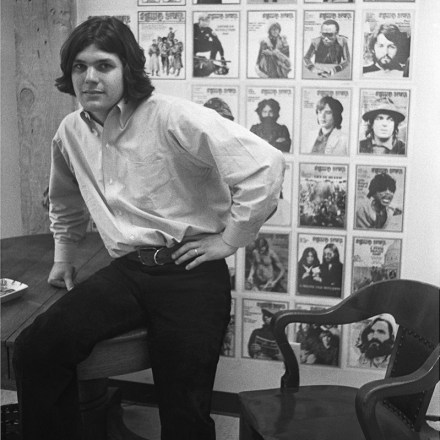
There are so many examples of narcissism-on-steroids that litter Rolling Stone magazine founder Jann Wenner’s memoir that it’s difficult to point out just one. But the following is typical: in 2001, Wenner was invited to a recording session for his friend Mick Jagger’s solo album Goddess in the Doorway. Wenner, long out of practice in writing for his magazine — clear prose was never his forte — submitted a review to his editor, who, knowing of the friendship, gave the album four stars. Wenner intervened, bumping it up to five stars, and reflected: “There was some snickering [in the office] about being on Mick’s leash, but so what, and what if I were?” Wenner’s torturously long memoir is a very bad book.

wenner