Features

Features

Autopsy of a failed war

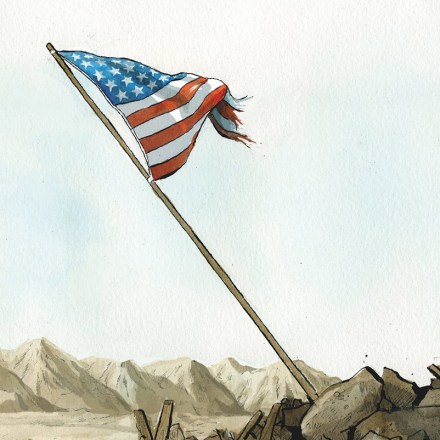
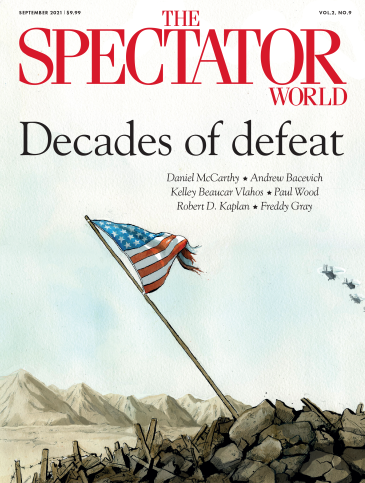
‘Your country just betrayed us.’ So Haji Sakhi, a resident of Kabul, recently remarked to a New York Times reporter. ‘Look at what they brought on us,’ the 68-year-old Afghan continued. ‘They lost the war and just fled the country.’ His they refers to us — the United States of America. Haji Sakhi’s unsparing judgment deserves sober consideration. Kabul is about to fall to the Taliban, faster than even the most gloomy experts predicted. Our nation’s ‘longest war’ is now ending in abject failure. How are Americans — at least those few of us who attend to such matters — to apportion responsibility for the outcome? Who or what is to blame for ‘losing’ Afghanistan? Was it ever ours to lose in the first place?
war
email

I think Donald Trump’s email team is trying to murder me

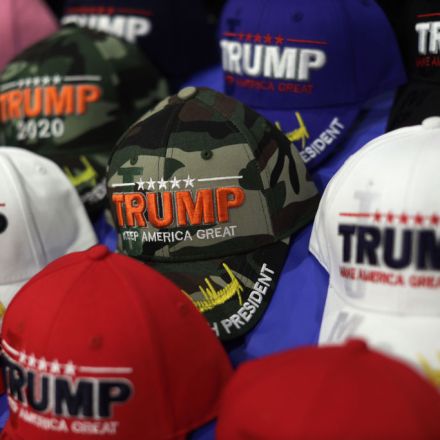
I remember well the day this all began. The rain was slanting through the gray air and drops were plinking against my office window. I was sitting at my computer, checking my email, when I noticed I had a new message. I opened it and saw that it had been typed in sporadic red and blue fonts, like someone had clipped each letter out of a magazine. ‘Don't let President Trump think he's lost your support,’ it read. ‘He has EXTENDED your PERSONAL 500%-MATCH DEADLINE FOR 1 MORE HOUR… This is your last chance.’ I sat back in my chair and exhaled a cloud of cigarette smoke. I had been receiving Donald Trump’s fundraising emails for years and certainly the language had always been insistent. But this was a new level of aggression altogether. My last chance, I thought.

The last war for democracy

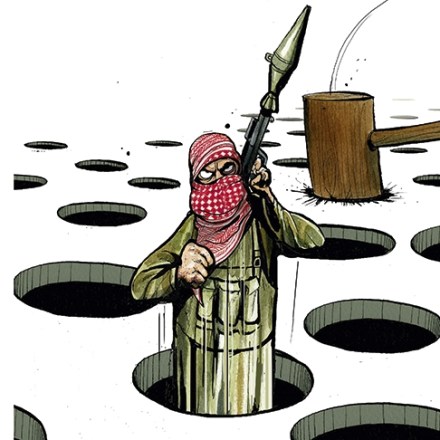
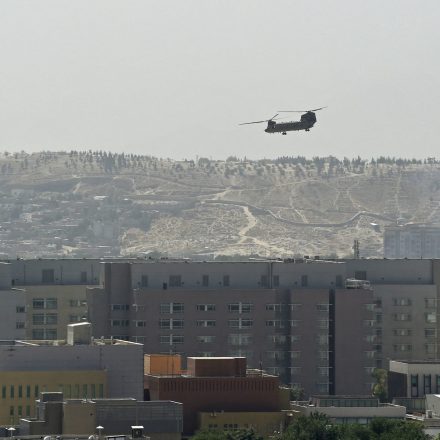
Twenty years after 9/11, the War on Terror has come full circle. Everyone expected the Taliban to surge back to power as soon as American forces left Afghanistan. Instead, the surge began while America’s embassy in Kabul was still open, inviting unwelcome flashbacks to Saigon in 1975 and Tehran in 1979. There are piquant memories of 1989, too — not of the Berlin Wall’s fall or a young Francis Fukuyama’s publishing ‘The End of History?’ in the National Interest, but memories of an Afghan insurgency’s triumph over a superpower. That triumph would inspire and ultimately contribute in the most concrete ways to a decade of terrorism, culminating in the 9/11 attacks.

war
iraq

How America squandered its moral authority in Iraq

Day by day, you could almost see America’s moral authority draining away in Iraq. The weapons of mass destruction that the US had invaded the country to find didn’t exist. And it sometimes seemed as if a monstrous trick had been played on American troops: they were promised a welcome with ‘flowers and sweets’; they got roadside bombs and suicide attacks. In 2004, a year after the invasion, a 19-year-old Marine — outside the US for the first time in his life — looked up at a minaret sounding the call to prayer and asked me: ‘What are they saying? “Kill Americans?

The future of liberal education

What’s liberal about liberal arts education? That question is not easy to answer; for one thing, really to answer it you have to know what the word ‘liberal’ means. Has any word accumulated more conflicting meanings than ‘liberal’? Deciding what ‘education’ means is no simple task, either. In my experience, the more you think about those simple words, the more elusive their meanings. According to James Madison, ‘liberty’ and ‘learning’ belong together. They ‘support’ each other, he says, and their connection supports a free society. In various forms, the nexus between liberty and learning is a very traditional idea, with epistemological and existential as well as political dimensions.

liberal
substack

Substack changed the business of journalism

When a tech guy named Hamish McKenzie first reached out to me in early 2018 to see if I would try out his new newsletter platform Substack, because he thought I could make some money from it, I was skeptical. When I finally wrote him back, in May that year, I said, ‘I’m slightly leery of devoting much time to anything that won’t guarantee pay — I know that sounds somehow crude, but it’s just the reality of being a freelance writer. My book has forced me to do less freelancing than I would have otherwise, and while I’m fine for now, I do need to make sure to budget my time in a responsible way.’ A few years later, I’m exceptionally grateful that I took the plunge. I’m also a bit worried about where it’s nudging me as a writer and a thinker.

Hot vax summer

Remember spring 2021? COVID cases dropped as the days lengthened, every balmy, breezy morning bringing happy news of America’s three-vaccine rollout. By the end of the season, vaccination wasn’t just for hospital workers and overweight asthmatics. As temperatures rose into the 70s in the Northeast, where I live, we heralded the arrival of ‘hot vax summer’: the triumphant return of fun to the 20- and 30-somethings whose social lives had been shut down tighter than last year’s Democratic National Convention. After a long, dark winter, hope sprang. Now it looks like hot vax summer didn’t quite pan out for many in our sex-recessed country.

summer
afghanistan iraq military

The long march to disaster

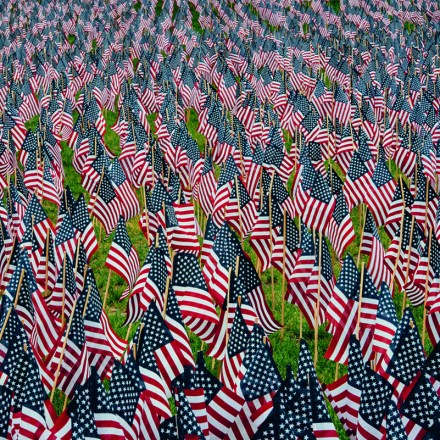
In the weeks after the 9/11 attacks, Americans came together in a spirit of grief, resolve and shared national pride. It didn’t last long, but this potent energy animated the US military’s mission and a new generation of recruits who signed up to ‘do their part’ in the wake of the tragedy. Twenty years later, it is not the same military. As an institution, its impunity, hubris and access to unprecedented financial spoils have led to corruption and mediocrity at the top. The exploitation of all-volunteer forces to fight protracted wars of choice without proper care and attention to their consequences has left veterans jaded and skeptical of the value of their service in a system that continues to fail them.

Central Asia’s geography after America’s defeat

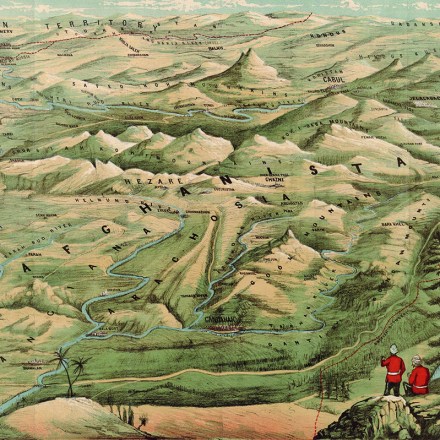
However much it is denied, we still live in an imperial age, at least metaphorically. Just as the withdrawal from Afghanistan registers the momentary decline of the American empire, it registers the momentary rise of the Russian and Chinese ones. America failed in Afghanistan because its military, while capable of fighting high-tech wars on land and sea, could not fix complex Islamic societies on the ground. Indeed, Afghanistan demonstrated how the deterministic elements of geography, culture and ethnic and sectarian awareness can vanquish Western ideals of democracy and individual liberty.

central asia
trans jessica yaniv progressive misogyny

The trans war on the body

'Families marching five by five Hurrah! Hurrah! Families marching five by five Hurrah! Hurrah! Some people choose their family And they love each other so proudly And they all go marching in The Big Parade!' In June, the Journal of Medical Ethics spelled out what it means in practice to teach children that family bonds are optional. If the world is to ‘take LGBT testimony seriously,’ argued Maura Priest, a bioethicist at the Arizona State University, then ‘parents should lose veto power over most transition-related pediatric care’. In many states, this is already well-established. In 2015, Oregon passed a law giving minors the right to receive transgender medical interventions at taxpayers’ expense, and without their parents’ consent.

Why are young women writing homosexual erotica about men?

In the 2010s, fanfiction had a serious moment in the United States. After nearly 30 years of hiding — first in handmade snail-mail fanzines, then in closed-off fan communities online, then on websites like LiveJournal, Fanfiction and AO3 (An Archive of Our Own) — ‘geek culture’ broke into the mainstream. For a moment, fanfiction was everywhere. Finally, it wasn’t just the diehard fans who wanted to participate: it was everyone or, at least, what felt like everyone. Reporters took notice. Vulture published ‘It’s a Fan-Made World: The Fan Culture Revolution’. VICE commented on the ubiquity of fanfiction about the boy band One Direction and the impact of Fifty Shades, among other things. Jezebel and BuzzFeed both marveled at the Omegaverse, not once, but twice each.

slashfiction fanfiction
9/11

After Afghanistan

The 20th anniversary of 9/11 will come in a matter of days. It will be marked by the victory of the Taliban in Kabul and the humiliation of America. The war in Afghanistan was one of the largest-ever undertakings of any major country, in any era. Adjusted for inflation, the Apollo Moon landing program cost the United States close to $300 billion. The Manhattan Project cost $30 billion. The Interstate Highway System, about $500 billion. Those three mammoth projects are dwarfed by the cost of 20 years fighting in Afghanistan, which will well exceed a trillion dollars when all is said and done. The amount spent on Afghan nation-building surpassed the cost of the Marshall Plan in 2014 and kept rising inexorably for seven years more.