Books & Arts

Books and Arts

A letter to George Steiner

Dear George, I met you first in 1965. You had just given a lecture at the Royal Society of Literature’s premises. You were outspoken in declaring the merits of reticence. Ardent for cool, you insisted that, when writing about sex, the explicit, licensed by the verdict in the Lady Chatterley trial, was the enemy of art. Never mind Sir Robert Walpole’s ‘Let us talk bawdy, then all may join in’: obscenity was one thing, literature another. The naming of parts, in your view, belonged only in the kind of book which Jean-Jacques Rousseau held to be read with one hand.
steiner
Conquistadores

A fatal clash of civilizations

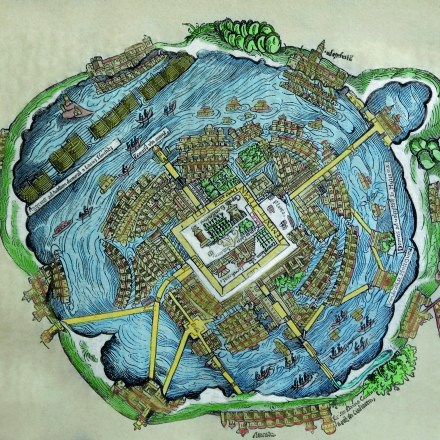
Many books claim to describe junctures that changed the world, but few examine ones as consequential as Conquistadores. Hailed by the Romantics as courageous explorers, the Spanish conquerors are increasingly seen as violent and rapacious exploiters. That, says Fernando Cervantes, oversimplifies the complexities of the early modern period. Cervantes, a Mexican historian, places the conquest of the Americas in Spain’s political context. In 1492, at great cost to the royal purse, Spain recovered Andalucía from the Moors. So when a charismatic Genoese navigator proposed to sail southwest in search of a new trade route to Asia, Ferdinand and Isabella approved. Columbus’s voyage was the first step to transforming a young nation into the greatest imperial power on Earth.

Somebody’s watching me

America has an abundance of daring documentarians: Frederick Wiseman, Errol Morris, Alex Gibney, Laura Poitras, Morgan Neville, Matt Wolf, Morgan Spurlock and Michael Moore, off the top of my head. Not a diverse list demographically, but you can tell their movies apart. Some are better than others, some (Poitras and Neville) have oily ethics, but others still have made some of the most iconic American films of this century (Spurlock’s Super Size Me is in the lexicon even if nothing else he’s done is, and say what you will about Moore and his films, his impact on American pop-political culture cannot be dismissed entirely).

all light, everywhere
mason

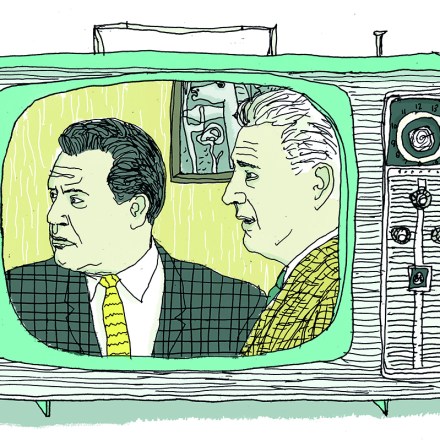
Perry Mason was America’s Sherlock Holmes

I was well into my thirties when my parents acquired a television set, for no good reason that I could discern after they’d gone so many years without one without obvious damage to their health or intellects. Growing up in the Fifties and Sixties, my sister and I were permitted to watch two television shows while visiting with relatives. One was Topper. The other was Perry Mason, which they occasionally joined us for: a small family grouping that was the closest thing the Williamsons ever came to resembling a painting by Norman Rockwell. Over the past year and a half, I have been re-watching episodes of the original show starring Raymond Burr as Mason, Barbara Hale as Della Street, William Hopper as Paul Drake, Ray Collins as Lieutenant Tragg and William Talman as Hamilton Burger.

The art of politics: what ministers hang on their walls

If I am ever appointed to one of Britain’s Great Offices of State — stranger things have happened to Spectator hacks — the first thing I’d do is furnish my office. A raid on the Government Art Collection is a perk of being a minister, and better than the car and the driver. A few Hogarth engravings, a set of David Jones’s ‘Ancient Mariner’ etchings, Cedric Morris’s ‘Irises and Tulips’, Edward Bawden’s ‘The Coal Exchange’...I’d have liked to nab Winifred Nicholson’s ‘Flower Piece’, if only Carrie, the new Mrs Boris, hadn’t got there first. A Freedom of Information request from The Spectator has lifted the little red velvet curtains on which works of art ministers have got from the vaults.

art
fatty arbuckle

Fatty Arbuckle’s fall

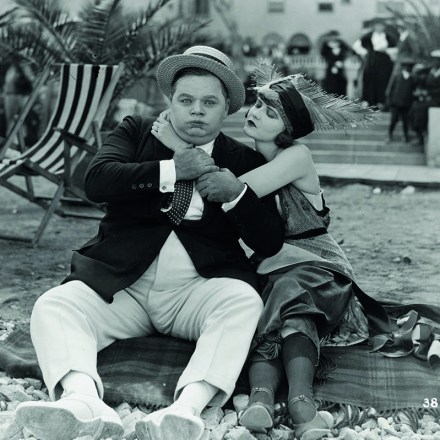
Roscoe ‘Fatty’ Arbuckle (1887-1933) never won an Oscar or saw his name emblazoned on the Hollywood Walk of Fame, but he should be remembered as a movie pioneer. Despite his considerable physical size, he was a remarkably versatile and agile actor, and his best films are weirdly droll as much as slapstick funny. He predated both Charlie Chaplin and Buster Keaton as a master of physical comedy played with a straight face. Arbuckle was also an accidental pioneer of cancel culture. Exactly a hundred years ago, he found himself sitting in a cell on ‘felony row’ at the downtown San Francisco jail, held without bail for the alleged rape and subsequent death of a 26-year-old actress named Virginia Rappe.

The odd couple: John Keats and F. Scott Fitzgerald

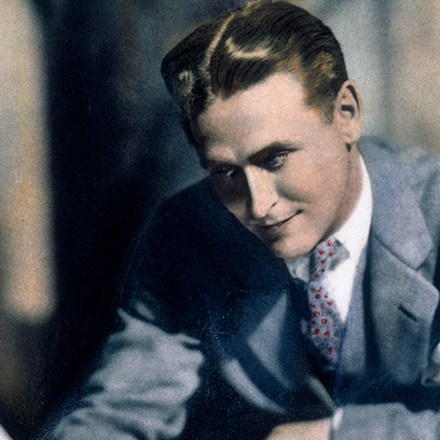
On a shard of paper, some time in the bleak 1930s, F. Scott Fitzgerald incorporated a favorite line from one of his favorite poets, John Keats, in a short verse of his own: 'Don’t you worry I surrender Days are long and life’s a bender Still I know that Tender is the Night.' Keats was a Romantic, perhaps the Romantic, with his lyric gift and tragically brief life. Fitzgerald loved the Romantic poets, and romance in the lower case, but was at the heart’s core a modernist, far more egoist than romantic, and quite hardboiled. The little quatrain above is rather like T.S. Eliot’s ‘jug jug’ in The Waste Land — homage of a sort, but also showing ironic distance, and no intention of writing like Keats.

Fitzgerald
parasocial

Dad’s the word

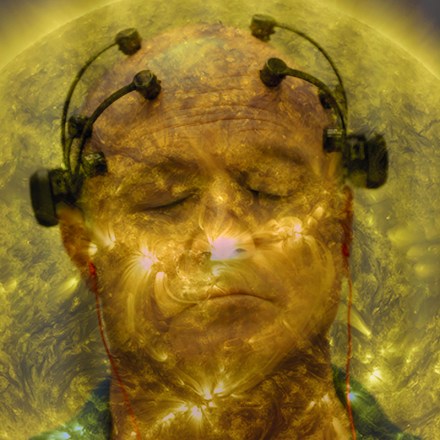
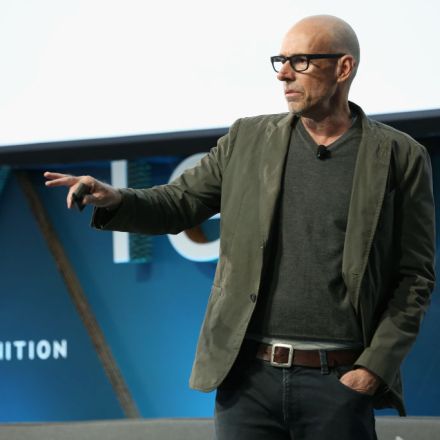
My partner has taken to calling his favorite podcast host ‘Dad’. ‘Can I put Dad on?’ he asks when we get into the car. I’ve fallen into the habit too. ‘Does your dad have a new episode today?’ I don’t know how much he actually agrees with Dad — Scott Galloway, the NYU professor and business expert whose podcast properties include Pivot with Kara Swisher and The Prof G Pod — as he is yet to invest in Galloway-approved stocks or repeat Dad’s opinions as his own. I also don’t think he aspires to be like Galloway, with his clearly nonexistent work-life balance and tragic dad jokes.

What Richard Scarry did all day

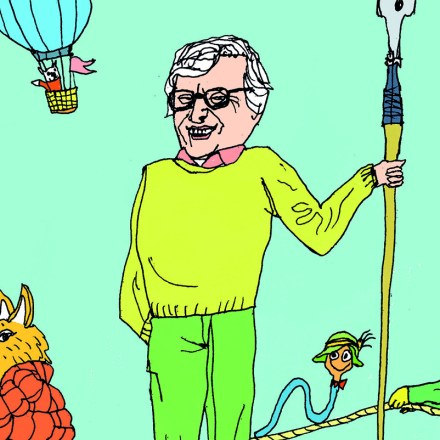
If you were lucky enough to know Richard Scarry, you might get a postcard from one of the world’s most successful and celebrated children’s book authors. If you were lucky enough to be Scarry’s friend, you might get a letter from Lowly Worm. If you were lucky enough to be a close friend and also a storyteller, you might get advice from the master storyteller himself. I was very lucky to be all three. I met Dick Scarry in 1959, when Dick bought a sailboat from my father in Westport, Connecticut. The two men had become friends based on a love of all things nautical. My father was an artist-illustrator and writer before he gave up the Madison Avenue rat race and opened a yacht brokerage and ship’s chandlery in Westport.

richard scarry