Books & Arts

Books and Arts

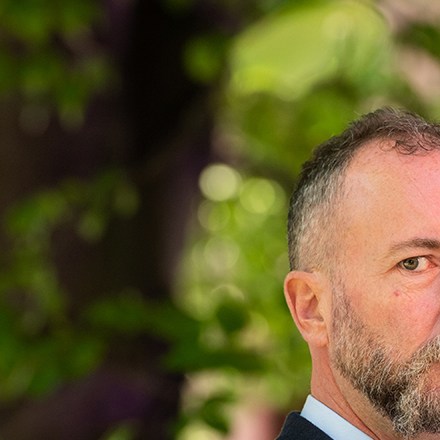
Meeting Jay McInerney, Manhattan’s sassiest social novelist

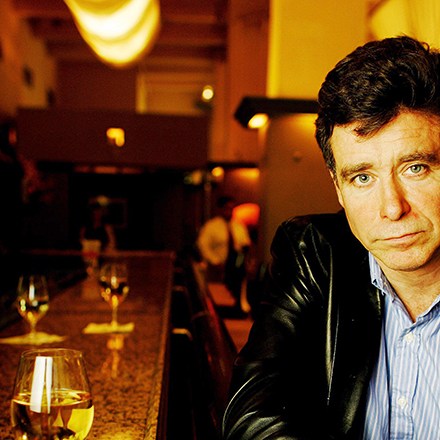
Since his debut novel Bright Lights, Big City appeared in 1984, Jay McInerney has been one of the best-known writers whose work is mostly grounded on the long, skinny, granite-bedrocked river isle the Lenape called Manahatta, “island of hills.” He has lived in town for most of the past four decades too, and currently divides his time between a Village penthouse apartment and Water Mill in the Hamptons. McInerney walks into the lobby of the Marlton Hotel on West 8th Street, just paces from Washington Square, and heads turn. Young lovelies on their laptops with Mission Control Center-sized cans over their ears and chic hairstyles look up and blink, appealingly. Waiters slide swiftly to his side.
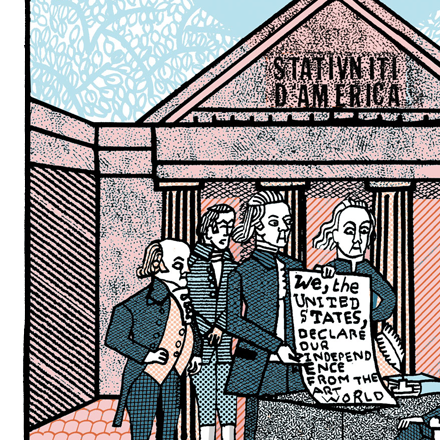
The message behind the US pavilion at the Venice Biennale

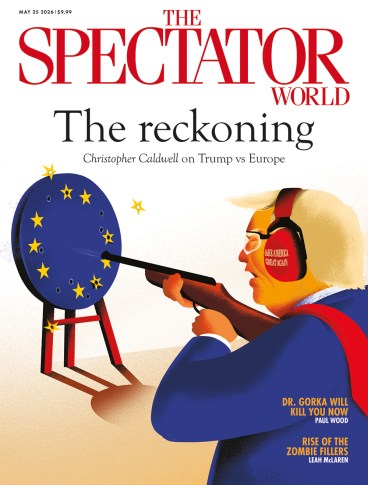
“All art is propaganda,” wrote George Orwell, “but not all propaganda is art.” Upon this subtle distinction rests the success or failure of whatever art we see at the Venice Biennale.  The Most Serene Republic’s exercise in art-world Olympics is propaganda by design. A garden of national pavilions – small buildings in various styles as you might find in a zoological park – presents exhibitions that compete with one another for a “Golden Lion for Best National Participation.” Here, in the murky parkland of the Giardini in the city’s eastern Castello district, nationalist and anti-nationalist passions mix with art-market imbroglio into a sordid spectacle. Just how bad will it be this year? To discover the answer is why we keep coming back.

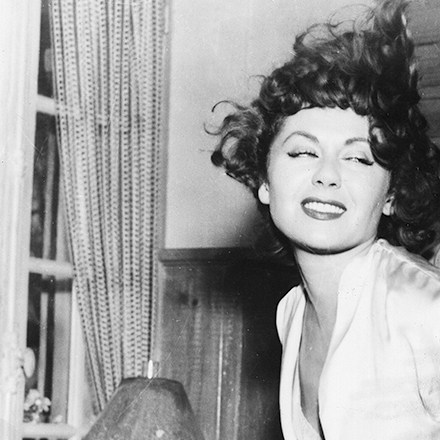
All the gossip about Lady Chatterley’s Lover

Lady Chatterley’s Lover was written in a villa outside Florence during the winter of 1927-28, two years after D.H. Lawrence was diagnosed with TB. Described by him as “a phallic novel, but good and sun-wards, truly sun-wards,” the tale is set in his native Nottinghamshire, which he left in 1912 when he eloped with his aristocratic wife Frieda von Richthofen, who was then married to his tutor. Frieda, who valued her freedom, was enjoying an affair with the Italian officer Angelo Ravagli, who became her third husband after Lawrence’s death in 1930. It is believed that Lawrence was impotent for the last years of his life. In the evenings he would read aloud his finished pages, in which the Lawrentian philosophy is expressed by Oliver Mellors, gamekeeper to Sir Clifford Chatterley.

lady chatterley
elizabeth

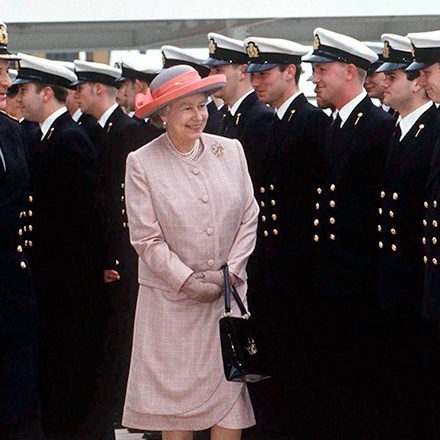
The exquisitely dull life of Elizabeth II, expert on cap badges

The dogs, horses, diamonds, furs, full-length evening gowns of lace and pearls; private jets and limousines; the ever-present jostling retinue; the push and shove of photographers and the clamor of crowds – Elizabeth Taylor and Elizabeth II had a lot in common, each taking herself very seriously and needing to be seen to be believed. Whereas the Hollywood actress was majestic mainly in her vulgarity and brashness, however, the late Queen, as is evident in this pair of biographies, did her level best to be reticent, even nonexistent. The best known of her few recorded utterances are “Oh really?” and “Are you sure?” She had a tendency to stare at a person with “absolutely no expression,” or at best “an expression of controlled irritation.

They shoot horses: Boyhood, by David Keenan, reviewed

David Keenan’s seventh novel is quite the ride, but its plot is not always easy to disentangle. The author has said that its title is his favorite word, and the book’s clearest narrative thread concerns the abduction of a young boy outside a Glasgow football ground in 1979. The boy’s older brother, Aaron, is subsequently guided by an angel called the Precious Gift. Aaron meets the guardian angel during a run for charity in 1986, on the last day of his boyhood, or so he thought, because he could never imagine doing a sponsored run again after that, because he got into literature and smoking pot straight afterwards.

boyhood
flowers

The art of flowers

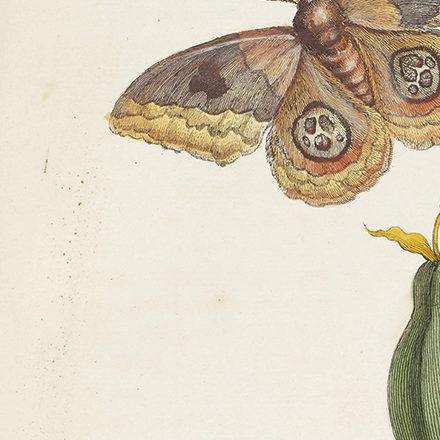
Multisensory exhibitions are old hat, but in the case of In Bloom – How Plants Changed Our World at Oxford’s Ashmolean Museum, it feels just right to sit in a space given over to flowers with the sound of gurgling water in the background, mingled with the cries and chirrups of birds. At intervals there are scent stations where you can smell damask rose or green and black tea from flower-shaped chalices. From the ceiling hang swaths of green muslin. I could have stayed here all afternoon. Right in front of me were also two delicious studies of tulips to illustrate the Dutch craze of the 1630s. Frankly, if it came to a choice of two-tone tulips or bitcoin as a way of squandering money, I know which I’d prefer. There is a print of a sultan’s seraglio in this tulip section.

How to dress a queen

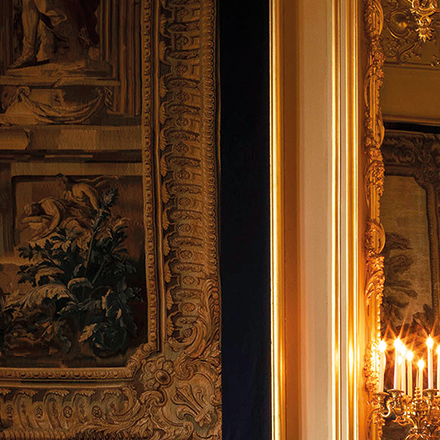
The problem with exhibiting costumes is well known. Should the mannequins be lifelike with human features, or faceless? What about trying a more surreal approach with Perspex or metals? This show of her late Majesty’s wardrobe opts for something more ghostly: hundreds of shoulderless, neckless, wristless, legless figures, floating magically in space, presented in cases at eye level, with others, higher, in serried ranks, like some gorgeously arrayed terracotta army. The unifying factor is that instantly recognizable royal silhouette – from the youthful wasp waist to the later fuller frame.

queen

A spring mood lifter: Tales of Love and Loss at the Linbury Theater reviewed

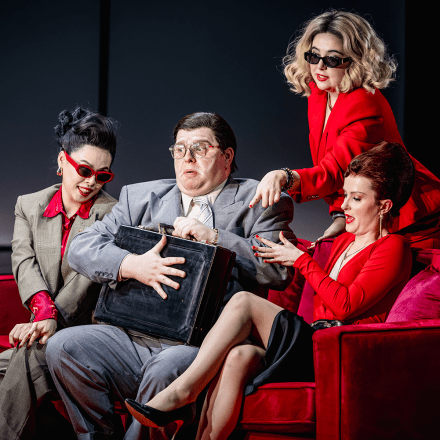
This year’s Jette Parker Artists showcase is a triple bill of modern-ish operas; a cleverly assembled trittico of one-acters, linked by a theme of bereavement. That sounds bleak until you consider that Puccini’s Trittico was originally inspired by The Divine Comedy, and who bothers about that today? Anyway, the three operas that make up Tales of Love and Loss are far from dispiriting in their overall effect. Like Puccini, Talia Stern – who directs all three – has gone for two tragedies plus a raucous, palate-cleansing comedy. And like Gianni Schicchi, the final laugh-fest (Elena Langer’s Four Sisters) plays out around a barely cold corpse and sends you into the night feeling uneasy, but undeniably entertained.

Riveting: Kokuho reviewed

A three-hour Japanese epic about a classical performance art (kabuki) isn’t the easiest sell, I’ll grant you, but I’ll give it my best. Kokuho is multi-award winning. It is the highest grossing live-action film in Japan ever. It is sumptuously filmed. It is masterfully sweeping. The kabuki itself is stunning, so much so that you may one day wish to visit the kabuki theater in Tokyo, although be warned: the shortest production is four hours. Some last all day. Looked at this way, you are getting off lightly here. Directed by Lee Sang-il, and adapted from Shuichi Yoshida’s two-part novel, the film is a drama spanning 50 years. It opens in 1964, in Nagasaki, with the shocking killing of a crime boss while his 14-year-old son Kikuo (Soya Kurokawa) looks on.