Previous magazine Next magazine

The reviving of the American mind

Browse past issues

Features

Features

Kilmar Abrego Garcia is no martyr

In the matter of Kilmar Abrego Garcia and his all-expenses-paid sojourn in El Salvador, there has been a goodly quota of posturing all around. Or, rather, there has been understandable outrage and intransigence on the part of the Trump administration. There has also been wild, almost comic posturing on the part of Democrats and their megaphones held up by the media. There are 195 countries in the world today. It is unfortunate, or at least complicating, that the Trump administration settled on El Salvador as the country to which to deport Garcia, whose wife was granted a temporary protective order against him in 2021, according to Maryland court records. Garcia has admitted to clambering into the US illegally in 2012, though he has never been convicted of any crime.

Garcia
Trump

The reviving of the American mind

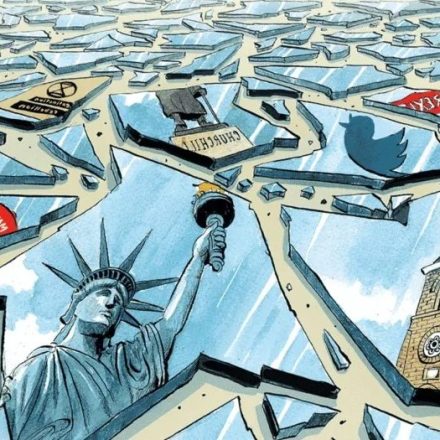
In his 1987 book, The Closing of the American Mind, Allan Bloom argued that higher education no longer taught US citizens how to think. “We are like ignorant shepherds living on a site where great civilizations once flourished,” he wrote. “The shepherds play with the fragments that pop up to the surface, having no notion of the beautiful structures of which they were once a part.” Now, almost 40 years later, we’re even more clueless. The rot in academia has spread throughout the education system and can be found all over American life. Rational thinking has now been almost entirely usurped by the baser passions of anger and grievance, as we saw all too clearly in the collective insanity of the Black Lives Matter riots of 2020.

The Palisades, reimagined

You’ve got to be careful what you put in your mouth in Los Angeles. In a gourmet ice cream parlor near Venice Beach, my ten-year-old daughter grabbed a small tub from the freezer. Halfway through eating it, she noticed the label indicated that it was HUMAN GRADE and featured a pawprint motif. This was a flavor meant for dogs. In a part of the world renowned for enhancement and augmentation, one finds many foods and beverages that have had a little work done: soft drinks boosted with collagen, cappuccinos laced with chaga (an anti-oxidant mushroom), granola fortified with “adaptogens” (herbs that combat stress), or salad dressings infused with CBD. “California sober” is a new phrase I learned this week from an old friend, Judd Weiss.

palisades
Trump

The Trump administration is giving us excellence, not equity

Americans are not a naturally gloomy people. We don’t necessarily expect things to go our way, but when they don’t, we can laugh it off. In my part of Vermont there’s a place called Hateful Hill, for example, so-named by stagecoach drivers who had a tough time with the steep road. But Hateful Hill is also a beautiful elevation. Today, even those who don’t “get” Donald Trump need to start seeing the upside. He doesn’t always get his way, which is probably a good thing, but he is leading a long-overdue revival of the American spirit and allowing for the return of optimism and the pursuit of excellence.

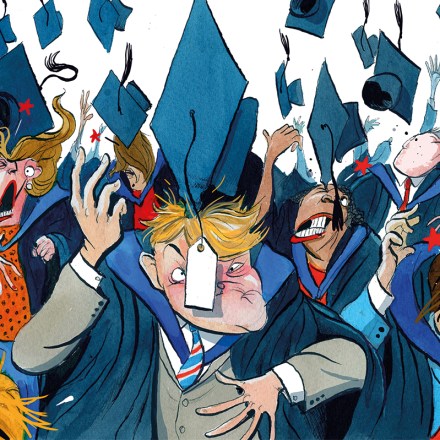
Wokeism is stifling thought in America’s universities

The American education system needs drastic reform from bottom to top.  Our K-12 schools, both public and private, have come to be dominated by radical left-wing ideas. Schools not only indoctrinate students with a one-sided view of history and society, but they also increasingly fail in their core mission of imparting the basic skills needed to function in our advanced and complex society. Likewise, our universities, professional schools and graduate schools are in the grip of a far-left ideology that has compromised their traditional missions of truth-seeking, knowledge creation and the preservation and transmission of western culture and the advanced skills essential to its vitality and prosperity.

universities
Rufo

How Christopher Rufo is changing American education

As fire-breathing counter-revolutionaries go, Christopher Rufo seems notably mild-mannered. Perhaps it’s his northern California roots and Pacific Northwest home that keep him from embracing the based lifestyle pursued by so many conservatives in the Trumpian era. He doesn’t like sports. He doesn’t enjoy UFC. He allows his four kids to watch Disney movies and admits he was once a vegetarian. Yet it’s also possible that the Georgetown-educated PBS documentarian turned right-wing iconoclast is effective precisely for that reason: he knows the people he is criticizing.

Why is intelligence declining?

In 1906, the famous polymath Sir Francis Galton visited a country fair on the edge of Plymouth, England. A bullock had been tethered for slaughter and almost 800 locals were invited to guess its dressed weight: how heavy it would be after butchering. Galton – an obsessive measurer of people, weather and intelligence – gathered the entries, calculated the average and found something remarkable. The crowd’s collective estimate came within a single pound of the ox’s actual weight. This elegant experiment would become one of the founding truisms of modern democratic thought. Galton had shown that while individuals may err, the group, in aggregate, can reason with uncanny accuracy and prescience. He had discovered “the wisdom of crowds.

IQ
ADHD

We shouldn’t downplay the risks of ADHD medication

I was diagnosed with ADHD in my freshman year of college. I’d suspected as much in high school, but I disliked the idea of taking medication. College was different. No matter what I tried, I kept finding gaps in my notes – and therefore gaps in my knowledge on test day. While I was prescribed so-called “smart drugs,” I didn’t delude myself into thinking they would magically make me more intelligent – which is why I laughed when I saw the ADHD research industry perform a volte-face in the pages of the New York Times, in a piece headlined: “Have we been thinking about ADHD all wrong?” The obvious answer is yes.

The real battle for Europe

Donald Trump hates Europe – that suspicion had grown so widespread by mid-April that J.D. Vance was moved to declare in an interview: “I love Europe.” Even its people, he claims. Of course, Americans have taken sides in European rivalries from the outset: Thomas Jefferson was a France man after the French Revolution, while John Adams preferred England. FDR preferred Pétain, while Eisenhower preferred de Gaulle. But hate Europe outright? The idea is absurd. Though our ancestors are not 100 percent European, our country is. You can imagine President Trump calling for a Wienerschnitzel and a tub of mayonnaise more easily than you can imagine him calling for a bowl of hủ tiều nam vang and a bottle of nưởc mắm.

Europe
Kennedy

Has Trump’s Kennedy Center overhaul worked?

When Donald Trump installed himself as chairman of Washington’s Kennedy Center, the progressive arts community reacted with predictable hysteria. Artists threatened boycotts and donors withdrew their support. The Guardian reported the news as “anti-woke MAGA populism on a collision course with America’s progressive cultural scene,” while the usual suspects emerged from their Brooklyn brownstones and Malibu beach houses to decry the “assault on democracy” and predict the death of artistic expression as we know it. But as with most things Trump, the reality has proven far more interesting. Since opening in 1971 as a memorial to John F.

What happened to the great American IPO dream?

There is a dark but funny one-act play called No Exit by Jean-Paul Sartre, that gloomy, chainsmoking, wall-eyed French existentialist. The play is about three characters trapped in a room from which they cannot escape. No flames, no pitchforks, no brimstone – it turns out the afterlife isn’t the fourth circle of Hell, but a dinner party you can’t leave. Round and round these characters go, each demanding what the others won’t give. In the end, the worst punishment isn’t torture. It’s just being stuck. “Hell,” goes the famous line, “is other people.” Well, mon Dieu, we now have a sequel.

IPO
Blue Dogs

How the Blue Dogs have evolved

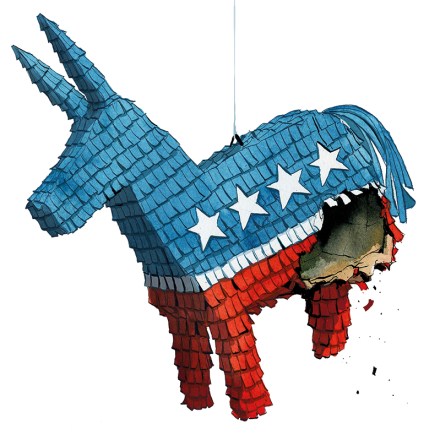
In every iteration of the American National Election Studies since 1952, respondents have been asked to name their biggest “like” and “dislike” when it comes to the two main parties. From 1952 to 2004, voters’ biggest “like” about the Democratic party was that it was the “party of the working class,” whereas the biggest “dislike” that voters had of the Republican party was that it was the “party of big business and the upper class.” Today, the parties’ reputations have shifted dramatically, mirroring the changing composition of their electorates. In the 1990s, nearly 60 percent of Democratic voters were white and didn’t have college degrees. For the 2020s, that proportion has fallen to 25 percent.

Why Trumpism won’t fix Clintonomics

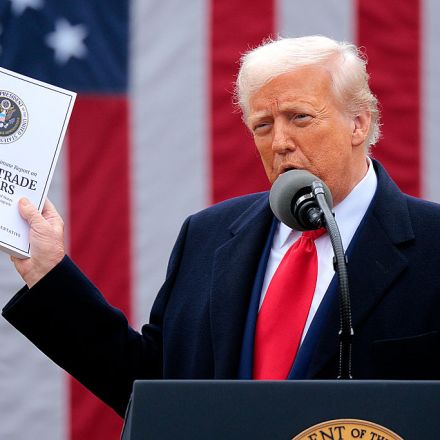
As a longtime critic of the Clinton administration’s “free trade” agreements, I’ve lately been mocked by liberal friends who suspect I’m sympathetic to the “plan” hatched by Donald Trump and his senior advisor on trade, Peter Navarro, to “ruin” the country with indiscriminate import tariffs. This sort of jokey ridicule goes with the territory when you jab at neoliberalism from the left. Bill Clinton still has legions of fans among the Democratic party establishment and its media acolytes, and it’s hard for them to face up to the fact that the former president’s economic policies have led directly to Trump’s election as president not just once, but twice.

trade
supreme court trump

Why Trump should put himself on the Supreme Court

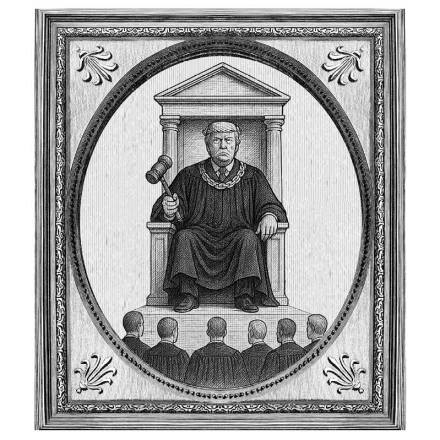
Legend has it that after subduing Greece, Egypt, Persia, wide swaths of India and what’s now Afghanistan, Alexander the Great wept, lamenting “there are no worlds left to conquer.” Donald Trump is close to knowing how that feels. “I run the country and the world,” he declared in a recent Atlantic interview. Trump’s second term has barely begun, but already the thought must cross his mind: “What next?” Alexander was lucky to die young, at 32 and at the peak of his power. The President is in rude health and leads a charmed life. The grim reaper missed him last year when an assassin’s bullet grazed his ear in Butler, Pennsylvania. As it stands, Trump can look forward to leaving office, aged 82, in January 2029. He’s conquered the world only to lose it to term limits.

Why cities have lost their appeal

Over the past half century, media and academic sources repeatedly suggested that increasingly dense cities would dominate the future. Places such as London, San Francisco and Chicago would dominate an economy. Today, this assessment seems grossly dated. Even in the pages of the urbanista New York Times there are widespread fears of an “urban doom loop.” But this, too, is a stretch. Great core cities will not go the way of post-imperial Rome, but their role is being recast as the urban frontier shifts increasingly to the periphery. What we are seeing mirrors H.G. Wells’s vision. He predicted that most economic life, and most families, would shift to the suburbs and exurbs.

cities
Cathedral online

Am I too Online?

There have always been “two Americas.” Our country has always reflected deep social, economic and cultural divides. It’s threaded into the fabric of our national identity, with origins dating back to the very beginning: should America exist on its own? Tensions only intensified in the 19th century between the industrial North and agrarian South, which played out in the Civil War and Reconstruction. In 1967, Dr. Martin Luther King Jr.’s “The Other America” speech described two nations. One was prosperous. The other was trapped in poverty, racial injustice and systemic inequality, especially for black Americans.

‘Dark Woke’ is nothing new

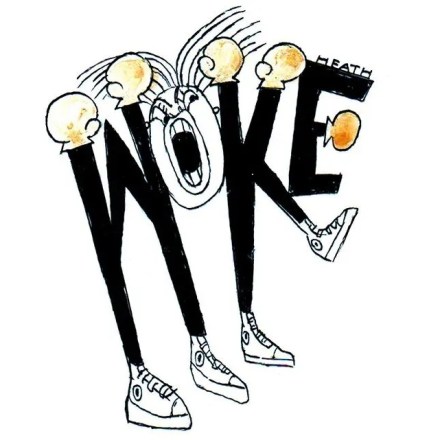
Ever in need of new narratives to feed into the bottomless abyss that is American political analysis, TikTok spelunkers and X addicts have delivered a new concept to be immediately overused and driven into the ground: “Dark Woke.” It’s woke, but dark. Somehow, things get lamer from there. “As liberals try to get their groove back, some party insiders say Democratic politicians have been encouraged to embrace a new form of combative rhetoric aimed at winning back voters who have responded to President Trump’s no-holds-barred version of politics,” writes Jack Crosbie in the New York Times. “It requires being crass but discerning, rude but only to a point.” Crass… but discerning! Rude…but only to a point!

woke
AI

Is the AI boom already over?

Is artificial intelligence a flash in the pan? Is the boom in tech shares, which exploded with the rise in public awareness of AI, doomed to go the way of other investment bubbles over the centuries? The answer to the first question is almost certainly no, and the answer to the second very likely yes. Investment bubbles do sometimes involve assets which have little intrinsic value, yet it is remarkable how often they begin as an entirely rational reaction to some new invention or development – an invention which outlasts the collapse of the speculative bubble, as if nothing had happened. You only have to look at a share chart and you would assume that railways went out of fashion in the 1840s, when a mad speculative umbrella collapsed.

A new map of the universe may turn gravity on its head

Scientists have released the largest map of the universe ever compiled. Millions of galaxies have been surveyed, stretching back 11 billion years, most of the age of the cosmos. According to many scientists, this data, combined with other observations, presages a major reassessment of what we know about the universe: possibly, for the first time, revealing a crack in Einstein’s theory of gravity. The Dark Energy Spectroscopic Instrument (DESI) is attached to a large telescope at the Kitt Peak National Observatory in Arizona. Each night it measures the positions of and distances to thousands of galaxies. Galaxies exist in groups and their motions are influenced by other, nearby galaxies.

universe 3I
scientists

Why won’t western scientists condemn Wuhan?

“I am officially launching my new company: Cathy Medicine. We will eradicate diseases in future generations through germline gene editing.” This is one of several strongly – and strangely – worded tweets sent in recent weeks from the X account of He Jiankui, a Chinese scientist who served a three-year prison sentence for gene-editing two human embryos. Those embryos are now people: seven-year old twin girls living under the pseudonyms Lulu and Nana. “Good morning bitches,” Dr. He wrote on April 16. “How many embryos have you gene edited today?” “Get in luddite, we’re going gene editing,” he added the next day. He also wrote: “I literally went to prison for this shit.” Is it the real Dr. He? The journalist Antonio Regalado, who first broke the story of Dr.