Books & Arts

Books and Arts

Notre-Dame rising

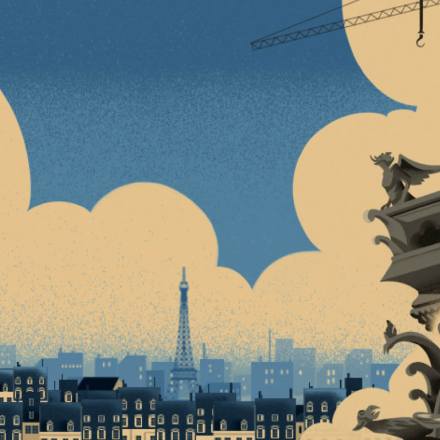
Five years have passed since a major fire swept through the Cathédrale Notre-Dame de Paris on April 19, 2019, bringing down the church’s roof but sparing the rest of the building. In response, French president Emmanuel Macron immediately promised that the structure, which is owned by the state, would be rebuilt quickly, and more beautiful than before. He further promised that the cathedral would be ready to receive worshipers and visitors in time for the 2024 Paris Summer Olympics. Since his announcement, however, things have not gone entirely to plan. Notre-Dame will not be finished in time for the Olympics; as of this writing, completion has been pushed off to December 2024.

notre-dame
Merrily

Finally, a version of Merrily We Roll Along that works

Merrily We Roll Along starts in 1976, at a party held by big-shot Hollywood producer Franklin Shepard, who is surrounded by stars (not least his second wife, a veteran Broadway siren, and his young lover, the nubile leading actress of his latest hit movie). It ends in 1957, with stars of a different kind: constellations in an inky sky that provoke awe and inspiration for a younger, more naive Frank, as he sits on a rooftop with friends Mary and Charlie, dreaming about their future. The juxtaposition — of celestial bodies with shiny, obnoxious celebrity — helps to frame this musical about the loss of innocence.

Reconsidering Paul Thomas Anderson’s Inherent Vice

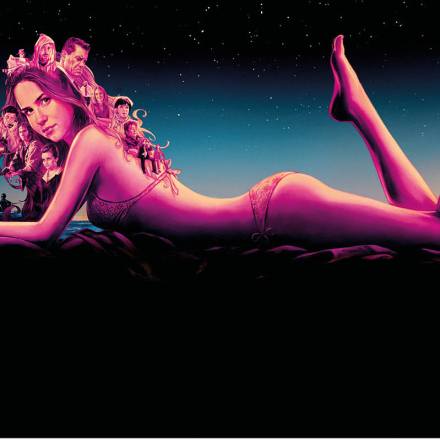
Much has been made in the Thomas Pynchon Reddit community — a crazed bunch — of the author’s rumored cameo appearance in Paul Thomas Anderson’s 2014 adaptation of his 2009 novel, Inherent Vice. Photos circulate in a frenzied online meta conspiracy: is he this old man? That guy in the hat? Famously reclusive, Pynchon has barely been photographed in real life. His only acting credit was when he voiced himself on The Simpsons, while his cartoon likeness appeared with a paper bag over its head. Pynchon revels in the oxymoron of the anonymous celebrity and his fans simply can’t get enough. He found the right director to bring his work to the screen.

Inherent Vice
gangster

The intriguing revival of the British gangster picture

Have you been watching Sexy Beast on the Paramount+ streaming service? No? Well, it’s hard to say whether you’ve missed out on much. Amid the current vogue for reviving decades-old films and turning them into television series, musicals or what-have-you, revisiting Zone of Interest director Jonathan Glazer’s 2000 debut, a blackly comic crime caper that owes equal debts to Harold Pinter’s The Dumb Waiter, Stephen Frears’s The Hit and Nicolas Roeg’s Performance, was probably not on anyone’s bingo card for 2024.

Who’s afraid of Judith Butler?

Gay icon Judy Garland. Folk queen Judy Collins. Now, we have the lesbian saint Judith Butler (as of 2020, they/them saint Judith Butler.) Once resigned to recognition on college campuses for their unreadable 1990 tome Gender Trouble, which posited that gender is a performance, the queer theorist and Berkeley professor took off as a mainstream hero in the past decade. Tumblr kids reposted quotes from their lengthy, poorly written academic work. New York magazine declared Butler a “pop celebrity.” In March, Farrar, Straus and Giroux published Butler’s first commercial book, Who’s Afraid of Gender? Its prolonged roll-out aims to credit Butler for “birthing” the nonbinary and trans identities of the twenty-first century. It’s as much a publicity stunt as a book.

butler
Holiday

A look into Billie Holiday’s final year

If ever a singer were difficult to pin down, it was Billie Holiday (1915-59), whose harrowing life story was first told in an unreliable memoir published just three years before her death. With Lady Sings the Blues, the jazz legend known for her emotional honesty not only allowed herself to be misrepresented (after all, she wasn’t even a blues singer), but actively participated in fabricating the fake stories which proliferated through the book. Some of these — such as a misstatement of her place of birth — are still repeated to this day. Two decades after the publication of Lady Sings the Blues a steady stream of more accurate biographies began to appear.

An unvarnished insight into the mind of Sonny Rollins

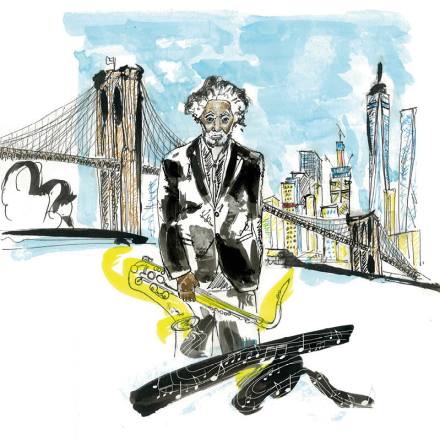
In the mid-1950s, alongside his close friend and intimate confidant John Coltrane, the revered saxophonist Sonny Rollins completely revolutionized notions about how the tenor saxophone could function within modern jazz. In landmark albums like Freedom Suite, Way Out West and Tenor Madness, Rollins pushed the art of melodic improvisation to transcendent new heights, his charismatic sound, his snaking melodies and his rhythmic liquidity ringing the changes as surely as Louis Armstrong had done thirty years earlier. And like Louis, and later Miles Davis, there came a point where Rollins wrestled free of the jazz aficionado’s gaze to become admired by a more general audience.

rollins
Iraq

An impressive examination of the conjoined fates of Iraq and the United States

In July 4, 1821, secretary of state John Quincy Adams gave a speech to Congress on American foreign policy. He said of the United States that “wherever the standard of freedom and independence has been or shall be unfurled, there will her heart, her benedictions and her prayers be. But she goes not abroad, in search of monsters to destroy.” For the first 150 years of the republic, its leaders dutifully observed Adams’s counsel. But after Woodrow Wilson’s intervention in World War One, American policy has tacked in the opposite direction. For over a century America has indeed been going abroad, searching for monsters to destroy.

Where is the clarity in modern center-right foreign policy?

When Ohio senator J.D. Vance arrived at the Munich Security Conference in February, he had a clear message meant for the world: the Republican Party was no longer the party of Ronald Reagan. Standing outside the Hotel Bayerischer Hof, he informed reporters that he did not believe American support for combat against authoritarian regimes should extend to Ukraine — and that he would continue to oppose efforts to “increase the supply of weapons in Ukraine because we’ve already expended so many of our munitions and resources” to achieve a victory that he does not foresee. Vance’s bootstrap story is well-known — he’s a Marine veteran turned Yale Law grad turned venture capitalist made prominent by his bestselling Appalachia memoir Hillbilly Elegy.

foreign policy