Food & Drink

Food and Drink

The heady reds of Avignon

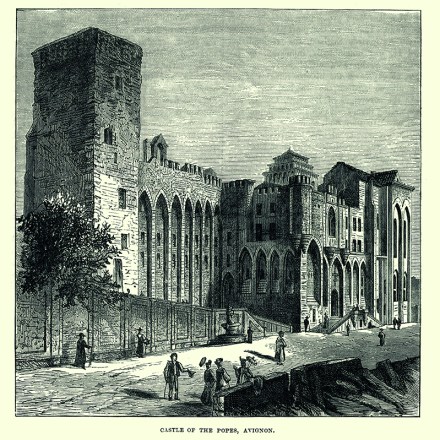
To you and me, “Châteauneuf-du-Pape” means the bold, dark, spicy red wine from the Rhône region of southeastern France, a bit north of the town of Avignon, with bottles usually featuring a glass-embossed representation of the keys of St. Peter. If you were Jacques Duèze, known to history as Pope John XXII, second and longest reigning (1316-34) of the Avignon popes, Châteauneuf-du-Pape meant first of all that “new castle of the pope” he built on the hill overlooking the town. After the popes left, it fell into desuetude and was raided for stone by local builders. During the Revolution, all the buildings except the great tower or donjon were sold off. During World War Two, the Germans attempted to dynamite the structure but succeeded in destroying only the northern half.
Châteauneuf-du-Pape
pan

The pan handler

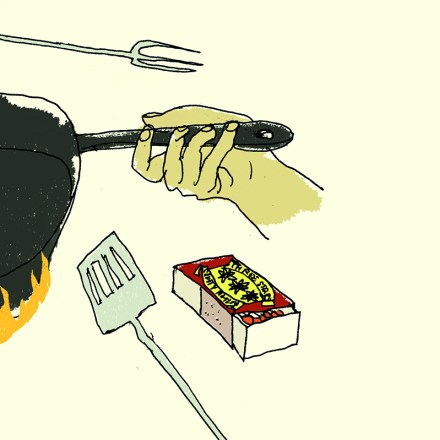
I have become a pan handler — a handler of cast-iron pans. I can think of few hobbies that are as rewarding as collecting and cooking on cast iron. Skillets, griddles, muffin tins, Dutch ovens, waffle irons, corn-stick pans and much else: there was a time when America produced the finest cast-iron cookware in the world. The iron ore was abundant. So was the coal to melt it. Foundries went up across this great land. American cuisine developed around it. From fried chicken to cornbread, the American menu should still be cooked on cast iron. Southern cooks never forgot this. The same goes for soul food; black America has always prized its cast-iron inheritance. Now I find I have little need to cook on anything else.

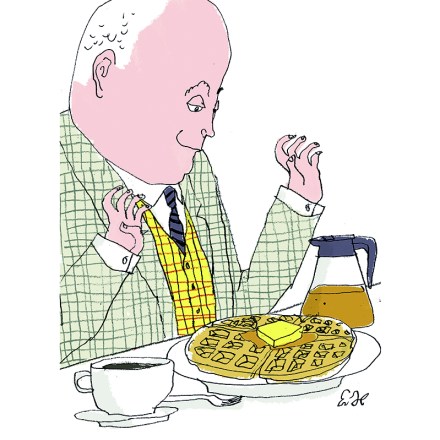
Welcome to Waffle House

"Snack bar,” “coffee shop” and such phrases once signified small eateries where customers sat on stools at a counter or in simple booths. Their orders were taken and served by waitresses in white aprons, and prepared by a short-order cook in a white paper cap. Hotel lobbies, railroad-station waiting rooms and airports all had them: private enterprises in public spaces purveying a cup of coffee and a donut, bacon and eggs, ham and cheese on rye, a hot dog, a hamburger, maybe a milkshake or an ice cream sundae. Little of this (for most were mom-and-pops) traveled well into the age of industrialized, assembly-line, eat-on-the-go feeding signified by the phrase “fast food.

waffle
valentine

Be my Valentine

I don’t know when my father showed André Fleuridas, a friend, the chunk of jade he’d brought back from Burma, where my father was based as a war correspondent during World War Two. Nor do I know how my parents’ friendship with Bonnie and André Fleuridas began. I can only guess. It might have been through art, as both my father and André were artists, and in Weston, Connecticut, where I grew up, artists occasionally gathered in each other’s studios to draw or paint from live models. Or they might have met at the Weston firehouse where artists, writers, musicians, actors and TV news anchors made up, along with farmers, Weston’s all-volunteer fire brigade.