Features

Features

Epstein, the Clintons and the death of trust

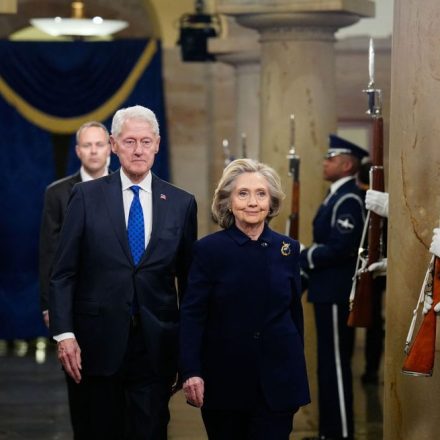
Bill and Hillary Clinton had a choice: face criminal contempt charges or come clean about their friendship with Jeffrey Epstein. After months of resisting, the former president and his wife have now agreed to testify before the House. Clinton will be the first former president to appear before Congress since 1983, when Gerald Ford discussed bicentenary celebrations for the enactment of the Constitution. An appearance of this gravity, however, is unprecedented; it may well mark the start of a true Epstein reckoning in America. The Epstein scandal has become a strange monster, hell-bent on devouring the old elite In typical Clintonian style, the couple presented their initial refusal as a principled stand.
epstein clinton

Wizard of Oz

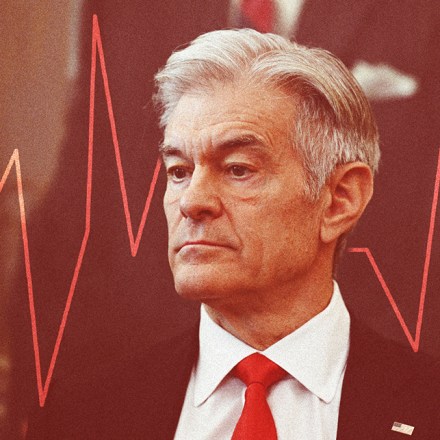
Early last November, during a White House press event to announce a Trump administration deal with pharmaceutical companies to cut the prices of weight-loss shots, a drug company executive fainted in the Oval Office. Fortunately, there was a doctor in the house. Doctor Mehmet Oz, whom Donald Trump had appointed to run Medicare and Medicaid, rushed to help the man, supporting him and lowering his head to the floor. It wasn’t the first such incident. Dr. Oz’s own granddaughter fainted during his swearing-in ceremony in April last year. Again, he knew just what to do. Oz is a rare public figure in that he both is a doctor and he plays one on TV. He fits squarely into an administration run by a former reality TV star. In Trump’s wider political sphere, Dr.

What Trump told me in my hour of need

"The two enemies of human happiness are pain and boredom," espoused German philosopher Arthur Schopenhauer. Having spent the past two weeks in the grip of both, after fracturing my femur so disastrously it necessitated a total hip replacement, I can confirm he’s correct. And given I did it tripping in a hotel restaurant, I would add "shame" to the list. The pain was excruciating; the shame even worse. (History will record that the Free Solo daredevil Alex Honnold successfully climbed the 508-meter Taipei 101 tower, without safety ropes, in the same week I failed to navigate a six-inch step.) But the boredom’s been stupefying.

Trump’s legacy hinges on the midterms – and he knows it

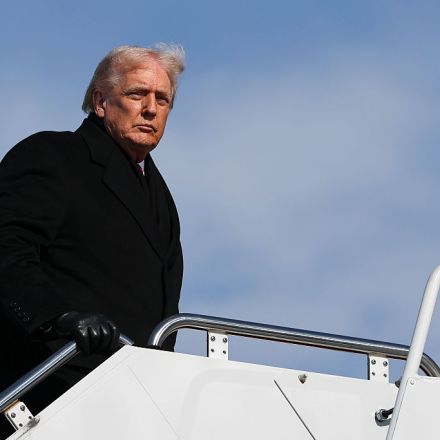
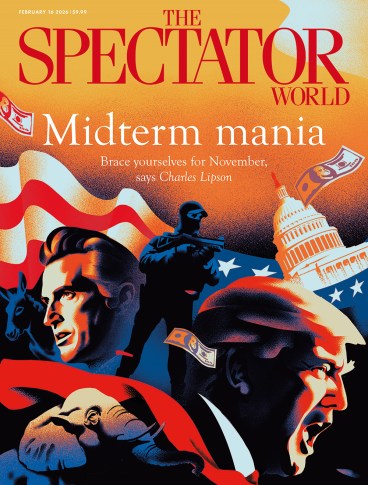
“We gotta win the midterms,” President Donald Trump told the crowd in Iowa at the end of last month. “I’m here because we’re starting the campaign to win the midterms. That means Senate and it means House.” Trump is, by all accounts, obsessed with the upcoming elections in November. Having been distracted by various foreign dramas, and seeing his approval ratings dip, the President aims to pivot back to a domestic mission in 2026. If the Democrats capture the House, Trump will face noisy congressional battles and possibly impeachment Trump understands the stakes, hence choosing Iowa, the traditional starting place for presidential primaries, to launch this campaign. The final two years of his presidency hinge on the outcome of these elections.

Christian nihilism is taking over American life

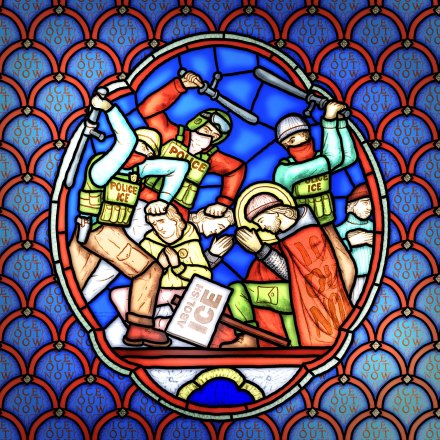
There’s something very religious about nihilism. For proof, look to the new capital of American nihilism, Minneapolis. A callousness toward death and danger has fallen over the city. Of the many disturbing videos to come out of Minnesota’s anti-ICE protests, one of the stranger examples shows a white man walking up to a line of heavily armed law-enforcement officers, shouting: “Shoot us in the fucking face! Shoot me in the fucking head!” What possesses someone to do that? I understand being against Donald Trump and Stephen Miller’s blitzkrieg deportation policy. And it’s not irrational, in the viral age, to protest theatrically. But this is psychotic. It is the death drive in overdrive.

christian nihilism

The censors are winning

They say you should never meet your heroes, a rule that is not always correct. But I did have a salutary session some years ago when a friend in New York asked me if I wanted to meet a comedian I really do admire. I had been looking forward to the meeting, but unfortunately it took place during the summer of 2020. If you remember those far-distant days, this was a time when America was obsessing over the story of alleged disproportionate police violence against black Americans. One of the cases was that of a woman named Breonna Taylor. Although the case for the police’s actions and the victim’s innocence revolved around a number of issues, the main one was whether officers should have shot when they did.

How to lose friends and alienate people

After two deadly shootings in confrontations between Donald Trump’s Immigration and Customs Enforcement agents and the activists obstructing them, Minneapolis was starting to remind people of Kent State. By “people” we mean progressive baby boomers, inclined to make the Vietnam War the measure of all things. For them, the massacre of four student protesters by a nervous detachment of Ohio national guardsmen in 1970 alerted parents to the war’s inhumanity. It started the groundswell against Richard Nixon that would force him to exit the war three years later – and the White House the year after that. The analogy is a bad one. Trump’s position differs a lot from Nixon’s. It’s stronger politically.

shadow fleet

Can Russia’s shadow fleet be stopped?

Of all the weapons in Vladimir Putin’s arsenal, the most strategically crucial has proved to be not hypersonic missiles but the motley fleet of oil tankers that have allowed Russian oil to keep flowing to international markets. Oil dollars have been the lifeblood of Russia’s war economy during four years of conflict. And the West’s failure to shut that export business down has, so far, been the single most important factor behind Putin’s continued military resilience. Economic sanctions were supposed to be the West’s superpower to punish the Kremlin for invading Ukraine in February 2022. So how come Russia now exports more oil by sea than it did at the beginning of the war?

Letter from Argentina

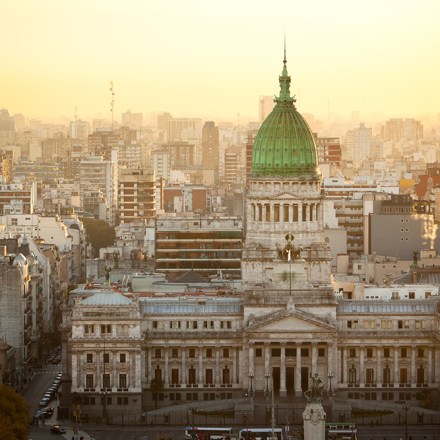
Buenos Aires, Argentina My last visit to Buenos Aires was a whistlestop assignment exactly 40 years ago. All I can remember was that the generals had gone, but the ache of the Falklands/Malvinas debacle had not yet subsided. Most memorable was the haunting story told me by my wealthy, upper-middle-class host about the loss of his twenty-something daughter. By his account, he was called sometime after midnight by a local police chief and told that she had been at a party of rowdy youngsters taken to the station to sober up. He was not to worry: she would be released in the morning. When she hadn’t returned by midday the next day, he called the station again. No one had any recollection of the late-night phone call and he never saw his daughter again.

No one is safe from a wealth tax

No matter how many jurisdictions discover the hard way that wealth taxes backfire, in California an initiative is collecting signatures to put a "one-time" (ha!) 5 percent tax on the net worth of the state’s roughly 200 billionaires on November’s ballot. Hey, those guys are rich. They won’t even notice. But the funny thing about people and money is that even folks with lots like to keep it. The 2026 Billionaire Tax Act is slyly retroactive, a variety of pre-crime legislation – applying to anyone resident in California on 1 January this year, looping a bungee cord around the ankles of would-be absconders. Thus billionaires such as Peter Thiel scrambled to establish a presence in a lower tax state before midnight on New Year’s Eve.

Is this the denouement of the 2020 election?

Where is it that the chickens go to roost? If you said “home,” you don’t quite get it. The correct answer is “Fulton County, Georgia.” At least, that’s where the chickens were congregating at the end of January when the FBI raided a Fulton County election office and made off with some 700 boxes of ballots and other election materials. Seven hundred, kemo sabe. According to the official search warrant, the G-Men were there to seize “all records relating to violations of Title 52, United States Code, 20701 and 20511.” It’s always scary when people start talking about “United States Code this and that” because at the end of the day you know that it’s all so much foreplay culminating in the word “felony.” In this case, the FBI was hoovering up: a.

2020 election

Will Trump bring about World War Three?

One of the enduring myths about Donald Trump is that he is an isolationist: a president bent on dismantling alliances and hauling up the drawbridge on America’s engagement with the world. The reality is more unsettling. Trump’s instincts may incline toward retrenchment, but they coexist with a pugnacious temperament and a visceral conception of American honor. Given that volatile combination, it is easy to imagine an adversary taunting him out of restraint – or a well-meaning but insufficiently sensitive ally, or even an unprovoked emotional spasm, producing the same effect. After that, who knows where events might lead?

I need a home for my digital nation – why not Greenland?

I left the Greenlandic parliament – the Inatsisartut – last year and walked to the Hotel Hans Egede to grab my swim trunks. I came here to explore one of the last frontiers on Earth. Greenland is a quasi-communist country that prohibits land ownership and depends on Danish aid. Perhaps the US will change that, someday. I met my team in the lobby with towels. I’m the CEO of Praxis, a new kind of political project we call a “digital nation.” It’s a community of more than 150,000 people who want to help build a better future for western civilization. In 2020, we launched as a transgressive group chat interested in Greek literature, cryptocurrency and New York’s art scene. We hosted events and were antagonistic to our woke counterparts. We grew quickly.

venezuela

Was the raid on Venezuela real?

From the very start, there was something weird about Operation Absolute Resolve. The official story went something like this: after a whirlwind air attack, which included the use of suicide drones for the first time, special operators from the US Army’s renowned but shadowy SFOD-D unit (“Delta Force”) were helicoptered into the Fuerte Tiuna military complex in the south of Caracas, the capital of Venezuela. They defeated the local garrison, used “massive blowtorches” to breach heavy metal doors in a fortress-like residential site within the base, captured the President of Venezuela, Nicolás Maduro, and his wife, then spirited them back to the helicopters and flew them out to face charges in the United States.

The inconvenient truth about polar bears

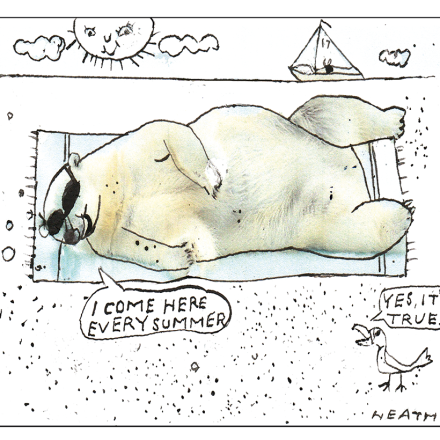
The BBC reported terrible news recently about polar bears: they are thriving. This is very annoying of them as it goes against the interests of environmental activists, polar bears being the very emblem, mascot and clickbait of climate change cataclysm. But the bears’ stubborn refusal to get the memo and starve has become too obvious to ignore. The latest evidence comes from the Barents Sea, and the Norwegian-administered archipelago of Svalbard in particular, where bear numbers have been steadily increasing. Surprisingly, they are also getting fatter, according to measurements taken when bears are caught and weighed. This is despite a decline in sea-ice cover in the area, especially in fall.

polar bears

The folly of Hamnet

Democracy has not been kind to William Shakespeare. His works may be read and performed more widely than ever, but readers and audiences understand less and less of what they see. Egalitarianism encourages narcissism, and narcissism interprets all art as autobiography. Shakespeare could only write about his own life, and if, in fact, he wrote about royal courts and noblemen, then Shakespeare must not have been Shakespeare, the actor from Stratford-upon-Avon. He must have been Edward de Vere, the earl of Oxford, or somebody like that. He could not have possessed the intelligence and imagination to transcend his personal identity, for none of us can do that. It would be superhuman. That’s one foolish contention arising from the idea that writing must always be memoir.

Prediction markets have turned the world into a casino

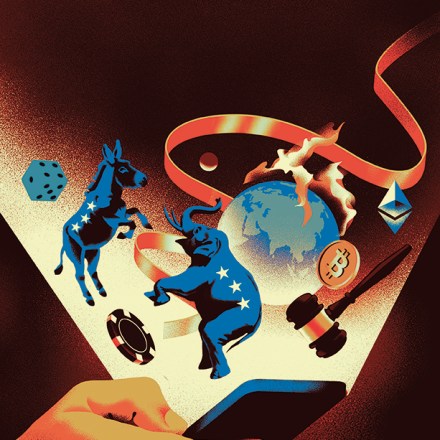
How might the ayatollahs know an American strike force is coming? Advanced radar technology, perhaps, or a mole somewhere in the Pentagon. Or they could just look at Polymarket. There is currently around $125 million wagered in the largest market predicting when the US will next strike Iran. Given the current odds, traders reckon an attack will take place in the second half of this month. If Nicolás Maduro had checked Polymarket on the night of January 2, he would have seen his odds of losing power spike from around one in ten to 66 percent, hours before Delta Force arrived. One trader has racked up $150,000 in profits in seven months, placing trades on military activity by Israel Polymarket and its competitor Kalshi are prediction markets.

prediction markets
prediction markets

Is the survival of prediction markets a safe bet?

On a cold January night in New York City, Chris Hayes walked off the set of CBS’s Late Show with Stephen Colbert only to face a pressing ethical dilemma. As he left the Ed Sullivan Theater and walked on to Broadway, he got a text from a friend who covers technology for NPR with a screenshot of a Yes/No market that had been spun up on the prediction market Kalshi, based on what Hayes might say on the evening’s broadcast. What would he say about Donald Trump? Would he talk about affordability, Russia, China, Greenland or other topics? It was just a $22,000 market in volume, a minor amount. But what struck Hayes as truly bizarre about the market was this: it was a prediction market about something that had already happened.

The dying art of sports journalism

Late in January, while the Washington Post was gearing up for the Olympics, staffers got an email from managing editor Kimi Yoshino. “As we assess our priorities for 2026,” she wrote, “we have decided not to send a contingent to the Winter Olympics.” A few days later the Post announced that it would send four journalists to Italy after all – down from more than a dozen. That’s four people to cover a two-week event with more than 116 medal competitions. Then at the start of this month, all 45 members of the sports team were told the section was being shut down. “We will be closing the Sports department in its current form,” the Post’s executive editor, Matt Murray, said in a statement afterwards.

The Artemis II mission is an exercise in wonder

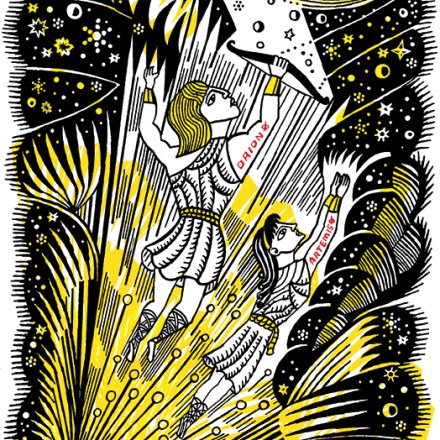
When the Artemis II mission eventually blasts off, it will take humans back to the Moon for the first time in more than 50 years. Americans Reid Wiseman, Victor Glover, Christina Koch and Canadian Jeremy Hansen will travel further out into space than anyone before when they loop 4,700 miles beyond the Moon, seeing parts of it never before glimpsed by human eyes. The flight is designed to put the powerful Space Launch System rocket and the Orion capsule, with its European-made Service Module, through their paces. Three hours after launch, the crew will monitor a procedure not performed since 1972, so-called TLI – Trans-Lunar Injection. Only five of the 24 astronauts who have experienced that are still with us.

The new power of cryptid belief

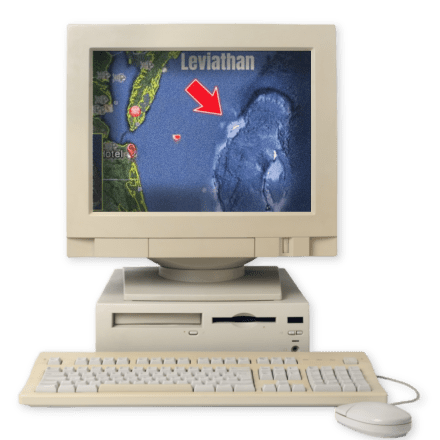
Last month, during the Arctic Blast that still has a few states trapped under ice (greetings from Illinois), someone posted an altered Google Earth screenshot to Facebook. The image displayed a snake-like shape in the Atlantic Ocean, east of Virginia. “The Leviathan is waking up,” the caption read. “This is why they are creating a FAKE snow storm and manipulating the weather so they can freeze it because of the military bases in the area.” The post gained enough traction to land on Know Your Meme, the internet’s best-kept meme encyclopedia. But it wasn’t just a meme, at least in the sense we usually mean. A lot of people earnestly believed that the biblical Leviathan was waking up from beneath the Commonwealth of Virginia.

How useful is AI for research?

Late last year, I published the first theoretical physics paper in which the main idea originated from artificial intelligence – from an AI. And my experience working with the most powerful AI models left me both impressed and wary. The most accurate analogy I can offer is that it’s like something familiar to anyone who has done research: a brilliant colleague who is also unreliable. This colleague can produce deep insights at surprising speed – and then, the next second, make an error that ranges from the trivial to the profound. That tension – capability versus reliability – has shaped how I now use these systems in mathematics and theoretical physics. It is also what will shape how they affect scientific research over the next few years.

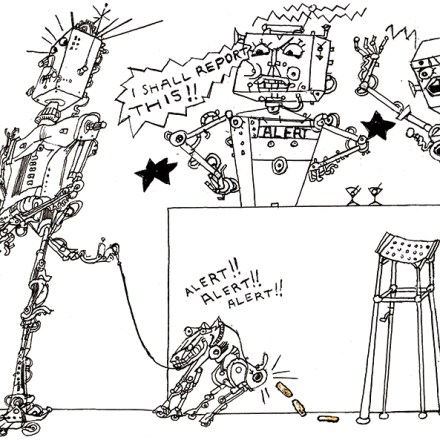
Has AI finally developed consciousness?

Depending on where you stand on AI, January 30, 2026 will go down in history for one of two things. Either it is the day when the AI singularity really began and the robots became conscious – or the day when it was revealed that far too many people are credulous about AI and were fooled by a bunch of cosplaying crypto-bores.  To recap: this story begins with several confusing names you may have glimpsed on the internet in recent days – Clawdbot, Moltbot, Openclaw, Moltbook. They represent different pieces of the same extraordinary puzzle. Built by London-based software developer Peter Steinberger, OpenClaw (the current name for what started as Clawdbot) is an AI "agent" that runs locally on a user's own hardware and connects to everyday apps such as WhatsApp, Telegram and iMessage.