Books & Arts

Books and Arts

How does the global art market move?

Art market reporting tends to be more sensationalist than, say, the news about corn futures. Breathless accounts of high-stakes bidding abound, remarkable discoveries of forgotten treasures in thrift shops get big headlines, and who’s up or down and how much money the fluctuation involves become fodder for salacious gossip. Interesting though these tales undoubtedly are, though, they don’t provide a realistic picture of the art business. While they may be less gossipy, some nuts-and-bolts stories away from the headlines can be just as compelling for those with an interest in the art market, and how what we see displayed in our homes, public spaces and cultural institutions depends upon very practical considerations to get there.

art market
starfield

The frustrating promise of infinite freedom in video games

Starfield is intermittently, unexpectedly profound. As my custom spaceship lands on one of the game’s thousand planets, and my customized character steps into the neon lights of a strange alien city, I’m struck by the sheer scale of this digital universe. This is the game I dreamed of as a sci-fi nerd child and teen, burying myself in The Icarus Hunt, The Long Earth, Foundation, Hyperion, Dune and boundless other sci-fi novels that transported me from a rural Australian library and into space. And here I am, transported there again, through an Asus M16 gaming laptop. There’s a big galaxy out there, and it’s yours to explore. And yet, however vast, it’s a desolate universe.

Beauty, terror and banality are uneasily juxtaposed in Harmony

If there is a central message in Harmony, it is that old cliché that evil flourishes when everyday people stand by and do nothing. That idea is returned to repeatedly, with increasing angst, as the central characters in the musical get swept up, and finally tossed aside, in Nazi Germany. Harmony revives the true story of the Comedian Harmonists, six men — three Jewish, three Gentile — who created an ensemble in 1927 during the waning days of the Weimar Republic. The group, who melded physical comedy with singing, sometimes using their vocal cords to mimic entire orchestras, became a surprise hit. They sold millions of records, appeared in movies, and performed worldwide.

Harmony
crawford

Does Joan Crawford deserve her bad reputation?

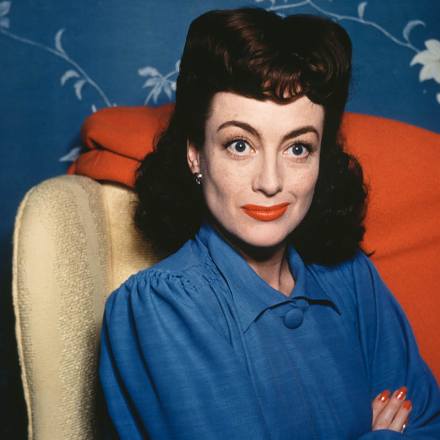
Bitches get a bad rap. In his new book, Ferocious Ambition, film historian Robert Dance recontextualizes the life, career and artistry of the most notorious bitch of them all, Joan Crawford. Crawford’s early twentieth-century rivals have faded into history (outside of the gayest of gay kids, does any Gen Z-er know the name Norma Shearer?), but Crawford is omnipresent for all the wrong reasons. Ryan Murphy reenacts her feuds on FX’s Feud. Drag queens imitate Crawford running around with an ax. And, every Mother’s Day, bloggers roll out posts and memes about her legacy as the worst mom of all time; the titular Mommie Dearest of Faye Dunaway’s campy, classic, child-abuse shlockfest.

John Densmore on protecting the Doors’ legacy

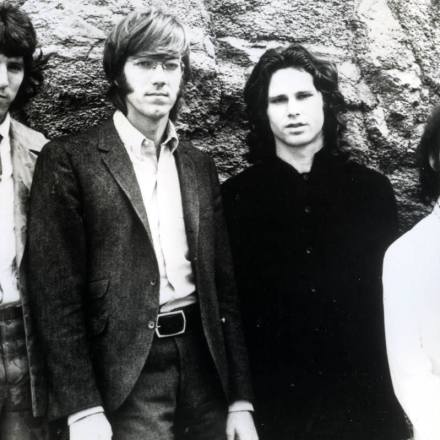
The once-explosive accusation that a rock ’n’ roll band is a sell-out, aimed at artists who make an accommodation with industry, has come to seem a little naive since it was first bandied about in the 1960s. Whether it’s that well-known monument to prudence Iggy Pop extolling the virtues of car insurance, the Zombies promoting Tampax or Bob Dylan shilling for Victoria’s Secret, they’re all at it these days. Elton John wants you to dial UberEats, the Stones will start you up with a $139.99 Keurig coffee machine, and by now it might be easier to list the names of rock stars who haven’t chugged Pepsi on TV than those who have.

densmore
death

The peculiar American attitude toward death

Dying sensibly has always eluded Americans — from Elvis to Houdini — and that’s before you even get to the funeral part. In fact, in America, something peculiar has occurred over the last century. Traditional obsequies have fallen out of favor as Americans increasingly opt for “anything but” the conventional when it comes to final resting places: that is, no more six feet under. According to the National Funeral Directors Association (NFDA), the majority of Americans now choose cremation, with the rate expected to surpass 80 percent by 2045. Ecofriendly departures — think hemp coffins or ashes strewn over a living coral reef — are also becoming more popular; 60 percent of respondents to one recent survey expressed an interest in “green funeral options.

Cahokia Jazz is enormous fun

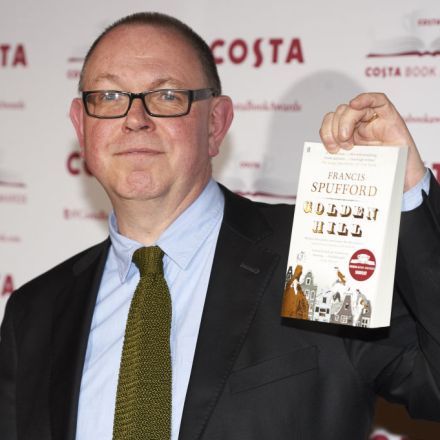
If you are a male, middle-aged, middle-class novelist, do not despair of being deemed unpublishable in our era of identity politics. On both sides of the Atlantic, the smartest chaps have turned away from the interiority of literary fiction. From Colson Whitehead and Marlon James to Mick Herron and Charles Cumming, they now write detective fiction, speculative fantasy, or a combination of the two. Francis Spufford, the award-winning author of best-selling novels such as Golden Hill, has come up with a zinger. Cahokia Jazz is set in a 1920s city in a counterfactual America. Here, the native Americans were not fatally weakened by a deadly strain of smallpox, but experienced the milder version which has just a 1 percent mortality rate and confers immunity.

spufford
gissing

In praise of George Gissing, the born exile

George Gissing died just over 120 years ago, marooned in the French Atlantic resort of Saint-Jean-Pied-de-Port and in circumstances that might have been plundered wholesale from one of his notoriously ground-down novels. H.G. Wells, present at the scene, was so affected by his friend’s deathbed ravings that he transferred them word for word into the mouth of Uncle Ponderevo as he lies dying in Tono-Bungay (1909). There are Orwellian shadings: like Gissing, Orwell died at forty-six of lung disease, and was profoundly influenced by his Victorian forebear. It was Anthony Powell who remarked of Orwell’s third novel, Keep the Aspidistra Flying (1936) that “the Gissing had to stop.

Relive Lou Reed’s wild, contradictory life

Before “Walk On The Wild Side” changed everything for Lou Reed in 1972, bringing him status and bolstering his bank account, he had been lead singer of the Velvet Underground, a group, as managed by Andy Warhol, that served up songs about drugs, gender-bending and sexual fetish, all designed to crash the boundaries of what polite America considered acceptable. The great thing about Velvet Underground songs was that musically, too, they transgressed: drone-based harmonies progressed glacially as rhythmic impetus stuttered. The big problem with the Velvets, in terms of finding any wider audience beyond self-confessed weirdos who hung out with Warhol, was that virtually nobody wanted to hear drone-based harmonies moving glacially or rhythms that fragmented. Where was the fun in that?

reed
ruskin

The notorious feud between John Ruskin and James Whistler

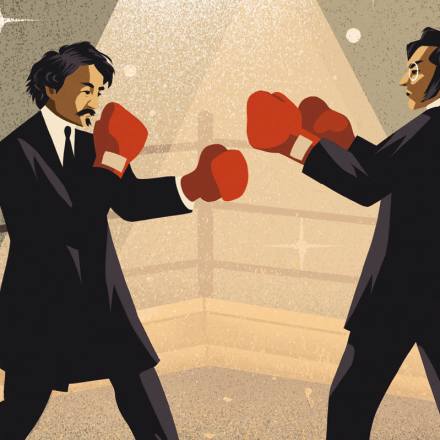
It was too dark to see, and the painting was upside down. In 1877 John Ruskin, the leading art critic of Victorian England, attended an exhibition that included paintings by the American-born artist James Abbott McNeill Whistler. He hated them — and said so. In print. “I have seen, and heard, much of Cockney impudence before now; but never expected to hear a coxcomb ask two hundred guineas for flinging a pot of paint in the public’s face.” Whistler sued. The following year the argument came to court, on a dark day in a gloomy and gaslit courtroom. The canvases that Ruskin had so disliked were propped up against a wall and barely visible; one was the wrong way up, and another was dropped unceremoniously onto an elderly gentleman’s balding head.