Books & Arts

Books and Arts

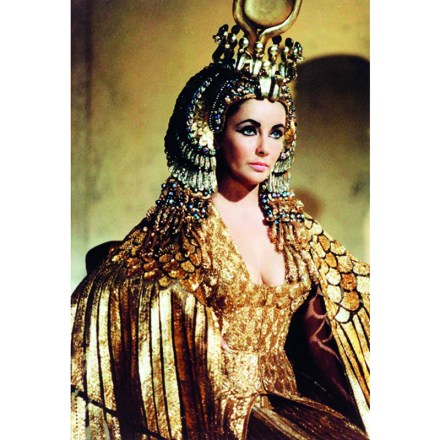
Cleopatra still dazzles sixty years later

It’s a dazzlingly staged event that evokes the ancient theater, Italian operas, elaborately choreographed Busby Berkeley films and an open-air spectacle on par with WrestleMania at Caesar’s Palace. I’ve watched it knowing that as a small boy, I tugged on my mother’s blue jeans and asked a question informed purely by cinema: “Is Cleopatra the most beautifulest woman in history?” “No,” replied mother, with a cigarette stuck between her clenched teeth. “Elizabeth Taylor is.” I was, of course, picturing Elizabeth Taylor as Cleopatra. The event I’m referring to isn’t mere cinematic overindulgence; it is a monumental moment — six decades after moviegoers first saw it — which transforms a movie star into a deity.
Cleopatra
hopper

Edward Hopper’s America

With a new show at the Whitney, Edward Hopper’s New York; a new documentary film from director Phil Grabsky, Hopper: An American Love Story; and a recent exhibition organized by the Virginia Museum of Fine Arts and the Indianapolis Museum of Art, the work of one of the most popular yet seemingly inscrutable American artists of the twentieth century is receiving a great deal of renewed attention. In his paintings, Hopper’s hard-edged realism, impressionistic plays of light and passages of intensely saturated color compete for attention. What has always captured the public imagination is the relative isolation of the figures that appear in his work. Search for articles about Edward Hopper online, and many will describe his art as an exploration of loneliness.

An ingloriously dumb adaptation

There’s always been a market for nostalgia. Keats, the huckster of Greek glories, put it best: “Heard melodies are sweet, but those unheard are sweeter.” But the peculiar achievement of Lester Bangs, the cantankerous rock critic played by Philip Seymour Hoffman in the film Almost Famous (2000), is to sell us some self-confessedly unsweet music. True rock and roll, the Bangs character tells us, is “gloriously and righteously dumb” and could suffer no worse fate than to become an “industry of cool.” Of course, by his lights, the golden age has passed; all that remains is “the death rattle, the last gasp, the last grope.” If nostalgia is a drug, he has mainlined the stuff. What are you on, man, and where can I get some?

almost famous
queen mother

Was the Queen Mother ever really funny?

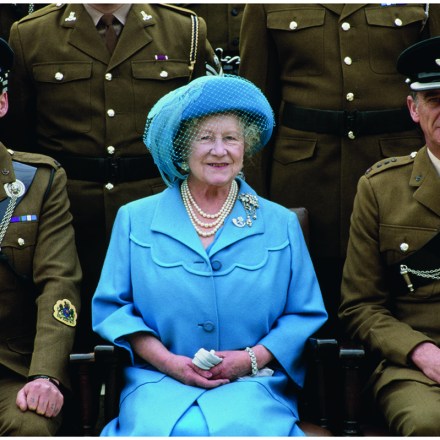
Was the Queen Mother ever really funny? She was clearly extremely good company: an attentive listener, full of enthusiasm and affection, right up until her death, aged 101, in 2002. She was also the ideal queen for an unconfident George VI, undermined by his stutter and caught unawares by his accession to the throne, thanks to the abdication of his appallingly selfish brother, Edward VIII. The only time I ever saw the Queen Mother — when she was eighty, at her Clarence House home — I was only eight, but I remember her clearly. A tiny figure, she beamed away, spreading goodwill among strangers when so many people that age have lost mobility, let alone the ability to cheer up other people. Grumpy George V had thought much the same of her charm nearly sixty years earlier.

Bob Dylan’s tower of song

“He doesn’t write on drugs, he doesn’t write on liquor, he writes on everyday occurrences.” — Beatty Zimmerman, Bob Dylan’s mother, 1999. After you admire the cover of Bob Dylan’s The Philosophy of Modern Song, and its triptych portrait of Little Richard, Alis Lesley and Eddie Cochran in their prime, open it to the title page. There, in pulp-fiction red, is a little crimson lightning bolt. On the next page, there is a photograph of the twenty-two-year-old Elvis Presley — the man who popularized the lightning bolt, with his logo “TCB” or “Taking Care of Business in a Flash” — in a Memphis record store, looking through just-released bounty like “Here’s Little Richard” and “A Tribute To James Dean.

Dylan
locust

Stephen Amidon’s day of the locust

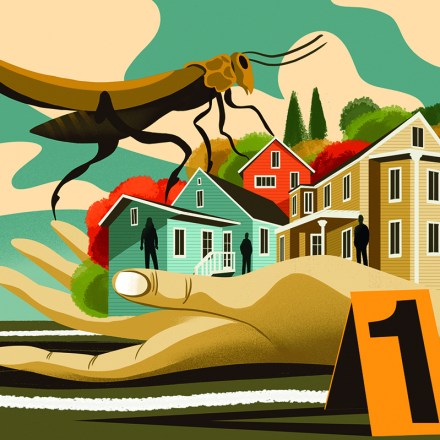
Stephen Amidon’s Locust Lane begins late at night, with a dog run over by an alcoholic fund manager. Patrick is well over the limit: “He didn’t need another item in the overladen shopping cart of guilt he was pushing around.” He vacillates, and then scarpers, setting up the novel’s themes of addiction, accident, power and privilege, and how far people will go to save themselves. Questions of nature and nurture abound: does monstrous behavior pass down the generations, or is it learned and acquired? And what lengths will communities go to in order to protect their own? Locust Lane is a street in the town of Emerson. It’s a tony neighborhood, whose vast, spotless houses contain apparently equally spotless WASP-y families, insulated by centuries of accumulated wealth.

The spy who loved me

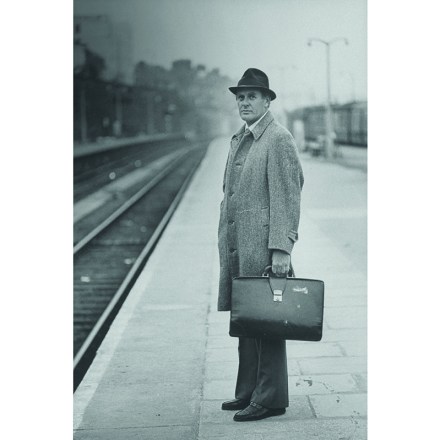
I started reading Suleika Dawson’s The Secret Heart at a London bar, intending simply to skim through as I finished my beer. Six hours and many more beers later I was still at the bar, and still reading. The book, an erotically charged, no-punches-pulled account of her multiple affairs with the author John le Carré (or David Cornwell, as she knew him), is also a fascinating and important portrait of the man himself. The pseudonymous author, with her winking nod at Max Beerbohm’s femme fatale, offers a degree of insight and honesty which le Carré’s official biography (let alone his own memoir) and recently released collection of letters do not, and a character study of a London long since lost.

le Carré
publishing

The publishing mega-merger that wasn’t

If you sit down and talk to an author for any length of time, you will hear gripes. (Writers will never be confused with the sunniest of people on this planet.) About the visibility of their books; about the size of their advances; about their sales, relative to their other titles and to their peers; about publicity campaigns; about cover designs. There will be a lot of gripes, and if you are cornered by an author in a bar, or at a party, you might be advised to make your excuses and flee. But if you have some sympathy for this much-maligned breed, it may occur to you that the basis of their complaints ultimately comes down to a simple lack of appreciation by their publishers: those all-powerful entities that have the power to make or break careers at the touch of a button.

The return of Bret Easton Ellis

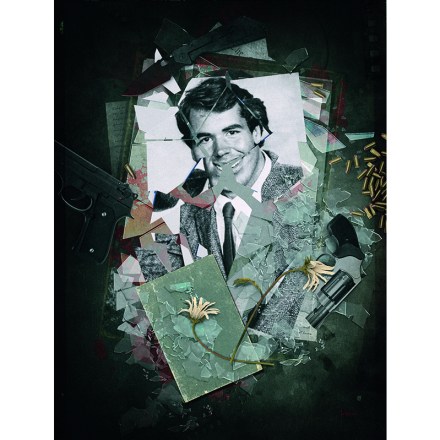
The Shards is about 600 pages long. “Should anyone even publish a 600-page novel?” asks its author Bret Easton Ellis. “I happen to believe, yes, if it’s justified.” Such books are rarely justifiable, and often, novelists become buzzed-about simply for executing them, but not many can boast that every word, scene and sentence is necessary. This is how it feels to read The Shards: not a detail is to be missed. It contains the thematic elements that run through Ellis’ oeuvre: the social lives of the wealthy, or nearly wealthy, drugs, sexuality and desperation painted over with bursts of violence. The through line that connects his work isn’t that sex and violence are taboo.

ellis