Spectator Life

Spectator Life

An intelligent mix of culture, style, travel, food and property, as well as where to go and what to see.

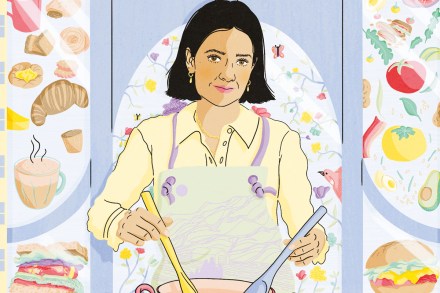
Ali Slagle’s low-stress supper

Who is Ali Slagle? A fan of New York Times Cooking might recognize the name: nine of their fifty most popular recipes of 2022 are credited to her, the most of any of their contributors, including household names like J. Kenji Lopez-Alt and Melissa Clark. But despite the tremendous popularity of her recipes, Slagle herself is a bit mysterious. She crops up, cheerfully and occasionally, on NYT Cooking channels. Her 142,000 Instagram followers are a mere fraction of the followings of her food-celebrity contemporaries, like Molly Baz, Alison Roman, or Claire Saffitz. She doesn’t appear to be developing a platform; she has no Twitter, no Substack, no YouTube channel. She appears to live in a camper van.

ali slagle

A salt for all seasons

It takes four people, according to the French, to get a salad dressing right: a spendthrift for the oil, a miser for the vinegar, a wise man for the salt and a lunatic for the pepper. A tough cast to assemble, you might think, but the freehanded, the tightfisted and the insane aren’t such rare birds. The true needle in the haystack is the wise man who would have anything to do with a recipe involving four chefs. Cooks, broth, too many — enough said. Most wise men would be out of town before you could say “smoked oak salt flakes” ten times fast. But the point stands: getting the salt right isn’t a walkover. The rookie has to steer a tight course between undersalted Scylla and oversalted Charybdis.

salt

Japanese food is overrated

After twenty-three years in Japan, I have concluded that the much-lauded, worshipped even, cuisine is overrated. And I am getting a little tired of being told how awe-inspiringly wonderful Japanese food is, often by people whose only experience is high-end sushi or designer tempura in a showpiece Tribeca eatery, a world away from the standard fare available on the backstreets of Shibuya. Part of the problem is that much of what delights the Japanese about their food is unrelated to its actual taste.

Japanese

Save the all-you-can-eat buffet!

The pandemic of the past two years had many casualties — everything from lost lives to faith in bureaucratic and medical expertise. All-you-can-eat buffet restaurants were among the hardest-hit subsectors of the service economy. Buffets were already in steep decline nationwide by 2019, owing to evolving American preferences for fast casual dining and farm-to-table menus with Golden Corral as arguably the sole remaining buffet chain in America. By 2022, even that venerable franchise  — a Raleigh, North Carolina-based symbol of American excess and dependent on high gross revenues to offset narrow per-order profit margins — had seen its footprint shrink 25 percent, down to a mere 360 restaurants after losing eighty due to pandemic-related closures.

buffet

A Christmas gift guide for foodies

I’m hungry, so I know it has begun. December. The month when the kitchen transforms into a battleground, no soldier safe from its vigilant sniper’s gaze. Seemingly innocuous snacking is off-limits: one must assume that everything edible — everything — has been squirreled away for festive drop-ins, cocktail parties and The Big Day. “Wait! Don’t open that. It’s the Christmas wine.” “Hey. Don’t even think about it. That’s a gift for Auntie Jo.” “Put those back! They’re the Christmas Eve cashews.” We must struggle with bizarre concepts like “having a banana” or “waiting until dinner.” Or, do as I do. Continue in vain, scribbling an IOU list that grows as long as my belly grows round. I’ll buy it back tomorrow. Of course I will.

christmas gift guide foodies

The unruly chef

Joshua Weissman’s number-one bestselling An Unapologetic Cookbook is misnamed. You won’t catch the potty-mouthed, long- haired chef saying sorry for making a mild ethnic slur against Italians or a penis joke, but in a philosophical sense, apologetics is exactly what he’s doing: he champions the joys of home cooking to an uninitiated audience. Weissman’s unlikely following is made up of the type of guys who consume a lot of quasi-educational content on YouTube and Wikipedia. They won’t buy the latest Barefoot Contessa volume, but they are curious about how things are made, whether it’s bridges or Big Macs.

weissman

A gingerbread house divided

To celebrate my birthday, which falls six days before Christmas, my mother used to make gingerbread houses for me and a dozen of my friends. Every December, she set to work baking sheet after sheet of gingerbread. The baking would take up the first week of the month, and in the second she would assemble the houses, laying their icing foundations and sealing the four walls with crisp white frosting. These would dry in the basement laundry room, taking up every available surface. After school, I would peep at the houses and dream about my party. On the big day, my mom set out each perfect house at the formal dining room table, and we convened to decorate them.

gingerbread
christmas

My smorgasbord of Christmas traditions

Like many American families with multicultural members, my own family incorporates traditions to reflect different ways to celebrate Christmas. I count seven besides American: Swedish, English, Scottish, German, French, Swiss, Belgian. The first five are in the family DNA. The remaining two reflect countries where we have lived and raised our children. Growing up with Swedish immigrant grandparents under the same roof, my Christmas took on many Swedish customs, starting on December 13 with the celebration of Santa Lucia. Legend has it that the fourth-century saint was a child-martyr who brought food and aid to Christians hiding in the Roman catacombs. A young girl is dressed as the saint, in virginal white, sashed in red, representing a baptismal robe and the blood of martyrdom.

Lucius Beebe knew how to live

There are some characters who infuse literature and life with disproportionate zest. The nature of their vocations is less relevant than the fervency they bring to the job, which is what makes them stand up off the page and sail through time. Lucius Beebe, who kept a Rolls-Royce and a Bentley, favored bowler hats and evening dress and wrote a column for the old New York Herald Tribune in the 1930s and then for Gourmet until his death in 1966, sits high up on my list of zestful characters who go the distance: militantly old-fashioned, never out-of-date. The association with the estimable, sadly deceased Gourmet justifies talking about Beebe under the food heading as much as any other, even though he did not always write about food as such.

beebe

Feeling grumpy about good service

Horizontal, deep into a book and ever deeper into a mojito, is how I’ve spent most of my week. A private beach under the Caribbean sun should have been relaxing. And it would have been, if it wasn’t for the vibe squad. What is a "vibe squad," you ask? Well, picture it: you’re nearing the end of a Patti Smith novel, and naturally you’re crying. It’s mid-afternoon, you’re contemplating a nap after the next drink. When all of a sudden you and Patti Smith are covered in booze, startled by a young girl in a bright top screaming, "are you ready to part-aaaaaay?" I was not, in fact, ready to part-aaaaaay, and the girl quickly moved along to the next unwitting tourist too polite to tell her to sling her hook.

Serving up a Half Baked Harvest feast

As one of eight children, I feel deep kinship with others who come from big families. Bunk beds, hand-me-down clothes, abject chaos at dinnertime — these are the staples of big-family life. Tieghan Gerard, the author of the food blog and cookbook series Half Baked Harvest, is one such kindred spirit. She comes from a family of ten, and began cooking as a tween to help with frenzied mealtimes. She soon started creating her own recipes for a food blog, which became three bestselling cookbooks and a four-million-follower Instagram. Her big-family backstory blends with her wholesome, rustic aesthetic: feeding a crowd, after all, involves creativity, resourcefulness and well-loved tools. I hoped I’d recognize some high-volume cooking tricks in Half Baked Harvest: Super Simple.

harvest

The last roadside ice cream stands in America

When I’m out on small New Jersey roads — sometimes Virginia roads, but I don’t see them there as often — I always take an extra second to look at ice cream stands. You know the place: a basic, boxy building with a little awning, an ornamented, angular front, one or two counters to order, and more often than not no inside seating or even a customer entrance. The staff are usually high-schoolers, maybe retirees. The prices, like everything, have crept up, but they’re still wallet-friendly. They’re refreshingly un-trendy, too. Nobody manhandles your ice cream on a frozen rock. I love these places. I have many fond memories of my parents pulling off the road for ice cream, sitting at a simple table on gravel under an awning and enjoying a treat. Simplicity. Contentment.

You, too, can ban James Corden from your restaurant

The restaurant world was devastated this week after learning a fact our cousins across the Pond have been telling us for some time: that James Corden is a huge douchebag. The Late Late Show host found himself on the blacklist of swanky New York haunt Balthazar, after owner Keith McNally described the Brit as his “most abusive customer.” Now, one enterprising company that provides signage to restaurants is offering its clients a “free digital sign” to Iet Corden know he’s banned from their establishments too. Australia-based Mandoe Media breathlessly rushed the signs out in a press release. A bit too quickly for Cockburn’s liking, as the company appears to have skipped the spell-checking stage. One reads, “DONT BE LIKE JAMES: TREAT STAFF WITH RESPECT!

james corden

Keto no-no

I recently got engaged. After the celebratory Champagne and indulgent restaurant meals my fiancé and I enjoyed in our month of post-betrothal bliss, reality set in: soon I must fit into a wedding dress. Of course, dresses come in all shapes and sizes, just like brides. But have you seen the price of a wedding photographer lately? I’d like to look my best. These days, the main weight-loss food trend seems to be the ketogenic diet. Like the Paleo and Atkins diets, eating keto means cutting carbs. Unlike these other diets, keto isn’t high in protein; it’s high in fat. The idea is that depriving yourself of carbs and protein will cause your body to burn fat for energy — starting with the bacon and eggs you ate for breakfast and ending with your thighs.

keto

Are you man enough to eat raw offal?

The dominant wolf gets the liver, at least according to the podcaster Joe Rogan. In one episode, a bodybuilder called “CarnivoreMD” (real name Paul Saladino) tells him: “If you eat liver, you get to be an alpha male... or alpha female.” Offal has taken a markedly macho turn in recent years. No longer consigned to memories of the postwar school cafeteria, organs have become the preferred food of a certain type of gym bro. The word “offal” implies wastage — from the Middle Dutch for offcuts — but it can also be a delicacy. Foie gras is only the most obvious example. For the most part, though, the West has become squeamish about what was once called “variety meat.” But a new wave of offal-lovers is reviving an interest in organs.

offal
cake

Cake for a world turned upside down

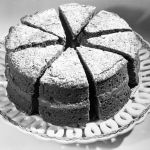
My mother, although an excellent cook, never baked. She left that to her Swedish mother, Anna, who lived with my grandfather in an apartment my father built for them over our garage in Weston, Connecticut. Anna, as I’ve written before, was a gifted baker, especially when it came to Swedish breads. I can’t remember when my mother suggested I might make my father’s birthday cake. Or why the task had been handed down to me. I was only nine or ten, but my mother was well aware that I loved to watch Anna bake, and that my curiosity needed constant nourishment. Rural Weston had no bakery in its small-town center, nor did neighboring, cosmopolitan Westport. In the 1950s, powdered cake mixes came to Westport’s Gristedes supermarket.

zucchini

The postmodern horror of zucchini ‘apple’ crumble

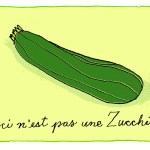
There are some very bad people out there. Call me naive, but while I always vaguely knew this to be true, a chance discovery the other day really brought it home. I was scrolling idly through internet recipes and then, suddenly, stark and horrible, there it was — zucchini “apple” crumble, advertised as a method of successfully “tricking your family” into eating vegetables while conveniently using up overgrown zucchinis from the kitchen garden. “If they don’t see you making it, they’ll never know it’s not apple!” urged the author, evidently an agent of the dark side. My eyes widened with horror. My soul curled like a leaf in protest. But then the calming voice of reason intervened.

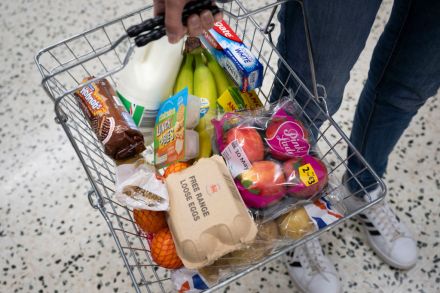
Two cheers for grocery store shopping during inflation

The other day I attempted to have sushi rolls for dinner. I ended my night disappointed, and excited to go shopping for overpriced groceries. Back in college, in central Jersey, I used to go to a Japanese restaurant in town, order the triple spicy roll combo, claim a student discount, and walk out with a perfect dinner for about $13. The filling was just pure fish, and enough spicy mayo to complement it. No crunchy flakes, no cucumber, no cost-cutting measures. Sure, it was a lot of rice despite feeling healthy, but I told myself the hours of studying would burn it off. So the other night, with my wife at the office and out for a work dinner, I was on my own for dinner and went searching for my old college favorite.

trader joe’s petitions

Barbecue is America’s food

Summer is fading fast, and though, according to my calendar, “the Autumnal Equinox” (is that the newest model of Hyundai?) isn’t until September 22, all the things we love about the season — swimming, county fairs, outdoor drinking, the August congressional recess — are essentially over after this weekend. And while people mark Labor Day in different ways, one of the best is with a barbecue, one of the few culinary traditions America can truly call its own. Smithsonian Magazine tells us barbecue has its origins in the first indigenous tribes Christopher Columbus encountered, who had a “unique method for cooking meat over an indirect flame, created using green wood to keep the food (and wood) from burning.

Eating well at a time of inflation

Inflation having topped 9 percent this summer, Americans are looking for ways to cut their spending. Rising prices at the grocery store are impossible to avoid, but we can learn to adjust. There’s no better inspiration than M.F.K. Fisher. Fisher, a food writer who hung around with Julia Child and James Beard during her lifetime, felt the pain of wartime rationing acutely. Her 1942 book How to Cook a Wolf addressed the problem of hunger — “the wolf on the doorstep” — with a few clever recipes and a great deal of philosophy. Survival of the crisis, she predicted, would require first and foremost an attitude of abundance. Fisher ascribes virtues like honesty, dignity and nobility to simply prepared foods.

garden

On constant gardening

Let nobody sneeze at the horticultural arts. Francis Bacon devoted a moderately famous essay to the topic, beginning by pointing out that the very first garden designer was Almighty God. The garden, Bacon argues in his 1625 treatise, offers the purest of human pleasures. As a civilization approaches its peak, its creative geniuses tend to focus on perfecting architecture before finally, at the apex of its development, turning to the art of the garden. With a name like Bacon, Sir Francis might be pardoned for devoting especial attention to the kitchen garden, whence hail so many excellent pairings for salt-cured pork — roasted cabbage with bacon and pine nuts, for instance, or the inseparable bacon, lettuce and tomato.

chatham

Spending Labor Day on the Cape

A few days before Labor Day I tend to get nostalgic for the sixty-five summers I spent in Chatham on Cape Cod. The feeling starts slowly, especially during our after-dinner, three-generation family strolls around the Chatham Lighthouse in the charming Old Village. If it is our last evening before returning to Europe, my father would be broiling the last steak. The stroll begins with a nip in the air and the gently falling, silver leaves from the trees that line small streets. There isn’t any traffic; residents of the Old Village walk. Later, when my mother had two bionic knees, she was still lovingly called the “fastest woman in town.” Now she strolls with the rest of us. We are savoring another tradition, after a summer filled with golf, tennis, swimming, boating and feasts.

Is Papa John’s no longer God’s pizza?

Cockburn saw Papa John last week at CPAC — and he had some strong words about his old stomping grounds. John Schnatter, founder of Papa John’s Pizza, was ousted from his company in 2018 after saying the N-word on a conference call. Cockburn thinks he had it coming. Schnatter, who ate 800 pizzas from the chain over the last eighteen months, claims the company is now “down with Little Caesar’s,” among the gravest insults you can level in the pizza business. The Pizza Papa made it clear that he knows why the company is losing its way: "We built the whole company on conservative values. Conservative ideology has two of the most critical attributes: truth and God." Without truth and God, he said, the pizza had gotten worse.

papa john

The little joys of growing corn in Connecticut

They were neighbors and friends. Harold Loeb, an economist, writer and heir to the Guggenheim and Loeb fortunes, and his wife Vera lived down the Saugatuck River from us on Snake Drive, at the end of Buttonball Lane. Harold was better known as having been betrayed by Ernest Hemingway in Paris in the 1930s — Robert Cohn in The Sun Also Rises was modeled after him. Harold got even in The Way It Was, published in 1959. He asked my father to sketch him for the book’s back cover. Among other things they had in common a gift for gardening. My father, known for his charcoal sketches of celebrated locals of Weston, Connecticut, planted a large, Walden-inspired plot surrounded by a white picket fence, where weeds were allowed as long as they didn’t interfere with the crops.

corn
reykjavik

Thai-celand: how southeast Asian cuisine took over Reykjavik

Last October I flew to Reykjavik for a spa weekend among the volcanic lagoons. It sounded blissful, but the reality was strange and, in some ways, downright alarming. This was back when people still cared about Covid, and no one seemed to care more about Covid than the Icelanders (even though the data suggested that barely anyone there had the virus). You might imagine their reaction when someone collapsed on an incoming plane. That someone was me. I didn’t have Covid and had multiple PCR tests to prove it. What I had was a bout of vertigo so bad that I initially thought the plane was crashing. I managed to tell the Icelandic stewards, “I’m fine, really, it’s just vertigo.” One of them said to the other, “We’ll give her the injection, pull her pants down.

The scoop on homemade ice cream

"Gelati, sorbetti e granite,” it said on the cover. We were in a little bookshop off the Piazza Duomo in Verona. Days of consuming Italian gelato in the hot afternoons had worked so wonderfully upon our imaginations that here we were purchasing a recipe book in a language we didn’t even understand, trying to capture a little of the magical glitter of the Italian summer before it slipped through our fingers. I still have the book — and I still don’t understand enough Italian to follow a recipe. But the pictures convey some of the original magic. Gelato al limone peers creamily out of a yellow bowl, garnished with bristling strips of lemon peel. Gelato allo Champagne is pink and melting, snuggled up to a strawberry. Sorbetto d’arancia is spooned into a hollowed-out orange.

ice cream
upgrade

The decline and fall of eating out

"Upgrade” is a term I associate with flying and getting a seat in the front cabin that you don’t pay for — except perhaps with “miles” and “points,” our version of Green Stamps. Upgrade’s predecessor from the era of rail travel was “step-up,” the term used by the Pullman Company when a passenger wished a better accommodation and space was available. You paid the conductor the step-up charge (in cash), and the porter dutifully toted your bags to your new compartment. Nowadays, it is no longer necessary to travel to upgrade. Just step out for lunch and add some “protein” to your salad. Upgrade! Marketing gibberish in the restaurant world is nothing new, but today it signifies the accelerating downgrade (sorry, no refund) of the whole business.

f'mores

Introducing f’mores

Don’t mess with s’mores, s.v.p... unless it’s for f’mores. They are my Gallic version of the gooey, sinfully rich and highly caloric, all-American dessert that the Girl Scouts invented in the 1920s. Graham crackers are sandwiched together with marshmallows roasted over campfire embers, and chocolate. S’mores are in our genes. I have three half-French grandchildren. Two summers ago, when California closed its schools, Covid sent the family fleeing Los Angeles to Antibes for two years. French schools reopened after six months of Zoom learning while California gave way to the powerful teachers’ unions and remained closed until this past spring. Before leaving, the family came to us.

Alison Roman joins the cancel brigade

Alison Roman is back on YouTube with a new video on making homemade smashburgers, including some very strong opinions on how to best dress the griddled patties: iceberg lettuce, thinly sliced onion, NO TOMATO, pickles and tons of mustard. Oh, and hold the fries: instead serve ’em up with a heaping side of cancel culture. In the middle of Roman's cheeky rant about her pickiness when it comes to burgers, the cookbook author and food vlogger declares that the bun has "got to be" a "potato roll." However, Roman never actually says the "potato roll" part — it's actually dubbed in via a text-to-speech robot. When Roman holds up the package of "perfect" potato rolls, the brand name is blurred. Why?