Spectator Life

Spectator Life

An intelligent mix of culture, style, travel, food and property, as well as where to go and what to see.

‘I don’t build new restaurants’: an interview with Tyler Florence

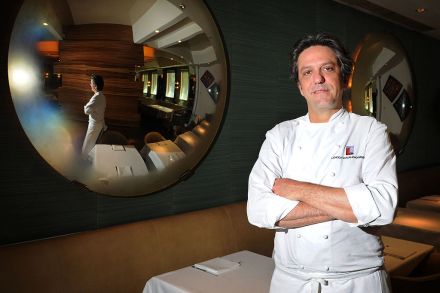
As a child, the chef and television host Tyler Florence had 42 different listed allergies. It wasn’t until he was 13 years old that he tasted melted cheese for the first time. “I had a very weird early diet. I could only eat and drink things like salmon, lentils, goat’s milk.” As a teen, he finally outgrew the allergies and tried foods most kids had been eating their whole lives. “It was like an explosion – all the flavors and the textures. I couldn’t get enough of it.” His first job was as a dishwasher at the Fish Market restaurant in Greenville, South Carolina. “It was the nicest restaurant in town. All the waiters had tuxedos and cummerbunds. It was the 1980s, so there were pink tablecloths and fish tanks in the dining room.

zucchini

My zucchini seedling scheme

Véronique arrives 45 minutes late, a vision of practiced nonchalance and rustic affectation in a loose-fitting linen smock dress, clutching a wicker basket suspiciously devoid of wear. She regards my zucchini seedlings with mild distrust and incredulity, the way the French eye giant Spanish strawberries when they first start appearing in the local supermarket. The plants’ robust stems and glossy leaves look almost too healthy, especially given their minuscule nursery pots. Something is amiss. “C’est bio, ça?” she asks, though her tone suggests this isn’t really a question –more an ideological verbal tic than a genuine inquiry into my choice of potting mix. “Ben oui!” I smile with the practiced ease of a man who has told this particular lie many times before.

RFK Jr. faces down M&M’s

Robert F. Kennedy Jr. may have finally met his match: the green M&M. Mars, which manufactures various popular candies including M&M’s recently announced it will be changing direction from its 2016 goal of removing "all artificial colors from its human food portfolio globally"... because Americans like their candy Red 40 red, rather than beet-red. The Health and Human Services Secretary has a plan to remove American children's spoons from their "toxic soups of synthetic chemicals." It's contingent on an "understanding" he has with major food companies that Americans don't want to be poisoned. Yet it seems his and the candy industry's mutual "understanding" is breaking down.

M&Ms rfk

Chet Sharma: chef, DJ, PhD

Chet Sharma – physicist, DJ and award-winning chef – only needs to sleep for four hours a night. “I inherited [this gift] from my mother,” shrugs the Londoner when we talk one morning before lunchtime service at his restaurant, BiBi. “She has unlimited energy!” Raised in Berkshire, England, to parents with Indian heritage, Sharma has a master’s degree in clinical and experimental medicine from University College London, as well as a master’s in physics and a PhD in condensed-matter physics from the University of Oxford. It was during those seven years studying that he also moonlighted as a cook and a DJ. “I’d do university in the morning, dinner service at a restaurant [at night], and at 11 p.m.

How I flouted a cardinal French gardening rule

“C’est ma faute,” I called up to the local old boys as they strolled past my potager, chuckling among themselves. I tried to match their levity, but it was obviously affected; they could sense my panic. It was late-April and my garden resembled an eccentrically out-of-season Halloween scene, with tomato plants standing eerily motionless like infant ghosts, wrapped from head to toe in protective fleece. Everyone knows that 41°F is too cold for tomatoes, but spring had been deceptively warm, and I couldn’t help myself. AccuWeather had issued a grim prediction for the night’s minimum temperature. Only a few days previously, I had been openly proud that my plants had been in the ground for two weeks. I felt foolish and impetuous.

gardening
jam

The joy of preparing freezer jam

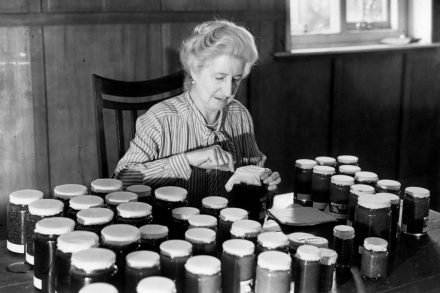
July, and the morning sun blazes over fields of pick-your-own strawberries. The black bears scope out the blueberry patches in the national parks. Skin-destroying raspberry canes trail across the path, ready to spring out and scratch the faces of passers-by. The berrying season is upon us: scratched faces and stained clothing are on the cards. Have you ever seen a child pack a handful of wild raspberries away into a shirt pocket for safe keeping? I hope so. It’s one of the joys of life. Their faces, on seeing the inevitable results, are completely worth the ruined outfit. However, if you don’t have any young relatives to cheer you up with their berrying misadventures, pick-your-own farms aren’t just pick-your-owns but pick-me-ups.

The oyster is your world

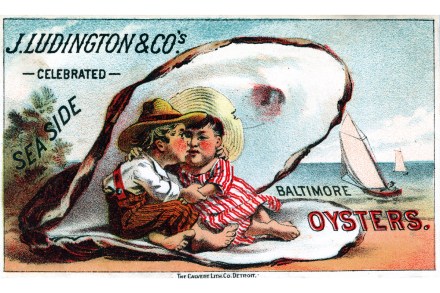
Oysters have recently achieved near-meme status as one of several “pick-me” foods alongside the dirty martini, pickles, tinned fish and other briny staples popularized online by Gen Z. These foods are noted for their slightly polarizing air – expressing a preference for them communicates an evolved palate, a niche preference, a willingness to see past an aesthetically questionable facade (the bumpy pickle, the barnacle-encrusted oyster). However, unlike its fellow “pick-me” travelers or its late, meme-ified millennial predecessor, avocado on toast, the oyster itself cannot be readily dismissed as a passing fad.

oyster

Tomato-gate: how I reclaimed my garden

Nothing beats befuddling my French garden neighbors each year with ridiculously early, cold-resistant tomatoes. I live in a tumbledown village in the Languedoc, population just shy of 1,000, and come spring each year I make it my business to confound the local gardening orthodoxy. My secret weapon is a full-spectrum LED grow light in my basement. Shhhhh! It’s not as illicit as it sounds – yes, they really are tomatoes that I’m growing, officer. While the local vieux garçons are still sharpening their spades and waiting for the Tramontane wind to stop scaring the dogs, I’ve been working in my subterranean lair since January, coaxing my Solanum lycopersicum into early adolescence.

garden

The allure of edible petals

Saying it with flowers used to be the thing – now we’re serving it with them. Edible florals have become quite the fashionable choice. There will be geraniums in your salad, lavender in your latte and hibiscus in your chocolate. Meghan Markle is making floral ice cubes, Jeremy Salamon is infusing his homemade vinegar with chamomile and Jamie Oliver is mercilessly pickling magnolia petals. There’s a Michelin-starred food joint-slash-florist in New York City, Il Fiorista, where you can get your favorite blooms stewed, baked, boiled or fried. The cocktails are swimming with garden truck, nasturtium leaves dye the buttermilk green and you could once, at any rate, lunch on sliced lotus root dusted with pine pollen (which sounds like a recipe for a positively Homeric sneeze).

flowers

The highs and lows of Montana’s state fair

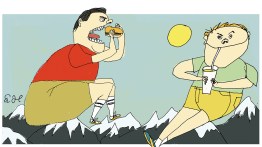
There isn’t a lot for a kid in Montana to do in summer. School’s out and the heat is relentless – so stifling that the only real escape is the cool embrace of the fruit and vegetable aisle at Albertsons. By July, my hometown’s lone waterpark was overrun with feral, overweight preteens, their bellies jiggling as they stampeded across the scorching cement. After an overpriced afternoon at the waterpark, many of these kids would head to McDonald’s for dinner. The more upmarket option was to try to exploit a family with a country club membership. The fast food there is classy; quick but not greasy – think mini tacos and peppery chicken strips served with a petite white cup of ranch on the side. But down the highway are the real fast-food joints.

Montana

The joy of French school lunches

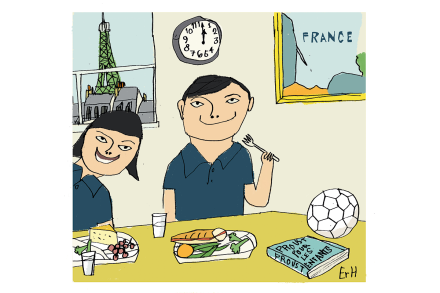
Since moving to France, one of my greatest pleasures has been rushing to pick up my two grandchildren from the tiny schoolhouse in the village of Monthelie. I can’t wait to hear about what they had for le déjeuner. Le déjeuner scolaire, a three- to four-course lunch, subsidized by the government, is sacrosanct. The French even have a phrase for socializing and eating together: la commensalité. They know that “a family that eats together, stays together.” I remember when America, where I used to live, understood that, too. Rarely do you see the French eating lunch or dinner alone in restaurants, bistros or cafés. The exception is for une pause café or morning coffee, when the French do prefer to be alone with a croissant, newspaper and quite possibly a cigarette.

salmon

The beauty and complexity of salmon

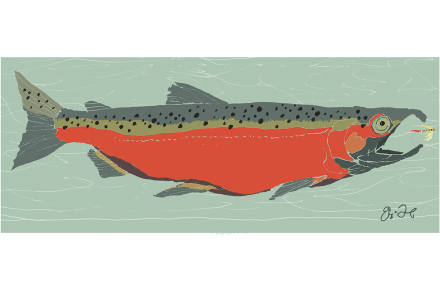
Britain’s most popular fish comes with batter, not scales – but America can virtuously say its favorite fish is salmon. Salmon and tilapia, according to AI, but you must never take AI at face value. Nor tilapia, for that matter. Stop me if I’ve already recounted the sad tale in these august pages, but I once – disastrously – tried to serve my relations tilapia. I bathed it in lemon-butter sauce, sprinkled chopped garden-fresh chives on it and nestled it among roasted tomatoes, olives and little baby potatoes in their skins. I even called it whitefish. I really gave it a fair shot. But pointed questions quickly came sailing toward me. What is this fish? What do you mean, tilapia? Where does it live? What does it eat? What are its desirable attributes?

The small town in Ontario with a world-class chocolatier

I’m sipping Madagascan hot chocolate out of white-and-gold Haviland Limoges, and nibbling on Venezuelan milk-chocolate bonbons, under an oil painting of Queen Victoria. I am on a visit to Guild Chocolates, “the finest chocolate shop in Petrolia,” in southern Ontario. The town’s population was circa 6,000 at the last census and on a Saturday morning, the chocolate shop is the place to be. During my visit, a sign on the Dickensian, wood-paneled storefront clearly indicates the shop is temporarily closed, but people keep turning the door handle and popping their heads in hopefully. Jaclyn Sanders, proprietor and chocolatier, calls warmly and apologetically out to them. Jaclyn opens her shop only one day a week: Saturdays from 10 a.m. to 5 p.m.

chcolate
German

Why German-origin Americans keep quiet about their culinary contributions

Irish Americans are arguably the most ostentatious in their national celebrations. It is hard to imagine any other group getting a day off work and spending it turning the Chicago River green. I wrote of my own Irish pride in these pages last year. March 17 was the highlight of our social calendar. My grandfather inaugurated our city’s St. Patrick’s Day parade, which still runs in Great Falls, Montana, today. Montana — especially Butte — is famous for its Irish population, which makes up 15 percent of residents. But there is a significantly larger ethnic group in Montana, whose traces of national pride are almost imperceptible. According to a US Census Bureau survey in 2020, 24 percent of Montanans claim German ancestry.

The Caviar Kaspia experience

It’s been almost 100 years since Arcady Fixon, a refugee from the Russian Revolution, opened the doors of Caviar Kaspia on Place de la Madeleine in Paris, and began beguiling his fellow exiles and the crème of Paris society with the exotic flavors of his homeland: shiny black caviar, served with blinis or potatoes, and ice-cold vodka. After being passed down through family hands, Caviar Kaspia is now owned by the charismatic entrepreneur Ramon Mac-Crohon, who has ensured that the place has lost nothing of its prerevolutionary charm: Nicolas II’s seal sits alongside antique porcelain in a display cabinet, and Nicolas Swertschkoff’s Troika, depicting a Russian horse-drawn sledge moving through snow, still hangs in the dining room.

Why did Spain leave behind such terrible food?

I can still remember it: probably the worst seafood dinner of my life. A slice of fish that was simultaneously cold, hot, dry, crumbly and rubbery, surrounded by overcooked vegetables and accompanied by a mysterious whiff of cigarette smoke. It was so repellent that even though I was famished, I summoned the waiter, returned the dish and retired to my room, there to endure a dinner of Pringles from the minibar. What made it worse was that I was in a celebrated fishing port. All I had to do was look out the window and I could see trawlers bringing in some of the world’s finest fish from some of the planet’s richest seas. It was dismaying, saddening, deflating and left me starving. What it was not, however, was surprising.

Spanish

I can’t stand Stanley Tucci

I love Italian food, and I love food writing and TV shows, so you might think I’d love Stanley Tucci. And yet I find him creepy and his recipes are rubbish. I can’t be the only one. The actor, who I first saw in the brilliant film Big Night, about a Jersey Shore Italian-American restaurant, is probably best known for The Devil Wears Prada, a film I adore. His character in that film did wind me up, but it took a while before Tucci himself got on my nerves. I suppose it began with him coming over all chef, like he’s the new Anthony Bourdain. I kept being told to watch his TV series where he travels around Italy, but the sight of his smug face on my screen turned out to be more than I could bear.

Stanley Tucci

Ship shape: Normandie, the biggest French restaurant of all

These pages recently carried a lament for the little French restaurant, and the loss from the cities they once graced of a certain element of gentility and, yes, class. On the same subject, let us consider another era when class was valued more highly, and which produced the classiest, and the grandest, French restaurant of all. This requires a journey. In July 1936, a Chicago family, relations of mine, embarked on an unrushed two-month European vacation. A meticulous Thos. Cook & Son-Wagons-Lits, Inc. itinerary routed them first to France, then Italy, Switzerland, Germany, Holland and finally to England. It was a thoroughly first-class affair.

French

How to host the perfect Christmas party

Cool guests, hot food; cool music, warm hostess: the recipe for the perfect party, and the motto of Perle Mesta, one of the most successful postwar Washington hostesses. Good King Wenceslas, a model host of even greater status, lived out this motto in legendary style centuries earlier. His guests were cool, if not downright frozen; their host was warm of heart (and sole, as the page discovered on treading in his footprints). The food was hot, for the king ordered up pine logs along with the flesh and wine. As for the music, the rude wind’s wild lament must have been on the cool side — though jollier tunes would surely have prevailed once the king and his fellow diners made it back to the royal fireside.

Christmas
Paris

Catching my breath in Paris

September felt like a long month — and I needed to escape London. The Spectator had just been sold — and while the transition from one editor to another brought excitement, it was also exhausting for everyone. Paris felt like the perfect retreat. And of course, the Eurostar is the fastest — and most enjoyable — way to get there from London. A friend of mine lives near the Gare du Nord, and as she was in London for a night, I borrowed her keys, jumped on the train and arrived in Paris as evening fell. Alone and hungry, I made my way to Les Deux Gares, a stylish hotel nestled between Gare du Nord and Gare de l’Est. Designed by Luke Edward Hall, whose aesthetic is unmistakably English, the restaurant inside is quintessentially French — and superb.

Casa Bonita

Casa Bonita, the greatest restaurant in the world

Colfax Avenue is the longest commercial street in the United States. It’s over fifty-three miles long, from the foothills of the Colorado Rockies all the way through the capital of Denver and out to the Eastern plains. It is littered with single-story, seedy roadside motels, some with working neon signage and some without. Hemp shops and dispensaries have moved in now as well. East of Denver, it has gained a sort of urban-legend reputation for sex work, vagrancy, crime and as of late, migrant gang activity. However, West Colfax is legendary for another reason. Nestled in the corner of a semi-rundown strip mall in the suburb of Lakewood, next to a coin-op laundromat and a Dollar Store, sits the mythological pastel-pink stucco tower of Casa Bonita.

Dining with the Chinese food pioneers of New York

For first-time restaurateur Bolun Yao, New York is a city to experiment in: “I feel like New York is the city that is always exploring new things. If you have a new idea, you put it here.” The Chinese-born entrepreneur — who has also spent significant time in New Zealand — came to NYU to complete a master’s degree in food studies. He quickly fell in love with the fine-dining Korean scene, including the two-Michelin-starred Atomix and COTE, America’s only Michelin-starred Korean steakhouse. Both merge contemporary and traditional techniques and ingredients. “Wow, that’s really, really smart and really creative,” the twenty-eight-year-old recalls thinking. “Why is there not a Chinese restaurant that does the same thing?

Chinese
Souls

Chicken soup for the souls: a feast for the dead

It’s indisputable. Food & Drink is The Spectator’s most important section. Ask yourself this: if you hadn’t eaten in days, would you have the slightest interest in perusing the deft political analysis, elevating cultural commentary and scintillating wit to be found the rest of the magazine? Without food, the only reading worth bothering with is Preparation for Death. As starvation sets in, only the two inevitables remain — Death and Taxes — and what need to worry about taxes? Tombstones have no mailboxes, shrouds no pockets. For over a millennium, November has been the month of the dead. The eleventh has been dedicated to fallen soldiers ever since World War One; but All Souls’ Day goes back much farther.

In praise of Halloween food

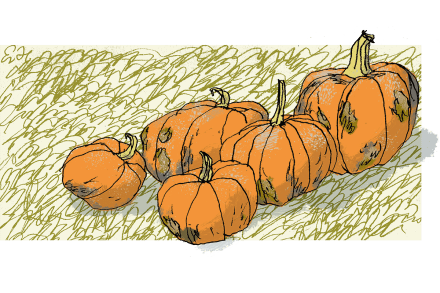
If you’re hesitant to ask someone if they are American or Canadian — the latter are often offended to be mistaken for the former — ask them instead about their favorite holiday. It isn’t a foolproof method, but if they say Halloween then you know you’re talking to an American. No other nationality would choose it — because no one else gets it so right. The origins of All Hallows’ Eve belong to Ireland and Scotland. The Celtic festival Samhain was not only a huge feast to mark the start of winter: it was a day full of superstitious activity, which included bonfires to clear the air of ghosts and sacrifices to appease anything all-powerful that might curse food supplies during the dark months.

Halloween
cookbook

Culling cookbooks

How do you choose ten cookbooks out of more than a hundred collected over sixty years? With difficulty. After my beloved husband Richard died, I decided that the only place I would want to live without him was in Meursault, France. The most difficult part was having to leave behind my cookbook collection. For a food writer, it was a daunting challenge. Here is what made the cut. I obviously couldn’t get rid of my father Bob Jones’s The Outdoor Picture Cookbook, published in 1954 and launched to Americans over their morning coffee on NBC’s Today show. He demonstrated how to cook his famous grilled chuck steak as Arlene Francis and Dave Garroway looked on with a bevy of buckets at the ready in case of fire.

Carbonara in the land of the free

In Texas the customers have opinions, and the opinions are always right, no matter how wrong. It was carbonara that taught me this crucial lesson. The diners at the restaurant where I worked brought the American talent for innovation to modifying what I had always considered a fairly simple, self-contained dish. Can you add fried chicken? Can you add grilled shrimp? Can you add meatballs? Can you add tomato sauce and meatballs? Can you do it without guanciale, without egg, without cheese? Can you do it like normal but put a fried egg on top? Can you replace the guanciale with a fillet of salmon? The answer is always yes. At the time, I was cooking at a neighborhood Italian place in a leafy part of Austin full of well-off old hippies, professional families and Texas politicos.

carbonara
Baked Alaska

Baked Alaska has become more accessible than ever

This doesn’t feel right. I am wrapping plastic around a freshly baked cake, preparatory to putting it in the freezer for thirty minutes. Then, I’m supposed to take it out and gingerly unmold a bowl of ice cream on top of it. Back into the freezer after that for another hour or so. The bowl of ice cream is lined with plastic wrap and filled with layers of raspberry sorbet, mango sorbet and chocolate ice cream. The ice cream was pressed flat to fill up all the gaps, and it went into the deep freeze two hours ago. Will it be firm enough to hold a beautiful dome shape as it unmolds onto the cake? Or will it slither and slide everywhere? I’m making Baked Alaska — or what seems to be a modern twist on it.

Pavlova: a dessert inspired by the Dying Swan

Pastry chef Alistair Wise says never to make pavlova on a rainy day. “Just forget about it,” he advises. And that’s only the tip of the iceberg when it comes to perfect-pavlova advice. Run a cut lemon around the inside of your bowl before whipping the egg whites. Don’t use fresh egg whites, but also don’t use cold egg whites. Don’t use a plastic bowl, as it may harbor grease. The bowl you do use must be scrupulously cleaned and dried... Don’t whip the whites on a “high” setting, but whatever you do, definitely don’t whip them on low. Use clean sugar — cue the desperate self-analysis of one who has never second-guessed the cleanliness of bagged sugar! Use superfine sugar, or all will be a disaster.

pavlova

Iron clad: good cooking’s most essential metal

Miles Coverdale’s translation of Psalm 105 in the Book of Common Prayer elevated iron from metallurgical to literary significance. The story of Joseph being sold unjustly as a bondservant — “Whose feet they hurt in the stocks: the iron entered into his soul” — shames flaccid times like ours. And iron’s virtues excel not least of all in cooking, where it can enter literally into our bodies and, who knows, maybe our souls too. Joseph just got things started. Think of the first ironclads, Monitor and Merrimac, hammering away at each other at Hampton Roads in 1862, of the dreadnoughts that put paid to Nelson’s wooden walls, of Agatha Christie’s ironclad alibis, of the verse in Christina Rossetti’s great carol: “Earth stood hard as iron, water like a stone.

iron