Spectator Life

Spectator Life

An intelligent mix of culture, style, travel, food and property, as well as where to go and what to see.

Cape of many colors

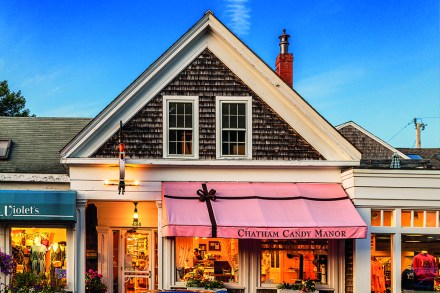
This article is in The Spectator’s February 2020 US edition. Subscribe here. The pretty, preppy town of Chatham, Massachusetts sits more or less at the elbow of Cape Cod, just after the swollen bicep of Hyannis and just before the Cape’s forearm tapers upward to Wellfleet’s freshly disembedded oysters, Truro’s schools of Subaru station wagons and Provincetown’s shallow-swimming shoals of gays. People who’ve never seen the Cape assume that it’s universally charming in an Olde Newe Englande sort of way: shingled houses and lobstermen, homely pubs with whaling paraphernalia on the walls and yellowed photos of Norman Mailer behind the bar. But, like any 340-square-mile place, it’s multifarious.

chatham cape cod

After the Americans

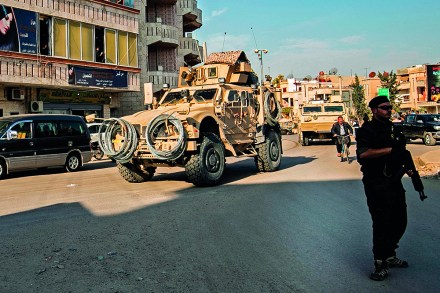
This article is in The Spectator’s January 2020 US edition. Subscribe here.Malkef, northern Syria I’m sitting under an olive tree about a mile from the front with ‘Agir’, a Kurdish soldier from the Syrian Democratic Forces (SDF). The sharp cracks and dull rumbles of fighting make their way to us over dusty farmland; the shade protects us from the scorching mid-morning sun and omnipresent Turkish drones. Agir tells me how the Turkish-backed Free Syrian Army (FSA) can’t fight — at least, compared with the Islamic State (Isis). Agir fought Isis with American backing for years in Syria. Sometimes, he says, Isis soldiers would tie foam cushioning to their feet, sneak up to your position in the moonlight and slit your throat.

americans syria

In the cart of the city

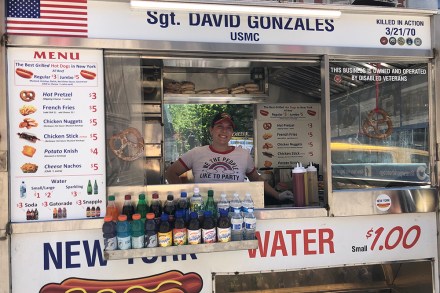
This article is in The Spectator’s January 2020 US edition. Subscribe here.New York City It’s the Sunday before Memorial Day outside the Metropolitan Museum of Art and the street is filling up with families. Navy servicemen and women stop for a friendly word and a photo. But a tragedy is happening here and there’s nothing anyone seems able to do about it. Elizabeth Rossi, a retired disabled Marine veteran in her early forties, runs a hot-dog stall outside the museum. She served in Operation Iraqi Freedom. ‘On my first day we were bombed; you never forget that,’ she says. Her father, Dan, also a disabled vet, runs the van next door. But they feel that they have been rejected by the city of New York and the world around them.

food cart

My wild Key West

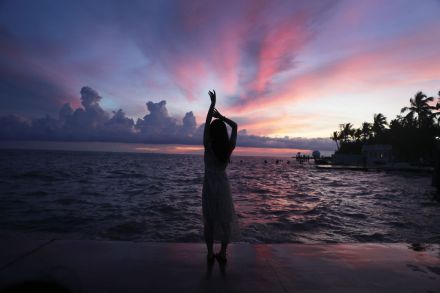
This article is in The Spectator’s December 2019 US edition. Subscribe here. Key West was originally called Cayo Hueso (Bone Island in Spanish) either for its bleached limestone rock or because the Calusa Indians used it as a burial ground. The first European here was Spain’s Ponce de León in 1521, on his spiritual quest for the Fountain of Youth. Lt Cmdr Matthew Perry planted the American flag on March 25, 1822. By the 1880s, Key West was the richest town in Florida. I first came on a Greyhound in November 1977. I knew no one. An American boyfriend in London had talked about breakfasting with fishermen, and of the Southern writer who was his mentor.

key west

The ‘Russians’ of Brighton Beach

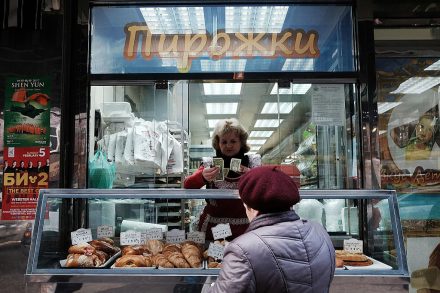
This article is in The Spectator’s November 2019 US edition. Subscribe here. At the very southern tip of Brooklyn, far from the hip avocado cafés and right before you hit the sea, there sits the neighborhood of Brighton Beach. Nicknamed ‘Little Odessa’ after the waterfront city in Ukraine, the area is home to primarily Russian-speaking immigrants from the former Soviet Union. It’s a jumble of identity. The immigrants are mostly Jews from Ukraine, hence the nickname, but also Russia, Belarus and the other Soviet republics. So what to call these people in America? In Russia, in Ukraine, in Belarus, our identity cards never described us as Russian, Ukrainian, Belarusian. We were just Evrei, Jews.

brighton beach russians

Hog wild in Indiantown

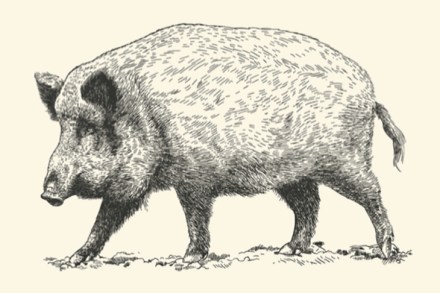
This article is in The Spectator’s inaugural US edition. Subscribe here to get yours. My old college roommate and I were sitting on a 180-pound wild male boar. Neither of us were habitual hoggers. It was our first rodeo. Florida Route 710, the Beeline Highway from Palm Beach to Indiantown, is a two-lane straight shot out of the tropics and into the scrub near Lake Okeechobee. In the Twenties, a Baltimore banker, S. Davies Warfield, built a railroad into central Florida from Palm Beach. Up went Indiantown’s gridded streets and houses, and the Mission Revival-style Seminole Inn, where Warfield’s niece Wallis Simpson stayed both before and after marrying Edward VIII. But Warfield’s plans were scuppered by two hurricanes and the Depression.

hog