Spectator Life

Spectator Life

An intelligent mix of culture, style, travel, food and property, as well as where to go and what to see.

Should Wimbledon ditch its all-white dress code?

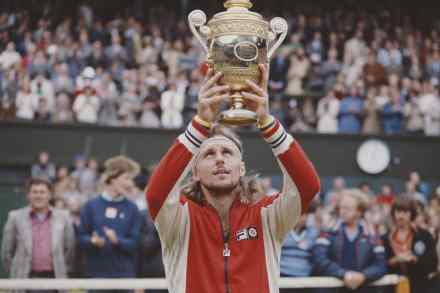
As this year’s Wimbledon Championships will demonstrate, tennis has moved on a bit in the past half-century: rackets are no longer wooden, ‘Hawkeye’ settles the ‘You cannot be serious’ moments and the winner of the ‘gentlemen’s singles’ competition will trouser £1.7m (compared with the measly £5,000 Stan Smith took home in 1972). But what happened to those great outfits from the days of Smith, Bjorn Borg, John McEnroe and Jimmy Connors? The striped shirts, the short shorts, the groovy track tops. Where did all the style go? The answer dates back to the late 1990s when the organising committee tightened-up the dress code, side-lining the previous protocol requiring clothing worn on court to be ‘predominantly white’ in favour of a ’90 per cent’ rule.

‘I’d ride out probably still drunk’: an interview with champion jockey Oisín Murphy

Oisin Murphy is seen as a bad boy of flat racing. He’s one of the best riders in the world but he keeps getting into trouble. He’s been banned from racing for 14 months for breaching coronovirus protocols by going to Mykonos and he failed two alcohol tests last year.  Oisin is now taking some time, as he puts it, to reflect. This year he’s at Royal Ascot without his riding boots for the first time in his career.  I find him in the Parade Ring. A horse obsessive, he immediately starts talking me through the details as the jockeys begin to mount.

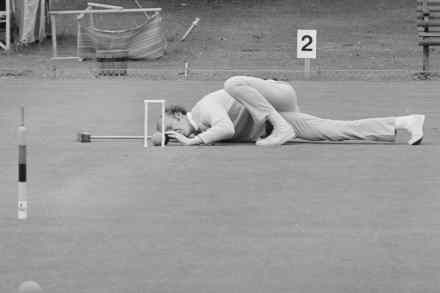
Why the English love lazy sports

Once upon a time, when the fingerprints on the Wimbledon trophy were more or less exclusively British, you could win in SW19 whilst wearing trousers. Even a tie if you go back far enough. But then, back in those days, tennis was a no-sweat sport. Well, perhaps a drop or two, but essentially there was much less of it around than today, when sweatbands, perspiration and frequent towelling off are part of a fetishised display of effort and strain – one that’s often accompanied by verbal ejaculations of sometimes rather alarming severity. I’m sure I’m not the only one who’s been forced to mute Wimbledon at times because of the repetitive baseline grunting. But it wasn’t always this way.

A new era of Welsh football has begun

As Britain toasted seven decades of the Queen’s reign outside Buckingham Palace, the Welsh basked in their 1600-year survival. Dafydd Iwan, the republican nationalist folk singer, bellowed Yma O Hyd around the Cardiff City Stadium as Wales took on Ukraine in their World Cup qualifier. A simple title – We’re Still Here – makes you want to weep and, then, fight.  What was once a marginal protest tune, composed at the height of Thatcherism after Wales rejected devolution in 1979, is now an apt anthem for spurring on Welsh footballers. Until recent years they were not a celebrated or well-known species but Gareth Bale, Aaron Ramsey and Joe Allen have changed all that.

The truth about Three Lions

During last year’s European Championship, England football fans switched, for some reason, from ‘Three Lions’ to ‘Sweet Caroline’ by Neil Diamond (‘so good, so good, so good’). If anything can make them switch back it’s the Football Association, who this week said they were thinking of dropping the Baddiel and Skinner anthem as England’s official song, because it could be seen as ‘arrogant’. Football fans are like children, and as any parent could have told the F.A., if you want to make sure someone does something then just tell them not to do it. The F.A. quickly had to issue a statement confirming there were no plans to change. David Baddiel himself feels the F.A. have long disliked the song.

The glorious return of the Grand National crowd

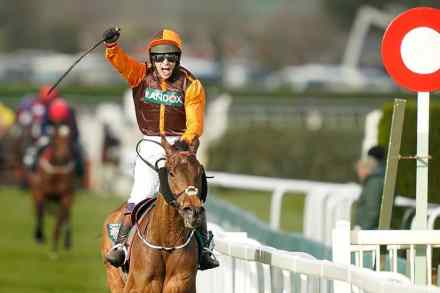
How wonderful after three years to have the crowds back to enjoy the glorious concoction of skill, bravery, razzmatazz and tear-jerking emotion Aintree’s Grand National meeting always provides. Having begun my working life on the Liverpool Daily Post in the days when developers’ greed nearly destroyed this national treasure, I relish my annual pilgrimage. Competition is almost as hot as at the Cheltenham Festival but somehow it comes without the angst. ‘You feel like it’s a party,’ said trainer Dan Skelton. ‘You are part of a carnival. I don’t drink but those who do tell me that they do that well here too.’ ‘Cheltenham is about pressure,’ said Grand National-winning trainer Gordon Elliott. ‘Aintree is more relaxed.

Why the Welsh are turning their backs on rugby

In the space of a few days last month, two games were held a mile apart in Cardiff. The first was the concluding episode of the Six Nations tournament, the second a crucial World Cup football qualifier. Beyond jubilation and disappointment, the occasions exposed the gulf between the two most popular sports in Wales: the former highlighting the crisis of datedness that has engulfed rugby, the latter demonstrating why football has gone on to reflect a more confident, vibrant and relevant Welsh identity. The age-old debate of what is Wales’ national sport has never been so easy to settle.