-
AAPL
213.43 (+0.29%)
-
BARC-LN
1205.7 (-1.46%)
-
NKE
94.05 (+0.39%)
-
CVX
152.67 (-1.00%)
-
CRM
230.27 (-2.34%)
-
INTC
30.5 (-0.87%)
-
DIS
100.16 (-0.67%)
-
DOW
55.79 (-0.82%)
Does Mark Carney believe in democracy?
Mark Carney is swaggering about Canada with his new majority government, acting as if he’d just received a landslide mandate from the electorate. The truth is he acquired his precious majority not by climbing up on his soapbox and convincing voters, but by whispering sweet nothings to five MPs from other parties, upon which they mysteriously lost their political principles and crossed the floor. Does Carney believe in democracy? It’s hard to be sure.
Yes, his party did just win three special elections. But only one of those counted (the other two were held by Liberals already and in safe Liberal ridings, so made no difference to the number of seats the party held). Without the floor-crossings, Carney would be stuck with the minority he won last April.
What’s unusual about these floor crossings is that the MPs in question – four Conservatives and one from the NDP – didn’t seem to have any particular disagreement with their parties. Marilyn Gladu, their latest convert, has sat as a Conservative since 2015. She has been vocally prolife and anti-euthanasia the entire time. She backed the Freedom Convoy, opposed the ban on conversion therapy, and even ran for leader of the Conservative party. Yet suddenly a week ago, she announced she was crossing the floor.
Liberals turned pale with horror on hearing that such unprogressive views were being welcomed into their midst. But Carney reassured them: Gladu – who you would have sworn was a staunch social conservative, if ever there was one – had promised to vote with the government on social issues. And Gladu confirmed.
This isn’t what Gladu’s constituents voted for, and the Conservatives are understandably upset. “The Carney Liberals did not win a majority government through a general election or today’s by-elections,” Pierre Poilievre, Conservative Party leader, wrote in an X post. “Instead, it was won through backroom deals with politicians who betrayed the people who voted for them.”
Carney has sought to deflect criticism by saying that in Westminster-style democracies like Canada, voters choose an MP to represent them, not a party. But it’s the representation, not the party, that’s at issue here. Voters wanted Gladu’s socially conservative principles, but they’re getting Carney’s progressive ones.
Some said Carney should call a general election in order to legitimize his majority, but he didn’t want to go there. “I am not considering calling an election,” he said firmly – because what Canadians want is for him to get on with governing the country. Perhaps he’s wise not to put that theory to the test.
What will happen now? Carney has announced that his first course of action will be to replenish the parliamentary committees with a majority of Liberals, to prevent what he calls “showboating” from other parties, which he finds a hindrance to the passage of legislation. (Perhaps somebody ought to explain to him that parliamentary debate is one of those Westminster-style-democracy things…)
Carney is particularly sore about the Conservative filibuster on Bill C-9. “We’ve had a variety of issues over the course of the Parliament where things have taken longer than they necessarily would, where debates have been more performative,” Carney said bitterly.
But Bill C-9 (currently before the Senate) touches on an absolute powder keg of an issue. It intends to do away with the good-faith protection for religious speech based on the Bible or other religious texts, and it opens the door for religious persecution in Canada – a nation whose entire system of law, ethics and justice is founded on the Bible. How could Carney imply that prolonged debate on such a serious topic could be merely “performative”?
On the very parliamentary committees he wants better control of, his cabinet minister Marc Miller made headlines by listing off the passages of the Bible he thinks are hateful and should be open to criminal prosecution. But somehow, critics of this outrageously offensive statement are the problem?
There are plenty of other problematic pieces of legislation that Liberal-heavy committees could swiftly wave through. Bill C-15, for instance, allowing government to unilaterally exempt certain corporations from federal law. Or Bill C-22 on lawful access, forcing all telecommunications service providers to set up surveillance tools to record and retain personal user data for a year, in case the government wants to investigate users for suspected illegal behavior.
It seems typical of Carney that his first move with a majority is to start shutting down debate. His instincts since he entered the prime minister’s office have been to centralize power, expand censorship and overrule those who disagree with him. For instance, with regard to the “notwithstanding” clause in the Canadian Charter, which enables provinces to override certain Charter rights as defined by the courts. Alberta recently invoked this clause in legislation banning the medical transitioning of children.
Carney does not want provinces to have this crucial freedom, and has quietly asked the unelected Supreme Court to end it. They say democracy dies in darkness. But sometimes it dies in broad daylight – and nobody does a thing.
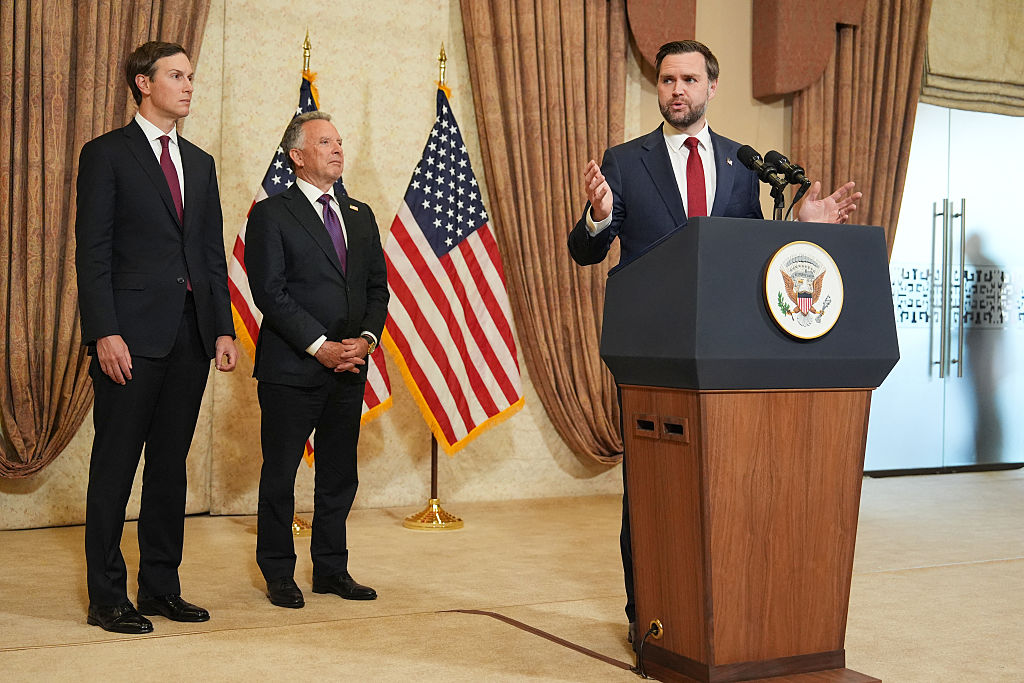
The lesson of Orbán: Trump must tackle corruption
The landslide defeat of Hungarian Prime Minister Viktor Orbán carries lessons across the ocean for Donald Trump and both MAGA and non-MAGA Republicans. Trump pulled out all the stops for his ally, sending Vice President J.D. Vance to Hungary for a three-day endorsement tour and promising the day before the vote to “use the full Economic Might of the United States to strengthen Hungary’s Economy” if Orbán won.
Well, he didn’t, and the Democrats are in full gloat mode after Orbán’s Fidesz party fell from 135 seats in parliament down to just 55. Senate Democratic Leader Chuck Schumer quickly made a comparison to the US, writing on X: “Pay attention, Donald Trump. Wannabe dictators wear out their welcome. November 2026 can’t come soon enough.”
If Republicans who rail against ‘waste, fraud and abuse’ are shown to have been complicit in its growth, they could see many of their core voters stay home
Of course, the US economy is in far better shape than Hungary, where Orbán’s anti-free market policies have resulted in four years of stagnation.
A poll this month by the European Council on Foreign Relations found Hungarian voters listed the economy as their most important issue at 20 percent. But corruption was second at 17 percent. Among opposition voters, however, corruption was first at 31 percent. And, on the other side of the Atlantic, that’s what should concern Team Trump most.
International rankings back up the view that Hungary has a problem. Even the pro-Orbán Heritage Foundation ranked Hungary’s government integrity score – which measures perceptions of corruption and the danger of “capture” of the state by elites – at 44 out of 100. In 2009, the last full year before Orbán returned to power as prime minister, Heritage’s index gave Hungary a score of 53 out of 100. The country has gotten worse under Orbán.
Republicans in Washington have long whispered about their worry that the public perception of corruption in the second Trump administration is far worse than the first. The Trump family has a tangled web of deals from cryptocurrencies to European resorts and Middle East ventures. And it’s undeniable that Trump appointees and MAGA circles include a fair share of grifters.
Republicans should be concerned because Orbán’s defeat is already encouraging Democrats to use the corruption issue in the midterm elections and beyond. Spurred on by demands from their base, more than 70 Democrats in Congress have called for either impeachment or the invocation of the 25th Amendment to remove President Trump from office.
But Democratic leaders are likely to be more cautious. If they win control of the House this fall, I believe they will delay initiating a third impeachment and focus on the soft underbelly of Trump appointees. House committees will issue a blizzard of subpoenas, holding oversight hearings on every nook and cranny of government and building a case to later impeach Trump on abuse of power. In some places, the Democrats will find a happy hunting ground.
Take Corey Lewandowski, Trump’s 2016 campaign manager.
For 14 months, he served as an unpaid, part-time volunteer advising then-Homeland Security Secretary Kristi Noem. He apparently exceeded work hour limits, piled up potential conflicts of interest, and was overhead by a reporter at Reagan National Airport discussing sensitive government contracts on his phone.
Nor was it his first brush with controversy. After Trump took office in 2017, Lewandowski co-founded a lobbying shop. He failed to register as a foreign or domestic lobbyist in 2017, despite publicly having several clients. His major client (at $300,000 a year) was the Venezuelan oil company CITGO, then controlled by the dictatorship of Nicolás Maduro.
Lewandowski’s former boss, now Special Envoy Noem, is under investigation by an Inspector General for green lighting a $220 million ad campaign featuring her on horseback promoting border control. Safe America Media, a firm registered at a Republican consultant’s home and set up just seven days before the contract was awarded, got $143 million from the no-bid contract. A firm run by the husband of Noem’s chief spokesperson secretly received money as a subcontractor.
Secretary of Commerce Howard Lutnick is already under close scrutiny for his department’s $1.58 billion investment in the rare-earth mineral company USA Rare Earth, Inc. A beneficiary appears to be Lutnick’s former firm, Cantor Fitzgerald, which is now led by his two adult sons. Reuters reports that queries from congressional Democrats about the deal are “widely seen as a preview of the types of investigations Democrats could pursue if they regain power in Washington after the November midterm elections.”
Labor Secretary Lori Chavez-DeRemer is under investigation for misuse of her travel funds and expenses. Three of her staff members have been placed on leave while allegations of unethical behavior are probed.
There are many other examples. Republicans who railed against Green New Deal scandals and the abuses of the Biden family have a choice to make. They can hope the allegations against Trump figures go away, an unsustainable wish if Democrats take the House. Or they can acknowledge the problem, privately press Trump to ease out his most troublesome appointees before they implode, and address the worst examples in their own oversight hearings.
Fear of risking the wrath of the White House has kept Republicans silent about the growing taint of corruption. But they have more to fear if they do nothing. One lesson of the Orbán defeat is that voters care about corruption. Allowing the issue to fester led to taxpayer losses while magnifying the resulting political damage. In the US, if Republicans who rail against “waste, fraud and abuse” in government are shown to have been complicit in corruption, they could see many of their voters stay home or abandon them in 2026 and 2028.
Sorry, but America still holds all the cards
“Negotiations.” Are you heartened or dismayed by that word? Those who remember or who have read up on the seemingly interminable Paris Peace Talks designed to bring an end to the Vietnam War have reason to be dubious. A negotiation, if it is to be successful, requires that both sides be candid and in earnest. The Vietnamese were not candid participants. They stalled. They prevaricated. They acted out.
It seems that the Iranians are hoping to reprise that melodrama. They will be profoundly disappointed. On the second weekend in April, Vice President J.D. Vance, Steve Witkoff and Jared Kushner met some 70 Iranian representatives in Islamabad to hammer out a peace deal. After a marathon 21-hour session, Vance emerged and told the press that, despite their best efforts, no deal was reached.
‘Iran played its biggest card and the main result is that the United States became the world’s emergency gas station and China’s cheap energy subsidy evaporated.’
A spokesman for the Iranians suggested that negotiations would continue. “Diplomacy never ends,” he said. Vance begged to differ. The Americans had made their “best and final offer.” The Iranians refused to give up their nuclear ambitions. That was non-negotiable. “The simple fact is,” Vance said after the talks ended, “we need to see an affirmative commitment that they will not seek a nuclear weapon, and they will not seek the tools that would enable them to quickly achieve a nuclear weapon.”
That assurance was not forthcoming. The Iranians also refused to respect free passage through the Strait of Hormuz. “The Iranian nation will not back down from its demands even an inch,” said one delegate. This was bad news, Vance admitted, but it was “bad news for Iran much more than it is for the United States of America.”
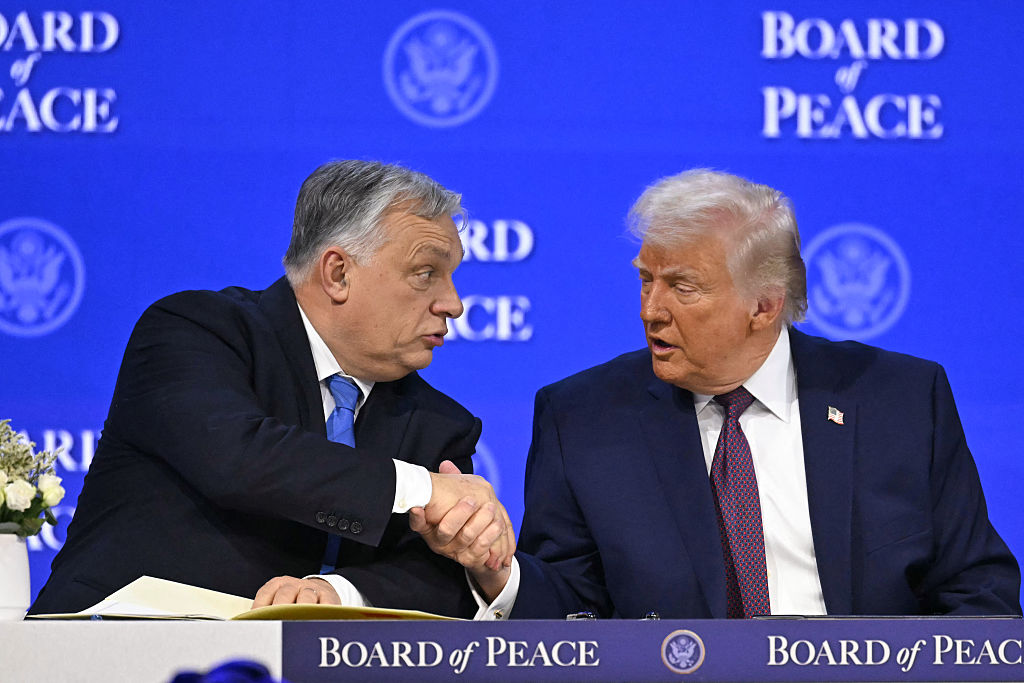
What happens now? The Americans headed home. Vance, Witkoff and Kushner represent the dovish side of the Trump administration. By sending them to conduct the negotiations, Donald Trump may have been extending an olive branch. Or perhaps, as one commentator suggested, he was following Sun Tzu. When peace is impossible, Sun Tzu said in The Art of War, you must first appear to seek it, so that when force follows, it is seen not as aggression but inevitability.
For decades, the Iranians have pretended that the Strait of Hormuz was their personal property. It is not. It is an international waterway. Until recently, some 20 percent of the world’s oil was carried through that 21-mile wide nautical corkscrew. Now Iran has begun imposing a “toll” of $2 million (payable in yuan, crypto or Iranian currency) per tanker. By threatening free passage through the Strait, the Iranians could cause economic and political chaos. All that is changing in real time.
As I write, hundreds of supertankers are changing course. They are leaving the Arabian Sea and heading to the Gulf Coast of the United States to fill up on American oil. A canny Venezuelan summarized the situation: “Iran played its biggest card and the main result is that the United States became the world’s emergency gas station and China’s cheap energy subsidy evaporated.”
Meanwhile, President Trump has called Iran’s bluff on the Strait. As of April 13 at 10 a.m. ET, US Central Command enforced a blockade “against vessels of all nations entering or departing Iranian ports and coastal areas, including all Iranian ports on the Arabian Gulf and Gulf of Oman. CENTCOM forces will not impede freedom of navigation for vessels transiting the Strait of Hormuz to and from non-Iranian ports.” The Iranians had, in effect, already imposed a selective blockade, mining the Strait and then saying that they weren’t quite sure where all the mines were. The US
just blockaded its blockade while it searches for and destroys the Iranian mines. Should the Iranians fire at any vessel, President Trump warned, they will be “BLOWN TO HELL!”
He made two additional points. One, those vessels that had acquiesced to the Iranian extortion and paid the toll would be stopped. “I have also instructed our Navy to seek and interdict every vessel in International Waters that has paid a toll to Iran. No one who pays an illegal toll will have safe passage on the high seas.”
The second came in another Truth Social post. “At an appropriate moment,” President Trump promised, “our Military will finish up the little that is left of Iran!” Is this a reprise of his infamous post-Easter prediction that “A whole civilization will die tonight, never to be brought back again”? How the Karens of both sexes loved to hate that statement! What a splendid opportunity to parade their more exquisite moral fiber – and at so little cost! Some of us thought the Babylon Bee saw more deeply into the matter. “World in shock,” that inestimable satirical venue blared, “as Trump takes seemingly extreme position to negotiate best possible deal.”
In any event, here we are in the aftermath of one of the most successful military operations in history. The Iranian war machine is in tatters. Its navy is sunk, its air force is nonexistent, ditto its air defense capacity. Many thousands of drones and ballistic missiles have been destroyed along with the factories in which they were produced. Most of Iran’s political and military leadership has been eliminated, as have scores of its top nuclear scientists. Elements of the repressive regime apparatus remain intact, but those are being actively challenged by an increasingly well-armed resistance. A side note for the Iranian delegates to the Islamabad negotiation: you were temporarily taken off the proscription list so that you could broker a peace deal. No deal was made. Now your exemption has expired. Watch your backs.
As for the Iranian people, they are pleased at the outcome. “We are relieved the ceasefire negotiations collapsed,” wrote one Iranian. “The spirit inside Iran and the genuine desires of the people stand totally against any truce or bargaining with this brutal regime – particularly figures like [Mohammad-Bagher] Ghalibaf, [leader of the delegation], a murdering psychopath who has the blood of countless Iranians on his hands.” In other words, the play is over. It remains only to strike the set and sweep the theater.
With Orbán’s loss, Russia has lost its European foothold
Péter Magyar’s landslide victory over Viktor Orbán is not just political earthquake for Hungary. It is Moscow’s worst result in the European Union since the war began.
Orbán served Russia in a way no overt ally could. He was never Putin’s puppet – he was something far more useful: a democratically elected, Brussels-based veto-wielder who could slow sanctions, obstruct aid to Ukraine, and dress it all up as principled neutrality. A leaked call recorded him telling Putin that Hungary was like a mouse to Russia’s lion. Leaked tapes of his foreign minister, Péter Szijjártó, conversing with Sergey Lavrov revealed the same cringing loyalty.
Yet Orbán always extracted payment for his services – cash from Brussels, energy exemptions, transit compensation – which meant Moscow could never rely on him fully. He was a brake on EU policy, not a stopper. Magyar’s arrival removes even that.
Orbán’s most tangible service to Russia was institutional. Hungary held a veto in the European Council, deployed repeatedly to slow sanctions extensions and block military aid to Kyiv via the European peace facility. Last month, three weeks before the election, they vetoed the 20th sanctions package and a €90 billion ($106 billion) EU loan to Ukraine, ostensibly over a dispute regarding the damaged Druzhba oil pipeline.
Hungary is important to Moscow primarily for energy and financial reasons
Now, Moscow will lose that brake. It will be important for Magyar to rebuild relations with Brussels, not least to access almost €20 billion ($24 billion) in various grants and funding that the EU froze in response to Orbán’s refusal to implement reforms and reverse his dismantling of Hungary’s democratic institutions. He won’t hinder EU policy on Ukraine and Russia in the way Orbán has. We should not expect a complete U-turn on Ukraine, given divisions in the Hungarian electorate and the country’s continued energy dependency on Russia, but Hungary’s permanent veto will come to an end.
The ideological damage to Russia is almost as significant. Orbán was living proof that illiberal democracy is sustainable inside the EU – a model Moscow has actively promoted. His fall shatters that narrative and sets an uncomfortable precedent for Russia’s other standard-bearers: those already in power, like Slovakia’s Fico; those with partial influence, as in the Czech Republic; and those with aspirations further west. Each is linked by nationalism and hostility to Brussels. Each will now have to reckon with what happened in Budapest.
The economic losses are real but more constrained. Hungary is important to Moscow primarily for energy and financial reasons. Magyar cannot simply cut those ties – some are locked in by contract, others by political reality.
Take gas. Gazprom and Hungary’s MVM Group signed contracts to deliver up to 272 billion cubic feet a year until 2036. At European prices, that is roughly $2.5 billion ($3 billion) annually – not critical to Russia, but vital to Gazprom, which has lost almost every other European buyer. The contracts are take-or-pay: walk away and Hungary faces years of arbitration and billions in penalties. Since Russian gas remains cheaper than alternative LNG, Magyar would struggle to explain higher energy bills to the voters who just put him in office. The gas contracts with Moscow will almost certainly survive.
Oil is more complicated and mostly already lost. Hungary has been the EU’s biggest buyer of Russian crude, taking around 10 million tons a year via the Druzhba pipeline. Druzhba has been out of action since January, damaged by a strike Ukraine attributes to Russia. Even if Ukraine fixes it as it had promised, the EU is already planning to shut the route by next year at the latest – a deadline Orbán fought and Magyar is unlikely to. Russia would, in theory, lose some $6 billion ($7.1 billion) a year in sales – but since the pipeline is already idle, the immediate loss compared to now is close to zero.
Also likely dead is Russia’s plan to sell a controlling stake in Serbia’s oil company NIS – currently held by US-sanctioned Gazprom Neft – to a consortium led by Hungary’s MOL. The consortium offered less than rival suitors, but for Moscow, it was never purely commercial. Russian Foreign Ministry spokeswoman Maria Zakharova called it a ‘strategic reformatting’, not a withdrawal: a way to keep Russian energy embedded in the Balkans, in new clothes, making it harder for Brussels to use sanctions as leverage against Serbia, or Russia for that matter. A new pro-EU government in Budapest dropping the deal would be the easiest possible demonstration of changed allegiances – costless to Hungarian consumers and painful to Moscow.
The Paks-2 nuclear plant, being built by Rosatom, is similarly immovable. Construction started formally in February; commissioning is not expected until 2033 at the earliest. The project costs €12.5 billion ($15 billion), of which €10 billion ($12 billion) was loaned by Russia. Walking away would mean repaying that loan plus penalties, plus a replacement would be needed for a plant aimed at providing the lion’s share of the country’s energy. No government could absorb those costs. Magyar may slow the expansion or halt new agreements with Rosatom, but the plant itself will almost certainly continue.
The financial channel is where Moscow’s losses could be sharpest. Hungary’s OTP Bank is the 20th largest bank in Russia and one of the few European-owned institutions that faces neither US sanctions nor European pressure, since Hungary is outside the eurozone. Under Orbán, OTP became a uniquely convenient channel for cross-border operations – so much so that when an Austrian bank, Raiffeisen’s Russian subsidiary, curtailed currency transfers in late 2024, OTP was briefly overwhelmed by the influx of Russian corporate clients. A Brussels-friendly government in Budapest would be unlikely to shield OTP from EU pressure. That channel, at least, looks vulnerable.
Russia is losing its most reliable brake on EU policy, its most useful institutional veto in the union, and its ideological showcase – all at once. The energy contracts will mostly survive, the nuclear plant will keep rising and the gas will probably keep flowing. But none of that is the point. Hungary was Russia’s foothold inside the EU: simultaneously a banking channel, an energy lifeline and a permanent spanner in the Brussels works. None of these functions will collapse overnight. But Orbán’s departure sets in motion a process that Moscow will find very hard to reverse.
Meet the humans training robots at the ‘arm farm’
AI is set to take over all cognitive tasks in the next few years. Your hard-won career as a paralegal, data analyst, radiologist, coder or novelist is about to be hacked out from under you. So far, so apocalyptic. But what about the jobs that are primarily embodied? Sous-chef, rehabilitation nurse, plumber, dog-trainer? These are expected to lag behind, awaiting the next generation of robots. But there is an important further question. Who will train these robots? Answer: you will.
This is the concept of the arm farm. On an arm farm, practitioners of the aforementioned jobs – chefs, nurses, plumbers etc. – wear Go-pro helmets, pressure-sensitive gloves, even full motion-capture rigs, and do the jobs that the robots will ultimately usurp. Somatic data flows from the sensors: information on force and precision, timing variables, optimal trajectories. Over many thousands of iterations a profile accumulates, amounting to the ideal way to, say, make an omelet. Here we are not just talking spatula proficiency. We’re talking pan-time relative to heat, browning metric, wrist action (tossing, beating) and toaster multitasking. This is the final frontier: handling irregular, deformable materials (otherwise known as food).
The human traitors paid for this work are called (by the colleagues who would probably do it too if they were offered it) “coffin makers.” Because the occupational know-how the traitors divulge ensure that those jobs are dead and buried, never to be performed by a human again.
And of course it’s already here. Objectways is a company based in the USA and India that captures data from human workers to train robots. Its aim is “to blend advanced technology with human-in-the-loop expertise to deliver secure, high-quality AI data solutions.” What this amounts to is that a young woman in Chennai stands before a work station. She has a camera strapped to her forehead. Her job is to fold the same towel a thousand times. The towel must be retrieved from a pile to her left, placed on the work surface, smoothed down, folded once along the x axis, once along the y, and then placed on a pile to her right. The video data is then post-processed and sent to the AI, which learns how humans fold towels.
The human traitors paid for this work are called ‘coffin makers’
Tech giants Boston Dynamics, Nvidia and Tesla are watching, of course. At the moment their robots are rubbish at almost everything except dancing to Motown hits. But when there is a market worth trillions of dollars in the offing, you can bet they are investing heavily. After all, if they don’t, others will.
Ali Ansari, founder of San Francisco-based Micro1, says robotics data collection increasingly focuses on remote operations. Humans in haptic suits make the robot do something like making tea. The AI is fed data from failed attempts at doing this and learns, eventually, to achieve it. It may also, in future, need to partner with the junior doctor who is increasingly unable to understand burns. “I believe that we will have systems that are smarter than all humans combined, eventually,” says Ansari. “That, however, does not mean humans will become less important.” Sometimes, of course, the robots lie on the floor and convulse. It’s a good idea to get as far away as possible from them when they do this.
Brett Adcock is the founder of Figure AI. “Figure was founded with the ambition to change the world,” he says. “We envision a future where humanoid robots are the universal interface in the physical world… Longer term, humanoids will play an important role in many areas such as assisting individuals in the home, caring for the elderly, and building new worlds on other planets.” Figure is in the process of capturing real-world data from inside thousands of American homes, observing human movement to teach robots to negotiate the domestic arena.
In earlier industrial upsets, workers moved on to other jobs. For example, Silas Marner, once a weaver, could retrain as a leech-gatherer. Now, with arm farms in the mix, all possible physically-encoded knowledge is extracted, digitized and centralized. In practical terms it means you might never have to gather a leech again. Workers, having given away the last thing they could possibly have bargained with, are rendered cognitively and somatically pointless. They have been paid to eliminate their own livelihoods. There are no hobbies they can undertake, since the robots can write an opera or drink themselves to death far better than a human being ever could.
Not everyone thinks this way, naturally. Many hypothesize that people will be freed from tedious labor, find more time to spend with their families, and eventually have more opportunities to wake up at 4am to see an advanced robotic valet standing next to their bed holding a cordless drill. But who owns the data generated by the arm farms? This big-picture question has a bigger picture answer: Sam, Elon, Dario, Sundar and Demis. In the near term, arm farms expand and then disappear. The better the models get, the less new human data is needed.
What about the remote future (three to six years)? Many human beings complain that their sexual partners are unable to touch them in a satisfying manner. Here’s where the arm farm becomes uniquely personalized. Strap on your Go-pro and your pressure-sensitive glove. Generate data. It turns out that some of the skills for making an omelet are quite transferable. Handling irregular, deformable materials. Grip nuance. Finger tracking. Tool haptics. Tension or resistance intensification. Rhythm, crescendo, pan-toss. Now pass this data on to your humanoid operative, perhaps working remotely from Guangdong.
Finally, having trained AIs on the best way to fold towels, make tea, sauté onions and indeed ourselves, we will be left with the one question that cannot be outsourced: deciding whether any of this was a good idea in the first place.
Mary Vought exits as Heritage comms chief… for $500k payout: source
Another high-profile departure at the Heritage Foundation: Mary Vought, who served as the think tank’s VP of strategic communications, bids adieu this week. “I’m grateful to @KevinRobertsTX for entrusting me with this position. It’s been an honor to work alongside some of the nation’s foremost policy minds while leading Heritage’s talented communications team – a group I am deeply proud of,” Vought tweeted. “I am returning full-time to my company, Leverage PR.”
“Thank you, @MaryVought, for your great work,” Heritage Foundation president Kevin D. Roberts wrote in response. “It’s been a pleasure to work with you for nearly a decade – both @TPPF and @Heritage – so I look forward to collaborating with you in the future. Best wishes on the next step! 🇺🇸🇺🇸🇺🇸”
A very neatly orchestrated exit for Vought – though you’d expect nothing less from the VP of strategic communications.
Vought’s ex-husband Russ is currently serving a second stint as Trump’s OMB director. And not unlike the Trump administration, Heritage and Vought seem to be adopting a policy of omertà: Cockburn understands the terms of Vought’s departure involved her signing a non-disclosure agreement and receiving a $500,000 payout. Vought didn’t respond to a request for comment when asked about this – but then, why would she?
On our radar
NOT GOING DUTCH The White House hosted the King and Queen of the Netherlands for dinner last night, as well as PM Rob Jetten.
PEACE TALKS Israel and Lebanon are presently engaged in direct talks in Washington, DC, overseen by Secretary of State Marco Rubio.
POPE AND CHANGE Vice President J.D. Vance, a Catholic convert, said Pope Leo XIV should “stick to matters of… what’s going on in the Catholic Church” in a Fox interview last night. God, who is omnipresent, is yet to comment.
Drilling time
President Trump considers the “Special Relationship” between America and the UK less special than ever these days. Particularly since Britain and other NATO partners declined to join – or bail out – America and Israel in their joint campaign against Iran. Now the President is taking pot shots over UK energy policy. “Europe is desperate for Energy, and yet the United Kingdom refuses to open North Sea Oil, one of the greatest fields in the World. Tragic!!! Aberdeen should be booming,” he wrote on Truth Social this morning.
“Norway sells its North Sea Oil to the U.K. at double the price. They are making a fortune. U.K., which is better situated on the North Sea for purposes of energy than Norway, should, DRILL, BABY, DRILL!!! It is absolutely crazy that they don’t… AND, NO MORE WINDMILLS! President DJT.”
It sounds like Trump would be rather fond of Robert Bryce’s piece in the Technology section of our forthcoming US edition, about the differences in energy prices between here and Europe. “The US actively drills for oil and gas. Europe doesn’t,” Bryce writes. “Europe’s refusal to drill has made it heavily dependent on imported hydrocarbons and, therefore, left it at the mercy of the energy price spikes now slamming consumers around the world. Like it or not, it’s time for Europe to drill, baby, drill.” The President – and other curious readers – should subscribe to get the next mag…
Swal’s well that ends well
It was a case of jump or be pushed. Democratic Representative Eric Swalwell and Republican Representative Tony Gonzales, both facing accusations of sexual misconduct, have announced their intentions to resign from the House. Gonzales’s GOP colleague Representative Anna Paulina Luna had been leading simultaneous campaigns to expel both, but such a measure would have required a two-thirds majority to pass.
For Swalwell the fall has been particularly dramatic. This time last week he was the Democratic front-runner – albeit in a crowded field – to succeed Gavin Newsom as governor of California. From that perch, Swalwell would have been one of the most prominent opposition politicians in America, clearing the way for – who knows – another run at the presidency in 2028? Out, out, brief candle…
Expulsions from the House are rare and a quasi-compelled double departure like this is unprecedented. Congress used to be much more reticent about expelling its members, aware that the tool could be used for cynical reasons, and that the moral character of representatives was ultimately a matter for the voters. Neither man has been convicted of anything yet.
Luna, for her part, is not resting until the two men are gone. “If Congressman Swalwell has not resigned with the Clerk of the House by 2 p.m. today, I will continue my resolution regarding his expulsion,” she tweeted this morning. “His statement about his ‘plan to resign his seat’ is not binding and is wormy. The same goes for Tony.” Swalwell resigned by 2:30.
Cockburn gets the sense that the taboo has now been broken, and that expulsions are likely to happen more often. Speaker Mike Johnson this morning endorsed kicking out Representative Sheila Cherfilus-McCormick, after she was found guilty of misappropriating Covid funds. And if the expelled former congressman George Santos’s lurid theories about sex “cages” below the Capitol building prove correct, then all of a sudden Congress could feel very empty.
The sadness at the heart of Harry and Meghan’s Australia trip
Before dawn today, a Qantas jet touched down in Melbourne from the United States. Aboard, flying commercial first class but hardly incognito, were world-famous philanthropists and former working royals, Prince Harry and his wife Meghan, the Duke and Duchess of Sussex. The couple are in Australia for a week of “engagements” in Melbourne, Sydney and Canberra.
Even Australian monarchists who, according to opinion polls, still outnumber confirmed republicans, are unimpressed by the Sussexes’ pseudo-royal progress
Unfortunately, there was none of the famously fine weather that preternaturally followed the late Queen Elizabeth in her travels. In Melbourne today the weather gods ensured the city was cold, squally and miserable. The Sussex hearts would have been warmed, however, by the phalanx of police and hired security that greeted them on arrival, and followed them through the day. They were treated as the high-profile VIPs they’ve always known themselves to be,
A long way, certainly, from the publicly-funded security deprivation that Harry insists has kept his family away from visiting their British family.
The weather didn’t deter Meghan and Harry from embarking on a day of royal tour-style engagements. They visited Melbourne’s Royal Children’s Hospital, greeted by a sizable and enthusiastic crowd of patients, families and staff. They worked the crowd like pros, Meghan especially making sure she was photographed with a young patient holding a sign for them. They toured the wards, bestowing the royal touch on young cancer patients – and incidentally gave photographers money shot after money shot.
Then Harry moved on to a veterans’ event, clearly at home amongst fellow veterans and promoting his Invictus Games. Meanwhile, Meghan visited a women’s shelter, bestowing her caring self on women scarred by family violence. She was turned out in stylish clothes and jewelry from Australian designers, her second clothes change of the day. “Californian cool,” purred the Age newspaper.
The Sussexes’ quasi-royal progress today was lapped up by the Australian media, albeit well down news websites. The couple would have been pleased that their immediate reception was warm and, as far the crowds went, they were big enough to fill television screens and revive memories of Meghan and Harry’s 2018 Australian visit as full-fledged royals: a visit that Meghan reportedly hated.
But if the pair felt a touch of love today and assume that Australians generally share that affection, they are mistaken. A petition entitled “No taxpayer-funded or official support for Harry and Meghan’s private visit to Australia” garnered 45,000 signatures, and a very defensive response from the Sussex camp before they arrived. The trip is all privately-funded, they insist; but tell that to Australian taxpayers stuck with the cost of a police presence, and the costs of the arrangements for hosting the Sussexes at the Royal Children’s Hospital and the other quasi-royal events during their Australian visit.
And it hasn’t been lost on the Australian public that the Sussexes are here for several lucrative commercial events, with price tags for attendees that can only be afforded by commercial and social elites – photos with the couple extra, of course.
Above all, Australians haven’t forgotten that Meghan took Harry out of the bosom of the British royal family, and Harry himself is nicknamed here as the “Ginger Whinger.” It also hasn’t been forgotten that Meghan, who talks so often about women’s empowerment, has her global public profile and platform simply because she married a particularly privileged bloke, not because she was once a moderately successful television actress. That the Sussex children have been deprived of contact with their extended Windsor and Markle families has also come up regularly when the Sussexes so often talk lovingly about the importance of home and family: Australians are no respecters of what they see as double standards,
Even Australian monarchists who, according to opinion polls, still outnumber confirmed republicans, are unimpressed by the Sussexes’ pseudo-royal progress.
Speaking to Melbourne’s Herald-Sun tabloid, Melburnian Barb Clough said she didn’t care for Meghan and Harry’s visit. “I’m not interested in Harry and Meghan,” she said. “But if it was Kate and William, I’d be lined up and waving my flag.” Clough is far from being alone in her thinking.
As for those turning out in Melbourne today, many, perhaps most, were attracted by the couple’s celebrity and notoriety rather than them being the Duke and Duchess of Sussex. They’ve seen the Oprah interview and the Netflix series, and read Harry’s Spare – or serialized extracts from it. They understandably are curious about these famous faces that have launched a thousand media opportunities, but that’s probably as far as their interest goes.
To most observers, however, there’s a sadness to this visit. The attempt to recapture the aura of the Sussexes’ highly successful 2018 official visit, while attempting to play down their lucrative side hustles and their patent desire for media attention is, frankly, a costly yet pathetic cry for public love.
For most Australians, monarchists and republicans alike, the Sussexes have come and, in a few days, will go. They are welcome here as private American residents, but if they think they have a place in Australian hearts simply because they are Meghan and Harry, they are sadly mistaken.
The great soccer World Cup swindle
Tickets for this summer’s soccer World Cup are the most expensive in the tournament’s history. Or the history of any sporting event for that matter, with the possible exception of one-off extravaganzas like the Mayweather-Pacquiao showdown in 2015. The face value of tickets at this American tournament are a staggering five times higher that of the previous World Cup in Qatar. The most expensive seats for the final match have reached wallet-busting levels, affordable only to plutocrats and corporate boondogglers.
And that’s just face value. What about the quaintly named secondary market? I occasionally peruse Fifa’s resale site, where the custodians of the game double dip from the buyer and seller to act as an official tout. I check the Fifa marketplace not as a prospective purchaser, but from an anthropological standpoint, mesmerized by the insatiable human greed on display. We really have left the Earth’s orbit and are in Artemis 2 levels of stratospheric pricing here. One ticket for the Final was listed at $250,000. It’s almost enough to make one a Mamdani supporter.
Many people have washed their hands of the whole idea of attending, and the ill-will it has generated is considerable. This must be the first time in history where the manager of a competing team (the frugal Steve Clarke of Scotland) has told supporters to stay home and watch the games on TV.
All of this makes me nostalgic for past World Cups (I’ve attended two, in 1998 and 2002). Prices were fixed and reasonable – $30 to $50 for first round games in France – and the whole touting business was spontaneous, face-to-face, fan-to-fan and almost fun. I achieved the Holy Grail outside the Tokyo International Forum in 2002: a ticket for the final, purchased from a lovestruck Brazilian who wanted to watch the game with his newly acquired Danish girlfriend but only had one ticket. He decided it was better to watch it on TV with her, rather than go to the game alone. I relived him of the ticket for 100,000 yen ($600) only about $100 premium.
Those days are seemingly long gone. Donald Trump and Fifa boss Gianni Infantino have formed something of a duopoly. Infantino has proved himself a master at schmoozing, even presenting Trump with a Fifa peace prize. Meanwhile, the ticketing company LiveNation’s has reached a deal with the Justice Department, which leaves them free to feast on the World Cup’s bounty. The MAGA promise of trust busting the ticket touts seems to have died. The result is that the ticketing industrial complex is alive and well at this summer’s tournament.
Things are so bad that some fans are threatening legal action, alleging that stadium maps have been doctored and their supposed Category A tickets are actually in Category B areas. The latest wheeze is the sudden appearance of a new ticketing category “Front Category A,” costing up to three times the previously listed price in areas where basic Category A ticket holders assumed they might be seated. Meanwhile, Fifa has declined to reveal how many tickets are unsold or how many fans were given access to the pre-sales. The relentless secrecy is fueling suspicion, resentment, and real anger. Expect #boycottFIFA to trend any day.
It is so shameless and wanton you could almost admire it, if only Fifa were honest and stopped wittering on about the “people’s game,” the “football family,” and, God help us, their role as a global peace-maker. Stop lying about so-called “affordable tickets” (largely illusory) and declare the World Cup a gross, filthy lucre-generating exercise. Make an anthropomorphic dollar bill the mascot and replace Shakira and Celine Dion in the opening ceremony with the reformed ABBA (“Money, Money, Money”).
Putting my despair to one side, is there any hope for the beleaguered ordinary fans seeking even halfway sane pricing? Well, maybe… all may not be quite what it appears. As well as the most expensive, the ticketing system for this summer’s World Cup is also by far the most opaque with a bewildering series of ticket classes, sales ‘windows’, and purchasing methods. You need to be alert and nimble-witted to keep track of what’s available, when, and for how much, in Fifa’s labyrinthine, and ever-changing, website. And you would be well advised to take the pronouncements of Fifa president Gianni Infantino with a grain of salt.
According to Infantino, Fifa sales have been extraordinarily successful with “every game sold out” and “over 500 million ticketing requests.” But that being the case, why did Fifa suddenly announce an additional “surprise” sales phase on April 1? And why are some games, including the USA’s opener, struggling to sell out?
The truth is almost certainly that the unprecedented demand is real, but only for a portion of the bloated tournament’s 104 games. The knockout phase, which begins on June 28 and includes the juicier of the first round ties such as those involving England, Brazil and Lionel Messi – sorry Argentina. For the other World Cup, the less glamorous games involving Saudi Arabia, Switzerland, Iraq, and Curaçao? Not so much…
Why are some games, including the USA’s opener, struggling to sell out?
Even some seemingly attractive fixtures may be struggling as the tickets have been “drastically mispriced” in the words of Scott Friedman of the Ticket Talk show. As Henry Bushnell, writing in the Athletic, noted, tickets for USA vs Paraguay, the primary host’s opener, were plentiful throughout the extra sales phase, without even being tagged with the usual marketing gambit of “selling out fast” or “last few tickets.” The reason isn’t hard to divine: prices of up to $3,000, three times that of the USA’s second and third games.
It seems likely that Fifa still has considerable inventory available, and it will be interesting to see how they try and shift it. Clues can be found in last year’s Club World Cup, where the much vaunted “dynamic pricing” worked in the favor of unenthused fans who were able to snap up tickets for as little as $13 on the day (many tickets were available for 16 percent of their original price). And if, as is customary in US sport, many of the tickets for the big games were hoovered up by bots, expect a steady stream of availability up to kick-off. Fans that hold their nerve and treat the initial eye-watering mark-ups as Trumpian art of the deal bravado may yet get in without breaking the bank.
Even so, there will almost certainly be embarrassing gaps in the stands (Jordan vs Algeria anyone?). Witness the Congo vs Jamaica play-off game last month, which may serve as a preview. This was a genuinely consequential, even potentially historic game (Congo had never qualified) played in an attractive custom-built soccer stadium and with tickets priced at a reasonable – even nostalgic – $11 to $17. The official attendance was 36,000 in a 50,000-seat ground, so well short of a sell-out.
I wouldn’t be at all surprised to see similar percentages this summer for many of the 72 first-round matches. Hopefully, Gianni Infantino will be in attendance to witness banks of empty seats around him. His face would be, in a word, priceless.
If Trump hates the Wall Street Journal, why is its editorial board dictating Iran policy?
For the better part of a decade, Donald Trump has been an avid, if irascible, reader of the Wall Street Journal – particularly the columns overseen by its long-time editor Paul Gigot.
Because the Journal is among the few American conservative outlets willing to criticize Trump – on everything from tariffs to temperament – he has developed a habit of denouncing it in public while devouring it in private.
The Journal, Trump recently declared on Truth Social, is “one of the worst and most inaccurate editorial boards in the world.” The ritual extends to annotated hard copies – margins filled with indignant scrawl – before the offending pages are FedExed back to News Corp headquarters in Midtown Manhattan.
A policy intended to restore order could instead tighten Iran’s chokehold on global energy and trade
Which makes what happened last weekend all the more curious. On April 10, the Journal – a reliable standard-bearer of neoconservative foreign-policy thinking – urged Washington to quarantine vessels carrying Iranian oil. Within two days, Trump had done precisely that, announcing a naval blockade of the Strait of Hormuz targeting ships trading through Iranian ports. The paper, in turn, was quick to approve.
The move marks a sharp escalation. Until now, Tehran had been selectively restricting passage through Hormuz – impeding much of the world’s tanker traffic and nudging energy prices higher – while continuing to export oil, particularly to China. The new American policy seeks to end that asymmetry by imposing direct costs on Iran’s own energy trade.
The Journal’s case is clear enough. A tougher line, it argues, is justified so long as Washington is willing to stomach the resulting disruption to global energy markets. Why should Iran continue to earn oil revenues while constricting supply to everyone else?
By targeting Iranian exports, the United States would raise the cost of continued disruption while drawing in other stakeholders – not least China, a major purchaser of Iranian crude – with a renewed interest in restoring stability to the waterway. Interdicting tankers and clearing mines are presented as steps toward the ultimate goal: reopening Hormuz to all traffic.
It is a neat argument. It is also, on closer inspection, a gamble. Retaliating against Iran for disrupting the Strait of Hormuz by disrupting it further has a certain circular logic. As J.D. Vance put it on Fox News yesterday, “What [the Iranians] have done is engage in economic terrorism against the entire world… well, as the President of United States showed, two can play at that game.”
But will it work? Let’s start with Iran’s likely response. Tehran, as most seasoned foreign-policy observers recognize, sees itself as facing an existential threat from the United States and Israel. In such circumstances, states do not typically fold; they dig in. A country with Iran’s nationalism and resilience is unlikely to surrender under economic pressure alone.
Moreover, allowing Iranian oil on to global markets during the war has not been an act of benevolence but of necessity. Once it became clear that the conflict would not be short or decisive, the priority shifted to keeping Iranian oil flowing to stabilize the global economy.
Removing that supply – not just of energy but fertilizers – will mean a messy shock to markets, with predictable consequences for inflation, growth and political stability throughout the rest of the world. Allies and adversaries alike will not simply accept energy prices climbing and growth faltering – nor, in an election year, will ordinary Americans already feeling the pinch of higher living costs.
The plan – or hope – is that Iran will capitulate. But Tehran may instead choose to escalate, widening the conflict to other energy waterways such as the Red Sea, with the assistance of its Houthi allies in Yemen. It’s well known that roughly 20 percent of the world’s oil and LNG passes through the Strait of Hormuz; less remarked upon is that a further 10 percent share, including much of Saudi Arabia’s exports, moves via the Red Sea.
Already, Riyadh is urging Washington to reconsider its blockade, mindful that any escalation could imperil the Bab al-Mandeb, a critical chokepoint for Gulf energy shipments. The paradox is that a policy intended to restore order could instead tighten the chokehold on global energy and trade.
Recent diplomacy – including talks in Islamabad – has done little to shift Tehran’s position. If anything, Iran may calculate that control over the Strait of Hormuz offers leverage of a different, but no less potent, kind. Even a partial or intermittent disruption of that waterway gives Tehran enormous influence over global energy flows – a form of strategic power that can rival any uranium enrichment program.
Which brings us back to the Wall Street Journal editorial page. A certain irony lurks behind Trump’s decision to escalate against Iran, culminating in a naval blockade of the Strait of Hormuz. The neoconservative school of thought he once ran against appears, at least for now, to have found a second life in his foreign policy.
The candidate who campaigned on “America First” – a language of restraint, limits and strategic discrimination – now sounds, at moments, rather closer to the voices he once dismissed. One hears familiar echoes not only from the Journal, but from hawkish pundits such as the New York Times’s Bret Stephens and Commentary magazine’s John Podhoretz, as well as the broader Washington ecosystem that has long favored a more muscular use of American power.
This is not to question their seriousness. These are thoughtful and articulate advocates of American primacy. But recent history offers grounds for caution. The post-9/11 interventions – ambitious in conception, uneven in execution – imposed heavy costs in blood and treasure, while doing less than advertized to enhance American standing.
Iran is unlikely to become another “forever war” like Iraq or Afghanistan. Yet even short of that, the risks are evident. The issue is no longer confined to the mechanics of shipping lanes in the Gulf, but extends to the broader question of American prestige and credibility. The greater a nation’s prestige, the less it must rely on force; the weaker its credibility, the more it is tempted to compensate with it.
If there is a wider lesson, it is not simply about Iran, or even the Strait of Hormuz. It is about the limits of coercion when strategy outruns circumstances – and about the recurring temptation, in Washington, to mistake resolve for results. This is the sort of moment when advocates of muscular policy risk being, to borrow their own phrase, “mugged by reality.”
The Hormuz blockade won’t hurt China
As I argued last month, the Iran war was really about America’s great power competition with China. Not by design, perhaps, but these kinds of conflicts are not easily confined by those who start them. Any disruption to the world’s principal energy chokepoint becomes, whether Washington planned for it or not, a test of the Sino-American balance of power.
China is the country around which the whole episode turns, and the one best positioned to come through it
Trump’s announcement on Sunday of a naval blockade targeting all vessels entering or leaving Iranian ports, after peace talks collapsed in Islamabad, sharpens that test considerably. Hours before CENTCOM confirmed the blockade would begin on Monday morning, two Chinese state-owned supertankers had already passed through the strait under the IRGC’s yuan-denominated toll system, collected their military escort and were heading east into open water. China is not a bystander in this crisis. It is the country around which the whole episode turns, and arguably the one best positioned to come through it.
The strait carries roughly a quarter of the world’s seaborne oil, and China alone receives nearly 40 percent of all crude transiting it. When Trump announced the blockade on Sunday, targeting all vessels entering or leaving Iranian ports, the immediate effect was to shut down the trickle of ships still getting through, most of them bound for China or India. Beijing’s response was measured: Foreign Minister Wang Yi told the UAE’s special envoy that the blockade does not serve the interests of the international community. China, he said, stands ready to play a “positive and constructive role.”
The conventional assumption is that China’s dependence on the Gulf makes it acutely vulnerable. Trump himself claimed in March that 90 percent of China’s crude imports pass through the strait. The actual figure is closer to 40 percent, and even that overstates the vulnerability. China is simultaneously the largest single importer through Hormuz and, paradoxically, among the countries best insulated against its closure.
Start with stockpiles. China’s state and commercial reserves are estimated at roughly 1.4 billion barrels, enough to cover four months of total imports or seven months of what normally transits Hormuz. Japan holds weeks of LNG cover. Then there is diversification. Unlike Japan, which sources nearly 80 percent of its oil from Saudi Arabia and the UAE, China spreads its purchases across eight suppliers, none of which provide more than a fifth. Russia, the largest source, delivers partly by pipeline. The Power of Siberia gas line provides an overland route that no blockade can touch.
Most striking is electrification. China’s electric vehicle fleet is roughly as large as the rest of the world’s combined. New energy vehicles accounted for over half of all car sales last year. The oil displaced by EVs in 2025 was roughly equivalent to Saudi Arabia’s total imports. Oil accounts for only about 18 percent of China’s energy consumption; coal and renewables dominate a power grid almost entirely insulated from seaborne imports. The People’s Daily has been telling readers the country holds its own “energy rice bowl.” That is partly propaganda but not entirely wrong.
The crisis is not costless for Beijing. Independent refiners in Shandong are losing access to discounted Iranian crude on which their margins depend. The chemicals sector faces a squeeze on naphtha and LPG feedstocks. China halted fuel exports in March to conserve domestic supply, triggering shortages across South-East Asia from Laos to the Philippines, and then released selective quotas to Bangladesh, Myanmar and Vietnam as a tool of regional influence. Real money is being lost. But this is not a systemic threat.
Contrast that with America’s actual allies. Japan sources 70 percent of its Middle Eastern oil through the Hormuz Strait. South Korea’s net oil imports run to nearly 3 percent of GDP. Thailand, Pakistan, the Philippines: all are rationing fuel, canceling flights and telling citizens to work from home. These countries are bearing the sharpest costs of a war they had no part in starting. The blockade compounds their predicament while doing relatively little additional damage to China, which had already lost most of its Hormuz supply weeks ago and has since begun buying American crude to fill the gap. Some 600,000 barrels per day of US crude are scheduled for loading to China in April. Chinese state media framed this, with characteristic delicacy, as a competitive victory over Japan in securing American supply. With friends like Washington, Tokyo might reasonably ask, who needs adversaries?
The IRGC toll system, under which vessels pay in yuan routed through China’s Cross-Border Interbank Payment System, does not herald the end of the petrodollar. The Gulf Research Center is right to call the yuan’s role here that of a “corridor currency:” not a universal alternative to the dollar, but one whose utility rises where dollar settlement is constrained. What matters is that alternative payment rails now exist and function, and infrastructure built under wartime pressure tends to persist.
Beijing’s wider posture is “active neutrality.” It condemned the strikes, backed Pakistan’s mediation and is calling for restraint, but will not intervene militarily. If Washington gets bogged down in the Middle East, it is distracted from the Indo-Pacific. The preference is to ring-fence the crisis, keep buying from whomever will sell, and wait.
Britain was right to refuse to participate in the blockade, but the European angle is secondary. The primary contest is between Washington and Beijing, and the real lesson is that China’s energy planners have been vindicated. The EV program, the strategic reserves, the pipeline diversification, the coal-and-renewables grid: all were designed for precisely this contingency. The 15th Five-Year Plan doubles down on every one of those priorities. Whatever happens next, Beijing’s capacity to absorb the shock will only grow. The same cannot be said for Tokyo, Seoul or the capitals of Southeast Asia, still dependent on a sea lane that the United States can no longer reliably guarantee. That asymmetry is the story of this war.
Swalwell’s fall was electoral math not morality
Eric Swalwell’s fall from viable gubernatorial contender to political casualty was swift and surgical. He was among the frontrunners to replace Governor Gavin Newsom until allegations of sexual misconduct from years ago were published in the San Francisco Chronicle. The response from major Democratic operatives was immediate, with labor unions and party figures quickly withdrawing endorsements. Swalwell formally announced the suspension of his campaign two days later, followed by his resignation from Congress the following day.
Some of the allegations are serious. In addition to claims of inappropriate and predatory sexual relationships with staffers, Swalwell has been accused of sexual assault. In a video statement, he denied any criminal wrongdoing. But he also framed the issue as “mistakes… between me and my wife,” an implicit acknowledgment of infidelity and inappropriate conduct.
The more revealing story is timing. By multiple accounts, Swalwell’s conduct was an open secret in Washington. CNN even hinted at similar issues in a 2017 segment about an unnamed California congressman. A reporter has said he knew of allegations as early as 2013, when Swalwell was a city council member. And yet the rumors didn’t derail his political career, nor did a formal investigation into an alleged romantic relationship with a suspected Chinese spy.
Swalwell survived so long because he was useful. He built his brand as an antagonist of Donald Trump, a fixture on cable news, and a prolific social media presence that earned him the label “Snapchat King of Congress” in 2016. If his gubernatorial run had not put him under a microscope, he might have remained insulated from consequences indefinitely.
The trigger for the sudden shift lies less in morality than in electoral math.
California’s June 2 primary uses the “jungle” system so that all candidates appear on one ballot, and the top two – regardless of party – advance. Usually, that benefits Democrats. This year, it may not.
That’s because Democrats crowded the field, with roughly eight candidates splitting the vote, while Republicans consolidated around two: Steve Hilton and Chad Bianco. Before the scandal broke, Swalwell was polling in the mid-teens, alongside Hilton and Bianco, with the other Democrats clustered just behind. That distribution created a real (though still slim) risk of two Republicans advancing to November, shutting Democrats out entirely. In a state where registered Democrats outnumber Republicans nearly two to one, that scenario would represent a stunning upset, but under this system it is not impossible. The state Democratic Party had been openly calling on candidates to drop out in an effort to avoid that outcome.
Allowing a candidate with unresolved baggage to advance from the primary carried real risk for Democrats. With at least one Republican likely to emerge from their primary, any long-simmering allegations surfacing afterward could leave Democrats with a weakened nominee heading into the general election, potentially opening the door for a Republican victory.
Who pulled the trigger on the story remains an open question. Many suspect Katie Porter’s campaign. She operated in the same Washington circles and would likely have heard the rumors. A poll showing Swalwell voters favoring her as a second choice strengthens the theory. Others point to Matt Mahan, the tech-backed moderate who entered late and may not have had time to deploy the information earlier. And if betting markets are any guide, billionaire Tom Steyer saw his odds improve sharply after the scandal broke.
What no one seriously disputes is that Democratic operatives drove the timing, given the obvious incentive.
Complicating matters, it is too late for Swalwell’s name to be removed from the ballot. He will continue to draw votes from low-information voters, loyalists or those casting protest ballots. His exit reshuffles the field, but it does not necessarily resolve Democrats’ core concern about a split vote that could hand the governorship to a Republican.
If this were purely about misconduct, there would have been immediate calls for him to resign from Congress. There were not – at least not from his former allies. The urgency was tied to the governor’s race. Although Swalwell did give in to pressure to resign, the focus of the initial response was telling.
The race is veering toward the absurd. A recent poll floated Kamala Harris as a write-in candidate – an idea so implausible that some suspect deliberate mischief, perhaps aimed at further fragmenting Democratic voters. It is the most chaotic California gubernatorial contest since 2003, when Republican Arnold Schwarzenegger emerged from a field of 135 candidates that included a child actor and a porn publisher, among other characters.
The deeper question is how Democrats failed to avoid such a circus. The party has struggled to consolidate around a credible frontrunner, despite dominating statewide politics. Part of the problem is a thin bench shaped by years of rewarding loyalty over leadership. And the scale of California’s governing challenges has made the job less attractive to more capable would-be contenders.
Swalwell did not fall because Washington suddenly found its conscience. He fell because operatives calculated that he was a liability. And in a race already defined by fragmentation, Democrats may find that removing one problem candidate won’t be enough to fix a fundamentally broken field.
Will Republicans blow the California governor’s race?
Eric Swalwell has dropped out of the race for California governor after a series of sexual misconduct allegations. Republicans may be celebrating the demise of the prominent Democrat, but they should hold off on the champagne for now. Swalwell’s exit only increases the chance of two Democrats moving through to the run-off, depriving the GOP of a place on the ticket.
However some Republicans still believe that the two GOP candidates in the race – Steve Hilton and Chad Bianco – can make it through California’s jungle primary and face each other in November. While it sounds exciting and makes a good social media meme, such wishful thinking could cause Republicans to blow a historic opportunity to defeat a deeply unpopular and chaotic Democratic party in California.
Two Republicans advancing to California’s general election for a statewide office has never happened in the 14 years since Proposition 14 enacted the top-two primary system. That is 32 total statewide races: it is hard to see how 2026 will be an exception.
Republicans have seen success in a handful of congressional races where two Republicans advanced to the general election, but these wins happened in districts where Republicans have a clear voter registration advantage. Statewide elections are different. They encompass Los Angeles, the Bay Area, and other deep blue regions that dominate the vote count. Los Angeles County alone casts more votes than the bottom 20 counties combined. Despite Republican growth in recent years, California remains a heavily Democratic state, with Democrats holding a substantial registration advantage and independents often breaking left in statewide contests.
With around a two to one voter registration advantage, Democrats outnumber Republicans by around 4.6 million registered voters in the state. This translates into percentages of around 45 percent for the Democrats and 25 percent for Republicans. This is relevant to the jungle primary because Democrats can afford to split 45 percent down the middle and still win decisively. Republicans cannot share their 25 percent and progress. There are simply not enough voters to go round for the GOP to have the luxury of two candidates.
The moment the Democrats consolidate around even two or three candidates, they will squeeze the Republican choices out.
Swalwell’s exit makes that more likely, even if by accident. Though he is still on the ballot, his vote will now dwindle fast and migrate to other candidates. No candidate on the Democratic side is lighting up the contest – Katie Porter remains uninspiring, and Tom Steyer only leads because he is throwing money at the race. But the pool is now smaller and that increases the chance of Democratic consolidation.
That is not to say a Republican cannot win the gubernatorial election. If the right candidate is nominated, someone with broad appeal with the very large number of independents could win. If they can carve out a portion of Democrats who are tired of their state’s extreme leftward tilt and inability to function – while giving belief to the GOP base – a Republican could pull an upset.
But they have to get there first, and right now they risk repeating history in reverse. In 2018, Democrats captured both top-two spots in several statewide races precisely because they dominated the electorate numerically and Republicans split their vote among multiple candidates. The same pattern repeated in 2022.
What is to be done? Republicans need to look at the facts and commit to supporting the candidate who is most likely to get through to the run-off and the most likely to win the general election.
Looking at the data and the profiles of the candidates and their appeal to the general electorate, that candidate is Steve Hilton. Steve Hilton offers Republicans the strongest path forward to win the governor’s race. He brings name recognition, media experience and the ability to speak directly to Californians who feel locked out by one-party rule. He has led every poll over the last month. In the most recent campaign finance reports, Steve Hilton led nearly all candidates in fundraising during the second half of 2025, raising $4.1 million from over 30,000 small-dollar donors, outpacing Eric Swalwell who raised $3.1 million and Katie Porter pulled in $3 million. Hilton’s grassroots enthusiasm shows that his message is resonating beyond the traditional Republican base and his coalition can survive the headwinds in a deep blue state.
I watch and poll races all the time: Steve Hilton has the depth and the breadth to reach across the state and win.
While Chad Bianco has run a serious campaign, he polls lower than Hilton, he is behind on fundraising, and his general election appeal is limited. Given Hilton’s strength, his staying in the race splits Republican voters and weakens the party’s chances. President Donald Trump seems to see this, having endorsed Hilton last week. Meanwhile, the Californian Republican party is still unable to decide.
If Republicans truly want a shot at beating another Democrat who will continue to push the same corruption Californians have seen over the last 16 years, now is the time for them to rally behind one candidate. Looking at the numbers, it is hard to avoid the conclusion that this candidate is Steve Hilton.
With Swalwell out, consolidation might happen to the Democrats by accident. Republicans’ only chance of staying in the race will be to choose to consolidate themselves. When the party unites behind one candidate early, it maximizes fundraising, volunteer energy and voter clarity.
The jungle primary rewards focus and punishes division. Betting on a rare and unlikely scenario where two Republicans advance is something California Republicans cannot afford. The safer and smarter path is unity. If Republicans understand the numbers, they will choose that path.
The truth about Pakistan’s role in the US-Iran conflict
Pakistan was always an unlikely mediator for peace negotiations between the United States, Iran and sotto voce, China. It would not be an exaggeration to describe Pakistan as a failed state. Having outperformed India economically in the aftermath of partition, Pakistan went into steep decline after the arrival on the political scene of a corrupt chancer, socialist and demagogue, Zulfikar Ali Bhutto. Today, bankrupt Pakistan is kept afloat by loans from the IMF, China, and the Gulf States.
Trump can be in no doubt that, with regards to political power in Pakistan, it is Munir who wears the pants
Bhutto’s political dynasty continued under the aegis of his daughter Benazir and later his grandson. Power alternated with Nawaz Sharif, whose brother Shehbaz Sharif is Pakistan’s current incumbent as prime minister. Nominally, Pakistan is a democracy, though arguably it is a military dictatorship every bit as totalitarian as Russia. Pakistan’s political parties are given license to govern by an army which has its grubby paws in every nook and cranny of the economy.
Woe betide anyone who tries to interrupt this cozy arrangement. Former prime minister Imran Khan learned this to his cost. Despite surviving several assassination attempts by his political opponents, and winning most seats in the 2024 election, Khan was inveigled out of power. He remains incarcerated in prison. Despite attempts to erase him from the public consciousness, Khan, lauded for his integrity and charitable works, is still by far the most popular politician in Pakistan and is arguably the world’s most famous political prisoner.
Given Pakistan’s rinky-dink reputation what is it about the country that makes it such a desirable moderator in the US-Iran conflict? Being a nuclear power of course gives Pakistan a head start in terms of credibility. It has the nuclear aura that Iran would love to possess. However dysfunctional, as a nuclear power Pakistan has to be taken seriously. Geographically Pakistan is situated at one of the cruxes of global power. It shares a border with Iran and possesses the second largest Shiite population – 30 million – after Iran. Pakistan’s politicians and its army leaders are well known to the IRGC (Islamic Revolutionary Guard Corps). To the north lies Afghanistan and Russia which makes it an important bulwark to the Taliban and indeed to Russia; since Pakistan won independence in 1947, the United States has been a consistent funder of its military.
Curiously the relationship between the US and Pakistan prospered in the first year of Donald Trump’s second presidency because of his unlikely bromance with Field Marshal Asim Munir. This, despite Munir being notable as a Hafiz, a title given to those who can recite the whole Qur’an. Trump has constantly praised Munir, Imran Khan’s nemesis, describing him as “my favorite Field Marshal” at last year’s Sharm el-Sheikh Peace Summit which concluded the Israel-Hamas ceasefire agreement. On previous occasions he has called Munir “a very important guy” and an “exceptional human being.”
Trump can be in no doubt that, with regards to political power in Pakistan, it is Munir who wears the pants. He was originally chosen as Pakistan’s army chief because of his hatred of Imran Khan who had previously fired him for accusing his wife of corruption. Thereafter Munir earned his spurs for the Nawaz government by the brutal suppression of Khan’s supporters.
But, according to Pakistan’s former foreign affairs and defense minister, Khurram Dastgir Khan, it was Pakistan’s four-day war with India in May 2025 that “was the decisive factor that raised [the] army chief’s profile internationally.” Munir earned brownie points with the White House when he not only credited Trump with the peace brokered with India but also nominated him for the Nobel Peace Prize. Last year, Munir was a frequent visitor to the White House. Despite the budding relationship with Trump, uniquely Pakistan maintains friendly relations with the US, China, Iran, Saudi Arabia and Russia.
Munir’s position as the de facto power in Pakistan was underlined by the passing of the 27th Amendment to the constitution in November. Munir was appointed to the newly created post of Chief of Defense Forces that gave him control of all three services. Legislation was also passed giving Munir and other military leaders lifetime immunity from criminal prosecution.
China, which is playing a background but crucial role in the push for peace talks, has a longstanding close relationship with Pakistan. Long-term geopolitical thinking in China sees India as its major competitor and “forever enemy”; based on “my enemy’s enemy is my friend,” China and Pakistan enjoy common cause against India.
That China sought out Pakistan to try to bring about peace is therefore no surprise. China’s need to open the Strait of Hormuz is pressing. Iran may account for just 13 percent of Chinese oil imports but over 38 percent comes from the Middle East, most of it through the Strait of Hormuz. China suffers from the war in two ways. Having already lost its discounted oil from Venezuela, the closure of the Strait of Hormuz will be a further hurt to a Chinese economy that, in 2026, is already expected to record its slowest growth rate in a generation. Equally important, the consumer markets of Europe and the US, on which Chinese manufacturers depend, will be adversely impacted by a prolonged rise in the price of energy. Pakistan enables China to make common cause with the US to prize open the Strait of Hormuz.
As a conduit between the United States and China, Pakistan has form. It was from Pakistan in 1972 that Henry Kissinger, President Nixon’s national security advisor made his secret flight to Beijing to meet Mao Zedong and Zhou Enlai in what turned out to be the most dramatic diplomatic coup of the 20th century – the rapprochement of the United States and China. As sinologist John King Fairbank jokingly noted, in the quarter century after the Chinese revolution “more Americans went to the Moon than to China.”
Subsequently, Kissinger was much criticized for using Pakistan as a middleman at a time when the Pakistan Army was engaging in a brutal genocide in East Pakistan (today Bangladesh) known as the ‘Martyrdom of the Intellectuals.” Indeed, realpolitik can sometimes be a cruel master. Just as Nixon chose to ignore the domestic depravities of the Pakistan government for the higher goal of peace with China, so the Trump administration has turned its back on the brutal suppression of democracy in Pakistan to achieve the higher goal of de-nuking Iran.
While the initial talks between the US and Iran in Islamabad have failed, it seems likely that Islamabad will remain the destination of future peace talks. The two major global powers, the US and China, in what is increasingly a bipolar world, have a common need to sort out Iran. China, more dependent on Middle Eastern oil than America, needs to open the Strait of Hormuz; while the US needs to defang Iran of its nuclear capabilities. Both superpowers are likely to continue to use Munir as their key interlocutor with Iran.
Israel won’t stop in Lebanon until Hezbollah is crushed
Direct US-brokered talks between Israeli and Lebanese representatives are set to take place in Washington this week. The Israeli delegation will be headed by Yehiel Leiter, Jerusalem’s ambassador to the US. Lebanon will be represented by Nada Hamadeh, the Lebanese ambassador to Washington. The State Department will host the negotiations.
In his statement on Thursday announcing the talks, Israeli Prime Minister Benjamin Netanyahu framed their purpose as “disarming Hezbollah and establishing peaceful relations between Israel and Lebanon.” Lebanese Prime Minister Nawaf Salam, for his part, expressed his hope that Beirut should become a “demilitarized city.”
Even as the talks were announced, Lebanese Hezbollah’s attacks on Israeli population centers and Israel’s wide-ranging ground and air offensive against the terror group continued. The IDF has now completed its deployment along a line of control north of the Israel-Lebanon international border. This buffer zone is intended to place Israel’s border communities out of the range of Hezbollah’s anti-tank rockets (which the organization routinely employs against civilian targets). It is also intended to make impossible any October 7-style attack from this border.
Hezbollah remains the strongest military player in Lebanon
The announcement of the first direct and public negotiations between Beirut and Jerusalem is of obvious significance at a symbolic level. It reflects the weariness of a significant part of the Lebanese political elite with Hezbollah, and with the destruction caused by the party’s use of Lebanese soil to prosecute its part of Iran’s long war against Israel. Beyond symbolism, what is the reason for holding these talks at the present time? Does their announcement presage any likely diplomatic breakthrough?
The reason for the timing of the talks is fairly clear, and it belongs to the broader regional context. The fighting in Lebanon is taking place because Hezbollah chose to join the Israel-Iran war after the killing of Iranian Supreme Leader Ali Khamenei last month. This is the second time that the organization has plunged Lebanon into conflict in the course of the last half-decade. The first was on October 8, 2023 when it chose to intervene in support of its ally Hamas in Gaza. The net result of both interventions has been displacement, chaos and suffering for inhabitants of both Lebanon and northern Israel.
The Israel-US-Iran war is now subject to a two-week ceasefire. There was a flurry of Israeli diplomatic activity last week intended to separate the campaign in Lebanon from the broader ceasefire with Iran. Despite lukewarm statements by the US President and Vice President, Donald Trump and J.D. Vance, appearing to endorse this separation, it was never likely to hold.
Last Wednesday, Netanyahu spoke with President Trump and envoy Steve Witkoff. US officials, according to a number of reports, requested that Israel reduce the intensity of strikes in Lebanon and begin negotiations. The swift subsequent announcement of talks with Lebanon offered a handy way to comply with the preferred US direction of events. As an unnamed Israeli official told the well-connected Israeli journalist Ben Caspit:
Israel was being perceived as spoiling the chances of ending the war with Iran, and Netanyahu was facing heavy international pressure.
Israeli officials have acknowledged that the goal of the complete disarmament of Hezbollah cannot be achieved by air action and ground maneuvers close to the border. The terror group maintains its core strength and assets north of the Litani. The only way that these could be destroyed in their entirety would therefore be a full-scale invasion of the country, bringing Israeli forces to Beirut and into the Beka’a. There is no prospect for an operation of this magnitude.
Israel therefore elected to pursue in Lebanon a similar approach to that employed in Iran. It is aware that it is facing an enemy committed to a long war and to its destruction. As such, Israel has sought to use the window of opportunity afforded by the US war on Iran to inflict as much damage on Tehran and its proxies as possible within the timeframe allowed.
The expanded buffer zone and the damage inflicted on Hezbollah represent tangible gains. The expectation is that further future rounds will come. With the US apparently committed to the ceasefire and efforts to wind down the current round of fighting, the promise of talks offered proof that Israel was not seeking to impede progress in this direction.
US enthusiasm for the ceasefire with Iran appears now to have given way to preparations for a naval blockade of the Strait of Hormuz, with all that this could entail in terms of escalation. As such, it might be argued that the commitment to readiness for talks with Lebanon has already served its purpose. Still, might the talks scheduled in Washington nevertheless bear fruit? Is there any prospect for normalization or a peace deal between Beirut and Jerusalem?
The answer, though it becomes wearying to repeat it, is that for as long as the government of Lebanon fails to exert full sovereignty over the area under its notional jurisdiction, there is little or no prospect for tangible diplomatic progress. Hezbollah remains the strongest military player in Lebanon. Any agreement signed with the official government would be meaningless for as long as Hezbollah can – at the behest of its masters in Tehran – launch war on Lebanon’s southern neighbor at a time of its choosing.
As has been obvious for a while, the government of Lebanon has no intention and also no ability to disarm Hezbollah by force. (The Lebanese Armed Forces are around 40 percent Shia and would almost certainly fall apart should such an effort be commenced. They are also, in any case, militarily weaker than the terror group). Hezbollah, equally obviously, has no intention of voluntarily disarming. The Lebanese government wants an end to Israel’s attacks on its soil, while also avoiding confronting the terror group. Israel is unlikely to be interested in such an arrangement for as long as Iran and Hezbollah remain committed to their long war for the Jewish state’s destruction.
From this point of view, it is a mistake to consider the events in Iran, Israel, Iraq, Hormuz and Lebanon since February 28 as constituting a “war.” Rather, they are a round of fighting in a much longer conflict that has been under way for decades and is likely to end only when the regime in Tehran falls. Short of that, prepare for more of the same.
Orbán’s defeat is a warning to MAGA
Hungary’s Viktor Orbán was the first populist of the 21st century. The problems his country faced, he said, were immigration – both legal and illegal – and the entrenched class of bureaucrats, judges and NGOs. By the end of 2015, he had built a fence on the southern border, and an attempt to replace the country’s establishment with new people was underway. His project had, for the most part, succeeded on its own terms.
And so, what to do then? Once the initial crisis had subsided, Orbán and his theorists’ thoughts turned, perhaps inevitably, to the moral character of society and the quest for meaning in the modern world. What they came up with was disappointing, and as certain figures on the American right – J.D. Vance, for example, or bodies like the Heritage Foundation – now wish to borrow from Orbánism, it is worth recounting why his wider project of illiberal democracy failed as an alternative to woke.
The problem with today’s society is not that people are too free, as Orbán believes
For one, the problem with today’s society is not that people are too free, as Orbán believes. Orbánists took it for granted that the condition of modernity is one of “atomization,” in which individuals are left adrift with nothing to believe in and no obligations to one another as a result of liberalism. This line of thinking was followed by people such as Zoltan Kovacs, the Hungarian government’s international spokesman, as well as the conservative intellectuals and journalists the government supported – most prominently the rather futile figure of Rod Dreher.
As a diagnosis this is very wide of the mark. The woke era has greatly tightened our obligations to one another. In the United States, you will be fired from many private sector and nearly all public sector jobs for disagreeing with society’s ruling ideas. Populism is really about liberating people from these obligations. The policies that MAGA opposes – illegal immigration, lax treatment of criminals – all hinge upon belief in universal moral obligations and our common humanity. Orbán’s decision to close Hungary’s southern border in 2015 was an example of the true populist streak he’s since lost. It signaled that the Hungarians were not obliged to take in the hundreds of thousands of asylum seekers then on the move, that common humanity was not enough of a reason to endanger the country’s citizens in this way.
This false atomization diagnosis led to fiasco during Covid-19, which some so-called populists initially crowed about as a rebuke to liberal society. Lockdown would revive a sense of community and mutual obligation, we were told; the frivolous and hedonistic moderns would have to stay indoors and busy themselves with gardening and sourdough starters. It was not a surprise, then, that Orbánist Hungary would put in place some of the strictest lockdown measures in Europe, with the resulting cronyism and economic damage. Pre-election polling revealed a dramatic swing away from Orbán’s Fidesz party among small business owners – those most menaced by lockdown measures.
The idea of atomization will lead to yet more problems, if fully taken on by post-Trump MAGA. It is taken as fact among theorists of populism, most notably Jonathan Haidt, that social media use leaves people atomized and nihilistic and so ought to be limited. Yet social media is the populists’ main point of contact with the masses. It is the only place where ruling ideas can be effectively challenged – without it, populism would quickly sink.
The idea has also led to an increasingly hectoring tone towards young men: they are “porn-addicted” and need to “step up.” This is how the key voting group of the 2024 election – probably the most put-upon demographic in America – is increasingly addressed. Donald Trump’s message was one of liberation, but the movement against supposed “atomization” would now throw all this into reverse.
The Orbán saga should also remind America’s populists of the perils of religious politics. The Orbánists are less pious than their American counterparts, but God is still a constant theme. For a populist movement, this is especially unwise.
Populism, being anti-establishment, is usually led by the slightly dubious adventurers who lurk on the fringes of politics. Over time, more conventional personnel come in – see, for example, the rise of reforming bureaucrats like Scott Bessent – but the movement will always have a slightly seedy strain. The public will tolerate those unconventional characters and their antics if they think that needed reforms to the state are being carried out. They will rapidly lose patience if those same figures start mouthing religious phrases. This combination of public piety and private squalor was particularly damaging for the Orbánists, and has provided a constant line of attack from the now-victorious opposition. An Orbánized MAGA movement that makes a lurching go at Christian moralism will likely end the same way.
The insertion of religion into politics also blunts the new or radical edge which populism needs. Religion does not threaten to disturb the establishment in any meaningful way and its does not reform anything about society, a few half-hearted attempts at prayer in schools aside. It leaves woke as the font of all excitement, power and preferment for an ambitious person on the make.
The nucleus of the Orbánist cause was a group of hard-edged people who learned their politics during the closing years of Hungary’s Communist regime. They had the good sense not to take these ideas all too seriously – the godliness and the pro-natal policies were largely improvised on the fly. But their American imitators are the genuine article. Should they succeed in commandeering MAGA, then the result will be an unappealing one – Trump’s bellicosity with Rick Santorum’s policies. Judging by Barack Obama’s and Hillary Clinton’s reactions to Orbán’s defeat, this is exactly the sort of opponent they want and expect to face in 2028.
The bleak humor of Samuel Beckett
Samuel Beckett, with his quizzically peering gaze and handsome, hawk-like appearance, has long been the academic’s pin-up. Endless PhD dissertations exalt the Irish writer, who was born 120 years ago in Dublin on April 13, 1906, as an unsmiling existential hermit figure when he was really nothing of the sort. Over the 60 years of his writing career, Beckett created a memorable gallery of tramps, waifs and other “crotchety moribunds” who find a lugubrious comedy in human failings. “Nothing is funnier than unhappiness,” declares a character in Endgame, while Estragon in Waiting for Godot pines for death in a dry climate where they “crucify quick.”
Beckett’s terminal vision was bleakly humorous – and comedy often intruded on his life. In 1969, an admirer purporting to be a Monsieur Godot congratulated Beckett on winning the Nobel Prize: “I am very sorry to have kept you waiting,” he wrote. Not at all, Beckett replied, and thanks for revealing yourself so promptly. Godot had been greeted with boos and catcalls when it hit the London stage in 1955, yet it made Beckett famous. In Miami, wonderfully, the play was billed as “the laugh hit of two continents,” a verdict that was not far wrong. The very name “Godot” suggested comic theological dread. The story goes that Beckett once made a dash for the exit of an Air France flight when the pilot introduced himself as “le capitaine Godot.”
Beckett is exalted as an unsmiling existential hermit figure, when he was really nothing of the sort
We should celebrate Beckett’s wit, which was almost Wildean in its repartee and not without its terse put-downs. The publishers Chatto & Windus, having rejected Beckett’s early book, More Pricks Than Kicks, was rebaptised “Shatton & Windup.” The schoolboy scatology never left Beckett. The narrator of his mid-period novel Molloy praises the Times Literary Supplement as being “impermeable to farts” when he lines his greatcoat with it against the winter cold.
Later works by Beckett such as Company and Ill Seen Ill Said, with their hermetic sparsities and bleak lyricism, were in some ways a distillation of the whiskey-fueled blarney that the author had known as a student in 1920s Dublin. The down-and-outs and philosophical strays that crowd Beckett’s literary imagination even sound like broken-down barroom virtuosos. “You must go on, I can’t go on, I’ll go on,” stutters The Unnameable.
In 1936, bizarrely, the young Beckett wrote to the Soviet film director Sergei Eisenstein stating his ambition to work under him in Moscow. The ambition was never realized and Beckett wondered if he should train instead as a commercial airline pilot. (“I do not feel like spending the rest of my life writing books that no one will read,” he told a friend, adding tetchily: “It’s not as though I wanted to write them.”) All his life Beckett suffered from a number of disabilities ranging from panic attacks to herpes, but even then his humor was uppermost. “Since my double dry pleurisy at Xmas I cannot point to any precise affliction,” he wrote to the Irish critic Arland Ussher, “unless it be a sebaceous cyst in my anus, which happily a fart swept away before it became operable.” Elsewhere, Beckett said of himself: “I was always a great one for cysts.”
He had a gift for friendship. “Must be a bit of a bitch,” the critic James Knowlson commiserated with Beckett after doctors advised him to stop drinking. “No Jim, it is not a bit of a bitch. It is a bugger of a bastard of a bitch.” (Knowlson was later appointed Beckett’s official biographer.) Other instances of Beckett’s humor are no less cheering. A French friend recalled how Beckett once gave a brassy-looking waitress in a Paris bistro a packet of cigarettes as a gift, which she gratefully tucked into her stocking top. “So, Madame, do you put everything in your stockings?” he asked, adding after a pause: “Even your legs?”
In 1961, Beckett married the former French Resistance fighter Suzanne Dechevaux-Dumesnil; awkwardly, his mistress Barabara Bray (a professional translator who worked in London for the BBC) moved to Paris that same year to be near Beckett, who continued to see her all his life. His letters to Bray are tender, affectionate – and funny. From his country retreat outside Paris he wrote to Bray of “sex-obsessed nightingales,” ladybugs, moles and, in the freezing cold New Year of 1963, the yellow tits that came for their margarine, “though they clearly prefer butter.” Bray remained Beckett’s confidante and anchor point at times of marital strife.
Beckett’s last days were spent in Paris in an old-people’s home. Oxygen canisters stood by his bedside for emphysema, yet he smoked cigarillos regardless and was often mildly squiffy from tots of Paddy, his favorite Irish whiskey. He appeared to be looking forward to death (“the end of a life is always vivifying,” says the old bedridden man in Malone Dies). Beckett was even “having fun” as the end approached, remembered the poet Derek Mahon, who visited him a month before he died in 1989 at the age of 83.
As we look back now on Samuel Beckett and his extraordinary work 120 years after his birth, we can justly claim him as one of the great writers of the 20th century. In all his gleeful, Dürer-like imagination, the Irish writer lives on.
The best response to Trump is to pray for him
Imagine that Martin Luther had scrawled his 95 Theses on the back of a Denny’s menu and nailed it to the doors of the nearest church and you get the picture of Donald Trump’s polemic against Pope Leo XIV.
The faithful should be careful not to overreact to the President’s provocation, which is objectively hilarious
The President’s TruthSocial rant against the Holy Father is highly offensive, of course. Show some respect for the Vicar of Christ. That’s not to mention the follow-up post in which he shared an AI-generated image of himself mocked up as Jesus Christ healing the sick. Given the condition of his second term in office, Trump might focus on trying to raise the dead.
Although a man of peace, the Pope has several options for retaliation. He could deploy a battalion of nuns from the Sisters of the Splintered Ruler to give the presidential knuckles what-for. Or he could send in the Jesuits, the Navy Seals of Catholicism, for a spot of psychological torture. An hour of having every question answered with another question and he’ll crack. Then there’s the nuclear option: tell the tradcaths that Trump prefers the Novus Ordo to the Latin Mass. The Secret Service will still be clearing altar rails from the White House lawn come inauguration day 2029.
The faithful should be careful not to overreact to the President’s provocation, which is objectively hilarious. However wounded we feel by an insult to the Pope, we should remember that our faith is girded by absolute truth and our willingness to suffer for it. If Jesus could die on the cross for us, we can laugh off the jibes of a carnival barker in the Oval Office.
Like how he claims “Pope Leo is WEAK on Crime,” as though the apostolic successor of Peter were a Democrat in a tight congressional race. Soft on crime? I could see that hurting him in the Vatican midterms. “I like his brother Louis much better than I like him, because Louis is all MAGA. He gets it, and Leo doesn’t!” Is he trying to make the actual, literal Pope jealous? There’s something about becoming Christ’s representative on Earth that tends to resolve any sibling rivalry.
Trump tries to blame the Pope for everything from Venezuela to the Iranian nuclear program. Unless the Ayatollah was secretly attending Mass and praying novenas for the destruction of Israel, you can’t pin Iran’s nuclear ambitions on us.
Trump repeatedly gripes “I don’t want a Pope who…” as though it’s anything to do with him. He’s not a Catholic, I don’t think. (If he is, boy does he have a lot of Hail Marys in his future.) This isn’t The Apprentice. He doesn’t get to set a weekly task for the College of Cardinals then fire them one by one. Naturally the kind of Pope he prefers is the kind that keeps schtum: “I don’t want a Pope who criticizes the President of the United States.” The Holy Father really should choose his words more carefully, like: “Blessed are the war-mongers, for they shall be called the children of Lockheed Martin.”
The President boasts that he won “IN A LANDSLIDE” (he didn’t) and declares: “If I wasn’t in the White House, Leo wouldn’t be in the Vatican.” The Almighty works in mysterious ways but not that mysterious.
The best response to Trump is to pray for him. God, may the veil of ignorance be lifted from his heart; may he repent and come to revere the Holy Father; may he stop Randomly capitalizing WORDS and Thus making Already unhinged Posts Needlessly more ANXIOUS.
Through Christ our Lord, Amen.
What will happen to Iran now?
What now after the collapse in peace talks between America and Iran in Pakistan? The gap between the two sides on the two critical issues – Iran’s nuclear program and the Strait of Hormuz – proved too big in the end. Is it back to war? What does the failure to reach a deal mean for the fragile, two-week ceasefire the two sides agreed? Whose fault is it that the discussions, which lasted for a marathon 21 hours, broke down? So far, there is little in the way of concrete facts about what exactly happened in Islamabad but the blame game is already under way.
First out of the blocks was J.D. Vance, who led the American side. He said the US had given the Iranian regime its “final and best offer” but to no avail. The Vice President revealed that he had spoken to Donald Trump “a half dozen times, a dozen times” during the negotiations – the highest-level talks between US and Iranian officials since the 1979 Islamic Revolution. Vance also remained in touch with other members of the administration including Secretary of State Marco Rubio and the Treasury Secretary Scott Bessent. Vance was sanguine about the failure to reach a deal, saying that “it’s bad news for Iran, much more than it’s bad news for the United States of America” and that he believed the US had been “flexible.” When pressed further on why he had decided to walk away from Islamabad, he said the Americans had not heard an “affirmative commitment that they will not seek a nuclear weapon.” The nuclear issue and Tehran’s claim to have a “right” to uranium enrichment was always going to be a major stumbling block. No real surprise that this has proven to be the case. Vance suggested the door remained open for Tehran but warned that the US would not change its stance. He did not answer a question about whether the US was going back to war, nor did he offer any answer on what the breakdown in talks meant for the ceasefire.
Iran has its own version of events. It blamed America’s “unreasonable demands” for the collapse in negotiations. “Repeated US demands derailed progress at every stage,” it claimed. Iran’s foreign ministry spokesman Esmail Baqaei said the two sides had “reached understandings on two or three key issues” but didn’t specify what these were. “Diplomacy never ends,” he added. Much of this should be taken with a pinch of salt. The Iranians would appear to have yielded little of substance in these negotiations but it serves Tehran’s interests to keep some form of dialogue open, if only to play for time.
So far, there is little in the way of concrete facts about what happened but the blame game is already under way
The harsh reality is that there is still too much of a gap on issues of substance between the two sides. This makes a successful negotiated outcome to this conflict something of a stretch. President Trump appears to be in no mood to yield ground. He told reporters yesterday that it “made no difference” to him if there was a deal or not. He added: “The reason is because we’ve won.” Trump has always framed the Islamabad talks in blunt terms, saying Iran had “no cards” beyond its ability to disrupt shipping. American forces are now reportedly beginning the process of clearing the Strait of Hormuz to allow for safe passage of shipping. That hasn’t gone down well in Tehran. The Iranian Revolutionary Guards Corps have threatened to deal “severely” with any military vessels transiting the waterway. Compromise appears as far away as ever. The Tehran regime, mistakenly or otherwise, still thinks it has time on its side and is in no hurry to make concessions.
Are there any grounds for optimism? Well, the collapse of negotiations in Islamabad doesn’t necessarily mean that diplomacy has reached an end. After all, both sides finally managed to get together in the same room to talk. They may not have seen eye to eye but have at least exchanged detailed proposals – even ones that looked impossible a week ago. The ceasefire is still holding – so far at least. Diplomacy and peace might still have a chance, even if the window is now narrower than ever. Still, no one should hold their breath.
Of course these peace talks would fail
The US and Iran have failed to reach an agreement after 21 hours of peace talks in Pakistan. I can’t say I’m surprised. After all, we didn’t have to wait for the negotiations to finish to make an informed guess of the outcome.
America and Iran agreed a ceasefire conditional on the Islamic Republic’s complete opening of the Strait of Hormuz. It has so far refused to honor that condition. Earlier this week, President Trump responded with fulminations: Iran “better stop now” if it’s charging tankers to pass through. But, in practice, all he has done is apply more pressure on NATO allies and send Vice President J.D. Vance to head the delegation in Islamabad.
The ceasefire agreement did not include Lebanon – where Israel is battling to destroy, or at least neuter, Hezbollah. However, Iran is now insisting on a ceasefire in Lebanon as a condition of the truce. Trump’s response has been to insist that Israel negotiate with Lebanon in Washington “as soon as possible” – even though the Lebanese government (if there is such a body) has no control of Hezbollah. As Brendan O’Neill pointed out, this is the terror group raining missiles and rockets on Northern Israel, forcing thousands of Israelis to flee, creating “Jew-free swathes of territory – just as the anti-Semites of Hezbollah like it” and, as friends with relatives there tell me, forcing Israelis into bomb shelters every day.
Little wonder then that negotiations stuttered to a halt overnight. Summarizing the talks, Vance told reporters: “We’ve had a number of substantive discussions with the Iranians, that’s the good news. The bad news is that we have not reached an agreement and I think that’s bad news for Iran much more than it’s bad news for the United States of America.” Once again, no surprise. The Pakistani government – which Vance thanked for its role – is hardly an unbiased mediator. Its foreign minister declared in a since-deleted post: “Israel is a curse for humanity. I hope and pray people who created this cancerous state on Palestinian land to get rid of European jews [sic] burn in hell.” As the talks drag on, China is also preparing to ship new air defense systems to Iran during the ceasefire, destroying the US’s control of Iranian skies – if such control existed.
To assume Iran would ever agree to Washington’s terms strains even Gottfried Leibniz’s optimism
Vance has insisted that Washington’s terms are their “best and final offer.” But to assume that Iran will ever agree to these terms would strain even Gottfried Leibniz’s optimism. It is to assume that Iran will agree to restore international waterway status to the Strait of Hormuz, transfer its nuclear stockpile to a safe depository and help bring peace to northern Israel. It is to assume that Iran – flush with daily millions in tanker toll fees – will not use those funds to rebuild its military. It is to assume that the Shia-majority regime – which dubs its Sunni neighbors “dogs” – will not use control of the strait to disadvantage those “dogs” and threaten them with dire consequences unless they close US military installations. It is to assume that the Europeans will find the will and the way to help America avoid the new world described above.
I would rather assume I am wrong.
Swalwell sexual assault accusations detonate California governor’s race
Is it Swal-over for Swalwell? Congressman Eric Swalwell – the longtime anti-Trump crusader, MS Now and CNN mainstay, and a leading candidate in the California gubernatorial race – has now been accused by an anonymous ex-staffer of sexual assault. The allegations, published by the San Francisco Chronicle, turn mainly on inebriation and the so-called power imbalance between the two:
Driving him to another event weeks later, she said Swalwell pulled out his penis in the car and asked her to perform oral sex on him. She said she did so in a parking lot.
In September 2019, the woman said, Swalwell invited her out for drinks and she became so severely intoxicated that she does not remember the rest of the night. She said she woke up naked in Swalwell’s hotel bed and could feel the effect of vaginal intercourse. She said Swalwell distanced himself from her afterward and the relationship faded.
The accuser has chosen to remain anonymous. The Manhattan District Attorney’s Office has now launched an investigation into these allegations. Three other women have since told CNN that the congressman had sent them unsolicited lewd messages and nude pictures.
Swalwell has denied the accusations. “They are absolutely false. They did not happen. They have never happened,” he said in a statement. Though, oddly enough, the Congressman also chose to apologize to his wife for unspecified past mistakes: “I do not suggest to you in any way that I’m perfect or that I’m a saint. I have certainly made mistakes in judgment in my past. But those mistakes are between me and my wife, and to her I apologize deeply for putting her in this position.”
The reaction from the party has been swift. Senator Adam Schiff – a key ally – has called for Swalwell to end his campaign and has said that he regrets endorsing him. So has Hakeem Jeffries. Swalwell’s Democratic rival for the nomination Katie Porter – best known for dressing up as Batgirl to the House vote on Trump’s impeachment in 2019 and for scalding his now-ex-husband with boiling potatoes – posted on X that: “The allegations against Congressman Swalwell are horrifying. I’m thinking of the courageous women who have come forward to share their stories. We believe you and we stand with you.”
Nancy Pelosi, still an eminence grise within her party, said allusively that “it is clear that [the investigation into these accusations] is best done outside of a gubernatorial campaign.”
The events of the last 24 hours have chiefly served to benefit another candidate for the office: the slightly guileless figure of Tom Steyer (remember him?) a billionaire who sought the Democratic presidential nomination back in 2020. Steyer’s odds of winning the race have rocketed to 52 percent, according to the betting website Kalshi.
California’s “jungle primary” format was always going to make the search for Gavin Newsom’s replacement a wild ride. Candidates of all parties run against each other to reach a two-person runoff round. Given that the Democratic field was so crowded with candidates, this meant that there was briefly a prospect of the two finalists for the governor’s mansion both being GOP candidates – Chad Bianco and Steve Hilton (who The Spectator has profiled).
Congresswoman Anna Paulina Luna, a Republican, has announced that she is going to table a motion to expel Swalwell from the House. Luna also supports the ongoing initiative to expel her GOP colleague Tony Gonzales, who is the subject of a House investigation over accusations of sexual misconduct. Such a measure requires a two thirds majority to pass, but in any case Swalwell’s candidacy is effectively over.
A sudden and brutal end to Swalwell’s career, then. Can he complain about the manner of his fall? Swalwell has spoken out against any reform to Title IX, a provision of the Education Amendments Act of 1972 that has seen male students at colleges expelled due to accusations of sexual impropriety with almost no due process. Live by the sword…
How Artemis II returned to Earth
The key event in the return of the Artemis II crew was the moment of real drama during what mission controllers call Entry Interface. The capsule is 400,000 feet above the Earth and still traveling at 25,000 miles an hour. They were among the fastest humans even though they did not break the incoming speed of the Apollo 10 mission. It is only fourteen minutes until splashdown in the Pacific, there is no turning back, no second chance, re-entry will happen no matter what.
A few hours earlier the crew donned their orange so-called crew survival suits and lowered their visors. In essence these are personal spacecraft providing everything they need to survive for up to six days. Their water-cooled inner suit was keeping them cool even though the cabin temperature was normal. Outside it was a very different matter.
When you return from the Moon, and they are only the tenth crew to do so, you are traveling very much faster than the velocity required to orbit the Earth, so this is no routine re-entry from the International Space Station. For days they have been making adjustments to their trajectory to align them with a small entry corridor which they must meet with exquisite precision. Failure to do so is unthinkable. To steep and they will burn-up, too shallow and they will bounce off the atmosphere and off into space only returning when all their oxygen is exhausted.
And so, at Entry Interface they begin slowing down from thirty-five times the speed of sound to a 17-mph splashdown just a few minutes later and the only thing that will slow them down is air, and the only thing keeping them alive is a three-inch thick heatshield made of plastic.
Almost imperceptibly at first, they begin to feel the faint tug of gravity as they start deceleration. It grows stronger until it exceeds three times the normal pull of gravity. Pushed back in their seats they know the Earth is reclaiming them.
It’s simple physics. They slow down because of friction with the energy of their movement converted into heat, all 5,252 degrees F of it assaulting their heatshield. It’s designed to burn, then char and then fragment, taking away the heat of re-entry with it. The heat is so intense that a sheath of ionized gas called plasma forms around the capsule cutting off communications for six minutes. When the re-entry is at its max the crew are on their own monitoring the instruments, feeling the excess weight, glancing at each other. This is routine, isn’t it? All but one of the crew have re-entered the atmosphere after previous missions. But this time it’s different.
Twenty-four people have experienced the high-speed return from the Moon, only five of them are alive. All were watching Artemis’ return. Charlie Duke who walked on the Moon with Apollo 16, now aged 90, told the crew they were in for the ride of their lives. When Apollo 11 returned after the first landing, pilot Michael Collins was glued to the window during the blackout when there was nothing to be done but wait and endure. The plasma whisps were dancing around the capsule and he described them as a, “combination of all the colors of the rainbow,” with a central core of orange and yellow.
The capsule does not shake. On liftoff the vibration was intense, but re-entry is smooth but not silent. As the re-entry continues Mission Control waits for the reacquisition of signal. The commander will speak and the computers will squirt a rapid burst of data to ground computers giving the status of the spacecraft.
For days they have been making adjustments to their trajectory to align them with a small entry corridor
The heat shield was a concern but not a problem. On the uncrewed Artemis I it charred and burnt a little more extensively than expected though it still performed very well and protected the capsule. Consequently Artemis II re-entered using a different profile, keeping them away from any problems. The 186 bonded blocks of a Titanium and plastic composite called Avcoat, just a few feet behind their backs, is glowing red. It is threaded with temperature and pressure sensors and this time Mission Control is happy that, as expected, it’s doing its job excellently. Is there a better way to return from the Moon? The Head of NASA, himself a veteran of two re-entries, thinks so, saying the current system, “is not the right way to do things.”
The blackout ends with “Houston, Integrity, we have you loud and clear.” Time for free-fall before the first of a series of parachutes deploy culminating in three main chutes that lowers them into the sea just a mile away from the USS John P Murtha and the circling Sea Hawk helicopters.
Astronauts say that the first taste of sea air after many days of cabin dwelling is an assault on their senses. The crew will take this in when a Navy doctor climbs inside whilst the capsule is still riding the waves to assess the condition of the crew and help them don medical support vests to help them in their first moments of gravity for ten days.
No longer do we live in a world where Moon travel is a thing of the past. The Artemis project moves forward. The components for Artemis III are already being assembled for a flight next year to carry out essential rendezvous tasks in Earth orbit. NASA is to announce that crew after this mission. The task is to put boots on the Moon by 2028 but given the considerable technical hurdles to be overcome this is expected to slip.
As for the Artemis II crew they are reported to be swiftly getting used to gravity again. They face days of medical tests and weeks of debriefs and evaluations and a difficult decision. Do they fly again?
They could if they wished, or they could regard this historic voyage as the pinnacle of their careers. There are certainly many just like them in training for the lunar adventures to come. But something will be different for all of them as they return home, rejoin their families, and carry on. Going to the Moon is no ordinary thing. They have traveled where few have been or could ever follow. From now on people will look at them differently and each will know that in a way they have broken the matrix of ordinary life. They are Moon travelers with thoughts and feelings that we can never truly comprehend. Perhaps like many of the Apollo astronauts they will be forever thrilled by their voyage, and perhaps like others, they will feel the melancholy of all things done.
What can we expect from the Iran negotiations?
The eyes of the world are on Pakistan’s capital Islamabad as it plays host to this weekend’s make or break negotiations between the United States and Iran. The Pakistanis, whose mediation efforts pushed the two warring countries to agree a fragile two-week ceasefire, are taking no chances. Security has been stepped up, with thousands of police officers and security forces patrolling the streets of the capital. Hope and trepidation are the order of the day when it comes to ending a Middle East war that has already cost thousands of lives and plunged the world into economic crisis.
Any peace agreement will require a degree of conciliation and compromise – alien concepts to the hardliners of Tehran
The American delegation is being led by J.D. Vance. He is joined by US special envoy Steve Witkoff and President Trump’s son-in-law Jared Kushner, both of whom took part in indirect talks with Iranian negotiators in Oman before the US and Israel launched the war against Iran at the end of February.
Vance has been given an unprecedented foreign policy role in this conflict. This is both high-risk and high reward for the Vice President, who has his eyes on a run for the presidency in 2028. He is a known skeptic when it comes to US involvement in foreign wars but has managed to keep a relatively low profile during this conflict. Now comes his big chance on the world stage: if Vance succeeds in pulling off a peace deal, he will gain deserved plaudits – should he fail, he will pay a political cost that could sink his hopes of winning the presidency.
The Iranian delegation is led by the country’s foreign minister, Abbas Araghchi, and the parliament speaker, Mohammad Bagher Ghalibaf. Araghchi is seen as the more seasoned operator but Ghalibaf has been mentioned by Donald Trump as someone he can do business with. The Iranian lead negotiators represent a careful balancing act of the different ruling forces in power in Tehran that must sanction any final deal.
The last time US negotiators met for talks with their Iranian counterparts it was merely the threat of war that loomed. The supreme leader, Ayatollah Ali Khamenei, was still alive, and treading carefully in his usual calculating manner. Now, across the table in Islamabad, the Americans will encounter a much more emboldened Iran. The regime has withstood a major bombing campaign conducted by the United States and Israel and remains in control of the Strait of Hormuz, one of the world’s key oil trade routes. A war that was meant to push the regime over the edge and usher in a people’s revolution has actually led to the promotion of a new and more hardline revolutionary leadership, at the head of the same political system.
Central to the negotiations between the two sides will be the question of trust, which is in short supply. Any peace agreement will require a degree of conciliation and compromise – alien concepts to the hardliners of Tehran.
The Iranians have always proven a tough bunch when it comes to negotiations, with the default position of always making maximalist demands as a starting point for discussions. Iran is certainly trying it on with its plan to levy tolls on tankers that pass through the Strait of Hormuz, for which there is no legal basis. This is a negotiating bluff that disguises Iran’s primary objective – the easing of sanctions that have crippled the country. It may be prepared to cede ground on the issue of the Strait if it secures sanctions relief.
Much trickier to negotiate away is the nuclear issue. Tehran will have to show some willingness to downgrade its “right” to enrich uranium, or alternatively allow international inspectors back into the country. How far the Iranians are prepared to compromise on this issue is critical. Just as significant for any lasting peace is Israel’s position, even though the Israelis are not at the table. Israel has made clear its skepticism about any arrangement that leaves Iran’s nuclear and missile capabilities intact. The Israelis will be watching closely.
What about the other interested parties to this conflict, forced to watch from the sidelines? The Gulf states are far from happy. Iran, with its repeated missile and drone attacks against its neighbors, is now seen as public enemy number one throughout the region. Its neighbors will now be looking to rethink their security arrangements in the wake of this war. Saudi Arabia has the resources to recover quickly from the attacks on its infrastructure but will not be pleased by the prospect of a newly emboldened Tehran continuing to pose a military threat. Nor will the Saudis be prepared to countenance the possibility that Iran continues to exercise overall control of the Strait of Hormuz through which much of their oil and trade flows. Such an outcome would give Iran a stranglehold on the economies of the entire region. There is much talk of new strategic partnerships in the wake of this war, with the idea of being less reliant on the United States in the longer term. Turkey has been mentioned as one potential partner. Pakistan too may play a bigger and more influential role in the region after its successes as a mediator in the war.
All in all, whatever happens in Islamabad, this is far from the end of the wider crisis in the Middle East. There is much more at stake in the peace talks than US-Iranian priorities. The warring sides may end up striking a deal that brings peace in the short term, yet leave the broader region vulnerable to further conflict and instability. Any kind of peace is better than the alternative of further escalation – but this may be no more than a Band-aid in the long run.
Ivanka Trump’s hustle grindset
Ivanka Trump gave a rare interview yesterday, appearing on the Diary of a CEO podcast. The show, hosted by the British entrepreneur Steven Bartlett, embodies the mix of individual hustle and mental health awareness that is rapidly becoming the dominant mode online. “You’re a bit of an empath, right?” asked Bartlett during a segment on business negotiation tactics. “Oh for sure,” answered his guest.
Trump came across as a frazzled and slightly besieged figure. She was tired of the “nasty swirl of social media” and the “gladiatorial” aspect of politics. She claimed to have found solace in Marcus Aurelius’ Meditations, the treatise on stoic philosophy now much in vogue among people like Bartlett. It was written “by a literal emperor,” Trump reminds us. She became emotional on two occasions when talking about her mother, who passed away in 2022. These were met with slightly irritating whispers of “it’s OK” from our host. “If you don’t know who you are, the mob wins,” Ivanka concludes.
Ivanka has had a varied career. After a stint as a model she made $800 million through her own fashion line, which then fell victim to the institutional backlash against her father’s politics as retailers such as Nordstrom cut ties. She then served as a senior advisor to Trump Sr. during his first administration, working alongside her husband Jared Kushner. Large parts of MAGA world, including Steve Bannon, would come to bewail the influence of “Javanka” over the Trump White House. It is perhaps no coincidence that the second administration, where different advisors have been chosen, has proven much more radical in terms of policy – though Kushner still plays a significant role in foreign policy this time around.
What has Ivanka been doing since she stepped back from politics in 2022? “Returning back to my real-estate roots,” she says. Most notable among these ventures has been Trump and Kushner’s $1 billion purchase of the island of Sazan off the coast of Albania, which they plan to develop into a luxury resort.
Ivanka makes much of mental wellness, self-knowledge, “finding joy” and so on, but there were still glimmers of her father. The best kinds of deals are with people you’ve built a “genuine connection” with, she says – these lead to “really beautiful kinds of transactions.” As Cockburn reached for the sick bag, he couldn’t help but be reminded of someone with that distinctly odd diction.
On our radar
POLY CRUEL The White House sent an internal email to staffers warning against using betting and prediction-market sites such as Polymarket and Kalshi last month.
INFLATION NATION The Consumer Price Index jumped 3.3 percent in March. Fuel oil is up 30.7 percent month on month, with gasoline rising 21.2 percent.
PLEASE NOEM MORE The Daily Mail has published more messages – text and audio – between Bryon Noem and one of the online dominatrixes he was paying.
The President turns on the podcast-sphere
What is MAGA these days, anyway? Is it, to use President Trump’s definition, “what I say it is” – or is it defined by consistent policy objectives such as “build the wall” and, er, “no new foreign wars”? A number of podcasters who’ve been branded “MAGA” for the last decade have broken with Trump over his Iran “adventure” and, particularly, his threat against their “entire civilization” on Tuesday. Candace Owens and Alex Jones called for Trump’s removal via the 25th Amendment, while Tucker Carlson compared Trump to the Antichrist for his profane Easter Sunday message. Megyn Kelly has also been critical of the administration over the war.
Yesterday afternoon, Trump hit back at the microphone brigade. In a lengthy Truth Social post, Trump said Carlson, Kelly, Owens and Jones “have one thing in common, Low IQs. They’re stupid people.”
“They’ve all been thrown off Television, lost their Shows, and aren’t even invited on TV because nobody cares about them,” Trump continued. “They think they get some ‘clicks’ because they have Third Rate Podcasts, but nobody’s talking about them, and their views are the opposite of MAGA.” He called Carlson a “Hand Flailing Fool,” said that “the First Lady of France is a far more beautiful woman than Candace” and that Jones “says some of the dumbest things, and lost his entire fortune.”
The podcasters, for their part, gave as good as they got. “It may be time to put Grandpa up in a home,” said Owens. Carlson, meanwhile, blamed “Israel Firsters” for badgering the President. “He is facing a level of pressure that is dark enough to make him abandon his campaign promises and morph into the precise kind of politician he once vowed to destroy.” His online store is now stocking baseball caps with “LOW IQ” emblazoned on them.
Trump’s press secretary Karoline Leavitt was also rather derisory toward new media this morning. After podcaster Shawn Ryan posted a summary of the Free Press’s story about the meeting between Elbridge Colby and the Vatican ambassador, Leavitt quote-tweeted him to say, “This is 100% garbage Fake News. The reporters who wrote it should immediately retract their stories, and the ‘influencers’ who fell for it should delete their tweets.”
The war on podcasters and the attention economy is yet another reversal on the part of Team Trump. After all, postmortems of the 2024 election were eager to stress how Trump’s interactions with the podcast-sphere – masterminded by Alex Bruesewitz and Barron Trump – helped him normalize his image and bring new voters into his coalition. Kelly and Carlson spoke at 2024 campaign rallies. Trump’s recent military exploits have earned him criticism from the likes of Joe Rogan, Andrew Schulz and Theo Von, “normie-bro” podcasters who proved useful in 2024. Trump appears to be reverting to type as the nation’s Fox News Grandpa-in-chief. But is it a tactical misstep for the right to dismiss broadcasters who’ve been “thrown off television” and instead bask in the plaudits of Sean Hannity and Mark Levin? Perhaps a clearer picture will emerge when we see how Trump is received at UFC 327 in Miami tomorrow – where the crowd will be closer to Rogan’s than Hannity’s.
TAC takes Taki
On Wednesday evening, Cockburn was chuffed to encounter a debonair Taki Theodoracopulos, dressed in a handsome robin’s-egg blue flannel suit and smoking a cigarette, as he stood sentry outside a four-story townhouse near Washington’s Dupont Circle.
Inside, about 100 revelers were celebrating not only President Trump’s ceasefire with Iran – a potent concoction called “Cease Fire Fizz” was advertised at the bar – but also the acquisition of Taki’s Magazine by the American Conservative, known to its fans as “TAC.” Executive editor Curt Mills explained that he plans to safeguard Takimag’s internet archive and regularly run columns by Taki and Ann Coulter.
Notables in attendance included Elizabeth C. Haney of the Claremont Institute, Paul Dans who is running for Senate in South Carolina, Scott McConnell, George O’Neill and Jude Russo of TAC, Justin Logan of the CATO Institute and The Spectator’s own Daniel McCarthy and Jacob Heilbrunn.
If only TACO were true
A useful rule, when trying to understand current affairs, is AAL: Acronyms Always Lie.
A case in point would be the acronym of the year so far: TACO (Trump Always Chickens Out). It means that Donald Trump is always bluffing and, when push finally comes to shove, he folds.
TACO has caught on since Liberation Day and the onset of Trump 2.0’s tariff agenda, and is now deployed again and again to describe the President’s latest ceasefire with Iran.
Over free trade, Greenland, and the Middle East, he’s shown himself to be a playground bully who loves to intimidate adversaries only to cave whenever the going gets tough.
Market analysts like to talk about “the TACO trade” – the idea being that, while the media pulls its hair out over the President’s latest antics, the smart money knows that he won’t actually upend the global financial system.
TACO delights NeverTrumpers because it so directly contradicts the President’s idea of himself as a bold and world-changing leader who makes the tough decisions others can’t stomach. Griff Jenkins, the Trump-boosting personality on Fox News, has come up with his own TACO antonym acronym: NACHO (Never Avoids Confronting Hard Obstacles).
The T for Trump is missing but Jenkins seems proud of himself for coming up with another Mexican food-based abbreviation. That’s the level we’re operating on.
While not as dumb as NACHO, TACO is still a stupid term that speaks to the idiocy of our times. Say what you want about Trump, but there is nothing chicken about him or his second administration. Overturning the global financial order, threatening to annex Greenland or bombing the Iranian regime to pieces may be mad, rash, foolish and wrong. But it isn’t cowardice.
A more accurate acronym, though not as catchy, might be TAOB: Trump Always Over-Bids. He takes the French revolutionary concept of surenchère and gives it a New York dealmaker twist – upping the ante to terrifyingly violent extent in order to settle on less extreme but still advantageous terms. Trump’s “madman” approach is now so well-known that the Iranians appear wise to it. That’s why Tehran called its military response “Operation Madman”: to fight crazy, go crazier.
Say what you want about Trump, but there is nothing chicken about him or his second administration
The world more broadly appears to have understood that while most world leaders play strategic chess, Trump prefers the more transactional game of poker.
But he doesn’t just advance his interests with rhetorical threats and nasty Truth Social posts. He deploys hard power, too, from Venezuela to Iran and elsewhere. So to suggest that, by not implementing his full range of tariffs, or not invading Nuuk, or not dropping a nuclear weapon on Tehran, Trump is somehow “chickening out” or “backing down” is to misunderstand his approach. It also trivializes the Iran situation, as if the current war can be easily retreated from when it clearly can’t.
As Vice President J.D. Vance prepares to negotiate a very difficult hand in Islamabad with Iranian officials this weekend, he may well think to himself: “If only TACO were true.” If only Trump had wimped out of launching the Iran war, the world might be in a better place. (Vance would never air those thoughts publicly, of course.)
Talk of “TACO trading” also implies that, while the bovine public might freak out about Trump’s antics, cooler financial heads understand the real game. But that is cope – another over-used word. It’s a deluded attempt to pretend that grown-ups still control the world and that the Gods of the Stock Market can steer America on to a more correct and stable course.
Yet what this war has shown, again, is that markets are anything but rational. Everybody can see that Trump’s social media posts are often timed specifically to influence Wall Street, and that he tends to initiate the most disruptive military missions late on Friday evenings when markets are closed for the weekend. Yet traders still seem to interpret the most desperately optimistic Trump outbursts about ceasefires as peace guarantees, and treat his clearly hyperbolic threats of mass destruction as wholly credible. NKA: in other words, Nobody Knows Anything.
What the hell is going on with Melania Trump?
Melania Trump’s bombshell statement yesterday on the Jeffrey Epstein affair needed subtitles. As she spoke it was all so odd. There had to be a subtext. Her choice of words and tone was so loaded it felt like there was another shadow statement underneath, and her shock appearance was just act one of this drama, prefiguring a much bigger statement to come.
It was so astonishing for her to deny allegations that most of us had never heard about. We were left wondering what she was really trying to say.
Her statement raised questions that hadn’t ever been asked before, and now we’re all wondering what the answers are
When she said that the rumors about her “need to stop,” did she mean the rumors about Trump and Epstein, or did she mean something else? When she said she was not a victim, did she actually mean she was one? Statement analysts went bananas online, but here is what occurred to me as she spoke.
“The lies linking me with the disgraceful Jeffrey Epstein need to end today.” Well, you cannot really demand an end to lies, so what are you demanding an end to? Are you hinting at the end of something related to your marriage?
“The individuals lying about me are devoid of ethical standards, humility, and respect. I do not object to their ignorance, but rather, I reject their mean-spirited attempts to defame my reputation.” Why don’t you object to their ignorance? If someone were being ignorant about me I’d object.
“I have never been friends with Epstein… To be clear, I never had a relationship with Epstein or his accomplice, Maxwell.” Now, hang on a minute. We all know that since Bill Clinton denied having “sexual relations with that woman” that saying you haven’t had a relationship can be code for accepting you had something else. What on earth has gone on, we ask ourselves, if she is denying she had a “relationship,” rather than simply denying they were friends?
But the dynamite of the statement is about to come. She continued:
“I am not Epstein’s victim.” What the hell? This is just an unbelievably explosive thing to say. No one has said, at least that I know of, that she was Epstein’s victim. So by denying it before it’s been said, she is putting that out there. There’s getting ahead of the curve if something is coming and there’s setting a hare running.
It only serves to make me think: is she somehow, in some way, however far removed, Epstein’s victim? And while that thought may be completely wrong, she herself is the one who put it in my mind. And she must know that would be the effect.
Why would she do such a thing? She denies everything, admits nothing, while introducing shocking ideas we never had until she said them.
“Numerous fake images and statements about Epstein and me have been circulating on social media for years now. Be cautious about what you believe.” A strange thing to say. Should she have been more cautious about something?
“I have never had any knowledge of Epstein’s abuse of his victims. I was never involved in any capacity – I was not a participant, was never on Epstein’s plane, and never visited his private island.” Again, we never said you were. But this is all so specific that I suppose I am now wondering, if you weren’t on the plane, Melania, what was your relationship with him?
“I have never been legally accused or convicted of a crime in connection with Epstein’s sex trafficking, abuse of minors, and other repulsive behavior.” Once again, I wasn’t aware anyone was saying otherwise. But I am now.
“The false smears about me from mean-spirited and politically motivated individuals and entities looking to cause damage to my good name to gain financially and climb politically must stop.” How must they stop? Might you stop them by distancing yourself from your husband, for example?
“My attorneys and I…” not me and my husband’s attorneys “…have fought these unfounded and baseless lies with success and will continue to maintain my sound reputation without hesitation.” She comes across as fighting in a separate capacity to her husband.
Sound, meanwhile, is an oddly restrained choice of word to describe one’s good name. It’s not a very effusive or flattering way for her to defend herself. Sound means secure, so does she mean that until now she had the whole thing nicely nailed down?
“Now is the time for Congress to act. Epstein was not alone. Several prominent male executives resigned from their powerful positions after this matter became widely politicized. Of course, this doesn’t amount to guilt, but we still must work openly and transparently to uncover the truth.” Is this a threat? Is she saying she will say more of something she knows about these prominent executives if people aren’t careful?
“I call on Congress to provide the women who have been victimized by Epstein with a public hearing specifically centered around the survivors. Give these victims their opportunity to testify under oath in front of Congress, with the power of sworn testimony. Each and every woman should have her day to tell her story in public, if she wishes, and then her testimony should be permanently entered into the Congressional Record. Then, and only then, will we have the truth.”
The truth about what? With this long impassioned speech about the victims, it seems as if she is identifying with the victims so much, it makes one wonder why? Why the impassioned empathy with these women?
Overall, this wasn’t just a statement that begged more questions than it answered, it was a statement that raised questions that hadn’t ever been asked before, and now we’re all wondering what the answers are.
The lies about Israel’s attack on Hezbollah
Imagine there was a virulently Francophobic militia on the doorstep of the French Republic. Imagine it had fired nearly a hundred thousand missiles into France these past three years. Imagine if the France-loathing maniacs had caused the deaths of hundreds of French people and forced almost half a million to flee their towns in terror. France would respond, right? It would take action, no?
Why, then, does President Macron not extend the same right to fight to his supposed ally of Israel? Hezbollah has inflicted every one of those bloody horrors on Israel since October 7, 2023. I’ve scaled up the numbers to account for France’s population of 70 million, compared to Israel’s ten million. Yet this is what the tiny Jewish state has experienced at the hands of that self-styled Party of God – ceaseless, indiscriminate violence.
Reprimanding a democratic state for pushing back against the racist militia that has subjected it to such savage fire? Who does Macron think he is?
In solidarity with Hamas’s Nazi-like pogrom of October 7, Hezbollah started raining projectiles on Israel the very next day. It has fired around 12,000 missiles, rockets and drones at its neighbor. Scores of people have been slain, including 12 Druze children playing a game of football. Tens of thousands in Northern Israel have been forced into internal exile, leaving ghost towns behind them. There are now Jew-free swathes of territory – just as the anti-Semites of Hezbollah like it.
There is not one country on Earth that would tolerate such apocalyptic goading. Even France, for all those memes about its tendency to surrender in the face of the fascist menace. And yet Macron this week rebuked Israel for striking back against Hezbollah. We condemn Israel’s “indiscriminate strikes” in “the strongest possible terms,” he said, to the glee of every moron in a keffiyeh.
He’s being gushed over, naturally. The fastest route into the affections of the bourgeois left is to take a swipe at Israel. Yet to those of us whose moral compasses have not been shattered on that wheel of hysterical hatred for the world’s only Jewish nation, Macron’s comments are mad. Immoral, even. Reprimanding a democratic state for pushing back against the racist militia that has subjected it to such savage fire? Who does he think he is?
I know France has a “special relationship” with Lebanon. But if anything that should make Macron favorable towards Israel’s righteous rebuffing of Hezbollah. Hezbollah is a cancer on Lebanon. It is essentially an expeditionary force of the Islamic Republic. It has made Lebanon into a basket-case outpost of Tehran’s Islamist lunacy. Oh the irony of witless leftists calling Israel a “colonizer” when it is fighting a militia that has colonized vast swathes of Lebanon with a foreign-born Islamism.
There is something nauseating about this vision of cosseted Parisian elites, whose only daily struggle is getting their hands on a chouquette, as they lambast Israel for fighting for its life against Islamist tyrants. And it’s not just the French. Across much of the media, and of course the entire left, Israel is being scolded for having the temerity to strike back against its anti-Semitic tormentors in Lebanon.
Peruse social media, mingle with anti-war types, switch on the BBC, and you could be forgiven for thinking Israel is bombing Lebanon for sport. It’s that “genocidal bloodlust” again, say the Israel haters of the left, blind to how unhinged and pre-modern such libels against the Jewish state sound to the rest of us. These are lies of omission. To obsess over what Israel is currently doing to Hezbollah without mentioning what Hezbollah has already done to Israel is to engage in flagrant acts of deceit.
The left’s obsessive hatred for the Jewish state, which often crosses over into outright sympathy for its anti-Semitic enemies, is a betrayal of everything the left once claimed to stand for. Hezbollah is an army of bigots. It dreams of annihilating the “cancerous” Jewish state. Its goal is a pogrom that would put into the shade those of the 1930s – it has promised to keep waging holy war against the Jews of the Holy Land, and those who survive “can go back to Germany, or wherever they came from.”
The war of attrition it launched against Israel after October 7 was the latest stage in its fascistic vision of a Middle East free of those cursed Jews, who are the “descendants of apes and pigs,” in the words of the late Hezbollah leader Hassan Nasrallah. For so-called progressives to demonize Israel and take the heat off these literal Jew-haters is an unforgivable inversion of truth and morality. The western left needs to explain why it thinks criticizing the Qur’an is “bigotry” but plotting the violent expulsion of Jews from their homeland is ‘resistance’.
Any coverage of the Lebanon crisis that leaves out these facts is not worth the paper it’s written on. Macron and every genuine progressive should be making one demand and one demand only: for the full surrender of Hezbollah and the liberation of both Lebanon and Israel from its hateful, violent ideology.
No, the US didn’t threaten to bomb the Vatican
The first American pope does not like the President of the United States. One of the few things we knew about the Chicago-born Robert Prevost when he was elected last May was that – despite having an older brother who supported MAGA – he detested the immigration policies of the Trump administration. His private X account, now deleted, made that clear. Pope Leo has rejected the President’s invitation to visit the United States to celebrate his own country’s 250th anniversary; instead, he will visit Lampedusa, the Mediterranean island collapsing under the strain of thousands of North African migrants who have risked their lives to get there.
When President Trump issued his blood-curdling threat to destroy Iranian civilization, the Pope immediately condemned him. “Today, as we all know, there was this threat against the entire people of Iran, and this is truly unacceptable,” Leo said on Tuesday. Under other circumstances, this would have been surprising. One thing we have learned about the Pope is that he speaks cautiously; despite his personal disapproval of the President, he has never goaded him in the passive-aggressive style of Pope Francis, a shameless Trump-baiter. As Reuters reported, “It is rare for the Pope, who leads 1.4 billion Catholics around the world, to respond directly to a world leader.” But the warning that “a whole civilization will die tonight” had to be addressed directly: the line Leo crossed was nothing compared to the one crossed by Trump.
We have gone from a baffling reference to a medieval schism to the suggestion that President Trump may – what? – bomb the Vatican?
In any case, the Pope’s words hardly came out of the blue. He had earlier urged the United States to find an “off-ramp” to end the war with Iran and suggested that God does not hear the prayers of leaders who start wars. On Wednesday, the respected conservative Italian journalist Mattia Ferraresi published an article in the Free Press describing the escalating tension between the Vatican and the White House. It contained a startling but apparently well-sourced claim. Soon after Pope Leo gave a speech in January declaring that the postwar international order was being “completely undermined,” Elbridge Colby, Trump’s Under Secretary of War for Policy, summoned the Holy See’s then-nuncio to the United States, Cardinal Christophe Pierre, to the Pentagon. “The meeting may be unprecedented in the history of relations between the two countries – there is no public evidence of any Vatican official ever taking a meeting at the Pentagon,” wrote Ferraresi. He went on:
According to both Vatican and U.S. officials briefed on the meeting, Pentagon brass picked apart the pontiff’s January speech, reading it as a hostile message directed at Trump’s policies. What particularly enraged the Pentagon, one Vatican official said, was the passage in which Leo appeared to challenge the Donroe Doctrine – Trump’s update of the Monroe Doctrine, which asserts unchallenged American dominion over the Western Hemisphere.
And then the real jaw-dropper:
As tensions escalated, one US official went so far as to invoke the Avignon Papacy, the period in the 1300s when the French Crown leveraged its military power to dominate the papal authority’
The Avignon papacy? What on earth was that about? As several commentators observed, it was impressive that an unnamed American official had even heard of that traumatic episode. From 1309 until 1376, seven French pontiffs reigned from Avignon; the Church recognizes them as legitimate popes and their rivals in Rome as antipopes. It’s a long story, of very dubious relevance to the Iran conflict, and we don’t know the context in which a reference to Avignon was thrown into an apparently heated conversation – and the story may not even be true.
Enter, predictably, the conspiracy theorists. Christopher Hale is an ultra-partisan Catholic Democrat blogger who portrays Leo as a fanatical anti-MAGA culture warrior while conveniently ignoring the Pope’s more conservative statements on abortion, sexual morality and the liturgy. He posted the following on X: “Some officials in the Vatican saw the Pentagon’s reference to an Avignon papacy as a threat to use military force against the Holy See.”
Let that sink in. We have gone from a baffling reference to a medieval schism to the suggestion that President Trump may – what? – bomb the Vatican? I thought this craziness demanded a forceful response, so I tweeted back: “This is unbelievable bullshit. There was no threat to attack the Vatican. Anyone stupid enough to swallow such an infantile conspiracy theory has no business working for the Holy See.” To which Ferraresi immediately responded: “Largely agree. Just noting that in my original reporting that interpretation isn’t there.” Last night, the American ambassador to the Holy See, Brian Burch, confirmed that a meeting with Cardinal Pierre had taken place but said it was “frank and cordial.” Meanwhile, a Vatican official told the leading Catholic news website the Pillar that the meeting had been “tense” at times, including some “aggressive” exchanges, but insisted that there was “no question of anyone threatening anyone.” Neither side could recall a reference to Avignon.
Such is the madness enveloping not just American politics but also those of the Catholic Church. As I argued in the Easter issue of The Spectator, Pope Leo finds himself trapped in a pincer movement between extremists of left and right who, for different reasons, are determined to force him into a far-left progressive mold. His obvious lack of sympathy for Israeli foreign policy is being exploited by anti-Semites; meanwhile his silence on the subject of the Iranian regime’s massacres of its own citizens has, not unreasonably, dismayed Catholics who are otherwise loyal to him.
On the whole, I don’t think Leo has acquitted himself too badly in a conflagration from which no public figure has emerged unscathed. But perhaps he should ponder his own repeated insistence on the power of dialog. The Vice President and secretary of state in this administration are practicing Catholics; Trump himself may have deserved a reprimand for his outrageous threat to eradicate Iran, but he pulled back and, although a Protestant, is impressed by the power and status of the papal office.
Depending on how the situation develops, the Holy Father may need to find his own off-ramp out of the crisis when it comes to relations with the government of his native country. In which case, there is an obvious solution: a flight home to celebrate a big birthday.
The Pentagon’s holy war with Rome
America is having its Golden Age, Iran is about to get blasted into the Stone Age… and Elbridge Colby wants to go back to the Late Middle Ages? According to a Free Press report by Mattia Ferraresi, the Under Secretary of War for Policy summoned Cardinal Christophe Pierre, the Vatican’s then-ambassador to the US, to a meeting in which the Avignon Papacy was invoked. (For those of you who didn’t go to Catholic school: in the 1300s the king of France had Pope Boniface VIII captured and beaten after the pope excommunicated him; a few years later the papacy moved to Avignon amid continued threats from the French crown and instability in Rome.)
During this meeting, Pentagon officials allegedly picked apart Pope Leo XIV’s “state of the world” address. This was the speech he gave in January, in which he warned that “a zeal for war is spreading” shortly after the capture of former Venezuelan president Nicolás Maduro.
One Vatican official told the Free Press that the Pentagon was particularly enraged by a part of the Pope’s speech where he said that “a diplomacy that promotes dialogue and seeks consensus among all parties is being replaced by a diplomacy based on force, by either individuals or groups of allies.” This was seen as a challenge to the Donroe Doctrine.
The Pope is not a fan of war (shocking, I know). While he never mentions President Trump by name in any of his critiques, he has spoken out against the “inhuman treatment” of illegal immigrants in the US and called threats to wipe out Iran’s civilization “truly unacceptable.”
Leo declined the White House’s invitation to America’s 250th birthday celebrations and is keeping some distance from his country of birth. Some might interpret this as the Pope resisting being drawn in to US politics, in line with his refusal to name-drop Trump; Ferraresi insinuates Leo could be worried about getting Boniface’d.
America’s relationship with the Chicago-born pontiff is further strained by the fact that quite a few members of the administration are Catholics, which complicates the Vatican’s ability to treat them simply as government officials. The most prominent ones are J.D. Vance and Marco Rubio, Trump’s would-be successors. That Rubio is an outspoken Catholic doesn’t, however, mean he wants to turn the Donroe Doctrine into Church doctrine. However, Vatican officials described the Pentagon meeting to the Free Press as a “bitter lecture warning that the United States has the military power to do whatever it wants – and that the Church had better take its side.”
Military power to bomb the hell out of Iran – or military power to seize the Vatican? And is someone in the Pentagon earnestly bringing up Avignon, or is that meant to be some kind of unfunny tradcath-bro joke? It’s not really clear from the report. It’s also worth reiterating that Colby is also Catholic, and far from a warmongering zealot.
So far, there are limited details of what actually went down between Vatican and Pentagon officials in January. The Pentagon responded to the Free Press article, saying it was a “highly exaggerated and distorted” characterization of the meeting.
Nonetheless, Christopher Hale, who writes the popular “Letters from Leo” Substack, called the meeting “pure mob” and said it reminded him of how MAGA bullied James Comey. (It also reminded him of when the “cabal” connected to Epstein, Bannon and the “far-right media machine” plotted to take down Pope Francis.) Hale claims the Pentagon was actually threatening the Vatican with the prospect of another Avignon papacy. Leo’s criticism of the Donroe Doctrine was, according to Hale, “powerful enough to make warlords drag a cardinal into a Pentagon conference room and raise the ghost of a murdered pope.”
You may have also seen a story last week about the Pentagon only holding a Protestant Service on Good Friday and no Catholic Mass. Hale covered this in a post called “Trump-Vance White House Escalates Holy Week Assault Against Catholic Church.” Was Hegseth’s Protestant Pentagon punishing Catholics for loving migrants? It turned out that the Catholic chaplain was out of town. Catholics don’t celebrate Mass on Good Friday, either.
If the Pentagon did indeed threaten the Vatican with Avignon 2.0 in an attempt to silence Leo’s criticism, that is worrying. It’s not, however, evident that this is what happened. A “bitter lecture” given to a diplomat is unprecedented in this case (there’s no public evidence of a Vatican official ever taking a meeting at the Pentagon) but it’s not the same as a threat of force, or a schism.
Brian Burch, the US ambassador to the Vatican, spoke to Cardinal Pierre today regarding the January meeting, according to the US Embassy to the Holy See. Pierre “emphatically denied the media’s portrayal of his meeting with Colby,” the Embassy wrote on X. The Cardinal said it was a “frank, but very cordial” and “normal encounter” and that the reporting “does not reflect what happened” and was “just invented to make a story.”
It strikes me as opportunistic for Hale, who is a career Democrat, to sensationalize the report. There are many American Catholics who have become disillusioned with Donald Trump over his foreign and domestic policies. But exploiting Catholic sensibilities for political ends makes it difficult to discern what’s true and what is, to borrow a phrase from Hale, a “media machine plot.”
What Trump gets wrong about NATO
The idea that the United States has been swindled by its NATO allies is not new. Robert Gates, in his valedictory address as secretary of defense in June 2011, warned bluntly that future American leaders might not consider the return on defense investment in Europe worthwhile. He spoke of a “two-tiered alliance… Between those willing and able to pay the price and bear the burdens of alliance commitments, and those who enjoy the benefits of NATO membership… but don’t want to share the risks and the costs.” Gates was no populist. He was a career intelligence officer and establishment Republican, and his warning carried real weight precisely because it came from inside the institutional consensus rather than against it.
Trump’s fury at Europe’s refusal to support his Iran campaign is, in this sense, the loud arrival of a grievance that had been building for more than a decade. The complaint has a surface plausibility: the United States accounts for roughly two-thirds of total NATO defense expenditure, and until very recently most European allies fell well short of the 2 percent of GDP spending guideline agreed at the Wales summit in 2014. By 2025, all 32 members claimed to meet the target, but this is a recent and, in some cases, cosmetic achievement. Spain, the most conspicuous laggard, has been openly defiant. The raw numbers invite the conclusion that America has been paying for Europe’s security while Europeans spent the peace dividend on welfare and early retirement.
However, in many ways this framing is wrong, and dangerously so. NATO has never been a protection racket, with the United States as an exasperated service provider and Europe as an ungrateful client. This is not how the alliance has functioned, nor is it why the United States built and sustained it.
From its inception, NATO was an instrument of American grand strategy. Its primary purpose during the Cold War was to contain the Soviet Union. But its secondary purpose, less discussed and arguably more consequential for the long-term shape of international order, was to pacify European geopolitics. The United States did not simply defend western Europe. It suppressed the security competition that had produced two catastrophic wars in 30 years. By extending its nuclear umbrella and stationing troops across the continent, Washington made it unnecessary (and, over time, unthinkable) for France and Germany to balance against each other, for smaller states to seek protection through rival alliances, or for any European power to develop the kind of autonomous strategic capability that might one day challenge American primacy.
This was not American altruism but rather the structural self-interest that arises when you design the system’s rules to reflect your own strategic interests. America’s strategic overwatch in Europe delivered several things simultaneously. It eliminated the prospect of a rival power bloc emerging on the continent. It gave the United States extraordinary, if often invisible, leverage over European political choices, from trade policy to monetary integration to the management of the post-Cold War eastern enlargement. And it created the conditions for an integrated transatlantic economy built on open markets, liberalized capital flows and broadly convergent regulatory norms.
The European Union itself, for all its self-image as a sovereign continental project, is more accurately understood as an American-enabled creation: encouraged, shaped and underwritten by the military stability that only American presence could guarantee, and designed in no small part to replace the patchwork of national regulations and market barriers that had long frustrated American commercial access to European markets.
Europeans, for their part, were happy to accept this arrangement and traded strategic autonomy for prosperity and domestic political space. Small defense budgets were justifiable, especially in the heady days of American unipolarity and the post-Cold War globalized “end of history.” To see the Europeans as freeloaders is to misunderstand the bargain. Europeans were not cheating the system but living inside it, on terms that suited both them and Americans for more than half a century.
What Gates identified in 2011, and what Trump has now made explicit, is that the American domestic consensus sustaining this arrangement is fracturing. The question is whether the fracture reflects a rational reassessment of costs and benefits, or a fundamental misreading of what the alliance was for. Trump’s rhetoric suggests the latter. When he describes NATO as a “paper tiger” and demands that allies support the Iran war, about which they were never consulted, he is treating the alliance as though its purpose were to supply auxiliary forces for American military adventures. That was never the deal. NATO’s value to the United States lay not in what Europeans could contribute to expeditionary operations in the Middle East, but in the structural pacification of a continent whose internal rivalries had twice drawn America into world wars.
Gutting NATO is spectacularly crude
The more serious version of the retrenchment case, advanced by offshore balancers and Asia-first realists in Washington, holds that American strategic attention must now concentrate on China and that Europeans should therefore take primary responsibility for their own neighborhood. As a proposition, this is not unreasonable, and European strategic lethargy has been real and indefensible. But gutting NATO is a spectacularly crude way to manage that transition.
If NATO is genuinely hollowed out or abandoned, the consequences will not only be confined to higher European defense budgets or a potentially more assertive Russia, but will also include the re-emergence of competitive European geopolitics, the erosion of American influence over European economic and regulatory choices, and the slow disintegration of the transatlantic market order that has underpinned American commercial power for decades.
A cost-benefit analysis of NATO was long overdue, and the European powers have dilly-dallied for far too long on defense, but Senator Tim Kaine is right to note that withdrawing from Nato would be “national self-sabotage.” He understates the case, however. It would not merely weaken American security. It would liquidate one of the most successful instruments of grand strategy any power has ever constructed, and it would do so on the basis of a ledger-book grievance that mistakes the cost of hegemony for the price of charity.