Previous issue
Next issue

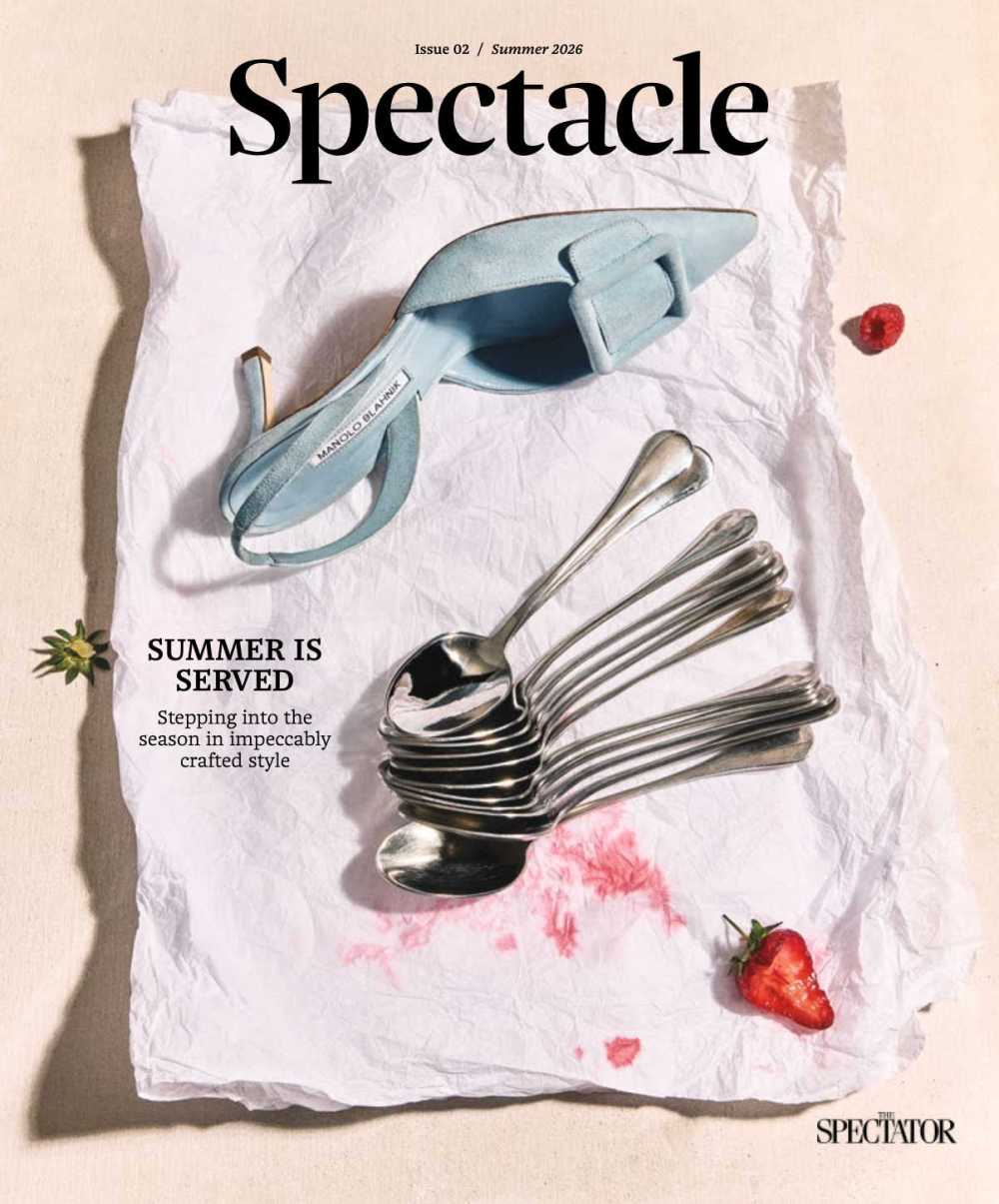
Latest issue Issue 02 / Summer 2026

Issue 02 / Summer 2026

Browse past issues

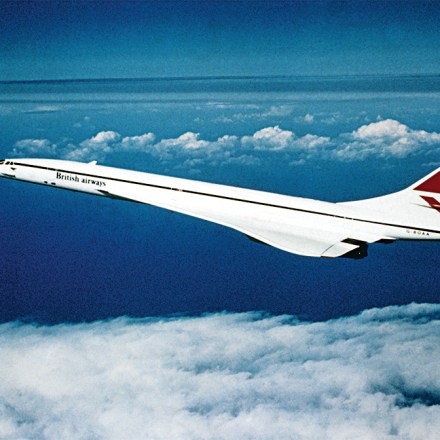
Looking back to the future on the 50th anniversary of Concorde’s first high-speed commercial flight

Not since the Spitfire has a machine inspired such complex loyalties. Never before or since had an aircraft so completely embodied national values and excited such admiration and affection. But, like the Spitfire, Concorde was both magnificent and absurd. Thus, essentially English. Concorde was shockingly beautiful and an aeronautical marvel. At its Mach 2 cruise – say 1,300 mph – its nose reached a temperature of 127 Celsius. The fuselage stretched by several inches. Passengers could – with a glass of champagne to hand – see the curvature of the Earth from its tiny windows. The sky was purple and orange. Concorde was an emotional and technical success, but a commercial disaster.
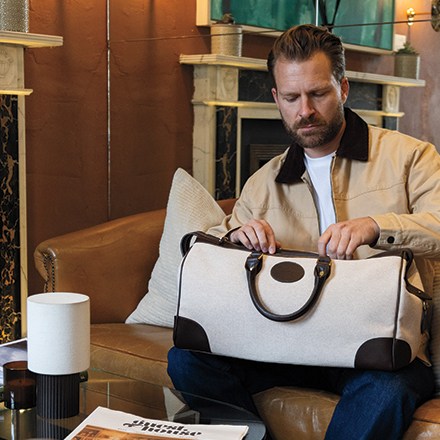
Pack everything you need for your weekend getaway in a bag that epitomizes British luxury

For summer getaways, look no further than British brand Ettinger to carry all you need in enduring style. The luxury leather goods brand’s collection of travel bags, available in overnight and weekend sizes, exemplifies Ettinger’s ethos of adopting traditional manufacturing processes, focus on durability, and attention to detail. The company uses various types of leather according to need: fine bridle leather is more delicate than traditional bridle hide and thus more versatile; soft Italian calf is chrome tanned, dyed, and drum rolled to give the leather a silky touch that improves with age; goat leather, one of the finest in the world, is known for its softness, strength, and resilience.

Margot Hauer-King, of word-of-mouth hot spot People’s, takes her cues from unexpected sources

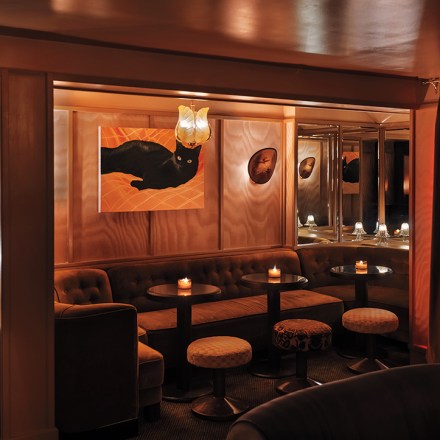
British-born and New York-based, Margot Hauer-King is the middle child of American theater producer Debra Hauer and London’s best-dressed restaurateur, Jeremy King. Hauer-King was raised in restaurants – her father having shaped London’s dining scene with his business partner Chris Corbin, from The Wolseley to Le Caprice to J. Sheekey, still reframing with his solo openings, The Park and Simpson’s. And now, after a chance introduction to journalist and film producer Emmet McDermott – of the headline-making documentary White Hot: The Rise & Fall of Abercrombie & Fitch – Hauer-King and McDermott are reshaping Big City nightlife. Opened just over a year ago in Greenwich Village, People’s is best described by what it is not.

Corneliani’s globe-trotting “travel jacket” touches down in Madrid

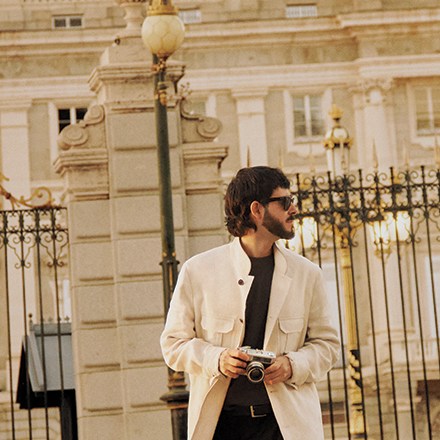
Ever since the luxury Italian menswear house Corneliani was founded by Alfredo Corneliani in the 1930s, it has created high-quality suits and coats, initially for a professional clientele, but more recently for what it describes as the “modern metropolitan nomad” – men who travel, and who have reasonable need for a versatile jacket to take with them. Corneliani calls this a travel jacket. But Corneliani doesn’t just make travel jackets. It has also inaugurated an art project of the same name, commissioning photographers around the world to shoot a Corneliani jacket on themselves or a friend in their natural environment. The idea is a series of travel photographs that interpret the brand through different lenses in different places and now covers 25 projects over five continents.

Berluti’s shoes have been worn by icons from Cardin to Warhol. Now, it’s created a sneaker for the 21st century

The story goes that, in 1962, Andy Warhol went into the Berluti store in Paris asking for some shoes to be made for him. The place, a family-run business founded in 1895, was well-known for its elegant footwear, and the young Olga Berluti was given the task of dealing with this new customer. Warhol’s sketch of what he was looking for was a guide, and Olga made a pair of leather loafers. But when the artist came to collect them, she confessed that one had a scar on it where the hide had been marked, possibly by the cow catching on some barbed wire. According to the brand legend, Olga apparently said that the blemish was the result of a “subversive cow,” and Warhol stated: “From now on, I only want shoes made from the hides of subversive cows.

The oldest luxury brand in Britain has made its “Hollywood comeback”

Founded more than 250 years ago as royal whipmaker to King George III, luxury goods manufacturer Swaine has long since moved beyond its equestrian origins, expanding into leather goods, hats, and umbrellas – all rigorously handmade in Britain. In many ways, the business has operated as a luxury conglomerate before that was a thing, undergoing several transformations since its establishment in 1750. Today, leather accessories remain at its heart, complemented by the later acquisitions in the mid-20th century of Herbert Johnson headwear and Brigg umbrellas. Despite a stellar client roster – from Queen Victoria to Tsar Nicholas II of Russia – and a history of outfitting some of cinema’s most enduring characters, the brand remains defined by discreet understatement.

A book made with gilded leather scales, shimmering organza, and not a single word

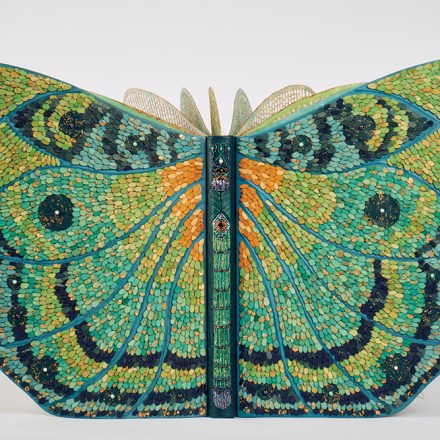
Kate Holland has what her father called a “butterfly brain”. The Somerset-based bookbinder and Homo Faber master artisan has spent three decades creating beautiful books that deftly straddle the line between novel and art piece; each is a handcrafted, artistic response to the text it houses, whether that’s a leather-and-gold-tooling interpretation of the Booker Prize nominees, or a first-edition Breakfast at Tiffany’s set with 1,000 white diamonds. “I’m often told I have too many ideas for a book,” says Kate. “I’ve always been told to pare it back.” So, she has found it creatively freeing to allow her imagination to flourish in her latest work, ‘The Butterfly Mind,’ created as part of the Homo Faber fellowship and shown at Milan Design Week in April.

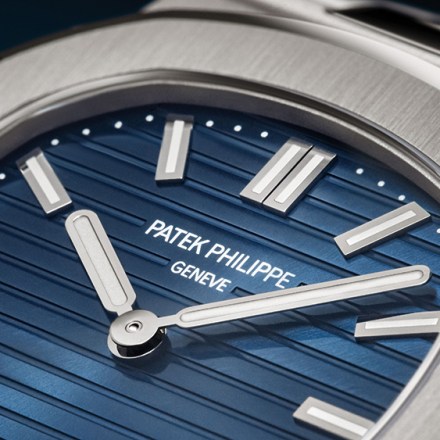
Patek Philippe celebrates a half-century of the Nautilus with a platinum watch that will fly out of the vitrines

Of the thousands of watch designs created during the past century, Patek Philippe’s Nautilus is among the few that can fairly be described as horological landmarks. Penned by the late, great Gérald Genta (famed for creating the Audemars Piguet Royal Oak), the Nautilus was launched in 1976 as Patek Philippe’s first integrated bracelet sports watch, complete with a hefty $3,000 price tag, despite the first models being made from steel. The original Reference 3700/1A broke all the rules with its large-but-slim 42mm case with unique “horns” at the three and nine o’clock positions, a flat, porthole-shaped bezel, and horizontal lines stamped onto its blue-gray dial.

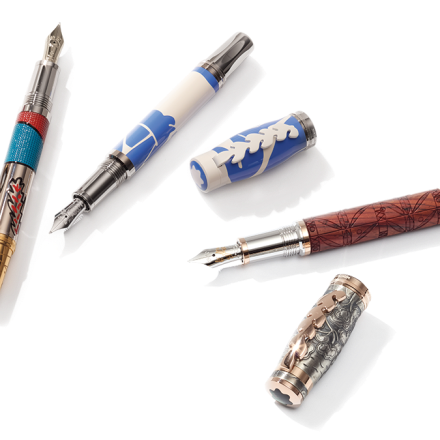
For its latest Masters of Art series, Montblanc channels the vibrant and expressive works of Henri Matisse

Think of Henri Matisse and what comes to mind? “The Snail”, a square of geometric brightly colored shapes made from cut-out paper. Or “Dance (I)”, a circle of pink figures on a blue and green background moving freely. Or how about “Interior with a Goldfish Bowl”, with its cool, dreamlike atmosphere. All speak of a love of form and vibrant color, and it is his use of color that is most noticeable in Montblanc’s new homage to Matisse. With its Masters of Art range, the maker of luxury writing instruments produces dedicated series of limited-edition pens that channel the spirit of great artists, interpreting their works through intricate and skillful craftsmanship. Now is the turn of Henri Matisse, giving us a collection based on five of his masterpieces.

Ever since the Wright brothers, the earthbound have dreamed of gaining personal access to the sky

A vehicle that lifts from your driveway, bypasses the gridlock below, and deposits you, serenely, wherever you choose? For most of the 20th century, it remained science fiction. Now, somewhat amazingly, the race to put a personal flying machine in private hands could be nearing completion. The history of this quest is longer and stranger than most realize. In the 1930s came Autogiro Company of America’s AC-35, an autogyro that could drive 25 mph and fly 75 mph. The ’40s saw the Fulton FA-2 Airphibian with detachable wings and tail. It was even approved by the Civil Aviation Authority, but production was halted due to financial issues.

Daubs and distractions

When Donald Trump said Keir Starmer was “no Winston Churchill,” it is unlikely he was thinking about painting. Not many think of the Great Wartime Leader as an artist. We all know about Churchill’s prodigious ability to write – he wrote at least half a million words, more than Charles Dickens and William Shakespeare put together; but he also painted over 500 canvases. He called them “daubs” – although one suspects there was a touch of mock humility about this because Churchill was proud of his works and is still the only person ever to be elected an Honorary Academician Extraordinary in the history of the prestigious Royal Academy.

Return of the Manx

The original The Thomas Crown Affair overflows with automotive eye candy. There’s an evocative promotional image of Steve McQueen with a dark blue Rolls-Royce Silver Shadow two-door (later known as the Corniche), and rarer still is his character’s Ferrari 275 GTB/4 NART Spyder. Exactly the sort of thing a millionaire playboy thief (or indeed movie star) would drive in 1968. But neither is actually the film’s most famous car. McQueen, a man who likely had issues with impulse control but also the means to indulge it, was perusing the August 1966 issue of Hot Rod magazine when he realized its cover star was something he needed in his life. This was a… well, what was it, exactly? It looked like a beach buggy. McQueen invariably got involved in Thomas Crown’s pre-production.

What women want

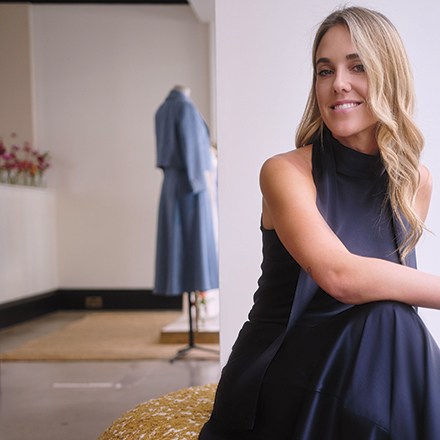
My doctor needs to know my weight so he can calculate the dosage of a prescription. As I kick off my heavy boots to claw back a few pounds before stepping on the scales, he instructs me to “breathe in.” He thinks I’m hilarious. It may well be vanity but it’s also something ingrained in the female psyche and shared the world over. We have an emotional relationship with our bodies that plays into the clothes we choose to wear. It’s what Daisy Knatchbull, founder of her eponymous high-end women’s clothing company, refers to as “the female problem.” She not only understands the complexity of the issues – “Pretty much every woman has the same struggles, whatever their age and size,” she notes – but addresses them, head-on.

The art of chaos

The 61st Venice International Art Biennale has just started and continues in “La Serenissima” until November. That much is certain. What ha­p­p­ens at this artfest, though, is anyone’s guess. It’s been the rockiest, most highly charged Biennale this century – even before it started. This year, the main exhibition, which sets the pulse for the Biennale, is In Minor Keys, conceptualized by the inspirational Cameroon­ian-Swiss curator Koyo Kouoh. Last May, just after delivering her vision for a show featuring 111 artists, including works by Carsten Höller, Alvaro Barrington, and Laurie Anderson, Kouoh died tragically and unexpectedly of cancer. However, she was able to map out the premise for the exhibition which focuses on the small but revealing elements in life.

Let’s workshop it

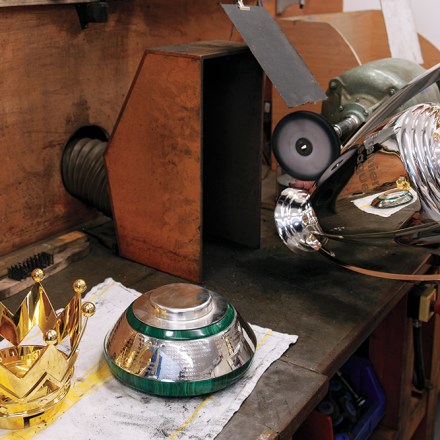
There are few brands that can claim to have made a handbag for Margaret Thatcher, a cigar case for Winston Churchill, and the necklace worn by Kate Winslet in 1997’s Titanic. Asprey, the British luxury house that has been operating out of London since 1781, can claim all three, and that’s before you get to the Royal Warrants, the generations of silversmiths working in its workshop, or the fact that it is currently embarking on what it calls a modern Grand Tour, sourcing rare crafts from artisans in Japan, Brazil, Afghanistan, and beyond to mark its 245th anniversary. If you haven’t heard of Asprey, you’re probably not alone – at least on this side of the Atlantic. In Britain, the name carries a particular kind of weight.

Paul Fischer examines books on American studio filmmaking

The writer Paul Fischer was born in Saudi Arabia, raised in France and now lives in Canada. His first book, A Kim Jong-II Production, the true story of the kidnapping of two South Korean filmmakers in North Korea, was one of NPR’s best books of 2015. His sophomore book, The Man Who Invented Motion Pictures, explores the disappearance of Louis Le Prince, who shot the world’s first motion picture in Leeds, England. For his third book, Fischer turns to the inside story of the friendship between Coppola, Lucas, and Spielberg. The Last Kings of Hollywood is a New York Times bestseller. Here, he discusses five film books that have influenced his work.

The scenic route

Million-strong caravans of wildebeest, darkly efficient lion kills, exuberantly plumaged birds – Africa’s prolific wildlife is a consummate scene stealer. So much so that the continent’s glorious wilderness landscapes rarely earn equal billing. Welcome to the stage Zambia and Botswana, where a two-center, dry season safari upends that formula. While the animals are many and mesmerizing – Moremi is Africa’s “Predator Capital,” the Makgadikgadi a magnet for 50,000 migrating zebra – they’re extras rather than A-list stars; tonic to the scenic gin. Where else to start but Victoria Falls?

Tomayto, tomahto

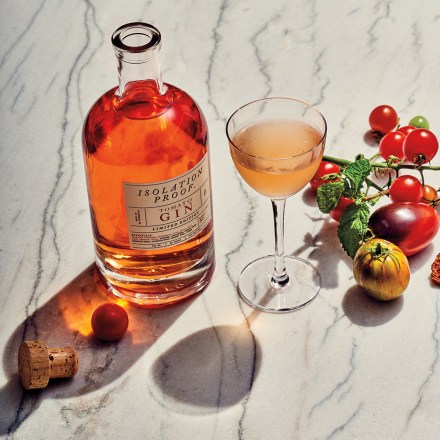
For decades, the bloody mary pretty much had the tomato cocktail on lock. If you wanted something savory, spicy, vegetal – a bloody was your brunchtime go-to. Today, tomato-based drinks span well beyond the bloody – and beyond brunch, too. From legions of tomato water ’tinis to savory spins on negronis, margaritas, and beyond, expect to find drinks everywhere this summer paying homage to the beloved tomate. The key drivers behind the trend: rising affection for savory drinks (thanks, dirty martini), tighter connections between kitchen and bar, and an emphasis on seasonality. ‘If you think tomato drinks sound weird, just remember it’s a fruit.

Game on

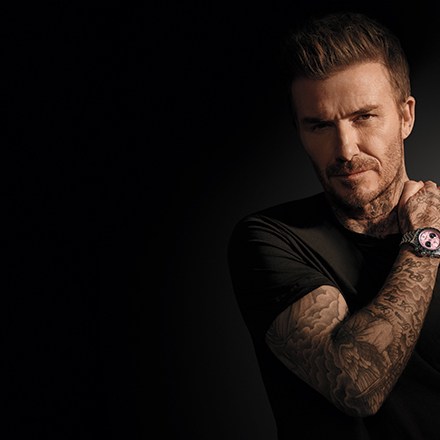
The FIFA World Cup is coming to the United States (Thursday, June 11 to Sunday, July 19, 2026), which means, for a few weeks, the country will submit to calling the Beautiful Game football. It already does so more often than it admits, and the insistence on “soccer” now feels faintly performative. The US came late to the game, but Major League Soccer now draws average crowds of more than 22,000 a match, placing it alongside established European leagues. Its broadcast deal with Apple – 10 years and $2.5 billion – suggests confidence. The arrival of Lionel Messi at Inter Miami CF in 2023 did not create interest so much as accelerate it. Watchmaking, as it tends to, has followed the audience.

Making it personal

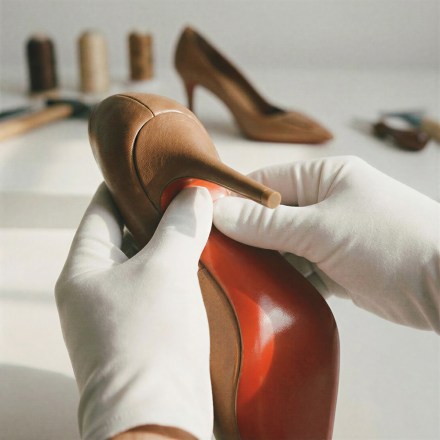
Founded over 50 years ago, Italian shoemaker Santoni has earned a reputation for quality, craftsmanship, and its commitment to “beauty through the hands.” Today, Giuseppe Santoni oversees the company founded by his father, Andrea, and remains committed to the philosophy behind the “Made in Santoni” mark found on every shoe it produces. “It is not simply a place of origin; it means ‘made by our hands,’” says Giuseppe. “Every step – from design to craftsmanship to final result – expresses a single, unmistakable standard of excellence,” he continues. “Our hands think, imagine, and create. They translate intuition into form, and knowledge into detail. Beauty is always found in the detail, where emotion, precision, and care reveal themselves most clearly.

Keep it classic

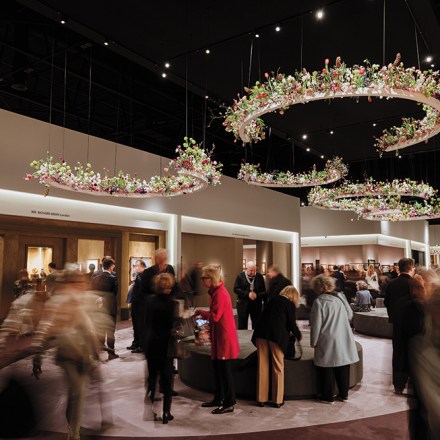
Old Masters has long been yesterday’s story as contemporary art surged away from the dusty legacy market. But just as the interesting times that we live in have investors heading for gold in their droves, the value of certainty is a rising stock in the art market, a tendency on vivid display at TEFAF art fair at Maastricht in the Netherlands this spring. Certainty of long-term value, certainty of supply and of provenance are some of the qualities that are drawing collectors back to Old Master categories, but add better curation, services and the perception that prices reflect intrinsic worth more than hype and the smiles all round as TEFAF closed are easy to account for.

The scenic route

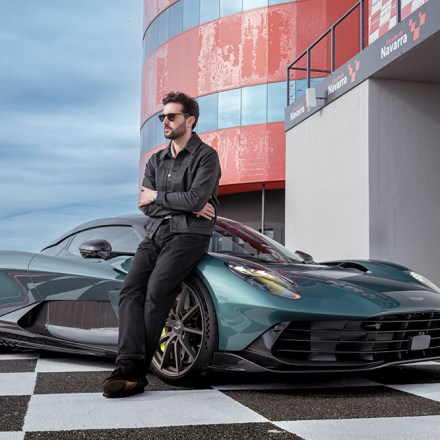
Walking up to the Valhalla is an intimidating experience. Low to the ground, it looks like a prototype race car and every bit the million-dollar starting price tag. Its large gullwing doors swing up, presenting an interior bathed in carbon fiber. After climbing in awkwardly, the carbon bucket seats hug you in and the squared-off steering wheel reminds you this is no ordinary Aston. Close the door and you’re cocooned in like a Le Mans Hypercar. The Valhalla isn’t a track-only racing machine, though. It’s a hybrid road car, made in partnership with Aston Martin’s Formula 1 team, but with surprising levels of comfort and usability. It has 1,046hp, with power coming from both the 4.

Loosen up

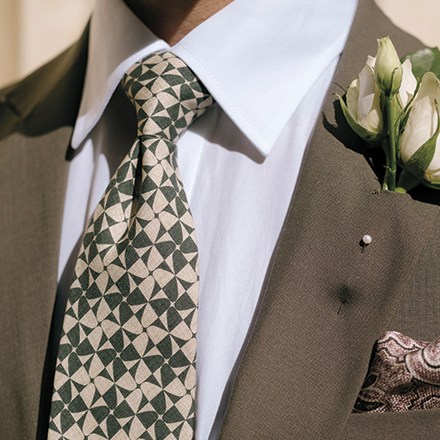
Oliver Spencer, designer and founder of London-based luxury formalwear brand Favourbrook, has a few thoughts about summer style. For a start, he is unimpressed by the type of men who turn up at the races squeezed into “tight suits” and seeming to want to look like an extra from Peaky Blinders. He is equally dismissive of the long reign of beige discretion. “We’re all a little bored of that ‘quiet luxury,’” he says. “No thanks. No more.” For Spencer, the answer is obvious. Summer should be fun, fancy, colorful, and, above all, joyful. He dislikes the idea of “occasionwear” altogether.

Mixing business and pleasure

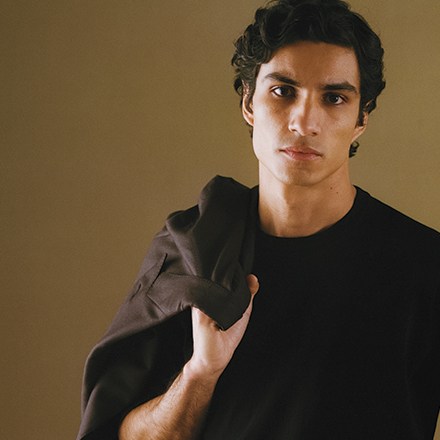
British tailoring house Thom Sweeney has long made a virtue of Italianate ease refined through a distinctly Mayfair lens. The wardrobe is sleek, elegant, and relaxed enough to move from airport lounges to boardrooms, members’ clubs, long lunches, and late dinners without missing a beat. That balance is especially clear in its summer proposition, where tailoring is stripped of heaviness but none of its polish. As co-founder Thom Whiddett puts it, “I love our new chocolate-brown blazer paired with a black dress trouser” – both cut from “very lightweight and breathable wool,” which makes them ideal for warmer weather, and the silhouette works for “both business and pleasure.