Lucinda Bredin

Daubs and distractions

When Donald Trump said Keir Starmer was “no Winston Churchill,” it is unlikely he was thinking about painting. Not many think of the Great Wartime Leader as an artist. We all know about Churchill’s prodigious ability to write – he wrote at least half a million words, more than Charles Dickens and William Shakespeare put together; but he also painted over 500 canvases. He called them “daubs” – although one suspects there was a touch of mock humility about this because Churchill was proud of his works and is still the only person ever to be elected an Honorary Academician Extraordinary in the history of the prestigious Royal Academy.
The art of chaos

The 61st Venice International Art Biennale has just started and continues in “La Serenissima” until November. That much is certain. What ha­p­p­ens at this artfest, though, is anyone’s guess. It’s been the rockiest, most highly charged Biennale this century – even before it started. This year, the main exhibition, which sets the pulse for the Biennale, is In Minor Keys, conceptualized by the inspirational Cameroon­ian-Swiss curator Koyo Kouoh. Last May, just after delivering her vision for a show featuring 111 artists, including works by Carsten Höller, Alvaro Barrington, and Laurie Anderson, Kouoh died tragically and unexpectedly of cancer. However, she was able to map out the premise for the exhibition which focuses on the small but revealing elements in life.

Explore the intellectual side of the Renaissance’s softest boi at The Met

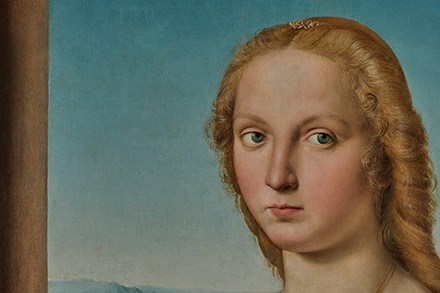
There can be resistance to Raphael. A bit unfair, really. Just as Renoir is considered the soft-edged Impressionist, Raphael (1483-1520), indisputably one of the three great artists of the Renaissance, is often eclipsed by his near contemporaries, Leonardo and Michelangelo. Is it because his works are just too beautiful, too ethereal, too perfect? This view is a relatively new phenomenon. In the 19th century, Raphael had pole position because his paintings were so otherworldly. His romance with La Fornarina (the baker’s daughter, sitter for one of Raphael’s greatest portraits) only boosted his reputation further. However, it turns out the 21st century is more inured to love’s dream. We prefer artists to be tortured souls.