Latest from Coffee House

Latest from Coffee House

All the latest analysis of the day's news and stories

Is Abdul El-Sayed racist?

In his failed 2020 presidential campaign, “Mayor Pete” Buttigieg famously scored 0 percent with black voters in multiple polls.⁠ Abdul El-Sayed, in his bid to be senator for Michigan, is not doing quite so badly. But the evidence suggests he does have an issue with African-American voters, who make up around 12-13 percent of his state’s electorate. In the Democratic primary, his opponent Haley Stevens carried the black vote by large margins, and a Fox News poll suggested he enjoys only about 75 percent support among black voters, which is weak compared to, say, the 87 percent of black Michiganders who voted for Kamala Harris. In a very tight race


abdul el-sayed

Is AI a bubble?

The news is full of speculation that we are about to see a bursting of a “bubble” in AI. “Will the AI bubble pop?” asks the Sun. The New York Post predicts that the entire market is about to “burst,” with a market correction to follow. But it isn’t just tabloids getting carried away – the IMF is concerned about an AI correction, as are luminaries from the financial world such as Ray Dalio and Michael Burry. Burry, who famously predicted the 2008 financial crisis, has denounced Anthropic and OpenAI (the creators of Claude and ChatGPT) as “bubble companies.” And there is already some evidence in the stock market of worries about AI infrastructure spend.

Is this email hack an attempt to destroy the AfD?

Hundreds of thousands of private emails from Germany’s Alternative for Germany (AfD) party have been hacked and published online, exposing the inner workings of the party and raising the possibility that members could be harassed.  The party has confirmed that unidentified hackers had accessed their private information, which allegedly consists of 421,179 emails, amounting to 281 gigabytes of data, according to the tabloid newspaper Bild.

The dark horse who stands to benefit from France’s riots

Marine Le Pen is the political winner from the anarchy that erupted in France at the weekend. A poll conducted in the 48 hours after the nationwide riots found that the leader of the National Rally is the only figure whose approval rating has increased. Le Pen is now up to 38 percent, a popularity not seen since Francois Mitterrand enjoyed widespread support in the 1980s. According to Frédéric Dabi, one of France’s leading political scientists, Le Pen is regarded as “the representative of the party of order, the party of those who can no longer tolerate the chaos.” Her nearest rival is Jean-Luc Melenchon, the leader of the far-left La France insoumise, the party that much of the country holds responsible for stoking disorder in recent weeks.

Look me up on Wikipedia and see how biased it is

When I read that Sandi Toksvig, the British television presenter, is raising money for an alternative to Wikipedia, my heart soared. It’s “deeply biased,” she told the Cheltenham Literature Festival, explaining that her new version – to be called Mappa Mundi – would be produced in collaboration with Cambridge University. It would be “a home for the vast amount of knowledge that is currently sidelined or deleted,” she said. She’s absolutely right. Wikipedia has long suffered from a left-wing bias, something documented at length in a report by David Rozado for the Manhattan Institute in 2024.

Americano Presents

Is libertarianism dead? Daniel McCarthy vs Robby Soave

Bill Gates’s sinister job interviews

Interviews are often tough — but imagine instead of being asked about your hobbies or what you’ll bring to the team, you’re instead quizzed on whether you’ve ever had extramarital affairs, what kind of porn you watch or if you had naked pictures of yourself on your phone. Cockburn would be out of the running, that’s for sure.  These were the questions asked to women that interviewed to work at billionaire Bill Gates’s private office. The extensive screening process included being questioned by a security firm about their sexual past, previous drug use and other personal things in case they were vulnerable to blackmail. That old chestnut!

bill gates interviews

Dear Mary | 25 May 2017

From our UK edition

Q. Re getting away from bores at drinks parties (Dear Mary, 20 May). I take issue with the idea that you even need to give an excuse. I usually just say: ‘Great to see you but I suppose you and I had better circulate now.’ — E.G., Wiltshire A. You are quite right. After all, your host would be furious if you got ‘stuck’ and monopolised the most interesting person in the room, for example Elon Musk. It is a guest’s duty to circulate and I will U-turn on last week’s edict. Q. My son’s godfather rang him in winter after forgetting his 21st. He asked for his postcode in Bristol (where my son was then at university) so he could send a gift. My son has now left uni and tells me that nothing arrived. His godfather, an MP, is very reliable.

‘I was tossed out of the tribe’: climate scientist Judith Curry interviewed

From our UK edition

It is safe to predict that when 20,000 world leaders, officials, green activists and hangers-on convene in Paris next week for the 21st United Nations climate conference, one person you will not see much quotedis Professor Judith Curry. This is a pity. Her record of peer-reviewed publication in the best climate-science journals is second to none, and in America she has become a public intellectual. But on this side of the Atlantic, apparently, she is too ‘challenging’. What is troubling about her pariah status is that her trenchant critique of the supposed consensus on global warming is not derived from warped ideology, let alone funding by fossil-fuel firms, but from solid data and analysis. Some consider her a heretic.

Cameron cross-questioned

From our UK edition

A quick post just to add the Guardian's interview with David Cameron to your Saturday reading list. It takes the unusual approach of fielding questions to the PM from a range of ‘public figures’ — and, although many of those questions reduce down to ‘why aren't you giving more money to X?’, the results are still generally engaging and occasionally insightful. And so we learn, after an enquiry by The Spectator's own Toby Young, that Cameron doesn't keep a diary. And we also have the PM justifiying his stance on Europe to Nigel Farage; skipping over a question about what he may or may not have inhaled during his time at Eton; claiming that ‘not everything [Gordon Brown] did was wrong’; and more besides.

‘Money, money, money’

From our UK edition

[audioplayer src="http://rss.acast.com/viewfrom22/thegreatbritishkowtow/media.mp3" title="Listen: Fraser Nelson and Jonathan Mirsky discuss Britain's attitude towards China" startat=35] Listen [/audioplayer] The Dalai Lama is a connoisseur of absurdity. When we met in London on Monday I reminded him that two years ago, desperate to resume relations with China, No. 10 said it had ‘turned the page on that issue,’ by which he meant the Dalai Lama. He responded with his celebrated chuckle but it became clear that he’s far from sanguine about being snubbed by Britain. He agreed with me that not even Beijing could have thought up a phrase like ‘turn the page’.

Man of many worlds

From our UK edition

By the kind of uncanny coincidence that would tickle his psychogeographically minded friends Iain Sinclair and Peter Ackroyd, Michael Moorcock’s publishers have recently moved offices to the same corner of London occupied by his latest novel, The Whispering Swarm; and just as their rather swanky embankment premises are called Carmelite House, so does the religious order provide Moorcock with one of his key characters. It is a Carmelite monk who leads the book’s teenage protagonist, one ‘Michael Moorcock’, from an ABC teashop to a mysterious enclave just off post-Blitz Fleet Street.

Unequal struggle

From our UK edition

‘How do you feel when you go back to Gary?’ I ask Joe Stiglitz. ‘Well, frankly, I get depressed,’ he replies. ‘The American middle class was created in places like my home town and is now struggling badly — which makes me sad.’ Stiglitz, a Nobel prize-winning economist and the closest thing the left has to an intellectual superstar, grew up in Gary, Indiana, during the 1950s, when it was the heart of the booming US steel industry. His father sold insurance and his mother was a teacher. ‘We had a modest detached brick house, with a lawn all around — it was safe and secure,’ he recalls. ‘Back then, if you worked hard and played by the rules in America, you’d make it — you could get ahead.

‘Paint goes on living’

From our UK edition

Maggi Hambling is 70 later this year, and a career that took off when she was appointed the first artist in residence at the National Gallery, in 1980, shows no signs of slackening in momentum. Hambling is still as uncompromising as ever, and as difficult to categorise. An artist of sustained originality and inventiveness who fits no pigeonhole and is part of no group, she is a resolutely independent figure (she enjoys the description ‘maverick’) who considers it her duty to keep questioning assumptions (her own as much as other people’s) and looking afresh at the world.

Alex Salmond sets out his terms for Ed Miliband

From our UK edition

‘Would you like a glass of pink champagne?’ asks Alex Salmond at 3.30 p.m., sounding very much like a man settling down for the afternoon. It’s Monday and Scotland’s former first minister has cause to celebrate. He spent the previous day musing on television about the price he’d demand for the SNP supporting Ed Miliband in the Commons, and his thoughts dominate the front pages. There’s plenty of outrage at the idea of the SNP toying with England, and outrage is just what he wanted. So champagne it is. He has found himself an unlikely star of the Tory election campaign; the party this week released a cartoon showing him playing a whistle while Miliband dances.

George Osborne interview: smaller government is not enough

From our UK edition

[audioplayer src="http://rss.acast.com/viewfrom22/putin-s-empire-building/media.mp3" title="James Forsyth and Fraser Nelson discuss Osborne's election manoeuvres " startat=839] Listen [/audioplayer]Puccini’s doesn’t seem like George Osborne’s sort of restaurant. It is a pizza-and-pasta place in the safely Labour constituency of Salford and Eccles, Greater Manchester, most notable for the fact that Sir Alex Ferguson once took his whole squad there. (‘Penne alla Giggs’ is still on offer to prove it.) In recent years, however, the Chancellor has become something of a regular — he has even taken the Prime Minister along — and is made welcome to the point that when we met there last Thursday diners queued to be photographed with him.

Jonathan Sacks on religion, politics and the civil war that Islam needs

From our UK edition

Jonathan Sacks has an impressive track record for predicting the age we are in. In his 1990 Reith Lectures, ‘The Persistence of Faith’, the then chief rabbi pushed back against the dominant idea that religion was going to disappear. In the early 2000s, he predicted a century of conflict within Islam. And he was one of the first religious leaders and thinkers not only to critique multi-culturalism (‘the spanner in the works for tolerance’) but to try to think of a path beyond it. We recently talked over some of this at his house in London, where he lives during gaps in a busy teaching schedule that also takes him to New York.

Clive James on his late flowering: ‘I am in the slightly embarrassing position where I write poems saying I’m about to die and then don’t’

From our UK edition

Clive James has published a new poem days before we meet. It opens, ‘Your death, near now, is of an easy sort’. It is about a Japanese maple his daughter has planted in the garden of his Cambridge home where we are sitting, and whether the poet will live to see the leaves flame red this autumn. The poem has made news. ‘At the moment,’ he says, laughing, ‘I am in the slightly embarrassing position where I write poems saying I am about to die and I don’t. My wife is very funny on that subject.’ It is part of an astonishing late body of work. This month there is a new book of writing on poetry, Poetry Notebook.

Hague: No deficit funded tax cuts

From our UK edition

William Hague’s just been on Dermot Murnaghan’s Sky show. They shot the breeze for a bit, gabbing about foreign affairs and the recent targeted assassinations on Taliban and al Qaeda leaders, then the conversation moved on to tax cuts as an economic stimulus. Hague laughed off the suggestion, saying that the US is in its current crisis because for years it has concentrated on offering tax cuts rather than controlling its deficits. Britain will not make that mistake, he said. ‘No deficit funded tax cuts’ was a line first pursued by David Cameron ten days ago in a speech to the Canadian parliament (although, as Fraser has noted, it has its roots in the 2005 leadership contest and Oliver Letwin’s opposition to “unfunded tax cuts”).

Gary Kemp on David Bowie, Margaret Thatcher, and joining the establishment

From our UK edition

There was a funny gaffe on Radio 4 the other day, when the newsreader announced that Hitler’s favourite architect Albert Speer had been banged up in ‘Spandau Ballet’. Cue a lot of laughter across middle England. Gary Kemp, the founder of Spandau Ballet, the 1980s pop band (not the Berlin prison) was also rather amused, even if he’d heard it before. ‘When we first started,’ he recalls, ‘the inky press thought our name meant we were a new fascist movement in music, which was obviously nonsense.’ The real inspiration behind the Spandau name was David Bowie. ‘We were obsessed with Berlin, which had been validated by Bowie. We all went to the Blitz club and bought synthesisers.

Michael Gove: why I’ll never run for leader

From our UK edition

Today's Guardian magazine runs a Michael Gove profile, colouring him blue on the cover as if to alert readers to the threat he poses. "Smoother than Cameron," it warns. "Funnier than Boris. More right-wing than both. Are you looking at the next leader of the Tory Party?" There is nothing unusual about leadership speculation following a  prominent Tory frontbencher, but there is something unusual about the way Gove has ruled it out in almost any way imaginable. He has combined General Sherman and Estelle Morris, saying he wouldn't and couldn't do  the job. It is now being said that Gove is protesting too much, but he has been clear about this for years. I'll add my tuppenceworth. Gove was once, briefly, my news editor at The Times.

Transcript: IDS on Today

From our UK edition

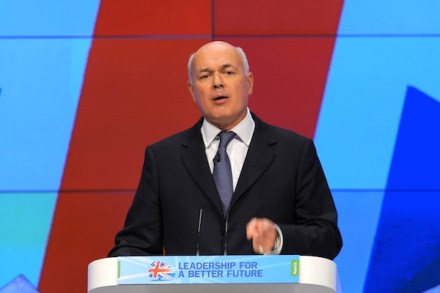
Iain Duncan Smith appeared on the Today programme this morning. In a heated interview with Evan Davis, the work and pensions secretary was interrogated about David Cameron’s radical welfare proposals. Conversation ranged from cutting rental payments for under-25s to protecting non-means tested pensioner benefits. The bulk of the exchange was devoted to discussing Cameron’s intentions, as he seeks to make welfare reform a central part of the 2015 election. Here is a transcript of those passages: Evan Davis: Okay, I’m going to quote a couple of things that you wrote in your green paper. ‘Successive governments have made well-intentioned but piecemeal reforms to the system.

The net delusion

From our UK edition

The internet is democratising and enriching the world, right? It’s happening now in the Middle East, isn’t it? No it isn't, says Evgeny Morozov, author of The Net Delusion, not as such. The Spectator has an interview with him over at the books blog (spectator.co.uk/blogs/books). He spoke to us about those liberal westerners, many of whom are close to President Obama and Secretary of State Clinton, whose utopian dreams ask far too much of the internet, and how their misguided analysis of global affairs is strengthening dictators not weakening them. Here is a flavour of what he had to say: ‘We have a very confused sense of how modern authoritarianism works. It works differently.

Balls wants you to trust him

From our UK edition

It's only ten days or so since Ed Balls was last quizzed by Andrew Neil, but there he was rehashing many of the same lines on the Sunday Politics today. Among the things that stood out was this: the shadow chancellor’s argument on the public finances is ever more cleaving into two halves. First, he accuses George Osborne of borrowing £150 billion more over this Parliament than originally planned. (Although there’s a detail that often, conveniently, gets obscured: namely, that borrowing is still going down year-on-year under Osborne's plan). Second, that Balls's plan would decrease borrowing in the medium-term even though it would increase spending and reduce tax revenues in the short-term.

Osborne brings it back to the economy

From our UK edition

It wasn’t, as expected, Nick Clegg on Marr this morning but George Osborne as the coalition attempted to move the argument back onto the economy. Osborne kept stressing that the government would focus on the things that ‘really matter’ to people; code for we’re not going to spend too long on Lords reform. Indeed, given that Nick Clegg has turned down a compromise on that, we now appear to be heading for — at most — a referendum on the subject. Osborne defended his deficit reduction programme, arguing that the lack of growth was a result of the Eurozone crisis and the oil price spike. But he did concede that a Tory government would be going far further on employment law reform than the coalition is.

Cameron’s Euro line

From our UK edition

One line jumped out at me in David Cameron’s Marr interview this morning. When Andrew Marr asked him if he thought we were halfway through the Euro crisis or nearing the end of it, Cameron replied: ‘I don’t think we're anywhere near half way through it.’ Cameron clearly does not believe that any resolution to the crisis is in sight. Given that, as long as the Eurozone crisis rumbles on it is hard to see how the British economy returns to robust growth, this is immensely significant. It does, though, make me wonder if the government’s approach to the crisis should now change.

Cameron needs results that match his words

From our UK edition

Further to James’s post on the Cameron interview, here’s what jumped out at me: 1. ‘Governments have difficult months. This government came together to dig this country out of the huge economic mess that it's in…’ This is the official No.10 explanation about the last few months; that it’s the problems of the austerity agenda. As James Forsyth says in his political column in the current magazine, there are strongly-held alternative explanations. 2. ‘We’re not just a bunch of accountants dealing with the deficit…’ Cameron kicks off with this, an interesting phrase as it has been used by those criticising his Chancellor’s economic message.

Cameron tries to return to the big picture

From our UK edition

David Cameron is out doing the media rounds today. He wants to, in his words, get back to the ‘big picture’, the argument over deficit reduction. Indeed, Danny Alexander’s speech today saying that departments have to indentify additional saving seems to have been timed to tee up this argument. Cameron’s Today Programme interview, though, was dominated by Abu Qatada, tax avoidance, Lords reforms and whether or not — in John Humphrys’ words — the PM is ‘a bit lazy.’ On Qatada, Cameron was insistent that the Home Office had ‘checked repeatedly’ with the European Court of Human Rights on the deadline. I expect that the Home Office will have to release details of these contacts today.

Balls lays into Brown — but why?

From our UK edition

Normally, pre-Budget interviews with shadow chancellors are dry and methodical. But the Times's interview with Ed Balls (£) today is the opposite: frenetic, relatively non-fiscal and utterly, utterly strange. Given that CoffeeHousers are probably waking up to brunch, I thought it might be a bit much for you to wade through his thoughts on food and on crying (‘OK. Crying. What do you want to know about crying?’). So I've pulled out some of the main political points from the interview here: 1) Laying into Brown. The quotation that gives the interview its headline is an eye-opener, coming as it does from Ed Balls. ‘Nobody is going to look back at any point in history,’ he says, ‘and say that Gordon Brown was a great Prime Minister.

Nassim Taleb: Ban Tesco bonuses

From our UK edition

There have been precious few people able to make sense of the crash. The main commentators didn’t see it coming — and so have focused their energies stressing how no man born of woman could have predicted it. But Nassim Taleb did. He has been a voice of sense, originality and common sense throughout, and David Cameron has been listening. The respect is mutual: Taleb even described Cameron as ‘the best hope we have left on this planet’ because he understood the dangers of deficits. If CoffeeHousers haven’t come across Taleb’s books, such as Fooled by Randomness and Black Swan, I can’t recommend them enough. I met him recently, and published the interview in this week’s magazine.

Dave talks film, finances and Europe

From our UK edition

It was the second of the Today Programme's New Year's interviews with the three party leaders today; this one with David Cameron. And there was plenty to digest from it. So much, in fact, that we thought we'd bash out a transcript, so that CoffeeHousers can read it through for themselves. That's below, but before we get there it's worth highlighting a couple of things that Cameron says. First, his point that ‘we've seen a level of reward at the top that just hasn’t been commensurate with success’, which is another volley in the battle against the ‘undeserving rich’ that James mentioned yesterday.

The Tories’ latest frustration with the Lib Dems

From our UK edition

Nick Clegg’s interview in The Observer today highlights what is fast becoming one of the biggest tensions in the coalition: the Lib Dem desire to show that they are the governing party who cares. Allies of Iain Duncan Smith have been infuriated by Lib Dem suggestions that the government would be doing little about youth unemployment if it was not for them. But Clegg repeats the claim to The Observer: ‘Whether it's on youth unemployment, whether it's on youngsters, whether it's on getting behind advanced manufacturing and not putting all our eggs into the City of London basket, I don't think that would have happened without the coalition.

Interview: Lammy speaks to the common people

From our UK edition

Tottenham is a very long way from Tuscany, in every sense. But they were briefly connected earlier this year as riots spread across London. The political class clung to their Tuscan sunbeds for a few more hours while Tottenham burned. David Lammy, Tottenham's MP, was an exception. His immediate response to the unfolding enormity impressed observers. Now he has written a book analysing the riots' causes, although he describes much more than that. Lammy grew up in Tottenham during the troubled '70s and '80s and his book is an engaging mix of autobiography and a sharp critique of New Labour (and Britain) in decline. We met in Westminster and I asked when he began writing what has become Out of the Ashes.

Son of Brownies

From our UK edition

How generous of Ed Balls to publish a transcript of his interview on the Politics Show earlier, so that we can amble through it on a Sunday evening. It contains, as you'd expect, more disagreeable parts than agreeable, and nothing more so than his comments about the national debt, deficit and all that. Two of his arguments, in particular, are worth alighting on because they're Brownies in the classic mould, and will probably be served up again and again: 1) ‘After the Second World War we took a number of years to repay our much higher level of debt. The government and Vince Cable have tried to get this done in one Parliament and it is backfiring.

Hague: The euro is a burning building with no exit

From our UK edition

James Forsyth has interviewed the foreign secretary, William Hague, in tomorrow’s issue of the Spectator. Here is an extended version of the piece that will appear in the magazine. Politicians normally have to wait for the history books for vindication. But for William Hague it has come early. All his warnings about the dangers of the euro, so glibly mocked at the time, have come to pass. But, as he makes clear when I meet him in his study in the Foreign Office days before the start of Tory conference, he is not enjoying this moment. Rather, he is absorbed with trying to sort out the mess that others have created.

Clegg on Marr, a few highlights

From our UK edition

Nick Clegg was in combative mood on the Andrew Marr show earlier this morning; he railed against the press and the Daily Mail in particular. It wasn’t exactly an illuminating session, but here are some highlights: Clegg on the Mail: “Can I put this mildly? I really wouldn't believe a word you read in the Daily Mail. This is the paper that called me a Nazi. They and other papers have got a bee in their bonnet about the coalition. They come up with drivel every single day. I'm in this because I believe it's the right thing to do...I want to see us succeed in the coalition and beyond...Miriam supports me...” Clegg on his leadership: “Absolutely. I intend to serve well beyond one term. There you go. Daily Mail wrong.

Willetts’ musings

From our UK edition

Coffee House has already touched on David Willetts’ interview with the Times (£), highlighting his view that the 50p tax rate is important to prove that "we’re all in this together". Willetts does not limit his words to the top rate of tax. In addition to his universities brief, he discusses equal pay issues, social reform and the recent riots. Willetts confesses to being a “muser”, never happier than when applying his renowned brain to the broad sweep of government policy. “I wouldn’t be able to function properly as a politician unless I was able to range across some of these wider issues. It just wouldn’t be worth it,” he says.

WEB EXCLUSIVE: Full-length interview with IDS

From our UK edition

I have interviewed Iain Duncan Smith for tomorrow’s Spectator. In print, space is always tight and we kept it to 1,500 words. One of the beauties of online is that you can go into detail in political debate that you never could with print: facts, graphs (my guilty pleasure) and quotes. Here is a 2,300-word version of the IDS interview, with subheadings so CoffeeHousers can skip the parts that don’t interest them. I’ve known him for years, and remember how hard it was to get out of his room four years ago when he started on the subject of gang culture and the merits early intervention. Now, he’s in the DWP, able to enact all he spoke about. He believes the riots will transform Cameron’s premiership in the same way that 9-11 did Blair’s.

Where are Cameron’s praetorians?

From our UK edition

One of the striking things about the wall to wall hackgate coverage on the 24 hours news channels is the absence of Tory voices defending the Prime Minister. It is coming to something when the leader of another political party, Nick Clegg, is doing more to defend the PM than most of the Tory members of the Cabinet. One minister told me earlier that Number 10 was having trouble getting people to go on TV to bat for the PM. While many Tories are wondering where their party chairman is, in these circumstances you would expect her to be touring the TV studios. Cameron’s political spokeswoman Gabby Bertin is doing a typically able and indefatigable job of making the case for her boss.

Miliband the hero

From our UK edition

Garlands go to the conqueror. The Observer has interviewed Ed Miliband about his response to the News International crisis, and it’s as if Caesar has returned home after crushing the traitor Pompey. Miliband told the Spectator in an interview with James Forsyth in this week’s magazine that Murdoch’s spell on British politics has been broken. He reiterates that sentiment with the Observer and adds that Murdoch’s endorsement will be a “double-edged sword at the next election”. When speaking to James he was careful to insist that there was nothing personal in his burgeoning crusade against Murdoch; he is not so careful now.