Latest from Coffee House

Latest from Coffee House

All the latest analysis of the day's news and stories

Inflation is a social evil, so why don’t our leaders care?

From our UK edition

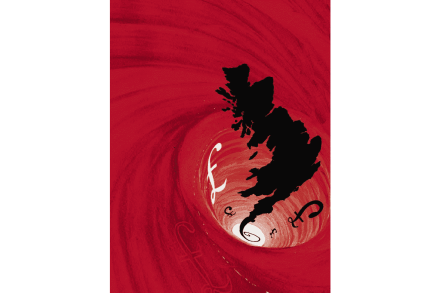
It was a ‘destroyer of society’, a ‘tax on ordinary people’s savings’ and a threat to social order. You don’t have to spend very long browsing the history books to find thumping quotes from Ronald Reagan or Margaret Thatcher denouncing rising prices as an evil that had to be defeated. And today? Even with prices in the UK now rising at 9.1 per cent, the fastest for 40 years, there are just a few mumbled apologies, coupled with some evasive excuses. That is not good enough. If we are going to defeat inflation all over again, it will take some leadership. We learned today that inflation has nudged up again, this time well past the 9 per cent barrier.

Is Britain heading into a wage-price spiral?

From our UK edition

Are wages about to spiral out of control? Boris Johnson certainly thinks there’s a risk. Last week he warned that the economy was ‘steering into the wind’ and that the UK could be entering a 1970s-style malaise. With inflation shooting up to 9 per cent – and expected to go higher still – rail workers are embarking on the first of three days of industrial action today, demanding a minimum pay rise of 7 per cent. Network Rail has offered just 2 per cent, with the potential for an extra 1 per cent on top if they can meet productivity targets later this year. Barristers too have voted for a walkout, and teachers and doctors are threatening to join the strikes.

Biden’s energy hypocrisy

Joe Biden promised on the campaign trail in 2020 that he would "transition away from the oil industry,” convert to 100 percent "clean" energy by 2035, and "end fossil fuels.” Shortly after taking office, he started to make good on this pledge by suspending all new gas and oil leases on federal property and ending the Keystone XL pipeline. Now, faced with gas prices at a record high $5 per gallon and runaway inflation — aka the consequences of his own actions — Biden is looking for an off-ramp. Somehow, the Biden administration has decided it can still convince oil companies to ramp up domestic production in the short term while simultaneously promising to adhere to the president’s ambitious climate change goals in the long term.

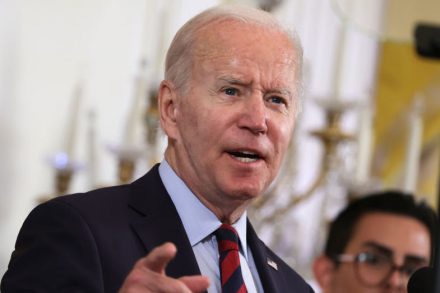
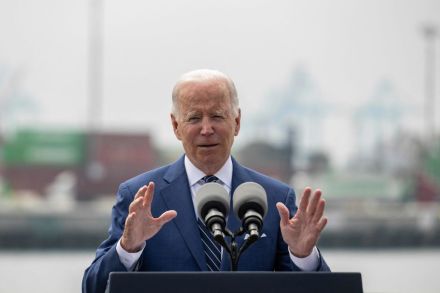
U.S. President Joe Biden (Getty Images)

How high might interest rates go?

From our UK edition

To nobody’s surprise, the Bank of England has hiked its base rate, and, equally unsurprisingly, it has chosen to do so by a relatively modest 0.25 per cent, bringing rates to 1.25 per cent. In 25 years of its existence, the Monetary Policy Committee (MPC) has never raised rates by more than 0.25 per cent at a time. That stands in contrast to the Fed’s decision to raise rates by 0.75 per cent on Wednesday. If the modesty of the rise was supposed to calm markets, however, it doesn’t seem to have worked. The FTSE100, already down nearly 2 per cent on the day, plunged further on the announcement.

The post-Covid mental health crisis

Recent mass shootings have reminded us of just how much gun violence has surged since Covid. The record of 45,222 Americans dying from gun-related injuries in the first year of the pandemic could well be topped in 2022, with more than 12,000 fatally shot since the end of April. Many rightly condemn progressive district attorneys in cities for failing to condemn the increased bloodshed. Yet the uptick in violence has been uniform across the nation, plaguing rural counties as much as urban ones, which is why most psychological experts put the blame squarely on the emotional residue of lengthy Covid lockdowns.

moran

‘Villain’ Elon Musk votes Republican for first time ever

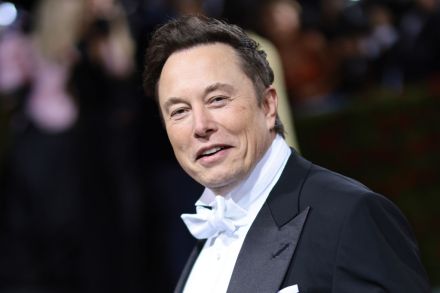
They say you never forget your first. Your first Republican, that is. For Elon Musk, that is Mayra Flores, the Trump-endorsed candidate who flipped the Congressional seat in Texas’ 34th District from blue to red with a vote from the world's richest man (as well as from thousands of other Texans). Cockburn discovered the news while perusing Twitter this morning (at 3:28 a.m.) to see how the political discourse was doing (not well, as expected). His mood, however, lightened when he stumbled upon this  tweet from Elon Musk: I voted for Mayra Flores – first time I ever voted Republican. Massive red wave in 2022. — Elon Musk (@elonmusk) June 15, 2022 Musk has been increasingly on Cockburn’s radar, especially since he vowed to make Twitter "fun.

The soaring cost of a Biden barbecue

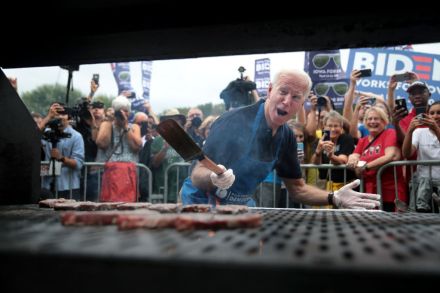
Last year, someone inside the Biden administration had a bright idea: let’s tweet about food prices on the Fourth of July! The staffer surely scanned an American Farm Bureau news release, and thought, wait until people hear they’ll save a whole 16 cents on their cookouts compared to last year! The staffer no doubt ran this brain wave by his higher-ups, who agreed. We'll even do a GIF that people can readily retweet! To quote the last administration, it’ll be YUUUUUUUGE! Of course, the graphic may have been tweaked slightly before it was sent out. Otherwise everyone might have noticed that prices were up on hamburger buns (6 percent), chocolate chip cookies (11 percent), and strawberries (22 percent!).

Levelling up is failing

From our UK edition

First the good news: the Office for National Statistics figures released today show that pay is rising at its fastest rate in two decades, with regular pay up by 4.2 per cent in the three months for February to April compared with a year earlier. Now the bad news: such is inflation that, in real terms, regular pay was actually down 2.2 per cent – lower than at any time in the past two decades except for a brief period in the autumn of 2011. So, yes, it isn’t just an illusion: we really are getting poorer. That is a big problem not just for households trying to make ends meet but also for the government, which at some point over the next two years will have to try to persuade voters to trust it with the economy.

Gas prices are the new Covid

Soaring gasoline prices (they’re up 49 percent since President Biden took office) are due to “Putin’s price hikes,” claims Biden. But last I checked, Putin wasn’t stateside canceling the Keystone XL Pipeline, pursuing efforts to end federal oil and gas leasing programs, and careening our country toward more Covid-like lockdowns, social isolation, supply chain shortages, and another summer crime wave. A brief recap of Biden’s oil and gastastrophe: in January 2021, during his first days in office, the president revoked the Keystone Pipeline permit and issued an executive order that, in his own typically eloquent words, directed the “Secretary of the Interior to stop issuing new oil and gas leases on public lands and offsh- — and offshore waters, wherever possible.

Why Biden’s inflation plan will fail

From our UK edition

It sounded impressive at the time. On the last day of May, a whole ten days ago, president Biden laid out a three-part plan for bringing inflation back under control. It consisted of making sure the Federal Reserve was allowed to do whatever it took to control prices, releasing oil and gas reserves to try to bring down the soaring costs of energy, and fixing supply chains to try to make industry and retailing more competitive. ‘I have made tackling inflation my top economic priority,’ he announced grandly. To listen to the rhetoric from the White House, you might think that this was an issue that could be fixed with a few tweaks to public policy, after which the President could happily go back to taxing and spending on an unprecedented scale. The problem would be solved.

Joe Biden’s greatest hits tour

Joe Biden would never be in a hair band; a hair plugs band, maybe. Yet the president does seem to be following a maxim known well to every aging rocker: when nothing else is working, you hit the road. So it was that yesterday Biden left Washington on a tour that sent him to Los Angeles with stops afterward in Santa Fe and Philadelphia. And while his handlers seem to have talked him out of doing the whole thing via Amtrak, there are other reasons to think this is not a typical presidential jaunt. From out of the White House has come news that the president is frustrated with his dismal poll numbers. He's also reportedly tired of being over-handled by his staff — and fair enough.

kimmel

Kimmel gives Biden the grilling of his presidency

Cockburn can’t help but tune into the late-night shows. On Wednesday night, he was spoiled rotten: President Joe Biden showed up on Jimmy Kimmel Live!, kicking off a West Coast tour to revive his declining popularity. While the audience applause lasted more than a minute upon his arrival, Cockburn wasn't quite impressed with the interview. https://www.youtube.com/watch?v=ZEtPV-qvLe8&ab_channel=JimmyKimmelLive From the start, it was clear Kimmel would carry the show like a pack mule, clarifying Biden’s points and continually asking questions that led the president towards easy answers, along with the occasional jab at Trump and Fox News. Kimmel kicked off proceedings by asking: “Do you mind if I ask you some serious questions?

There’s never been a better time to ditch the net zero agenda

From our UK edition

The cost of living crisis is confronting Westminster elites with the stark reality of some of the dubious policy choices they’ve recently made. Last week, the government was forced to postpone its ban on buy one get one free deals on ‘junk food’. The foolishness of outlawing cheap food – a policy Boris Johnson adopted after his spell in intensive care – has been laid bare now that inflation has risen to a 40-year high. Soaring energy bills ought to give proponents of eco-austerity similar pause for thought. Dozens of retail energy companies have gone bust in recent months. We are shipping fracked gas from the US while banning the technology here.

Life in an age of hyperinflation

From our UK edition

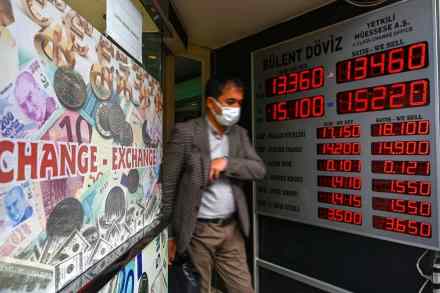
Istanbul, Turkey On Saturday mornings, Istanbul’s markets and greengrocers are packed with housewives in search of a bargain. Anxious women compare cabbages while chefs haggle over bunches of parsley, passing across thick wads of ten Lira notes – equivalent to about £5 a decade ago, now worth just 50 pence. The rising cost of food has become a national obsession in Turkey. Menemen, a staple breakfast dish of scrambled eggs with tomato, onion and fried green peppers, has seen the cost of its basic ingredients shoot up by 132 per cent in a year. Some shops in the big cities have invested in digital price tags – those little grey electronic screens you see in continental supermarkets that can be updated with the click of a mouse.

Everyone hates Nancy Pelosi’s gas bill

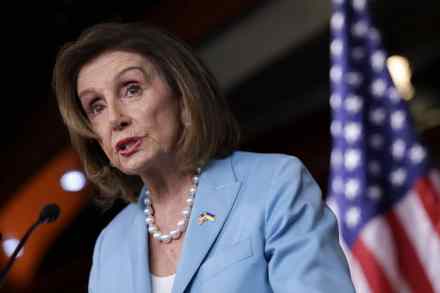
Congress on Thursday approved a bill that gives the White House power to enact price controls on gasoline. The Consumer Fuel Price Gouging Prevention Act lets the Federal Trade Commission treat so-called price gouging as a deceptive trade practice. Congress specifically directs the FTC to prioritize cases “concerning companies with total United States wholesale or retail sales of consumer fuels in excess of $500,000,000 per year.” In other words, all the major suppliers of oil and gas to the United States. “This is a major exploitation of the consumer, because this is a product the consumer must have,” droned House Speaker Nancy Pelosi, whose love of fuel price gouging legislation dates to 2005.

Unemployment is low – so why aren’t wages improving?

From our UK edition

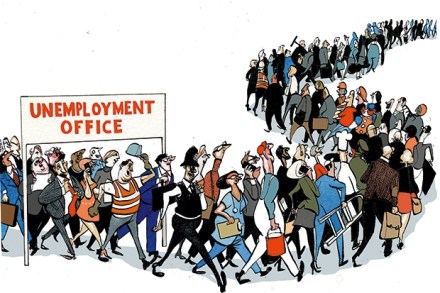
For the first time ever, the number of UK job vacancies – now almost 1.3 million – has overtaken the unemployment count. Normally, this would lead to people in work feeling much better off, and lead to pay hikes and bonuses as employers compete to recruit and retain employees. But in fact, regular pay in real terms (that is, after inflation and before bonuses) is down 1.2 per cent – fuelling the cost-of-living crisis that is now the central fact of British politics. What’s going on? In short, today’s ONS labour market overview is yet another example of how inflation can ruin otherwise good news. Total salaries are up 7 per cent and unemployment fell to 3.7 per cent in Q1 (a record low not seen since the mid 1970s).

The cruelty really is the point

Earlier this week, Politico ran a piece called “Inflation’s biting. Roe’s fraying. Dems are still trying to connect with voters.” The crux of the article is that while congressional Democrats have plans to counter rising inflation, they are having a hard time selling their command of the situation to voters. It’s no wonder. The star of the piece is Representative Katie Porter. Porter, a member of her party’s progressive wing, is portrayed as more aware of the impacts of inflation than her colleagues. The story describes an instance in which Porter had to put a package of bacon back on the shelf because, to her surprise, it was up to $9.99 per pound.

Could Haldane have helped save us from inflation?

From our UK edition

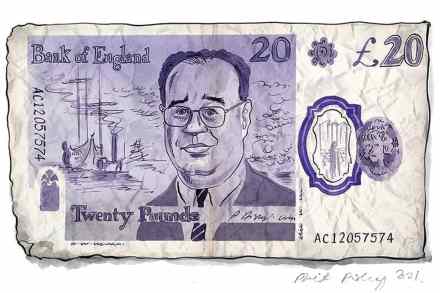
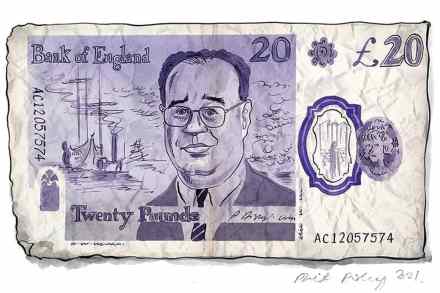
Would Andy Haldane, the economist who left the Bank of England to run the Royal Society of Arts, have made a better governor than Andrew Bailey? You might be thinking that Daffy Duck would have made a better fist than Bailey of combatting the cost of living crisis. But seriously, Haldane was an outsider (backed by this column) in the race won by Mark Carney in 2012, and Dominic Cummings reportedly wanted him to follow Carney in 2020. He’s a brilliant real-world observer and it’s poignant to know that, though he warned Monetary Policy Committee colleagues early last year to brace for inflation, it has ‘surpassed my worst expectations’.

Higher taxes won’t fix inflation

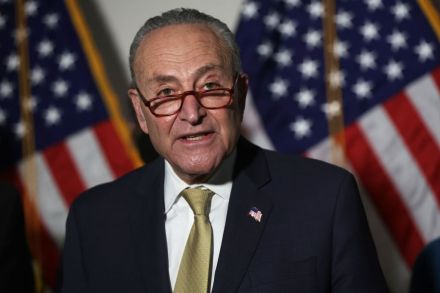
Senate Majority Leader Chuck Schumer knows how to fix inflation: higher taxes. “If you want to get rid of inflation, the only way to do it is to undo a lot of the Trump tax cuts and raise rates,” surmised the New York Democrat to reporters on Tuesday, after meeting with West Virginia Senator Joe Manchin about the budget. “No Republican is ever going to do that. So the only way to get rid of inflation is through reconciliation.” Manchin saw it slightly differently, portraying tax increases as budget reduction tools. He believes debt reduction is “the only way” to fight an inflation problem that threatens to wash away Democratic majorities in Congress.

democrats

The Biden Bust is here

From our UK edition

A wave of government spending would reboot the economy. Fairer taxes would pay for restored infrastructure. Skills would be improved, productivity raised, and new digital champions would emerge. When Joe Biden was elected, he promised the most radical programme of economic reform since Franklin Roosevelt's New Deal in the 1930s, and, to his army of cheerleaders at least, the American economy was about to be completely transformed. But hold on. Only a year into his term, the reality is very different from the promises. In reality, the Biden Bust has arrived. Donald Trump may have been personally obnoxious, but he bequeathed an economy in perfectly good shape The US GDP figures released today was genuinely shocking.

Who can put the toothpaste of inflation back in its tube?

From our UK edition

The UN Food and Agriculture Organisation’s food price index rose 13 per cent last month to stand a third higher than a year ago. Within the index, cereals rose by 17 per cent – driven by interrupted Ukrainian and Russian wheat supplies – and vegetable oils by 23 per cent, Ukraine being the world’s biggest sunflower farmer. In the UK, wholesale milk is up 20 per cent, as farmers face rising fuel and feed costs. Supermarkets squeeze suppliers to suppress retail prices: but soon, around the same time as our next quarterly gas bills, we’ll feel the full impact at the checkout. And then what?

Inflation is the real lockdown scandal

From our UK edition

No. 10 was an endless series of parties. The Chancellor was more interested in socializing than sorting out the economy. And the Prime Minister was imposing rules on everyone else that he cavalierly ignored himself. It remains to be seen whether Boris Johnson and Rishi Sunak can survive the fines handed out for breaking the lockdown rules and the public anger over their behaviour. And yet, in reality, there is a far larger lockdown scandal and one that will cause far more lasting political damage: inflation. The ‘partygate’ scandal, and its fallout, has distracted attention from yet another sobering set of inflation statistics. Today we learned that prices are now rising at an annual rate of 7 per cent, up from 6.2 per cent last month.

Is the Biden gas pump sticker arrest 2022’s greatest artwork?

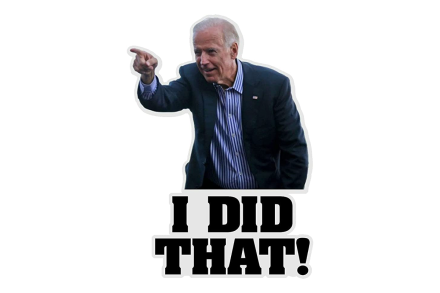
Who is the most intriguing political artist of the Biden era? Cockburn is happy to welcome a new contender to the fray: Thomas Richard Glazewski of Manor Township, Pennsylvania. Glazewski is part of a daring street collective who have been posting stickers of Joe Biden on gas pumps. They show the president pointing with the caption “I did that!” and are placed next to the price of gasoline — which has risen significantly in the past year or so. The vinyl stickers — available on Amazon — are manufactured in China. Just like the Biden presidency, right? But Glazewski took his piece to a whole new level: risking his freedom last month, he turned his sticker protest into performance art by getting himself arrested. A viral video shows the artist’s arrest.

i did that biden sticker

Is this the end of borrow and spend?

From our UK edition

Since the spring statement last week, Rishi Sunak has been dealing with complaints from all sides: the right have been arguing he should have been bolder with tax cuts, the left insists more support is needed to help people with the rising costs.  With the Office for Budget Responsibility projecting the biggest fall in living standards since records began, rumours of U-turns and further announcements started bubbling over the weekend. The media, the opposition, and even some Tory MPs have been asking Treasury representatives over and over again: is that all? In a keynote address hosted by the Institute of Economic Affairs this morning, chief secretary to the Treasury Simon Clarke answered that question in no uncertain terms: yes, for now, that is all.

Will inflation bring back austerity?

From our UK edition

The return of inflation has changed politics, I say in the Times today . Until recently, it was possible to argue that the government should borrow to slashes taxes, or to cover almost any additional spending. It was so cheap to do so that it was almost rude not to, the argument went. Inflation was also dismissed as a dog that hadn’t barked since the early 1990s. Johnson was relaxed, while last September Liz Truss thought that – if necessary – borrowing would be a better way to pay for the government’s social care policy than raising National Insurance. But debt payments are now expected to quadruple. They will absorb an extra £96 billion between now and 2027, which puts a limit on how much more the government should want to borrow.

Welcome to the new era of high inflation

From our UK edition

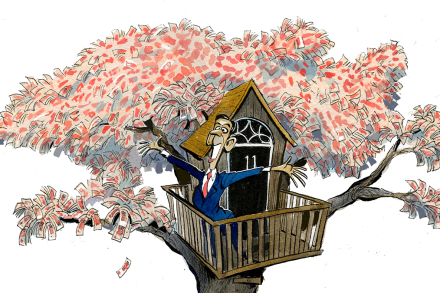
There was a time when a chancellor would have bitten off the hand of a national statistician who offered him an inflation rate of 6.2 per cent. But that takes us back to the days of Denis Healey and the early months of Geoffrey Howe’s time in Number 11. There is little disguising this morning’s grim news, however. The last time the Consumer Prices Index (CPI) was at 6.2 per cent was in March 1992 – although at that time the index was little used as the government’s preferred measure of inflation was then the Retail Prices Index (RPI).

What to expect at the spring statement

From our UK edition

The big story of Wednesday's spring statement by the Chancellor will be the impact of inflation – which has soared from almost zero just over a year ago to perhaps 10 per cent in coming months – on living standards and the public finances. I expect Rishi Sunak to provide limited protection from the ravages of inflation to those on low and middling incomes, probably by increasing universal credit and the threshold for paying national insurance.  But quite how far the Chancellor inflation-proofs the take home pay of low earners will be the most important question he will answer tomorrow.

Will Rishi Sunak stick to his ‘golden rule’?

From our UK edition

Here’s the Rishi Sunak paradox: he proudly defines himself as a low-tax Tory but under his watch taxes are reaching a 71-year high. There are plenty of Tories who want to ditch next month’s National Insurance increase but Sunak is firmly opposed – mainly because he wants to link up in people’s minds that more money for the NHS and social care doesn’t manifest out of thin air. But pressure is on at tomorrow’s spring statement to make clear what kind of Chancellor he really is. Does he come from the long line of Tories who like tax cuts in theory but not in practice – or does he have another agenda? Sunak’s starting position is that to cut tax, you need to restrain spending. For the Chancellor, it’s a simple point about trade-offs.

The Bank of England is playing catch up with inflation

From our UK edition

The Bank of England has voted to hike interest rates to 0.75 per cent, the third successive rise, which puts rates back to their pre-pandemic levels. Historically, we’re still at ultra low levels, but the rise is anything but insignificant. After the Federal Reserve made its first move to lift interest rates by 0.25 per cent (its first rise since 2018), it was all but guaranteed that the Bank would vote to lift interest rates again. The Fed had been holding out longer than most, with CPI in the United States hitting nearly 8 per cent, a 40-year high, before it took action. But the narrative that price hikes are ‘transitory’ finally broke down and no one – on either side of the pond – is credibly pretending this is a temporary phenomenon any longer.

Rishi Sunak’s energy bill dilemma

From our UK edition

This morning’s revelation that the UK economy grew 0.8 per cent in January, the fastest growth since April last year, is welcome news after a Christmas plagued by Omicron – but it’s news that’s out of date, too. As Capital Economics warns: ‘This is as good as it gets for the year'. Russia’s invasion of Ukraine, the commodity price jump and the cost-of-living crisis will soon show in the figures. Today’s ONS release warns that even in January, businesses were already reporting significant rises in the cost of energy and staff wages. The week after next, Rishi Sunak will present a mini-Budget. The Chancellor faces a conundrum: how to explain the inflation and energy bill hikes that are still to come?

Our monetary bubble is about to burst

From our UK edition

OK, I finally watched Netflix’s Don’t Look Up. Surprisingly, I enjoyed it — especially before its effective subtitle for us thickos, THIS IS A METAPHOR FOR CLIMATE CHANGE, YOU F-ING MORONS. Otherwise, the film might have playfully dramatised the more general phenom of fiddling with celebrity bodices while Rome burns. The comet at which I’m looking up could arrive far more immediately than perilous global warming. Money is in trouble. I’m not only referring to a cost-of-living crisis. Money itself is in trouble. Let’s contemplate, to coin a phrase, a basket of deplorables. US inflation just hit 7.5 per cent, the highest in 40 years. UK inflation, now 5.5 per cent and the highest in 30 years, is expected to reach 7 per cent by spring.

This government’s greatest failure is economic

From our UK edition

‘The main job of a government is to ensure that the economics don’t go wrong.’ So argued an economist friend of mine to me many years back. And I must admit that my first response was uncommonly cynical. ‘Well, you would say that, wouldn’t you?’ I replied. ‘You’re a political economist.’ It is to be expected. In the same way a military-defence type might say that the most vital job of government is to be able to defend these islands and project military force. Or Lulu Lytle might explain that the most important thing in government is to get the interiors right. But as the years have gone by, I have realised that my cynicism was wrong and my friend’s argument was true.

Britain’s cost of living crisis worsens

From our UK edition

If Boris Johnson manages to cling on to his job, he’ll have much more than the parties of lockdowns past to worry about. Britain’s cost of living crisis is worsening still, with CPI inflation rising by 5.4 per cent in the 12 months leading up to December last year. This has, once again, outpaced consensus, surging even further past the Bank of England’s most recent official forecast. There’s little doubt left that heavy government spending is playing a significant role in the inflation we’re experiencing now Inflation is now at a 30-year high. And it’s still rising. Capital Economics now estimates a peak of 7 per cent around April, and there is once again increasing speculation that December’s interest rate rise to 0.

When will the Tories do something about house prices?

From our UK edition

Anyone who doubts that the fiscal response to the pandemic has stoked inflation needs to look at the latest figures from the Nationwide on the housing market. Yet again they confirm that the deepest recession in modern history has been accompanied by a boom in house prices. Moreover, the inflation does not seem to have been reined-in by the ending of the stamp duty holiday. The price of the average home, according to the building society, rose by a further 0.9 per cent in November to reach £252,687. This is ten per cent up on last November and 15 per cent up on March 2020, at the beginning of the pandemic. How can a global crisis which temporarily put several million people out of work in Britain have resulted in a housing boom?