Latest from Coffee House

Latest from Coffee House

All the latest analysis of the day's news and stories

Isis is wreaking havoc in Afghanistan

From our UK edition

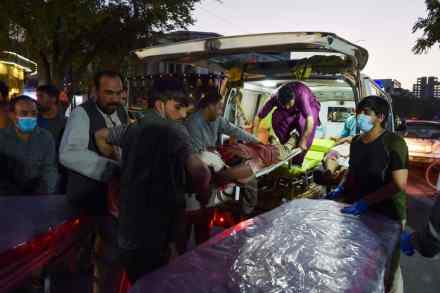
The bomb tore through an examination hall in Kabul on Friday, where students – mostly minority Hazara, mostly young women – were sitting a practice test in preparation for university. Thirty-five were killed, dozens more injured. An unspeakable human tragedy. We don’t formally know who did it, but we can guess. Under the Taliban’s leadership, Afghanistan is a haven for terrorists. And the terrorists compete. The Taliban is, in my judgement, indistinguishable from al-Qaeda.

Prevent and the problem of ‘political correctness’

From our UK edition

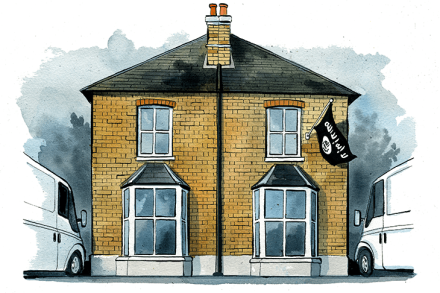
Britain is reviewing its cornerstone anti-terror programme. As the name implies, Prevent is a strategy designed to stop radicalisation before it metastasises into killer intent. But how well is it working? There have been accusations that Prevent is discriminatory. Groups such as Liberty and the Muslim Council of Britain have criticised the anti-terror strategy for targetting Muslims, arguing that it has caused hurt to Britain’s Islamic communities. But there are also criticisms that, even on its own terms, the Home Office programme isn’t working as well as it should. Dame Sara Khan, the social cohesion tsar, last week warned that efforts to tackle Islamist extremism are being hampered by ‘political correctness’.

Is Israel facing a new Intifada?

From our UK edition

Dizengoff Street is one of the busiest thoroughfares in Tel Aviv, a strip of bars, restaurants and Bauhaus architecture that is typically bustling with young people on a Thursday evening. Last night, it was the scene of the latest Palestinian terror attack when a gunman opened fire outside the Ilka bar, killing three and wounding nine. One of those killed was Olympic kayaker Barak Lopen, who represented Israel at Beijing 2008 and London 2012. In the past two weeks, 14 Israelis have been killed by a mixture of Palestinian and Israeli-Arab terrorists. For comparison, there were 17 terrorism-related fatalities in the entirety of last year. I asked on Coffee House last week if Israel was in the midst of another wave of terrorist violence. Dizengoff Street answers that question.

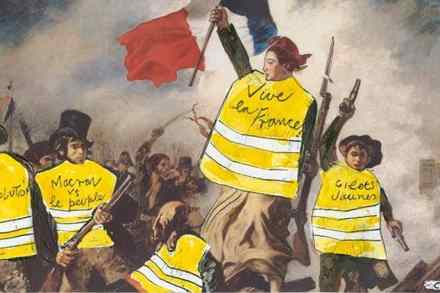
Will Macron surrender to the mob?

From our UK edition

It has been a torrid few days in France. In the early hours of Saturday morning, a former Argentine rugby international, Federico Aramburú, was shot dead on a chic Paris street after an altercation in a bar. The suspect is a notorious far-right activist who allegedly told Aramburú that he didn’t belong in France. On Monday Corsican nationalist Yvan Colonna died, three weeks after he was beaten into a coma by fellow prisoner and infamous extremist, Franck Elong Abé, an Islamist who was captured fighting for the Taliban a decade ago. It is alleged that Abé justified his attack on the grounds that Colonna ‘had bad-mouthed the Prophet’.

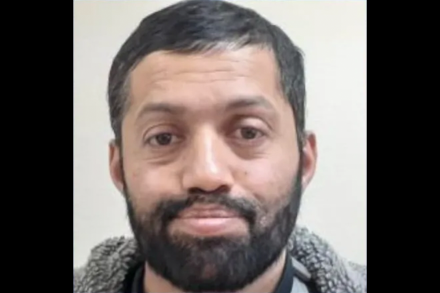
Malik Faisal Akram and our shoddy security state

It wasn’t so long ago that an official at London’s Heathrow airport, warned by the scanner through which my luggage was passing, uttered an Archimedean Eureka! (or words to that effect), pounced on my suitcase and abstracted an incriminating bottle of shampoo, which he confiscated. “Over the limit, Sir,” he exclaimed, as a colleague asked me to step aside and extend my hands to be tested for evidence of contact with explosive materials. It’s not only in England, of course, that functionaries subject the populace to their petty tyranny. It’s the same drill in the US. “Oh, but it’s to keep you safe, you know, that’s why we spend billions on our intelligence services and elite crime fighting units, equipping like armies so they can protect us from the bad guys.

malik faisal akram

I’m getting sick of the Tories

From our UK edition

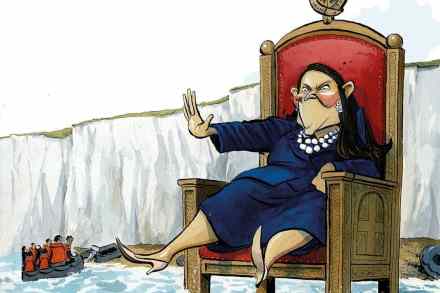
I suppose this happens to all of us at different speeds, but I am getting a little fed up of this government. In particular, I am getting fed up of the gap between its rhetoric and its actions. Most of the time this is most noticeable with the Prime Minister, who gives his base the occasional morsel of right-wingery only to then force-feed them great dollops of lefty-greenery. On a trip to Washington, Priti Patel has demonstrated that she is also no stranger to this tactic. So far we have had Patel (the DC version) talk about ‘the mass migration crisis’, as though she is merely an observer of the crisis in the Channel rather than one of the only people actually able to solve it.

How Britain and France learned to live with terror

From our UK edition

Emmanuel Macron told his people last summer they would have to learn to live with Covid. A year-and-a-half on, France is unrecognisable to the country it once was: Covid passports are in force and face masks remain mandatory in many places. The president of France is not alone among Western leaders in his uncompromising approach to the pandemic: Holland, Austria and Germany are re-imposing restrictions and Boris Johnson, who used the 'learn to live with it' line in July, has refused to rule out a Christmas lockdown. Yet while Europe's presidents and prime ministers appear ready to go to any length to protect their people from this virus, their approach to another threat – the danger posed by Islamist terrorism – is far more insouciant.

What the Liverpool attack means for Britain

From our UK edition

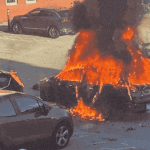
What’s happening in Liverpool? This morning police declared the detonation of a device in a taxi outside a large women’s hospital, and subsequent arrests of four people in the city, as a ‘terrorist incident'. It has just been announced that our terror threat level has been raised from ‘substantial’ to ‘severe’ meaning another attack is highly likely.  It appears the Liverpool incident involved a taxi passenger detonating an improvised explosive device outside the hospital, which was apparently its intended destination. The single passenger was killed as the car exploded and was engulfed in flames. The CCTV image is extraordinary, showing a blast of some force showering debris around.

Terror threat level raised to ‘severe’

From our UK edition

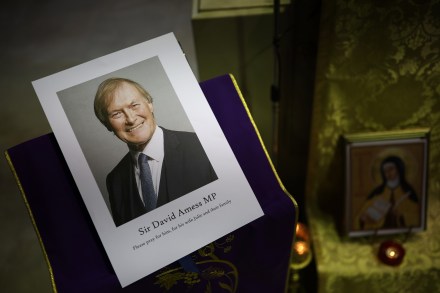
The Home Secretary Priti Patel has just announced that the terror threat level has been raised to 'severe' meaning that another attack is now considered 'highly likely'. The move comes after yesterday's explosion in Liverpool was declared to be a 'terrorist incident'. Speaking after a Cobra meeting, Patel confirmed that the Joint Terrorism Analysis Centre had raised the threat level following the Liverpool attack.  https://twitter.com/spectator/status/1460185050797035525?ref_src=twsrc%5Etfw The Home Secretary said that the decision had been taken because two terror attacks had been confirmed in the last month, the former being the murder of MP Sir David Amess.

Liverpool terror attack: what we know so far

From our UK edition

Britain has been subjected to another terror attack, just as the nation fell silent for yesterday's annual Remembrance Sunday memorial. An explosion occurred in a taxi outside the Liverpool Women's Hospital on Sunday morning, killing the passenger and leaving the driver in hospital. Police have now confirmed that the incident is being treated as a terror attack.  Reports suggest that the driver, David Perry, noticed that his passenger had a device and locked himself in the car alongside the bomber. The as-yet-unnamed passenger was declared dead at the scene. Boris Johnson has hailed Mr Perry's 'incredible presence of mind and bravery'. He was discharged from hospital last night after receiving treatment for cuts and burns as well as stitches to his ear.

The enduring power of Japan’s doomsday cults

From our UK edition

 Tokyo It is now 26 years since the doomsday cult known as Aum Shinrikyu (‘supreme truth’) carried out the worst domestic terrorist attack in Japanese history. Led by their leader Shoko Asahara, Aum released sarin gas on to the Tokyo subway, killing 13 and injuring 6,000. It remains the only time a weapon of mass destruction has been deployed by a private organisation. The details were sickening: one woman had to have her eyes surgically removed because the nerve gas fused her contact lenses on to them. Despite Asahara’s execution in 2018, the death cult has (somehow) survived, changing its name to Aleph and spawning two splinter groups. Aleph is small but appears to be in rude health, with 1,650 members, considerable cash reserves and several properties.

Rethinking MPs’ safety is not a victory for terrorism

From our UK edition

Whenever a killing is investigated as an act of terror, there is always a tendency to think that any changes made are a victory for terrorism. While a few MPs have called for changes to how constituency surgeries are held, many more want them to carry on as they were.  But as I say in the magazine this week, given the circumstances, the rethink of MPs' safety should be a practical exercise, not a philosophical one. In response to IRA bombing campaigns, Margaret Thatcher put a gate across Downing Street. Without it, an IRA mortar would have killed the war cabinet in 1991. That was not a ‘victory’ for the terrorists but a wise security measure. The same applies to the protective cars for US presidents: open-top vehicles were ditched after John F.

Britain’s fatal unwillingness to confront Islamic extremism

From our UK edition

More than any other country in the West, Britain has become practised in the arts of self-deception and subject avoidance. If a politician in France had been butchered by a Muslim of Somali descent, the French media and political class would have gone through a cycle of debate about the ideology that propelled the killer. Government and security sources would have talked about the networks surrounding the suspect. And the whole society would have learned a little more about what might have led to such an outrage. In Britain the situation is otherwise. David Amess was stabbed to death in a church while holding a surgery for his constituents. The man apprehended for his killing is a 25-year-old of Somali descent named Ali Harbi Ali.

Free speech didn’t kill David Amess

From our UK edition

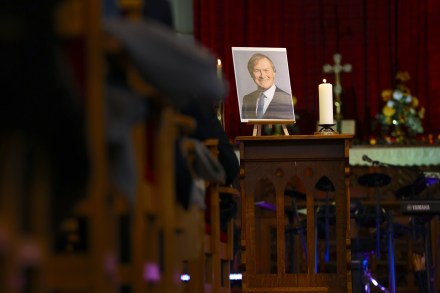
Every decent person was horrified by the senseless slaying of David Amess. And everyone will want to know what can be done to prevent similar atrocities from occurring in the future. But I fear that in the haze of anger and concern that has descended on the country following Amess’s death, we are coming to some questionable conclusions about the causes of such violence, and coming up with some iffy ideas for how to ensure that such a horrific attack on a public servant never happens again. Right now, the finger of blame is primarily pointed at the shouty, divisive nature of political discourse in the 21st century. The horror visited upon Amess is what happens, apparently, when political rhetoric is so heated and public life so polarised.

The Bataclan trial is forcing France to confront some difficult questions

From our UK edition

It's a stroke of good fortune for France that Salah Abdeslam is a coward. Had he not been he would have died with the other nine members of the Islamist terror cell (one of whom was his brother) when they attacked Paris on the evening of 13 November 2015. Instead of detonating his suicide vest, Abdeslam dumped it in a dustbin and then called a friend in Belgium and asked to be collected. He spent the next four months hiding in a suburb of Brussels before police tracked him down. It's rare for a potential suicide bomber to be taken alive. In most cases all we have to judge them by is a theatrical video message filmed shortly before their death. The capture of Abdeslam therefore has been a boon. The trial is now in its third week and is expected to last until May.

The West’s Islamist capitulation

From our UK edition

On Monday, Tony Blair addressed a military think tank in London and stated that the West should continue to intervene in countries under threat from Islamist extremism. According to the former PM, who led Britain as it joined the American invasions of Iraq and Afghanistan, an isolationist policy would serve no purpose because:  Islamism, both the ideology and the violence, is a first-order security threat and, unchecked, it will come to us even if centred far from us... Its defeat will come ultimately through confronting both the violence and the ideology, by a combination of hard and soft power. His declaration was along the lines of the one he made in October 2015 at the 9/11 Memorial Museum in New York City.

Kabul airport rocked by Isis bomb attacks

From our UK edition

At least 60 people are feared dead from two explosions near Kabul Airport, in what appears to be a sophisticated bombing campaign and suicide attack carried out by Islamic State. Two explosions took place around Abbey Gate near Kabul airport – where US and UK forces have been stationed – with the second blast near or at the Baron Hotel. Twelve US servicemen were killed in the attack. Videos being shared online show piles of bodies on the streets of Kabul – it is likely that casualty figures will rise.  In the past week, thousands of Afghans have been gathering at the airport every day in a desperate attempt to flee the country.

Will the Taliban’s victory lead to attacks on British soil?

From our UK edition

The security services in Britain have been concerned about the rise of the Taliban for many months. In government briefings they have been telling ministers that it was almost inevitable the Taliban would gain some role in the government of Afghanistan once Western forces withdrew – it was just a question of how much. It is easy to ignore, after the sudden collapse of Afghan forces, the fact that the national army had been losing ground to the Taliban over several years and bloody attacks have remained a constant in the centre of major cities in the country. The Taliban killed 16 people and injured 119 in a suicide bomb attack on a residential compound in the capital just days before the leadership was due to meet President Trump at Camp David in September 2019.

The Taliban’s win will unleash the next wave of global jihad

From our UK edition

The Taliban retaking Kabul has been inevitable for almost the entirety of the 20 year war, and certainly since Barack Obama announced the US troop withdrawal from Afghanistan in 2011. And yet the manner in which Kabul has fallen, with images of despair and the Taliban’s unopposed march to the presidential palace, heralds a global tectonic shift. For Islamist militia, regardless of their orientation, it signifies jihad’s biggest win of the decade. Jihadist outfits from Africa to the Middle East and South Asia, including groups that have been facing off against the Taliban in Afghanistan, will bask in the ‘triumph of Islam’.

Why were the emergency services so slow responding to the Manchester bombing?

From our UK edition

Claire Booth was put in the impossible position of having to decide whether to care for her sister or her daughter after the Manchester Arena attack. She understandably chose to look after her 12-year-old daughter, Hollie, but the decision still haunts her. More than anything, she wishes that emergency help had arrived quickly, in whatever form, and that the three of them had been taken to hospital for proper care. Kelly Brewster, her bubbly, music-loving sister did not survive the bombing. The speed of the emergency response may not have made a difference to Kelly but it may be that two others among the 22 victims could have been saved – eight-year-old Saffie-Rose Roussos and 28-year-old John Atkinson.

The case for isolating terrorists in prison is stronger than ever

From our UK edition

Watching last night’s ITV report from inside two of Britain’s highest security jails was an odd experience for me. The focus on terrorist offenders at HMP Frankland gave us a unique (although much pixelated) glimpse inside the separation units I urged the government to create back in 2016. I’ve had virtually no formal contact with HM Prison Service since. I sense this is in no small part due to the embarrassment I caused my former senior colleagues by revealing their corporate approach to counter terror –mired at that time in a culture of complacency, arrogance, denial and ineptitude. https://www.youtube.com/watch?

The fatal flaw in ‘see something, say something’

From our UK edition

The official review into the Manchester Arena bombing was published this week. Four years after 22 mainly young people were killed at a pop concert, the review by Sir John Saunders reveals a catalogue of failings, as such reviews always do. Yet one failing stood out in particular. On the night in question the bomber, Salman Abedi, had been standing around the exits to the stadium for over an hour and a quarter. You would have thought that in that time, the sweaty young man with a rucksack might have attracted some attention. And you would be right. A number of people, including security guards hired to protect the venue, expressed alarm about the man struggling to walk because of the weight of his rucksack, which was packed with a 32kg bomb.

The catalogue of failures that allowed Usman Khan to kill

From our UK edition

The inquest into the murder of Saskia Jones and Jack Merritt by Islamist terrorist Usman Khan has revealed a collision of arrogance, hubris, naïveté and incompetence from which the two graduates arguably paid with their lives. Saskia and Jack were attached to a prison education programme supported by Cambridge University called ‘Learning Together’. The scheme, which appears not to have been formally evaluated, inspected or risk assessed by its creators – and had no clear rehabilitation purpose – placed criminology students from the university alongside prisoners on a study programme. In late 2017, at High Security HMP Whitemoor, Khan – an active threat to prison staff – was allowed to join this group.

Britain must investigate its Islamist ‘dawa’ networks

From our UK edition

A few months ago, William Shawcross was asked by the government to lead an independent review into its anti-terrorism strategy, Prevent, and to ‘consider the UK’s strategy for protecting people vulnerable to being drawn into terrorism’. Ever since his appointment was announced, Shawcross has been attacked by an array of activists who want to minimise any scrutiny of Islamist organisations. The campaign against him has been vicious but it has also been deeply instructive. The opposition has been so intense that it has led some to believe that the UK Muslim ‘community’ is outraged by the independent review. There is a significant difference, however, between Muslims and Islamists. Shawcross is an exceptionally talented man whom I know well.

‘Religious literacy’ rules risk gagging the press

From our UK edition

There should be more ‘religious literacy’. So says the All-Party Parliamentary Group on Religion in the Media, chaired by Yasmin Qureshi MP. Amen to that. Religious ignorance is now virtually universal, so errors appear in news stories every day. But the APPG report seems less concerned with facts, more with attitudes. It wants news to concentrate more on ‘lived experience’, less on doctrine and ritual; it asserts that ‘religious literacy also incorporates respect for religion and belief as a valid source of guidance and knowledge to the majority of the world’s inhabitants’.

Prisoners dilemma: should we pay kidnappers?

From our UK edition

British-Mexican national Claudia Uruchurtu Cruz disappeared on the night of Friday 26 March in the town of Nochixtlan, Oaxaca State, Mexico. Claudia had been seen attending a rally protesting the beating of a local labourer, allegedly by security elements linked to the local municipal president. Unconfirmed witness statements claim she was grabbed and pushed into a red car. Claudia never arrived home and her family and friends have not heard from her since.  What is the right response for the British government? The most debated issue is whether to pay ransoms. Some governments refuse, others pay, or at least turn a blind eye to families that do. In Mali, where British troops are now operating, France has paid millions of dollars to Al-Qaeda in the Islamic Maghreb.

Is France losing its war on terror?

From our UK edition

A political storm has swept France in recent days. It follows the publication of an open letter by twenty retired generals to Emmanuel Macron. In their declaration, originally published on an obscure website and then reproduced in conservative magazine, Valeurs Actuelles, the officers warned that Islamist terrorism was pushing France towards civil war. The reaction among the political class was predictable. Marine Le Pen invited the signatories (1,000 in total) to join her National Rally party, while the government condemned the letter as 'irresponsible'. It promised action if any serving soldiers or gendarmes have put their name to to it. Some on the left want a criminal investigation launched, accusing those behind the letter of 'provocation and disobedience'.

How terror took over the African continent

From our UK edition

Eight law enforcement officials, including three policemen and five members of a local anti-jihadist force, were killed in a jihadist attack in Burkina Faso on Tuesday. Jihadist raids on two military bases in Somalia, using suicide car bombers, killed 23 on Saturday. On Friday, South Africa decided to deploy its troops in bordering Mozambique, days after Islamist militants took over the town of Palma, killing dozens of locals and forcing thousands to flee. The past week is only a sample of the jihadist peril currently engulfing Africa. These terror attacks reaffirm the growing strength of the world’s deadliest jihadist groups, including al-Shabaab, Isis, al-Qaeda, Boko Haram and their affiliates.

Isis’s weakness is now its strength

From our UK edition

As coronavirus swept the globe a year ago, Isis began issuing pronouncements. ‘God, by his will, sent a punishment to the tyrants of this time and their followers,’ said one such; ‘we are pleased about this punishment from God for you.’ With the world on lockdown, Isis followers were urged not to sit around at home but to ‘raid the places’ of the enemies of God. ‘Don’t let a single day pass without making their lives awful.’ The virus might have begun as God’s punishment to China for persecuting the Uighurs but, as one Isis video put it, the pandemic was a chance to attack Americans, Europeans, Australians and Canadians. For a moment, the jihadis toyed with the idea of sending infected volunteers to sicken the enemy.

How can we save youngsters from getting radicalised?

From our UK edition

Arrests for terrorist-related activity give a worrying insight into the rate at which young people are being targeted and radicalised. All age groups witnessed a fall in terror-related arrests for the year ending September 2020, except for one: those under eighteen, which doubled to account for eight (and subsequently 10) per cent of all such arrests. This is the highest proportion ever seen in any annual period to date. We also know that, all too often, the friends and relatives of those who are in danger of becoming radicalised are failing to act on their concerns. Referrals to Prevent, which aims to 'stop people becoming terrorists or supporting terrorism', saw an overall increase of 10 per cent in the year to March 2020.

The case for a domestic abuse register

From our UK edition

In the 12 months since the first lockdown, at least 112 women in the UK have been killed by men. Killers such as Anthony Williams are often treated sympathetically by the courts because the men claim to have been adversely affected by the pandemic, meaning that judges and jurors go soft on them in the same way they take it easy on men who say they only killed their partners because she nagged or cheated. Many of these men who commit fatal acts of violence have put women through hell for years, if not decades, before killing. But as the survivors of domestic abuse know, a woman unlucky enough to be trapped with an abusive man will often face the worst of it if she manages to escape.

Relative values: how extremism spreads through families

From our UK edition

Isis supporter Sahayb Abu has been convicted of plotting a sword attack on the streets of Britain. But the 27-year-old isn't the only member of his family who has succumbed to extremist ideology. In 2015, two of Abu’s half-brothers joined Isis in Syria; both are believed to have died in the fighting. In 2018, another half-brother Ahmed Aweys and half-sister Asma Aweys and her partner were jailed for terror offences, including sharing Isis material in a family chat group The case of Abu is just one of a number in the UK in recent years which have seen multiple family members committing terrorist offences together, or who have committed separate terror offences over time. So what do these – and other recent cases involving family connections – tell us?

It’s time to take Britain’s Incel terror threat seriously

From our UK edition

Far-right and Islamist extremism are both cause for concern in Britain today. But there's another threat which all too often slips under the radar.  Referrals to the UK government’s Prevent programme in 2019/20 presenting a ‘Mixed, Unstable or Unclear’ ideology accounted for 51 per cent of all referrals ‒ up from just 11 per cent in 2016/17. This represents a significant rise for the third consecutive year. Despite this, emerging ideologies – especially Inceldom – still aren’t receiving the attention they warrant.

The difficulty of cracking down on ‘hate’

From our UK edition

In general, my experience as a British Sikh has been overwhelmingly positive in my life. Most people who know anything about Sikhism, or the Sikh contribution to the world wars, tend to be enthusiastic Sikhophiles – some have even greeted me with an impromptu Sikh greeting, ‘Sat Sri Akal’. But over the years, especially during my time at university, I faced prejudice from both Islamic extremists and those who might be best described as the ‘Far Right’. It’s been an illuminating experience. Both hated me, albeit for different reasons. One supremacy is religiously motivated against the ‘kaffir’, the other by race. This hate was often accompanied with the slur ‘Paki’ followed by, ‘go back to your own country’.