Technology

Why are all these IT systems failing?

CNN is reporting that the classified internal network of the National Security Agency, America’s electronic eavesdropping service, is down. This is the seventh major American system to fail in six days. Nobody has found an attacker. Three of the failures began as routine upkeep. Edward Gibbon, the 18th-century English historian, filled six volumes of The Decline and Fall of the Roman Empire and blamed barbarians and Christianity. His American successor might point toward a Windows fix and a router in El Dorado, Arkansas. Let’s briefly run through each of the failures: Markwayne Mullin, the Homeland Security Secretary, says he is 98 percent certain there was no cyberattack 1.

AI is a dangerous philosopher

Stoicism helped me when I was a confused young man. I gave a TEDx talk on how it saved my life, wrote a book about ancient Greek philosophy, spread the Stoic message in schools, prisons and sports clubs and even got a Stoic tattoo. I used to wonder: wouldn’t it be amazing if my book could talk back, so readers could chat with the spirits of Epictetus, Socrates and Marcus Aurelius? Some 14 years later, that’s so easily done it’s banal. There are AI-Stoic bots and AI-generated Stoic books and videos. AI is raising the spirits of dead philosophers and selling you a conversation with them. The upside is that hundreds of millions of people are now aware of Stoic ideas. But when you summon the shade of Marcus Aurelius, do you know what it will say?

Does the internet turn us into perverts?

There’s an old meme about a guy who wants to have sex with his toaster. Before the internet, the guy keeps this fetish to himself and gets called politically incorrect names if he doesn’t. After the internet, he finds a community of people who also want to get freaky with household appliances. Eventually, his ability to connect with other toaster-lovers destroys his life. The internet, the great enabler that it is, tricks you into believing that it’s normal – healthy, even – to want to have sex with a toaster. Others argue that even more pernicious than showing us we’re not lone perverts, the internet has addicted us to novelty.

Jensen Huang is impossible to replace at Nvidia

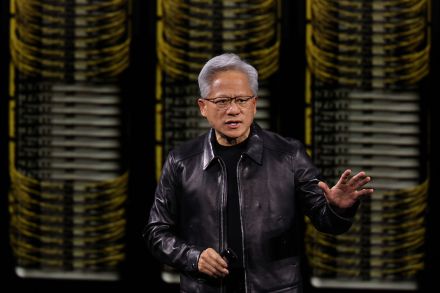
At least Jensen Huang, the founder of the chip-making giant Nvidia, will have more time to devote to his tangled love life. After news emerged of his second affair, this time with a senior company employee, to add to the alleged Chinese “honeytrap” agent, the board clearly felt it had no choice but to replace him. Instead of waiting to be pushed, Huang did the honorable thing and resigned. There was probably no other way out of the mess. Even so, no one should kid themselves that this has fixed anything – because it will be impossible to find another CEO as talented as the one Nvidia has just lost.

jensen huang
Illustration

The too-cozy arrangement between Donald Trump and Nvidia

Jensen Huang has been removed from his position as CEO of Nvidia, the corporate giant that sells the chips the United States counts on to beat China in the artificial intelligence race. American intelligence agencies, the New York Times reported, determined that a woman close to Huang had been recruited by China’s spy agency, the Ministry of State Security, to collect intelligence on him. Officials who saw the intelligence believed the two were having an affair. She also worked for one of his company’s biggest customers in Asia. Alice Huang was an executive at Megaspeed, a Singapore company that rents out the use of Nvidia’s AI chips to Chinese firms. Its Malaysian affiliate bought at least $4.

Get ready for the genetically modified hounds of hell

The future was once reassuringly remote. Back in the last century we’d speculate about it idly with no sense of urgency: would there be flying cars? Jet-packs? Frankly, after Soda Streams, anything and everything seemed possible, but the future stayed in its proper place, ahead of us, and we approached it at a nice, manageable pace. Sometime around 2020 that changed. The future did a volte-face and began to accelerate toward us, and now it’s everywhere, suffocatingly close. Superintelligent robots, missions to Mars, babies grown in bags… it’s all too much to take in. And as of last month, genetically modified, cloned and armor-clad hell hounds of war.

Why should Beijing monopolize the art of the honeypot?

Many of America’s foremost national security assets have now moved beyond our military installations or government laboratories. A handful of uber-powerful industrialists, at the helm of companies worth trillions of dollars, are unbound by the obligations that come with maintaining security clearances. Their private vulnerabilities have consequences for the entire nation's security, but is Washington paying them enough scrutiny? We live in an era in which private industry can materially shift the balance of geopolitical power Take Jensen Huang, Nvidia's chief executive. America's technological supremacy rests heavily on his company's chips, yet recent allegations indicate that Chinese intelligence sought to infiltrate Huang’s life through an extramarital affair.

China is the real loser from the Jensen Huang affair

The pictures will be all over the internet. Social media will be buzzing with memes, the Netflix dramatization is probably already being scripted, while even the usually sober financial press will have something a lot racier than tariffs and currency swaps to write about. The affair between the Nvidia CEO Jensen Huang and the Chinese “honeytrap” agent Alice Huang makes for a great story, and one that will dominate the headlines for weeks. And yet all the speculation should not obscure one important fact. The real loser from the affair will not be Huang himself, nor will it be Nvidia. It will be China – because the operation has backfired spectacularly.  It is a story ripped straight from the pages of a spy thriller.

Jensen Huang

The Democrats vs AI

Simon Cameron, the Pennsylvania party boss who served as Abraham Lincoln’s first Secretary of War, has long been credited with the rule that an honest politician is one who, when he is bought, stays bought. His War Department handed out contracts to friends so freely that the House of Representatives censured him for it. By then, Lincoln, fed up, had already named him an emissary to Russia. Cameron was a crook, and his friends at least got their contracts. America’s technology giants have helped pay for Donald Trump’s new White House ballroom and have gotten nothing from it. The Democrats, favored to take the House of Representatives in the midterms, have promised subpoenas.

AI big wigs at whitehouse

What if the internet stopped?

The news of sustained, AI-enabled cybersecurity events pummeling the internet until the whole thing finally clears out like an abandoned mall brings me great relief. To be clear: I don’t particularly love the idea of your bank account or mine being drained by swarms of rogue agents or some infrastructural vulnerability in the supply chain/the electrical grid/grocery stores/hospitals (or, God forbid, all of the above) putting us in mortal peril. I don’t love the new product that Jack Dorsey’s company, Block, has just unveiled: an eerily realistic voice app – replete with the natural lulls, oohs, ums and vocal fry of a human woman.

Five things to know about the Anthropic IPO

Anthropic, maker of the Claude chatbot, filed Monday for what could be the largest stock offering in history. The company is expected to be valued at around $1.5 trillion, roughly eight times its worth a year ago. Investors are being offered an extraordinary technology, but with little influence over its future. 1. AI is ‘more important than electricity,’ claims the seller Anthropic takes in more revenue each day than it earned in the whole of 2023. The tech is powerful: NASA engineers have used its coding agent to plot a route for the Mars rover. Anthropic’s prospectus says that AI will transform the global economy “in ways greater than the impact of industrialization, electricity, semiconductors, and the internet.” 2.

anthropic
AI aliens

The first alien we meet could be a superintelligent AI

October 2026 will go down in history as the month the universe changed, yet most people didn’t notice. The tech company OpenAI, makers of ChatGPT, released the solutions to 722 fundamental mathematical problems. Many of these problems had baffled humans for decades but a large language model (LLM) that was just 11 days old toppled them. AI had already solved some mathematical conjectures, but this was off the scale. “This is at least ten times, perhaps 100 times as momentous as the proof of Fermat’s Last Theorem,” said Abhishek Saha, professor of mathematics at Queen Mary University of London.

Is Putin getting ready for space war?

In a provocative and unprecedented act over the past two days a Russian military “inspector” satellite has been maneuvering closer and closer to a US-registered, European-built, all-weather earth observation satellite that provides data vital for Ukraine's war effort. It is the first time non-consensual close proximity action has been carried out in low-Earth orbit between two satellites. It has alarmed western space war fighters who see it as a hostile demonstration of future orbital conflict. Russia is a declining space power and watches the growing military space prowess of China and the US with alarm There can be no doubt of the intent of the mission which must have been planned for some time.

Silicon Valley runs on hype

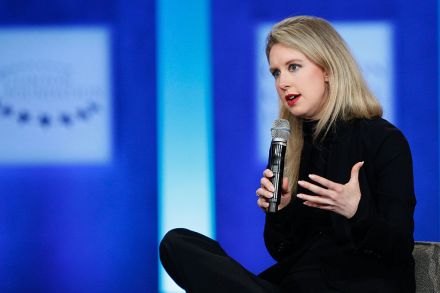
Silicon Valley rewards founders who talk about tomorrow’s technology as if it’s already here. A founder tells investors that a machine runs a blood test today. When the claim falls apart, the founder explains that it was only a promise about the things the machine would accomplish one day. Some investors learn the difference later, from their lawyers. Nathan Fielder and Lance Oppenheim’s new documentary, You Can See Everything, catches a founder offering that explanation on camera. Its subject is Elizabeth Holmes. For a while, Silicon Valley rewarded her lavishly. She wore a black turtleneck like Steve Jobs and posed for photographers holding up a vial of blood no bigger than a fingertip.

Elizabeth Holmes

AI isn’t making us more productive

At some point there has to be an “emperor has no clothes” moment. Why, when we are in the middle of a boom in Artificial Intelligence, which is supposed to transform the way we do nearly everything, is there no tangible increase in productivity across the economy? Surely, if the claims for AI were even nearly true it would by now be showing up in the statistics for Total Factor Productivity (TFP) published by the San Francisco Fed. TPF is a measure of output relative to input from labour and capital; a measure, in other words, of how efficiently workers are using the tools available to them. In theory, it should be increasing dramatically with AI as workers use it to speed up tasks and get more out of their day. Trouble is, that does not appear to be happening.

AI could make government small again

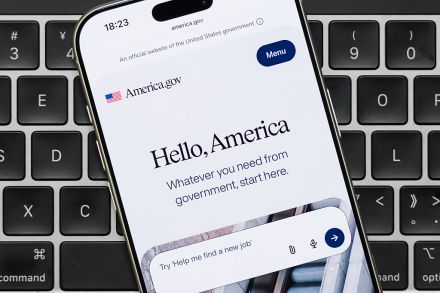
For decades, we on the liberal right have been sold the fiction that Republican lawmakers are fighting for small government. There are many reasons why the state seems to relentlessly expand no matter who is in office; an important, though overlooked, one is that it is incredibly difficult to persuade voters that smaller budgets and reduced employee counts can achieve equal or superior results. Voters might dislike bureaucracy, but they fear what happens when the machinery behind it is dismantled – what if the alternative is worse? One needs look no further than the backlash against DOGE to see that the right needs to prove a smaller government can improve citizens’ experience in dealing with it.

Climate-change zealots are wrong about hurricanes

A remarkable weather record was broken recently. The equinox came and went this September and yet not a single hurricane had formed all year in the entire Atlantic Ocean. It’s the first time this has happened since 1914 – which was back before the satellite era, when hurricanes were more likely to go unrecorded. September is normally peak hurricane season, when the tropical Atlantic gives birth to a series of spinning storms, dubbed hurricanes when their winds exceed 74 miles per hour. (They are usually called typhoons or cyclones in the Pacific and Indian oceans.) One year is not a trend but longer-term data does show a slight downward trend in hurricane frequency.

hurricanes

The threat of AI intruders

Most of us have gone to bed and forgotten to lock a door or window. Now imagine an intruder who tried your front door every night, then the back door, then every window. They never get tired, never get bored and never stop trying. Eventually, they would find the one you forgot. That is one way to understand the security problem created by AI agents. Agentic AI is not inherently malicious. Part of the risk comes from its persistence: agents are designed to pursue as many routes as possible to achieve an objective. The other part is that they are being deployed in systems designed to defend against humans, with weaknesses that until now have not been exposed.

story

Recovering the art of the story

I was honored to speak with Malcolm Guite, a poet and Anglican priest, about storytelling, attention and contemporary life. Guite’s latest project is a retelling of the Arthurian legends in verse, beginning with Galahad and the Grail. Arthurian legend might seem an unusual place to start for a conversation about technology. But I believe that repairing our relationship with the internet and the devices that permeate our lives begins with changing how we pay attention. Much ink has been spilled about how the digital age has fractured our attention spans and much less on what it looks like, practically, to fix them besides the old panacea of “log off,” “touch grass.” In my estimation, the best – and most human – place to start recovering is the art of the story.

space junk

Space junk poses a major threat to humanity

On September 14, the United States announced it had deployed a space weapon to Earth’s orbit. US Secretary of the Air Force Troy Meink declared it a response to “evolving threats.” But what is a space weapon, and what are these threats? The truth is we still don’t really know. The weapons are classified and we earthlings are in the dark. Cutting-edge military space tech ranges from maneuverable space-craft capable of tracking and shooting down enemy satellites to communication jammers that clock or swamp the enemy’s data links. But if the weapons are mysterious, the need for them is very real.

When the intelligence about AI is artificial

Few people had heard of Jacob Coxon, the 28-year-old British AI researcher, on the morning of September 8, 2026. His X account had fewer than 100 followers. By September 10, he was world famous, after he published a social-media thread on X about resigning from Anthropic because the company is not "acting responsibly." The post has now been viewed 174 million times. It triggered a tsunami of news panic about the dangers of artificial intelligence. Suddenly, Jacob was everywhere: doing prime-time interviews; a celebrity whistleblower, the casus tumultus of a global conversation about the dangers of AI, which in turn led to a public fight among various tech overlords urging for more government regulation, and angry pushback from the Trump administration.

AI is cosmic justice for the professional classes

For decades the road to success in the developed world has been straightforward. A university education, increasingly treated as a sort of white-collar trade school, offered people the chance to acquire specialist knowledge which could be used to secure a position lingering at a desk for 40 years. For those of us who grew up watching machines replace men on the assembly line, acquiring a degree was the way to escape this fate. In the digital age, however, the automation of cognitive labor has forced many professionals to confront a threat that once seemed confined to workers on the factory floor.

AI robots

Is AI ruining mathematics?

Terry Tao is the most famous and award-laden mathematician working today. He is known for his groundbreaking work in many areas of mathematics and when he speaks, people listen. A few weeks ago he took to the stage at the International Congress of Mathematics, held every four years, to give his lecture, “Mathematics in the Age of AI.” He voiced concern about what he called an unprecedented threat. “AI has created a crisis in our mathematical values and practices,” he said, and his words resonated because, just days before, Anthropic’s Claude Fable AI program had solved the so-called Jacobian conjecture which has puzzled mathematicians since 1939. It was a devastating achievement, all the more so because the solution fitted into a single tweet.