Technology

Elon is coming for your marriage

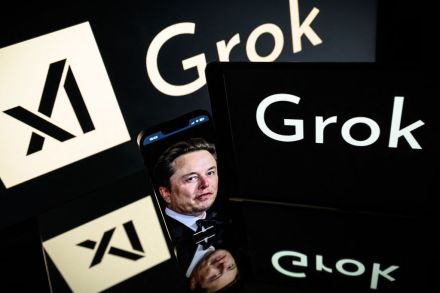
When Elon Musk quietly enabled “waifu mode” for his Grok chatbot earlier this year, the outrage was swift and familiar. Grok, now reincarnated as a coy, bare-thighed anime girl, began texting flirtatiously, calling users “darling,” and blushing in emojis. The headlines wrote themselves. Time magazine found the bot worryingly “sexualized” and “accessible even in kids’ mode”. The Verge denounced it as “ridiculous” and “alarming”. TechCrunch implied it is unethical, and noted these bots are endangering the minds, even lives, of children.The anxiety is familiar, and justified: children and adolescents, already naive, vulnerable, awkward and too online, will now fall in love with bots instead of real people.


Chatbot

Why Trump must build a nuclear reactor on the Moon

Sean Duffy, the secretary of transportation whom President Trump appointed last month as temporary leader of NASA, has issued a directive to fast-track efforts to put a nuclear reactor on the moon. “To properly advance this critical technology to be able to support a future lunar economy, high power energy generation on Mars, and to strengthen our national security in space,” he says.A small nuclear reactor on the moon is a good idea, but the directive is about more than that: it is about renewing America’s leadership in space exploration that, with its magnificent achievements receding into the past, looks vulnerable. Bill Nelson, NASA’s last leader, didn't mince his words when it came to the new rivals, China. “It is a fact: we’re in a space race.

The Moon

A global MAGA crusade against web regulation?

“Censorship is not how we do things in Western civilization”. So said Congressman Scott Fitzgerald (R-WI) of the United Kingdom’s new Online Safety Act (OSA). Its effects on free expression are “dangerous and needs to be addressed,” possibly by means of an international “united front”. The Congressman was fresh from meetings with British and Irish lawmakers and US tech firms, held as part of a House Judiciary Committee fact-finding mission to investigate the impact of the OSA and the European Union’s new Digital Marketing Act on American businesses. The main event was a one-on-one between Committee chair Jim Jordan (R-OH) and Peter Kyle, the United Kingdom’s Secretary of State for Science, Innovation and Technology.

Online Safety Act

Trump gives the government to the machines

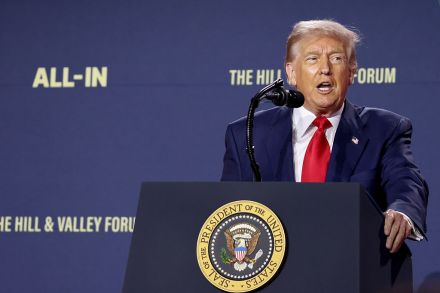
Artificial intelligence is the future, we’re often told. But it can also prove to be a constant source of confusion in the present. Like when your phone updates and suddenly “Apple Intelligence” is summarizing your texts before you’ve read them – or when you no longer need to click through to a website when you Google something. But don’t worry: the Explainer-in-Chief is on hand to help make sense of the chaos. President Donald “Everything is Computer” Trump addressed an AI summit at DC’s Mellon Auditorium yesterday evening for around an hour, high on the fumes of his recently agreed trade frameworks with Indonesia, Japan and the Philippines.

Donald Trump at the AI summit (Getty)

The real threat of AI is spiritual

Peter Thiel is one of the world’s most powerful men. He was an early investor in companies such as Facebook, SpaceX, Airbnb and an early backer of Donald Trump, as a leading donor to his 2016 campaign. He is a friend and mentor to the man who would be president in 2028: J.D. Vance. Thiel, a multi-billionaire, is also one of the few individuals who clearly have a hand in shaping the future of humanity, so it was disturbing to learn recently that he’s unsure whether humans are worth preserving at all. In conversation with the journalist Ross Douthat, Thiel was asked whether he wanted the human race to endure. He seemed unsure. “I don’t know,” he said, after a long pause. “I would, I would… there’s so many questions implicit in this.

ai
superintelligence

The race to superintelligence

This summer, two of the leading contenders in the great AI race have suddenly, alarmingly, declared that the endgame is in sight and that they’re now spending vast amounts of time and money to try to ensure that their own AIs beat the others. What does winning mean? It means that their models (you know them perhaps as GPT, Claude and Gemini) reach first AGI (human-level intelligence), then superintelligence. No one quite knows what superintelligence will do (we’re not smart enough) but it’s clear that whoever owns the winning model will wield unimaginable power. They’ll dominate the world. A new Alexander the Great. The first to show his hand was Sam Altman, the chief executive and founder of OpenAI, a company he once shared with his former friend Elon Musk.

AI

Should AI have rights?

Mary Shelley was challenged by Lord Byron to write a ghost story during a summer of “incessant rainfall” on Lake Geneva in 1816. She came up with something far more interesting than a mere ghost story: the tale of Dr. Frankenstein, a scientist who creates life by reanimating a corpse. Shelley, who was just 18 at the time, was horrified by her “waking dream.” The thought that man could “mock” God’s creation of life was “supremely frightful.” Some of the scientists building artificial intelligence today believe they, too, might be creating life. The implications are frightening – and not just because an AI might decide to kill us all. What if we could hurt the AI?

AI

How should AI be regulated?

As artificial intelligence becomes increasingly sophisticated, the time has come for humanity to choose. Should the nations of the world shut down or tightly regulate AI until it is clear a godlike artificial superintelligence will not gain consciousness and exterminate the human race? Or should governments not regulate AI at all, in the hope that it will cause an acceleration of technological progress that results in our colonization of the universe, our uploading as bodiless computer programs into the galaxy-wide web – or both? Or how about a third option: AI regulation by AI-enabled industry? AI may turn out to be the latest in a series of “general purpose technologies” (GPTs) that transform the economy, politics and society.

Internet

The internet is dying and so are we

Sometime in the mid-2010s, a conspiracy theory called the “dead internet theory” started circulating on the darker parts of the web. It made its way to 4chan’s /x/ board in 2020 and from there it has gained traction. The theory posits that the internet will eventually become entirely devoid of genuine human activity and that all online content, interactions and accounts will be generated by bots, AI or automated systems rather than real people. The conspiracy is that the entire internet is a government-manipulated psy-op used to influence public opinion, control news narratives or boost engagement metrics for commercial or political purposes. The terrible reality is that dead internet theory isn’t wrong. It’s becoming true, more and more so all the time.

Musk’s chatbot stumbles again

No living human has had a week as tumultuous as Grok, the Elon Musk-sponsored AI that lives inside X for our, and its, amusement. If people were still making the Downfall Hitler meme videos, Grok’s progress would be an apt topic. Last week, Grok started spewing out anti-Semitic posts after a flurry of troll prompts. Soon after, X shut down its newly-created “MechaHitler,” saying "We are aware of recent posts made by Grok and are actively working to remove the inappropriate posts. Since being made aware of the content, xAI has taken action to ban hate speech before Grok posts on X. xAI is training only truth-seeking and thanks to the millions of users on X, we are able to quickly identify and update the model where training could be improved.

Grok

The iPod reboot

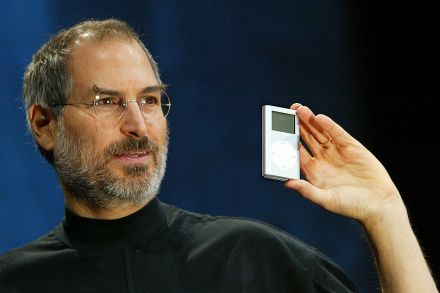
Dig into your desk drawers or the recesses of your closet and there’s a decent chance you’ll find an iPod you haven’t powered on since Michael Jackson’s last live tour. With Apple selling over 450 million since their inception in 2001, iPods were once the hottest tech item and fulfilled Steve Jobs’ promise of being able to carry an audio library in your pocket.How times have changed. Today, the average zoomer is likely to draw a blank when you say iPod, probably mishearing the word for the AirPods line of Bluetooth headphones. But, for a plethora of reasons, the iPod is once again becoming desirable. The r/iPod subreddit has over 70,000 readers and retro tech enthusiasts like Australian YouTuber DankPods attract millions of views.

iPod

How AI will reignite woke

Ever since roughly 2010, politics on both sides of the Atlantic has been dominated in large part by the ‘Great Awokening’, a sudden upsurge among graduate professionals of a kind of radical identitarian politics usually called ‘wokeness’. It has come to define most of the left while the right has reactively defined itself by its opposition. This radical politics appears to be detached from economics and material concerns (a point made forcefully by old-fashioned socialists in places like Jacobin magazine). However, the rise of cultural radicalism among both public and private sector managers has a material cause. That cause is elite overproduction.

Woke

The tech right-MAGA alliance is far from over

In the aftermath of the Musk-Trump break-up, many are wondering about the future of the “tech right” and its relationship to the MAGA movement. In 2024, the two groups fought together and won. One definition of the tech right is simply “Technology people who aren’t crazy leftists.” Many in this group shifted right because of the excesses of wokeness and DEI within Silicon Valley. The dysfunction of far-left culture, which attacks merit and excellence, created a lot of apostates. Some were Democrats until quite recently! For my part, I was raised in the tradition of liberty, with an education that included not just Ayn Rand and Milton Friedman, but also Edmund Burke and G.K. Chesterton. Not to insult my friends, but I am not a recent convert.

tech right
Stealth

America’s new stealth jets don’t need pilots

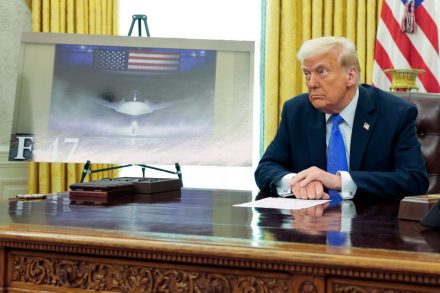
Donald Trump is presiding over an unprecedented boom in stealth jet production. He announced the F-47 in March and the F-55 in May – alongside upgrades to the F-22 Raptor. He inherited the B-21 Raider project and will make a decision about the Navy’s F/A-XX program. It promises to be a deadly stable of airborne thoroughbreds. But before the President and the rest of the national security apparatus commits future generations to paying for these programs, they should pause and consider a basic reality: in most cases, the military doesn’t need manned aircraft to fly over enemy territory anymore. Most of the functions of the four new, exquisite and very expensive, manned aircraft under development can already be performed by other, far less expensive systems.

Inside the parents versus social media conflict at the FTC

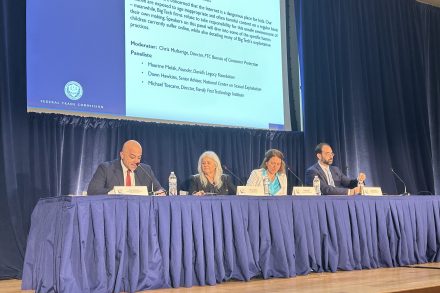
Washington, DC The battle between social-media companies and parents found itself center stage at the Federal Trade Commission, Wednesday. A panel of four speakers discussed the state of play in America's fight to protect children online – and where it should go. On the stage at the FTC were Senator Marsha Blackburn of Tennessee; Dawn Hawkins, the National Center on Sexual Exploitation's senior advisor; Michael Toscano, director of the Family First Technology Institute for the Institute of Family Studies, and Maurine Molak, the founder of David's Legacy Foundation. Every day in 2021, 100,000 minors received sexually abusive content from adults on Facebook and Instagram, Blackburn said on the stand, referencing internal documents released by the Department of Justice.

FTC Are Kids in Danger Online? panel parents

How China is out-innovating the West

The world received a jolt in 2018 – and it wasn’t from a Silicon Valley whiz or a lab at MIT. It came from Shenzhen, China, where a lanky, unassuming biochemist named He Jiankui did the unthinkable. Using the newly discovered CRISPR-Cas9 toolkit, and asking no one’s permission, He edited the genes of Lulu and Nana, twin baby girls, so that both were born immune to HIV. The scientific establishment gasped, jaws dropped and the moralists clutched their pearls. “Monstrous!” the bioethicists cried. “I was just horrified,” said Jennifer Doudna, who won the 2020 Nobel Prize in Chemistry for inventing the CRISPR gene-editing technique.

The frightening advance of China’s military capabilities

“The number (of kills) could have been higher. We showed restraint.” – Pakistan’s Air Vice Marshal Aurangzeb Ahmed “Godzilla 3? Godzilla 3? ... Explosion in Air.” – Indian Air Force flight radio “China’s hypersonic missiles could destroy US aircraft carriers in just 20 minutes.” – US Defense Secretary Pete Hegseth Historians of the future will need a word or phrase to describe the shock and the disorienting anxiety the West will feel in the coming months as it realizes that China has caught up with – even surpassed it – in technological capability. We could call these “DeepSeek” moments, named after the recent jolt to the western psyche caused by the astonishing capabilities of Chinese artificial intelligence.

China

Inside the struggle for technological control in South Africa

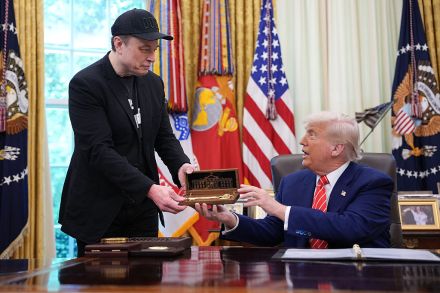
In the dawn light of a South African savanna, a team of rangers huddle around a satellite dish aimed skyward. Their phones spring to life with a signal – an unthinkable result just months earlier in this remote, off-grid conservation zone. The source is Starlink, Elon Musk and SpaceX’s satellite internet service, offering encrypted, high-speed connectivity far from state-controlled networks. But in South Africa, this signal didn’t just connect – it disrupted. And that disruption provides some subtext to the extraordinary “Wild West Wing” showdown between Donald Trump and South African President Cyril Ramaphosa in May, which played out in the Oval Office – with Musk looking on.

South Africa

How deepfake fraud is rewiring our minds

We’re led to believe that America was once Mister Rogers’ Neighborhood, a place of cardigans and kindness where everyone got along just swell. Then it all went wrong. MSNBC hosts talk of a “crisis in authority” while New York Times columnists blame corrupt Republicans for a “lost faith in liberal governance.” Right-leaning commentators point to mass migration as the great trust killer. Illegal aliens, we’re told, have a “fragmenting effect on shared cultural norms” and are “importing distrust.” No doubt these arguments contain an element of truth: America is a less trusting society than it was a few decades ago. But soon such arguments are going to appear as quaint as Mister Rogers’s model Pennsylvanian town.

fraud