Society

Biden cracks down even on green energy

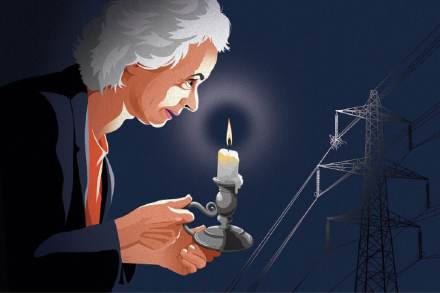
We know that government’s knack for finding something wrong with everything rivals even the most stereotypical mother-in-law. But the relentless fault-finding’s latest victim may surprise you: federal prosecutors have fined a green energy company $8 million and slapped on a five-year probation period after bald and golden eagles died on its wind farms. There is now no such thing as “clean energy.” Even so-called “green energy” is tinged with the blood of birds. Just when you thought the war on energy couldn’t get any more ridiculous, Joe Biden's Department of Justice has sucker-punched one of its own golden boys.

Elon Musk is the Darth Vader of Twitter

When I think of Twitter CEO Parag Agrawal, I think of Darth Vader. It’s not that Agrawal himself reminds me of the Star Wars protagonist, grave concerns over Twitter’s handling of free speech notwithstanding. I just can't help but think of the nervous imperial commander who receives Vader as he arrives to inspect the Death Star II at the opening of Return of the Jedi. “Lord Vader, this is an unexpected pleasure. We are honored by your presence,” the commander says, with a lump in his throat. The Dark Lord of the Sith flatly replies, “You may dispense with the pleasantries, Commander. I’m here to put you back on schedule.

Beware the risks of tyrannical tech

“Just think about it. Our whole world is sitting there on a computer. It’s in the computer, everything: your, your DMV records, your, your social security, your credit cards, your medical records. It’s all right there. Everyone is stored in there. It’s like this little electronic shadow on each and every one of us, just, just begging for someone to screw with, and you know what? They’ve done it to me, and you know what? They’re gonna do it to you.” — Sandra Bullock as Angela Bennett, The Net, 1995 A few weeks ago, I called the local Domino’s. The man who answered asked whether my address is an apartment or a private residence. I live in a fairly remote Michigan community of about 8,000 people.

How science fiction novels read the future

The pandemic is not quite over, but we are getting used to its inconveniences. What disaster will be next? An antibiotic-resistant strain of the bubonic plague? Climate collapse? Coronal mass ejection? Will the next catastrophe be natural — perhaps a massive volcanic eruption, the likes of which we have not seen for more than two centuries, since Tambora in 1815? Or will it be a manmade calamity — nuclear war or a cyberattack? And might we inadvertently descend into a new form of AI-enabled totalitarianism in our efforts to ward off such calamities? To all these potential disasters it is impossible to attach more than made-up probabilities. So what can we do about them? The best answer would be that we should strive to imagine them.

science fiction

How bad could a Russian cyberattack be?

When I have designed wargames around a NATO-Russia conflict, I often left out cyberattacks for a simple reason: it was just too complicated. Too many unknowns make an accurate simulation impossible. The number of targets, scale of the attack, damage done, how the attack could be carried out and its ramifications were beyond calculation for a mere simulation on the scale I was running using just consumer-based computer technology. Honestly, nuclear war seemed easier to think about, and that says a lot. But that should give us pause. Our world is basically a giant computer now, with cloud-based networks controlling virtually every aspect of our lives, from sewage and water treatment plants, to our electrical grid, to our smart homes, and on and on we go.

cyberattack

The rise of the Busy People

I have a friend who’s always very busy. So busy that we rarely see each other. But I know that she’s very busy because when we talk on the phone and I ask “How are you?” she always says the same thing: “Busy. Very busy.” She is one of the Busy People. Busy people work very long hours and have important meetings, conferences, trips and appointments to attend to. She belongs to that breed of Busy People — fortunately a minority — who love to tell you how busy they are. I, on the other hand, am one of the Lazy People. We hardly work at all. We don’t have meetings or conference calls; we have long lunches and short naps. The only important meeting we ever take is with our oral hygienist or therapist.

busy

The ultimate human futility of sports

If it were true that civilization progresses inexorably according to the laws of some teleological principle, public — in modern times, professional and commercialized — sports would not have survived Classical Greece and the Roman Empire, thus sparing the modern world such obscene extravagances as the Super Bowl in the United States, the World Cup in Europe and the international Olympic Games. Mass man at play in his leisure hours is not a pleasant and encouraging sight in any circumstances, but gathered with his fellows in massive sports stadia one views him at his absolute worst.

sports

Going out on a fossil fuel bender

Covid rates are abating just in time for surging gas prices to eclipse the pandemic as our crisis du jour, and people from both sides of the political aisle are crying out in unison: something must be done! The current energy crisis debate consists of a few camps: one group professes that they can’t abide fossil fuels being used at all, while another can’t imagine living without them. The third group makes up the middle of the Venn diagram, and though a paradoxical state of mind, it contains the most members. Choosing a winner from among the prevailing arguments is no simple task.

oil

Biden’s science advisor falls to the woke

Last month, President Biden tapped Dr. Eric Lander to be his science advisor and lead a new "war on cancer" initiative. Just five days later, he was unceremoniously dumped. Nominees come and go all the time, of course, yet there was no doubt over Lander's scientific and managerial qualifications. He is a professor of biology at MIT and Harvard University. He was instrumental in steering the Human Genome Project to a point of actual utility, providing detailed genetic maps of heritable diseases, and proceeding from those clues to novel treatments. He is a skilled political operative, hobnobbing with the wealthy and powerful on his way to becoming the president and founding director of the Broad Institute of MIT and Harvard.

eric lander science

Why won’t Pope Francis condemn Russia?

On February 25, the day after Russia invaded Ukraine, Pope Francis met with Aleksandr Avdeyev, Russia’s ambassador to the Holy See. Yet rather than summoning Mr. Avdeyev to the Vatican, Francis called at the Russian embassy, just two blocks from the Castel Sant’Angelo. The visit was a violation of diplomatic protocol. Heads of state don’t just pop ‘round to the local embassy. Over the next couple of days, it became clear that Francis wouldn’t be paying the same honor to Ukraine’s ambassador. Even more strikingly, Francis refused to condemn Russia for the attack. Vatican-watchers fumed. On February 28, the Vatican’s secretary of state released a video condemning the conflict “unleashed by Russia against Ukraine.

vatican

Maria Bartiromo vs social media

Fox Nation, the online streaming counterpart to Fox News, recently dropped a new investigative series by Maria Bartiromo called Killer Apps. The program digs into the rise of dangerous social media trends, internet addiction, and the facilitation of trafficking via social media. The Spectator World caught up with Bartiromo about her new show. Amber Athey: What was the inspiration behind your deep dive into the dangers of social media? What do you hope to achieve with this investigation?     Maria Bartiromo: One trigger was what appeared to be dangerous "challenges" going viral on social media, such as 'who can swallow the most laundry detergent?' or 'who can tie a belt around your neck and see how long you can stop breathing?

FOX Business Network Anchor Maria Bartiromo (Photo by Monica Schipper/Getty Images)

What’s behind the push for abortion in Latin America?

As the pro-life movement in the United States looks with optimism to the very possible overturning of Roe v. Wade by the US Supreme Court later this year, the tide seems to be flowing in a different direction down south. First came Argentina, where the Senate passed a highly contested bill in early 2021 legalizing abortion in the first fourteen weeks of pregnancy. The vote was preceded by months of protests, debate, and even a series of personal pleas from the world’s most famous Argentinean, Pope Francis. In September, Mexico’s Supreme Court struck down abortion bans in two states, effectively paving the way for decriminalization nationwide. Most recently, Colombia effectively legalized abortion in the first twenty-four weeks of pregnancy.

abortion

Fasting this Lent for the people of Ukraine

Last Wednesday was Ash Wednesday, the first day of Lent for Christians in the West. Many of us will give up sweets or video games or online shopping. Some intrepid souls will even give up coffee. I tried that last year, but my priest reminded me that my wife didn’t choose “dealing with a crabby husband” as her penance, so I found another penance. It’s a little different for our brothers in the East. Their season of fasting begins on Meatfare Sunday and ends on Pascha (Easter). They’ll give up meat… then dairy… then fish…then wine... then oil. They’ll go from eating three meals to two, and then from two to one — and their one meal is basically just a peanut butter sandwich and carrot sticks. The most devout won’t eat at all from Holy Thursday until Easter Sunday.

The Russian Orthodox Church eyes Ukraine

Christopher Hitchens, allergic to the idea that secular regimes might actually be more bloodthirsty than religious ones, infamously attempted to blame the atrocities of Stalin’s Soviet Union on the Russian Orthodox Church. It was an end run worthy of the NFL Hall of Fame, and no doubt Hitch would be attempting something similar if he’d lived to see Russian President Vladimir Putin’s invasion of Ukraine. He would be wrong, but as Putin fights to reclaim territory once held by the Soviet and tsarist empires, the church appears to be conducting its own parallel campaign of spiritual imperialism. There’s little doubt Putin sees the church as politically useful.

The creeping authoritarianism of facial recognition

In an effort to lower crime rates, American law enforcement is pushing to combine facial recognition with expanded video surveillance. Politicians worried about their re-election chances due to a perceived crime wave see the expansion as necessary. It’s a sharp swing from 2019 and 2020, when cities like San Francisco and New Orleans were banning or at least enacting limits on facial recognition technology due to privacy concerns. Now, New Orleans plans to roll back its facial recognition prohibition. The Virginia State Senate gave law enforcement a late Valentine’s Day gift by passing a facial recognition expansion bill on February 15 — the Democrats who unanimously approved a ban on facial recognition last year suddenly changed their minds, as did five Republicans.

Ash Wednesday and the gift of guilt

Deep in the gloomy last days of winter, Ash Wednesday once again descends upon us. Dutiful Catholics worldwide, soaked with enough sugar and spirits from Mardi Gras to last forty days and forty nights, will drag themselves to church to have their hungover heads smudged with ashes and be reminded that “You are dust, and unto dust you shall return.” Ah, Lent. As a Catholic myself, this time of year always fills me with mixed emotions, sort of like going to the gym: I know it’s good for me, I know I’ll feel better afterward, but the Good Lord knows I’m no saint…let’s get on with it already! Lent is a season that bewilders a lot of non-Catholics. Fasting? Abstaining from meat? Almsgiving? It's 2022, guys.

Man flu is real

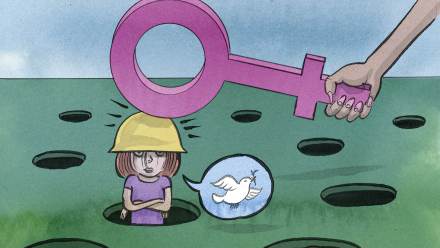
Over New Year’s, I came down with the Omicron. Or as I put it to my wife, civilization as I knew it almost came crashing down around me. Why are men so bad at being sick? I ask that fully aware that even saying the word “men” is enough these days to get you tossed off a college campus by a mob of tots screaming about how they identify as Chevy Impalas. The fun and flirty battle of the sexes has given way to an assault on the very concept of sex itself. And patriarchal oppressors versus birthing people just doesn’t have that same snappy “Summer Nights” ring to it. Yet even allowing for the ongoing abolition of gender, the difference between how men and women get sick is one of the few sex distinctions we’re still allowed to notice.

sick

Mother’s milk is good for you

I had my first taste of breast milk after a training session at a garage gym. We swap tips and stories and we bond, so when a friend brought a bag of his wife’s frozen breast milk we thought it’d be fun to test the potential benefits to our lifting programs and physiques. I’m not sure whether he ever told his wife that I tried some, and I’ve not had the heart to admit it to her. It was sweeter and more watery than I expected, almost sickly. I didn’t enjoy it, but I was curious. Bodybuilders will chase any small benefit, and we’re always experimenting with our diet and exercise programs. Breast milk is a poor source of protein but it’s abundant in probiotics and valuable micronutrients such as human growth hormone IGF-1.

milk

Succeeding at failing

My London agent calls to break the news gently. “Your book is dead. I can’t sell it. Sorry. But you do have the most fabulous collection of rejections from publishers I’ve ever read.” “Really? Can you get me a book deal for a book of my book rejections? Failure is a hot topic now.” “You’re funny...” “Thanks.” “...but not commercial. Still, there is some good news.” “Really?” “I’ve sold your ex-wife’s new book for a huge advance!” My ex-wife and I have the same agent so I’m well practiced in the art of the fake congratulation. It’s what we men do, our equivalent of the fake orgasm. “That’s such wonderful news!” Two weeks later, more failure.

failure

Liberalism and existential insecurity

After 1789, conservatism was the party of insecurity, pessimism and fear, liberalism the party of confidence, optimism and eager anticipation, down to the early years of the twenty-first century when the mood of hubristic triumph that followed the collapse of the Soviet Union deflated almost overnight, in the United States especially, where liberal democrats have come to resemble the “normal American of the pure-blooded type” whom Mencken described as going “to rest every night with an uneasy feeling that there is a burglar under the bed, and... [getting] up with a sickening fear that his underwear has been stolen.

liberalism