Society

China’s grave insult to the Catholic Church

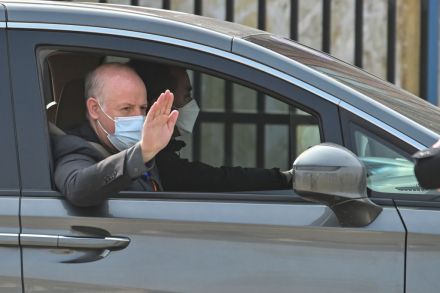
The outrageous arrest of Cardinal Joseph Zen last week — together with the Vatican’s weak response — presages dark days for Catholics under Beijing’s authority. Nicknamed “the conscience of Hong Kong,” Cardinal Joseph Zen is known and respected throughout the world for his fearless defense of Chinese Catholics and his opposition to communism. As bishop of Hong Kong, he encouraged and celebrated annual masses on June 4 for the victims of the Tiananmen Square massacre (participation in a Tiananmen Square memorial was one of the “offenses” that put Hong Kong media tycoon Jimmy Lai in jail last year). This year, the diocese of Hong Kong has canceled the June 4 Tiananmen Square memorial masses, for the first time in over two decades.

The dangerous rise of academic diversity quotas

Who should be the custodians of science? For centuries, scientists themselves have been. Now, their custodianship is under threat. Science has long operated as a sort of guild, with the guild managing its own practice and traditions. This holds for the guild’s continuity: admission of aspiring members to the guild is controlled by the guild itself. For the sciences, aspiring members must clear a competitive series of hurdles: apprenticeship (graduate school), journeyman (post-doctoral fellow and assistant professor), then full membership (tenured professor). For the past few decades, science’s stewardship has been shifting into the hands of an arriviste managerial class with no idea what science is or any real respect for it.

More silent films, less Twitter

News that billionaire Elon Musk is buying Twitter has shaken the world to the point that left-wingers are threatening to deprive us of their every thought by quitting the platform. My guess is this blustering will take those celebrities about as far away as they went when they pledged to leave the country if Trump was elected president. And though Twitter is likely far from rid of the Jameela Jamils and Chelsea Handlers of the world, even a brief reprieve from the balderdash could do us wonders. Last weekend, I had the privilege of experiencing a one-of-a-kind event at my local theater. “Rick Benjamin’s Paragon Ragtime Orchestra” came to town and performed the original musical score to Buster Keaton’s Steamboat Bill, Jr., a 1928 silent film.

Elon Musk and tweeting on a volcano

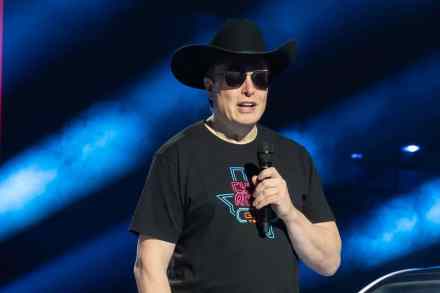
Of all the hilarious freakouts over Elon Musk's bid to buy Twitter, my personal favorite comes from journalism professor and self-styled "NYC insider" Jeff Jarvis (as noticed by The Spectator's Bill Zeiser last week). Jarvis tweeted — and I quote — "Today on Twitter feels like the last evening in a Berlin nightclub at the twilight of Weimar Germany." One imagines Mehdi Hasan and Molly Jong-Fast manically jazz-dancing as the Bruenigs belt out a song from a cabaret stage. And surely nothing calls down the specter of fascist totalitarianism quite like Musk's pledge to end Big Tech censorship. Because that's what the Nazis did, right? They kicked down the door to the nightclub, stormed through the horrified crowd, and barked, "ATTENTION PLEASE!

elon musk
experts

The march of the ‘experts’

Historically Americans have had little, if any, respect for college and university professors, for whom they felt a mild though distant and tolerant contempt. As more and more members of the professoriat have been recognized as “experts” in their respective fields, or at least at the edges of them, since World War Two, they have naturally presented themselves to the public under the guise of “specialist,” a vast improvement over their previous reputation as absent-minded eggheads barely able to afford the Ford Motor Company’s cheapest product and a shabby house on the wrong side of the railroad tracks.

Mahler

Of Mahler and mandates

On February 23, 1897 a slight Austrian eccentric walked into the parish church of St. Ansgar and St. Bernhard in Hamburg, affirmed his belief in the Holy Trinity, the one, holy, Catholic, and apostolic church, and received the sacrament of baptism. Some months later, Gustav Mahler was named principal director of the Viennese court opera — a post that would have been denied to him had he not converted from Judaism. One hundred and twenty-five years after his baptism, the Kennedy Center for the Performing Arts honored Mahler by performing his Second Symphony with legendary guest conductor Michael Tilson Thomas.

Elon Musk is the wrong kind of billionaire

Oh, to have been a fly on the wall in the C-suite at Twitter on Thursday afternoon. The social media company’s San Francisco headquarters reportedly played host to an all-hands meeting in which concerned employees were given the chance to ask questions about billionaire Elon Musk’s offer to buy their company. Their panic is not entirely without merit — Musk has floated the idea of turning Twitter’s building into a homeless shelter. Yet it's worth noting that Twitter’s employees have been told they can work from home indefinitely, and their questions were delivered to a largely empty building via the messaging app Slack.

elon musk ketamine
new york times

Free speech folly at the New York Times

I suppose we should be grateful that the New York Times has finally come out in favor of free speech. After more than four years of hysterical denunciations of anyone who questioned the tactics, rhetoric or punishments employed by #MeToo, Black Lives Matter or transgender activists — some of which were inspired by the Times’s own reporting and editorials — America’s “paper of record” has apparently become woke to the problem of mob intimidation and its deleterious impact on what the mainstream media likes to refer to as “robust” democratic debate.

Biden cracks down even on green energy

We know that government’s knack for finding something wrong with everything rivals even the most stereotypical mother-in-law. But the relentless fault-finding’s latest victim may surprise you: federal prosecutors have fined a green energy company $8 million and slapped on a five-year probation period after bald and golden eagles died on its wind farms. There is now no such thing as “clean energy.” Even so-called “green energy” is tinged with the blood of birds. Just when you thought the war on energy couldn’t get any more ridiculous, Joe Biden's Department of Justice has sucker-punched one of its own golden boys.

Elon Musk is the Darth Vader of Twitter

When I think of Twitter CEO Parag Agrawal, I think of Darth Vader. It’s not that Agrawal himself reminds me of the Star Wars protagonist, grave concerns over Twitter’s handling of free speech notwithstanding. I just can't help but think of the nervous imperial commander who receives Vader as he arrives to inspect the Death Star II at the opening of Return of the Jedi. “Lord Vader, this is an unexpected pleasure. We are honored by your presence,” the commander says, with a lump in his throat. The Dark Lord of the Sith flatly replies, “You may dispense with the pleasantries, Commander. I’m here to put you back on schedule.

Beware the risks of tyrannical tech

“Just think about it. Our whole world is sitting there on a computer. It’s in the computer, everything: your, your DMV records, your, your social security, your credit cards, your medical records. It’s all right there. Everyone is stored in there. It’s like this little electronic shadow on each and every one of us, just, just begging for someone to screw with, and you know what? They’ve done it to me, and you know what? They’re gonna do it to you.” — Sandra Bullock as Angela Bennett, The Net, 1995 A few weeks ago, I called the local Domino’s. The man who answered asked whether my address is an apartment or a private residence. I live in a fairly remote Michigan community of about 8,000 people.

How science fiction novels read the future

The pandemic is not quite over, but we are getting used to its inconveniences. What disaster will be next? An antibiotic-resistant strain of the bubonic plague? Climate collapse? Coronal mass ejection? Will the next catastrophe be natural — perhaps a massive volcanic eruption, the likes of which we have not seen for more than two centuries, since Tambora in 1815? Or will it be a manmade calamity — nuclear war or a cyberattack? And might we inadvertently descend into a new form of AI-enabled totalitarianism in our efforts to ward off such calamities? To all these potential disasters it is impossible to attach more than made-up probabilities. So what can we do about them? The best answer would be that we should strive to imagine them.

science fiction

How bad could a Russian cyberattack be?

When I have designed wargames around a NATO-Russia conflict, I often left out cyberattacks for a simple reason: it was just too complicated. Too many unknowns make an accurate simulation impossible. The number of targets, scale of the attack, damage done, how the attack could be carried out and its ramifications were beyond calculation for a mere simulation on the scale I was running using just consumer-based computer technology. Honestly, nuclear war seemed easier to think about, and that says a lot. But that should give us pause. Our world is basically a giant computer now, with cloud-based networks controlling virtually every aspect of our lives, from sewage and water treatment plants, to our electrical grid, to our smart homes, and on and on we go.

cyberattack

The rise of the Busy People

I have a friend who’s always very busy. So busy that we rarely see each other. But I know that she’s very busy because when we talk on the phone and I ask “How are you?” she always says the same thing: “Busy. Very busy.” She is one of the Busy People. Busy people work very long hours and have important meetings, conferences, trips and appointments to attend to. She belongs to that breed of Busy People — fortunately a minority — who love to tell you how busy they are. I, on the other hand, am one of the Lazy People. We hardly work at all. We don’t have meetings or conference calls; we have long lunches and short naps. The only important meeting we ever take is with our oral hygienist or therapist.

busy

The ultimate human futility of sports

If it were true that civilization progresses inexorably according to the laws of some teleological principle, public — in modern times, professional and commercialized — sports would not have survived Classical Greece and the Roman Empire, thus sparing the modern world such obscene extravagances as the Super Bowl in the United States, the World Cup in Europe and the international Olympic Games. Mass man at play in his leisure hours is not a pleasant and encouraging sight in any circumstances, but gathered with his fellows in massive sports stadia one views him at his absolute worst.

sports

Going out on a fossil fuel bender

Covid rates are abating just in time for surging gas prices to eclipse the pandemic as our crisis du jour, and people from both sides of the political aisle are crying out in unison: something must be done! The current energy crisis debate consists of a few camps: one group professes that they can’t abide fossil fuels being used at all, while another can’t imagine living without them. The third group makes up the middle of the Venn diagram, and though a paradoxical state of mind, it contains the most members. Choosing a winner from among the prevailing arguments is no simple task.

oil

Biden’s science advisor falls to the woke

Last month, President Biden tapped Dr. Eric Lander to be his science advisor and lead a new "war on cancer" initiative. Just five days later, he was unceremoniously dumped. Nominees come and go all the time, of course, yet there was no doubt over Lander's scientific and managerial qualifications. He is a professor of biology at MIT and Harvard University. He was instrumental in steering the Human Genome Project to a point of actual utility, providing detailed genetic maps of heritable diseases, and proceeding from those clues to novel treatments. He is a skilled political operative, hobnobbing with the wealthy and powerful on his way to becoming the president and founding director of the Broad Institute of MIT and Harvard.

eric lander science

Why won’t Pope Francis condemn Russia?

On February 25, the day after Russia invaded Ukraine, Pope Francis met with Aleksandr Avdeyev, Russia’s ambassador to the Holy See. Yet rather than summoning Mr. Avdeyev to the Vatican, Francis called at the Russian embassy, just two blocks from the Castel Sant’Angelo. The visit was a violation of diplomatic protocol. Heads of state don’t just pop ‘round to the local embassy. Over the next couple of days, it became clear that Francis wouldn’t be paying the same honor to Ukraine’s ambassador. Even more strikingly, Francis refused to condemn Russia for the attack. Vatican-watchers fumed. On February 28, the Vatican’s secretary of state released a video condemning the conflict “unleashed by Russia against Ukraine.

vatican

Maria Bartiromo vs social media

Fox Nation, the online streaming counterpart to Fox News, recently dropped a new investigative series by Maria Bartiromo called Killer Apps. The program digs into the rise of dangerous social media trends, internet addiction, and the facilitation of trafficking via social media. The Spectator World caught up with Bartiromo about her new show. Amber Athey: What was the inspiration behind your deep dive into the dangers of social media? What do you hope to achieve with this investigation?     Maria Bartiromo: One trigger was what appeared to be dangerous "challenges" going viral on social media, such as 'who can swallow the most laundry detergent?' or 'who can tie a belt around your neck and see how long you can stop breathing?

FOX Business Network Anchor Maria Bartiromo (Photo by Monica Schipper/Getty Images)

What’s behind the push for abortion in Latin America?

As the pro-life movement in the United States looks with optimism to the very possible overturning of Roe v. Wade by the US Supreme Court later this year, the tide seems to be flowing in a different direction down south. First came Argentina, where the Senate passed a highly contested bill in early 2021 legalizing abortion in the first fourteen weeks of pregnancy. The vote was preceded by months of protests, debate, and even a series of personal pleas from the world’s most famous Argentinean, Pope Francis. In September, Mexico’s Supreme Court struck down abortion bans in two states, effectively paving the way for decriminalization nationwide. Most recently, Colombia effectively legalized abortion in the first twenty-four weeks of pregnancy.

abortion