Society

What George Washington learned from Brooklyn Heights

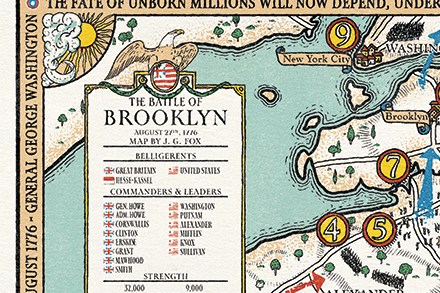
The biggest battle of the American Revolutionary War was fought in Brooklyn, just after the signing of the Declaration of Independence, in the summer of 1776. The Americans were outnumbered two to one, lost badly and were lucky to be able to extricate themselves from what could have been a war-ending disaster. George Washington, in command, learned that his troops must be better armed, better led and better disciplined to take on the Redcoats and that, whenever possible, he should avoid European-style pitched battles. Acting on these lessons for the next seven years, he found a way to survive and, eventually, to prevail.

brooklyn
American

Who’s the most underrated American?

Bill Kauffman Luther Martin: a voluble and drunken Maryland attorney who walked out of the Constitutional Convention of 1787 after warning his fellow delegates that their handiwork provided the framework for a centralized and militaristic empire that would efface regional distinctions and erode the liberties for which American patriots had fought and bled a decade earlier. An unheeded prophet who breathed the Spirit of ’76. Lionel Shriver Edith Wharton. Hardly unrecognized, but under-taught and too little familiar to the international literary readership (e.g., in Britain). A spectacular stylist, she wrote novels that still sound modern and perfectly accessible 100 years later – and she was a real feminist before the days the word meant humorless pill.

england

America is still an English country

Americans have been enjoined, as we approach our country’s 250th anniversary, to be a bit more grateful. Good advice. It is not just the freedom of speech and the purple mountains’ majesties we should be taking stock of. It is also our knack, in recent decades, for miseducating ourselves, failing to read the signs of the times, making wrong choices – and then profiting from the fallout. In the global financial crisis that ran for a decade after 2008, blunders in American financial engineering, from complex derivatives to mortgage-backed securities, bankrupted debtor countries and cost several others their sovereignty, most notoriously Greece.

Ambition is in America’s DNA

Rome Last month, I found myself sitting on a panel discussing the European Union’s digital asset strategy. The conversation revolved around the digital euro, tokenization, stablecoins, financial regulation and the future of capital markets. Outside the conference hall stood one of the great cities of human civilization. Rome encourages long thoughts. Every stone seems to remind visitors that history is not a straight line. Great nations rise, stagnate and sometimes disappear altogether. Walking through Rome after the conference, I started thinking less about digital currencies and more about something else entirely. America turns 250 this year. For any nation, two and a half centuries is a respectable run. For a republic, it is extraordinary.

America at 250 remains an exceptional country

Who could ever have imagined what was being unleashed on the world when Thomas Gage ordered 700 Redcoats to march out from Boston and seize supplies in the town of Concord? Who could have dreamed, 250 years ago, what would be built by the descendants of those 56 men who put their names to the Declaration of Independence while gathered in the Pennsylvania State House? The United States of America turns 250 having enjoyed a near-uninterrupted run of success unmatched in world history. By her 100th birthday, the US was already master of an entire continent. By her 200th, she had won two world wars, invented the airplane, the atomic bomb and the transistor; created the motion picture and rock ’n’ roll; become the first automobile nation and put a man on the Moon.

Chicken Milanese is the king of homemade fast food

When it comes to home cooking, we’re obsessed with optimization. Today this manifests itself in reels on Instagram offering a "hack" to make the time you spend in your kitchen shorter and your dinner to arrive more quickly. Harder, faster, better, stronger. None of this is new: there was a time when every Jamie Oliver cookbook shaved ten minutes of the promised cooking time off the last. Delia Smith’s How to Cheat at Cooking caused a public outcry (can you believe she advocated for frozen mashed potato?). The whole appeal of air fryers is that they’re fast, and while slow cookers don’t exactly get to their destination quickly, they do so with as little intervention as possible from the cook.

chicken milanese

The Spectator’s role in the birth of America

The Spectator was there at the founding of America. George Washington had six copies of the original, 18th-century Spectator at his Mount Vernon estate and read them often. He shared with Joseph Addison, The Spectator’s co-publisher, an interest in how to educate ideal citizens: men and women with wit and grit. Young Washington read The Spectator in the hope of bettering himself, too. Both of his older half-brothers had been educated in England and he wished also for the manners and polish of an English gentleman. For the pioneering, self-improving men who would go on to create an independent America, the 18th-century Spectator was both an education and a guide. “I bought it, read it over and over, and was much delighted with it,” wrote Benjamin Franklin in his Autobiography.

The New York Times’s twisted reporting of Henry Nowak’s murder

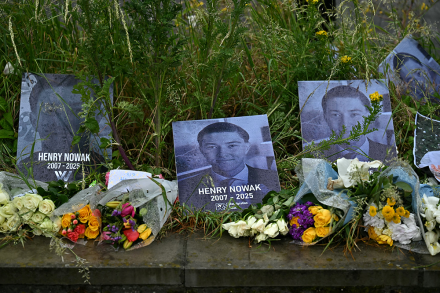
Last month’s headline in the New York Times was obfuscating: “In the UK, a Violent Cycle: Hateful Attacks, Right-Wing Agitation and Riots.” Because hatred is now irrevocably associated with the “right-wing,” innocent American newspaper readers will have presumed that these agitating, rioting reactionaries were also the authors of the “hateful attacks.” The New York Times and the PBS News Hour delivered such twisted, incomplete and minimized versions of recent incendiary events in the UK that I was obliged to tell the stories of Henry Nowak and Stephen Ogilvie to more than one ordinarily up-to-date American friend, because the salient details had been omitted from left-leaning reports.

Beware the ‘matrescence’ con

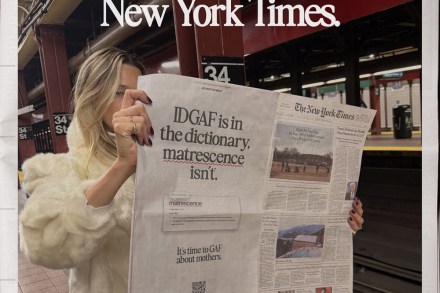
Every so often, a fashionable new concept is born. Witness the arrival of "matrescence," which, for the uninitiated, is a phrase used to describe the physical, psychological, emotional and social transition a woman undergoes when becoming a mother. Or, as my mother and grandmother would have put it, and perhaps yours too: motherhood. "Matrescence" first appeared in the 1970s, coined by the medical anthropologist Dana Raphael, but it seems to be reaching maturity now. Advertisements splashed across the back page of the New York Times make the case for the inclusion of the word in the dictionary. A "global movement" is being launched (by a social networking site for women and a company that sells baby bottles) to put matrescence on the cultural map.

matrescence

Jerry Seinfeld and the dark truth about ‘Free Palestine’

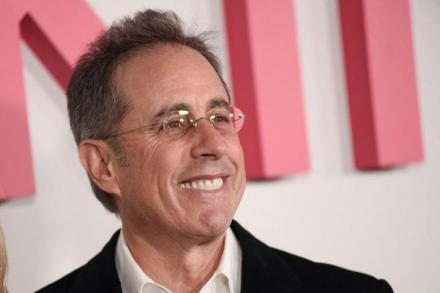
I see Jerry Seinfeld has got the pompous left sobbing into their keffiyehs. His sin? He refused to buckle to their neo-religious mantra “Free Palestine.” The comedy legend was accosted by a YouTuber outside Madison Square Gardens in NYC last week. ‘Free Palestine’ feels like a jeer designed to taunt Jews “Can we get a ‘Free Palestine’?” the streamer asked as he shoved his mic towards Seinfeld’s mouth. Seinfeld smirked. He held his tongue. No “Free Palestine” passed his lips. It gets better. He then proceeded to shut down his chirpy interrogator with three words. “It doesn’t exist”, he said. He was talking about Palestine. Cue fury from the Gazaholics. This was “racist rhetoric”, cried the cranks at the Council on American-Islamic Relations.

How many people did Australia’s backpacker murderer kill?

Australians are known for world-class performances in many fields. Mostly, our achievements are a source of national pride, but one field of achievement causes us only horror and shame. Our serial killers are some of the most prolific and brutal anywhere. And none are more brutal or prolific than the late, unlamented, Ivan Robert Marko Milat. Milat took his victims into the forest bound, terrified and subjected them to unspeakably sadistic torture The facts of Milat’s known killing spree are gruesome and horrific. In the late 1980s and early 1990s, Milat turned the Belanglo State Forest, a bushland reserve off the main highway to Melbourne, and 80 miles from Sydney, into his personal killing field.

backpacker

Sweden shows that not all immigrants are the same

I’m just going to say it. Not all immigrants are the same. I know that reading that might make you feel uncomfortable, particularly if you’re white and American and therefore more vulnerable to cancel culture and snowflakery. But it’s true. Some immigrants are simply better than others. And by better, I mean that immigrants from certain nations and cultures are more likely than others to integrate and make a positive contribution to their new country. Sweden is a useful terrarium of immigration; the good, the bad and the ugly Sweden is a useful terrarium of immigration; the good, the bad and the ugly. I was born in Sweden to Iranian parents in the early 1990s.

The Anthropic logo is displayed on a computer screen photographed through a magnifying glass in Creteil, France, on April 21, 2026. The image is taken amid reports of the NSA using Claude Mythos Preview despite a ban on Anthropic for United States government agencies. (Photo by Samuel Boivin/NurPhoto via Getty Images)

Is the White House trying to hurt Anthropic?

The US government has finally intervened in the AI regulation question, albeit in the kind of haphazard, incoherent, and possibly corrupt manner in which the Trump administration tends to wade in to anything related to the stock market, particularly on a Friday evening before it closes. The US Department of Commerce announced that Fable, Anthropic’s hardened version of the underlying model Mythos, was indeed far too dangerous to be released to the general public. Then they issued a blanket export control directive saying that no “foreign nationals” should be allowed to use the new product. So Anthropic, most of whose employees are foreign nationals, had no option but simply to turn Fable off.

Kim Kardashian deserves better than Lewis Hamilton

I’ve always been keen on Kim Kardashian, going right back to the earliest years of her family reality show. At one point in an over-excited piece for the Sun, I even compared her to Helen of Troy – a modern day icon of beauty whose bum launched a thousand quips. Hamilton has a long history of acting like both a princeling and a drag queen in terms of entitlement and drama, while also liking to present himself as the underdog But my word, she can pick them. Starting with Ray-J, who appears to have been talking about little else since 2007 but the sex tape they made as youngsters in 2003. Then there was most famously Kanye West.

My Memorial Day pilgrimage to a Pennsylvania Walmart

Here in the US, Memorial Day – which falls on the last Monday in May – is, officially, an occasion for mourning and honoring military personnel who have given their lives in service to this great country. Unofficially, it is an occasion for charred hot dogs, 24-packs of Bud Light and nationalistic merchandising usually confined to airport gift shops. In our household, however, Memorial Day marks something different entirely. It’s the day we make our annual pilgrimage into the heart of consumer capitalism: a Walmart in East Stroudsburg, Pennsylvania. By now you might know that I live in Manhattan. You might, therefore, be wondering why exactly we’ve adopted this strange ritual, necessarily involving a rental car and gridlocked traffic on the George Washington Bridge.

iphones birth control

How iPhones became birth control

A new study has found that smartphones are a likely cause of falling American birth rates. Economists Caitlin K. Myers and Ezekiel Hooper tracked the rollout of the iPhone across the country and found that the more people used smartphones, the further birth rates fell. This was especially true for the youngest cohort of women. Between 2007 and 2011, use of the iPhone was correlated with between 33 to 52 percent of America’s fertility decline. There’s been a lot of discussion about smartphones and falling fertility rates lately. Most arguments go something like this: smartphones and social media are linked to rising rates of anxiety and depression, less sex and less in-person socializing.

Decluttering is the ultimate act of love

“You are going to die before me and leave me to deal with this, and I will curse your soul for all eternity,” I once said half-jokingly to my husband over a glass of wine. We were having one of our regular conversations about what he was going to do about his late uncle’s possessions, which had arrived at our house in lorry-loads about a year after we had married. “Why don’t you do half an hour of sorting every weekend? I will help you,” I would suggest in reference to the multiple barns, basements and attics at our farm, which were now piled high with three generations’ worth of male hoarding. But with an increasing number of children in the house and no sense of urgency, progress was slow.

declutter
world cup

The World Cup’s critics must give it a chance

There has been so much controversy in the run-up to the 2026 World Cup that it is sometimes easy to forget that it is actually a soccer tournament. That is why it is something of a relief that the competition is finally underway, allowing fans to focus on the game itself rather than all the off-field goings on. The 2026 competition is being played in North America with thousands of fans descending on the United States, Canada and Mexico to watch their national teams in action. It features 16 host cities, 48 teams, and 104 matches. It amounts to a stupendous orgy of soccer excess. Even so, the build-up to this tournament has been markedly ugly and increasingly politically-charged, despite FIFA’s attempts to paint it as a unifying global event.

strait

Know your facepalm from your headslap

“That’s not a facepalm,” said my husband. “It’s a headslap.” He proved the point by making contact between the flat of his hand and his noble brow, producing a percussive sound. Then he covered his eyes with outstretched fingers and said: “That’s a facepalm.” He was right to make a semantic distinction between these two nonverbal gestures. The headslap signifies usually comic frustration at another’s stupidity. The facepalm conveys embarrassment. The names are recent. Facepalm is not found earlier than 1996 in the Oxford English Dictionary. Those who like to employ emojis (which I do not) will find one for the job. The headslap has not yet been noticed by the OED.