Scotland

Nicola Sturgeon has a key advantage in her independence fight

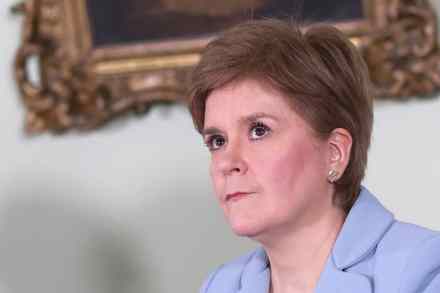
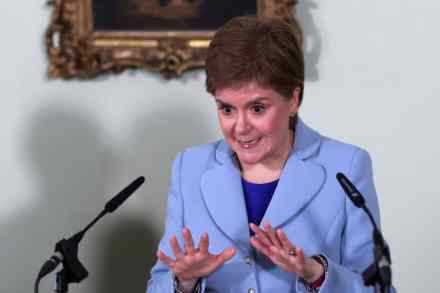
Nicola Sturgeon has unveiled her plan for another referendum on Scottish independence. The plebiscite – which Westminster will have to legislate for – will use the same question as in 2014 (‘Should Scotland be an independent country?’), and take place on 19 October 2023. The Lord Advocate, one of Sturgeon’s ministers, has referred the provisions of the Bill to the Supreme Court to determine whether they are in line with devolved powers. Writs have been served on the UK Government this afternoon. If the Court rules against the SNP, they will fight the next general election solely on independence, which Sturgeon asserts would be ‘a de facto referendum’.

Another Scottish independence referendum is coming

Despite what the SNP and its supporters insist, Nicola Sturgeon did not 'announce' a second referendum on independence today. Far from it. Her statement to the Scottish parliament quietly accepted that a referendum is highly unlikely to take place on 19 October next year. The 2014 referendum – an act of self-determination that inconveniently produced the wrong outcome for the SNP – was an agreed plebiscite. All parties and Scotland's government agreed it should take place and that its outcome would be politically, if not legally, binding. This is still the path Sturgeon would prefer. Holding such a referendum, however, requires a section 30 order by the British government, which accepts the Scottish parliament’s right to legislate on an otherwise reserved matter.

Sturgeon plans to sue herself

Here we go again then. Nicola Sturgeon has finally anounced her great Scexit wheeze: after years of making claims about another independence referendum, she's finally announced a timetable at last. Thursday 19 October 2023 is now Scotland's divinely-ordained date with destiny (according to the First Minister at least) with Sturgeon prepared to use the courts to achieve this, given the UK government's continued intransigence. To do this, Sturgeon says she asked the Lord Advocate to consider referring to the Supreme Court the position of her referendum bill with regards to reserved matters; in effect, suing herself. She confirmed that the Lord Advocate has agreed to make a reference to the court, with papers being filed in London this afternoon.

Nicola Sturgeon’s women problem

It seems that Scotland isn't the only thing failed by the SNP. Britain's greatest grievance-merchants are (rightly) being hauled over the coals today for their treatment of Patrick Grady's male victim, after Ian Blackford told a room of MPs last Tuesday that the disgraced sex pest had their 'absolute full support.' One of those who expressed support for Grady was fellow nat Amy Callaghan who is now, apparently, 'truly sorry' after telling the meeting that the SNP should be 'rallying together around' Grady. And all it took was a leaked recording and a public outcry — truly, the definition of contrition. Don't worry though: it's not just men that the SNP are failing.

Ian Blackford’s bad weekend

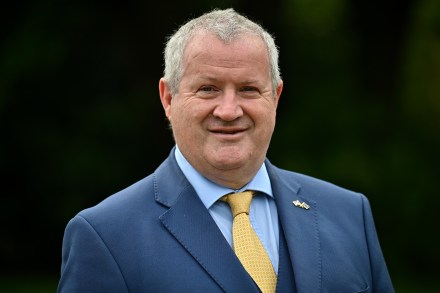
It's not been Ian Blackford's best weekend. On Friday night, the Daily Mail exposed a secret recording in which the Westminster leader directed his MPs to back a sex pest in their party. Blackford told SNP members on Tuesday night to give Patrick Grady their 'absolute full support' after the latter was found by an independent panel to have touched and stroked the neck, hair and back of a colleague 17 years his junior at a social event. Just 15 minutes after Grady's suspension from parliament was announced, Blackford told applauding SNP colleagues that: He’s going to face a number of challenges over the short term and so he should have our absolute full support. I for one very much look forward to welcoming Patrick back into the group next week.

We need to talk about Scotland

The Scottish government has published the first instalment of its new independence prospectus, a paper with the remarkably verbose title: ‘Building a New Scotland - Independence in the Modern World. Wealthier, Happier, Fairer: Why Not Scotland?’ Scottish government resources have been diverted away from the tedious day-to-day business of running the country to produce this paper and Scotland’s First Minister has taken time out from her busy schedule of talking about independence to hold a press conference to announce that ‘it is time to talk about independence’, so I felt duty bound to sit and study what has been produced.

It’s time for Westminster to take on the SNP

There will not be a legally binding referendum on Scottish independence next year. It’s important to bear this in mind when chewing over Nicola Sturgeon’s latest pronouncement. The SNP leader held a press conference on Tuesday morning to publish a paper on independence in advance of a plebiscite Sturgeon says will be held in 2023. She claims a mandate for such a vote from the 2021 Scottish Parliament election, in which the SNP and Greens ran on pro-referendum manifestos and won a majority of seats between them.

Nicola Sturgeon’s Potemkin independence bid

In one sense Nicola Sturgeon’s new independence campaign launched today – which assumes there will be a second referendum within the next 18 months – does not signal anything new. Sturgeon did not unveil any new legislation. Nor did she submit a formal request for the UK government to allow a referendum to take place. The legal and political impediments to having a rerun of the 2014 vote remain. Most people in Scotland do not want a referendum next year. Polling shows there is no majority for secession, while the constitution is way down the list of people’s priorities. There is no incentive for Downing Street to concede even an inch of ground to the SNP-Green administration’s demands for having another go at ‘Scexit’.

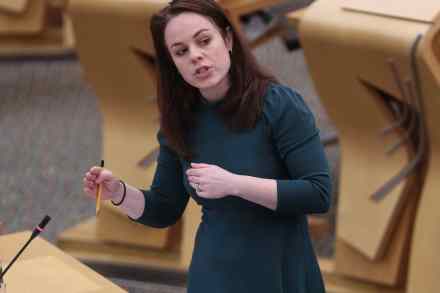
Kate Forbes, Tartan Thatcher

The SNP's political gifts know no bounds. Mr S has to take his bonnet off to Kate Forbes – Sturgeon's finance secretary and heir apparent. For no Tory minister could have ever announced the spending cuts which she did yesterday without facing the wrath of the Scottish establishment. Couched in managerial jargon-ese, Forbes' spending review statement promised a 'reset' in the country's public services over the next five years. 'Reset,' of course, is simply a shorthand for 'real term cuts', with the funding axe set to fall on a swathe of different areas including local government, higher education, the courts service and cultural affairs. Despite all this, there is still some cash for the SNP's own vanity projects, with £20 million put aside to plan for another referendum.

Scotland’s census has failed

Today is deadline day for Scotland’s census. When threats of £1,000 fines were delayed at the start of this month just 74 per cent had returned their form. It’s now 86 per cent. Better, but far short of the 94 per cent national target. Some 370,000 households are yet to complete it. The target of 85 per cent in all local areas hasn’t been met either. Nicola Sturgeon has admitted the outputs could be unreliable. Academics have also warned the data could be ‘useless’ because of low uptake and extensions to the collection period. The minister responsible - Angus Robertson - jetted off to Brussels this morning. Why the low return rate? One theory is that unionists are ‘boycotting’ it to make the government look bad.

The irrational cruelty of the SNP’s nationalism

They can't build a ferry, organise a census or keep the railways operating, but when it comes to organising a grievance campaign, nobody does it better than the SNP. This week saw perhaps the most impressive effort yet from team grievance as the SNP tried to turn the Chancellor's announcement of a windfall tax on big oil companies into a Scotland-versus-the-rest-of-the-UK bun fight. Speaking on Sunday, SNP MP Kirsty Blackman complained:  It feels very unfair that Scotland is having to pay for the entirety of the UK. If Scotland was an independent country, the windfall tax would generate £1,800 for every household in Scotland.

Is this the answer to Scotland’s drug death epidemic?

Scotland could pioneer a scheme to cut drug deaths by allowing users to consume narcotics under supervision and with medical assistance on hand. The establishment of overdose prevention centres (OPCs) is proposed in a consultation launched yesterday by Labour MSP Paul Sweeney, who believes his Bill will 'implement changes that will save lives'. Sweeney, a former Royal Regiment of Scotland reservist, previously volunteered in an unofficial safe injection van in Glasgow and has told the Scottish parliament that he saw people saved from overdose. These centres would take what volunteers have already done and give it a legal framework. Although these centres are already used in parts of the US and Europe, Scotland would become the first UK jurisdiction to introduce them.

Scotland’s national investment bank is running aground

Like so many SNP Scottish government initiatives, it was launched to great fanfare but has made questionable progress since. Established in November 2020 as an investment vehicle for delivering long-term, ‘patient capital’ to Scottish businesses, the creation of the Scottish National Investment Bank (SNIB) was described by Nicola Sturgeon as ‘one of the most significant developments in the lifetime of this parliament.’ The ‘mission-led development bank’ is being funded by the Scottish government to the tune of £2 billion over ten years.

Sturgeon’s record in eight graphs

Today, Nicola Sturgeon becomes the longest serving First Minister in the history of devolution. Surpassing Alex Salmond’s seven years, six months and five days. It’s a long time to be in charge: a full generation by some definitions. Certainly time enough to make your mark on a country with devolved powers unparalleled in the democratic world. But what difference has Sturgeon made in her time in office: 1. Life expectancy for Scots men and women has seen the sharpest fall in 40 years – accelerating in the time Sturgeon’s been in power.  Scottish men born today can expect to live 77 years, the lowest of any UK country (it’s 79 in England) and a fall of some 18 weeks on the year before.

SNP U-turn on power-sharing deals

Shock, horror! Another principled SNP stance has crumbled at first contact with the prospect of power. For much of the past three weeks the nationalists in Scotland have been screaming blue murder about opposition groups negotiating pacts on local authorities where the SNP are the largest party, to lock them out of office. Such deals between the Tories, Lib Dems and Labour should, perhaps, be unsurprising given that Nicola Sturgeon’s followers are still committed to the break-up of the UK. But that hasn’t stopped the First Minister’s lackeys from crying foul play every time a new deal has been announced. Take South Lanarkshire where the SNP won 27 of the council’s 64 seats but failed to win a majority, despite being the largest party.

Is the SNP now pro-nuke?

At the rate he’s going, the SNP’s hawkish spokesperson on defence, the MP Stewart McDonald, will soon be talking about an independent Scotland having a weekly armed forces day where citizens don camouflage and wargame defending the nation. McDonald is tasked with making the SNP sound sensible when it comes to defence and western collective security. His latest manoeuvre appears to be to turn his party’s long-standing anti-nuclear weapons position on its head. This would move the SNP on from merely pretending it wants to be a part of Nato to credibly backing an independent Scotland’s membership of the alliance.

David Cameron bags a new job

Poor David Cameron has had a tough few years since leaving No. 10. Few of his post-premiership ventures seem to be doing well. First there was the collapse of Greensill capital; then his enforced resignation from Afiniti after the firm's founder was accused of sexual assault. There's also the flatlining performance of his flagship legacy project, the National Citizen Service, and the underwhelming sales of his memoirs. So Mr S was intrigued to see that 'David Cameron' trending on Twitter in Scotland's third biggest city. Clicking through, a headline in Aberdonian organ Press and Journal flashed up: 'Local ‘champion’ David Cameron named new Lord Provost of Aberdeen.' Was the granite city the scene of an unlikely political comeback?

Sturgeon spins on American jamboree

Crisis, what crisis? Beset by domestic problems of their own making, the SNP government at Holyrood now has to face a difficult international climate too, amid rising tensions abroad and economic troubles around the globe. So, what better time for the country's embattled First Minister to duck questions on ferries and sleaze by jetting off to Washington to rub shoulders with some of America's more pliable politicians. Unfortunately it seems that a change of scenery still hasn't cured Nicola Sturgeon's habit of tampering with the truth.

Yet more SNP bullying hypocrisy

Oh dear. It seems that the sainted Sturgeon has slipped up again. Much as Jesus was betrayed by his disciple, so too has the Blessed Nicola been let down by one of her own. In this case, it's Fergus Ewing – scion of the First Family of Scottish nationalism. The former rural economy secretary stands accused of bullying civil servants: allegations which Sturgeon government's has now been forced to investigate. That probe is believed to have concluded but (quelle surprise) the First Minister is refusing to disclose the outcome of the inquiry, citing 'data protection laws' as the reason why she is unable to discuss the case. What a convenient excuse for Sturgeon. It is, however, not a terribly plausible one.

The problem with Nicola Sturgeon’s latest independence drive

The Scottish government will start refreshing the ‘very positive case’ for exiting the UK, Nicola Sturgeon said this week, in the aftermath of Scotland’s local council elections. Can we expect anything radical to come out of this series of papers? Will there be a big departure from the last major overhaul of the independence pitch, the 2018 SNP-commissioned Sustainable Growth Commission report? That report advocated an emerging market-style currency arrangement – with Scotland unofficially using pound sterling for a prolonged period after secession – and a decade of austerity to put the new state’s public finances in shape.