Is Rishi Sunak right about Rwanda?
71 min listen
Cindy Yu is joined by immigration minister Robert Jenrick, Fraser Nelson and Kate Andrews to discuss the Rwanda plan and whether it can truly stop the boats.

Read about the latest political news, views and analysis
71 min listen
Cindy Yu is joined by immigration minister Robert Jenrick, Fraser Nelson and Kate Andrews to discuss the Rwanda plan and whether it can truly stop the boats.
The word ‘actress’ used to be interchangeable with ‘prostitute’ and though it’s a good thing that this little misunderstanding was cleared up, it’s a pity that ‘living saint’ has been substituted for hooker. Modern actresses are variously ‘activists’ and ‘humanitarians’ – or whingeing nepo-babies mistaking themselves for the first two. But they are rarely ‘broads’ anymore, the way the great female stars (Taylor, Gardner, Mae West) used to be. Except, that is, for Helen Mirren. The word, though originally meaning a woman of flexible sexual morality, has come to indicate an ultra-tough, good-humoured woman, the binary opposite of the non-binary cry-babies who now frequent the bazaars of Thespis. Mirren has

The R word strikes terror into the hearts of ministers and their diary managers alike but spare a thought for the poor people organising events at this year’s Labour party conference after last month’s Shadow Cabinet reshuffle. I am in admiration of the creative energy of the fringe organisers who are desperately trying to hang on to their confirmed speakers. While it might be a bit of a stretch to refocus a debate on local government finance for the newly appointed lead for International Development, God love the lobbyist who tried. Having been released from the task of levelling up the country, I am relishing the chance to level up

When the Soviet system fell in my native Estonia I was 17 years old. I’d spent the entirety of those years mastering the main rule for surviving the USSR: you needed two separate identities. One was for home and those you trusted, the other for public places: we knew that in front of outsiders or certain relatives, you simply didn’t speak about some topics. If you followed the rules and kept the two identities apart, you could survive and even prosper. But if you mixed the two worlds up, woe betide you. My grandparents – who’d separated in the early 1950s – led lives that illustrated this. My grandfather had

Why the attack? Why now? What pretext? For Muslims like me, who have been following the Israel-Arab peace talks with hope and expectation, the atrocity does have a monstrous logic: Hamas wants war. Hezbollah wants war. But in recent months and years we have seen peace talks between Israel and the Emirates, Bahrain and Saudi Arabia. Today’s attack, certain to solicit a furious response by Israel, will push Middle Eastern opinion back towards polarised extremes. This is an attack not just against Israel but on the whole process of Israeli-Arab rapprochement. Sunni jihadis (Hamas) and Shi’ite jihadis (Hezbollah) joined forces for today’s attack and this alliance needs to be seen

Leftists love to fantasise about how heroic they’d have been when Jews were being rounded up in the 1930s. ‘I’d have said something’, they insist. Well, Jews are being rounded up again. They’re being kidnapped, humiliated, paraded through the streets, slaughtered. And leftists are definitely saying something. They’re saying: ‘Good’. These are war crimes. They are acts of genocidal bigotry carried out by a movement whose founding charter committed it to an existential ‘struggle against the Jews’. If you ‘celebrate’ this, you are truly lost. The radical gloating over Israel’s suffering today is beyond the pale. It’s a new low for a left that was already in the moral gutter.

Some 5,000 rockets have rained down on Israeli civilians in an attack co-ordinated from land, sea and air by Gaza-based Hamas and Palestinian Islamic Jihad. Gunmen have stormed the south of Israel, taking control of a number of towns. The attack seems to have taken Israeli intelligence completely by surprise: the death toll – 300 so far – is certain to rise with 900 injured and 100 kidnapped. ‘We are at war, not in an operation, not in rounds of fighting. At war,’ Benjamin Netanyahu has said. ‘I instructed a wide-scale call for reserves to respond militarily at an intensity and scale that the enemy has not known before. The

As the scale and barbarity of the Hamas terrorist assault on Israel begins to unfold, to no-one’s surprise Iran has leant its formal support to the insurgents. While thousands of rockets rain down on Israeli civilians and and Iran’s proxies pull men women and children out of their homes — murdering them in the streets — it’s worth remembering that the United Kingdom still has not proscribed that regime’s state terror exporters, the Islamic Revolutionary Guards Corps. Whether it is terror funding and training to Hamas in Gaza, Hezbollah in Lebanon or Palestinian Islamic Jihad in the occupied territories, the IRGC is inextricably linked to today’s butchery. This is the same
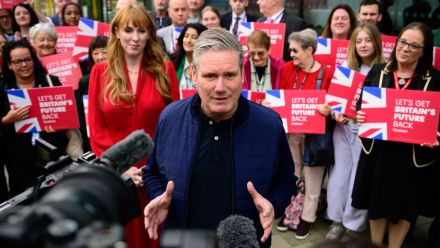
As Labour travels to Liverpool this weekend, one issue which will attract attention is the extent to which Sir Keir Starmer spells out his vision on constitutional reform, if the party wins a majority at the next election. The Blair administration introduced a variety of ambitious constitutional innovations in its first term, including devolution, Lords reform, the Human Rights Act and freedom of information. Gordon Brown also envisaged change, launching a significant (albeit unfinished) review into the governance of Britain when he took over as Prime Minister in 2007. As we enter what might be the final Labour conference before the next general election, it is far from clear how

To Green conference, where the party is thrashing out its policy platform ahead of next year’s general election. All too often in British politics, the smaller parties are distracted and held back by internal rows and feuds. So Mr S was intrigued to hear how the Greens would walk the delicate line between broadening the party’s appeal and retaining their tradition of internal party democracy. Upon entering the Brighton Centre, one of the first leaflets thrust in Steerpike’s direction expressed concern about the lack of ethnic minority representation within the party. Kefentse Dennis, one of the candidates for the party executive earlier this year, has previously accused the Greens of

In the early hours of this morning, Israelis had a flashback to the surprise attack of the Yom Kippur War that started almost 50 years ago to the day, in October 1973. Hamas says it has launched 5,000 missiles deep into Israeli territory. The missiles were used to mask a much more elaborate attack that saw dozens of Hamas terrorists, dressed in uniform and — according to reports on Israeli media — heavily armed with machine guns and grenades, invade Israeli territory. The terrorists entered towns and villages by foot, paraglides and vehicles. Fighting between Israeli security services and the terrorists has gone on for hours, with reports of dead,

Oh dear. It seems that Layla Moran has done it again. As Lib Dem foreign affairs spokesman, she has chiefly served to undermine her party’s carefully calibrated equivocations on tactical voting and rejoining the EU. But today the Oxford West MP has outdone herself with her response to the unfolding horrors in the Middle East, where dozens of gunmen from Hamas appear to have infiltrated southern Israel. Following a surprise Palestinian attack that saw hundreds of rockets hit Israel from Gaza, Moran decided to tweet the following: Deeply concerned by reports from Gaza and Israel. Civilians must be protected, I am especially horrified to hear about hostage taking, and all
Seven years after the Brexit vote, Katy Balls is joined for a fringe panel from the Conservative Party Conference to discuss if voting to leave the EU was worth it, where the wins are and if opportunities are being missed. Katy Balls in conversation with John Redwood MP, Theresa Villiers MP, Camilla Cavendish, Charles Grant and Vote Leave founder Matthew Elliott.
It’s day two of the Green party conference today in Brighton. There’s an air of expectation at this year’s jamboree as first-time attendees mingle with veteran eco-activists, clutching their pro-Palestine leaflets and tupperware lunchboxes. Mr S is a regular on the political conference circuit but even he didn’t expect the shindig to chime with his prejudices to this extent. From the all veggie menu to the copies of Jolyon Maugham’s book on sale, the homemade protest badges to the 20 minute check-in queues, at least the Greens are in keeping with traditional perceptions of the party. But the Greens are now – they’d have you believe – a serious party
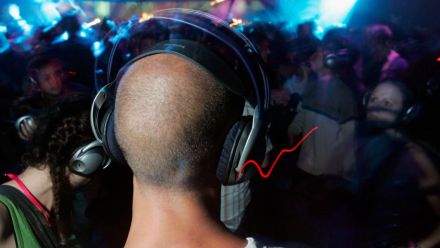
I will not be attending the silent disco that is soon to be held in Canterbury Cathedral. I will not witness ‘some of the UK’s best 90s DJs playing all your favourite tunes in the stunning, illuminated surroundings of Canterbury Cathedral’. I will not be among ‘100s of like-minded 90s fans singing their hearts out whilst wearing state-of-the-art LED headphones’. Why not? Isn’t this the sort of trendy gimmick that a trendy liberal like me approves of? Don’t I often express the view that the Church should be open to the culture around it, and find ways to tempt arty agnostics into its orbit? Well, I suppose it won’t do any

24 min listen
This week Melissa Kite mourns the Warwickshire countryside of her childhood, ripped up and torn apart for HS2, and describes how people like her parents have been treated by the doomed project (01:15), Nigel Biggar attempts to explain the thinking behind those who insist on calling Britain a racist country, even though the evidence says otherwise (06:38) and Matt Ridley enters a fool’s paradise where he warns against being so open-minded, that you risk your brain falling out (13:01). Produced and presented by Linden Kemkaran.
What is Labour’s offer for Nigel Farage? Yes, you read that right. Of course, Keir Starmer’s party detests almost everything the former Ukip leader stands for, including Brexit and immigration control. That almost goes without saying. But we are well into the phase of the political cycle when grubbing for votes is far more crucial than are purist ideals. A generation ago, in advance of the 1997 election, Tony Blair and his gang were making regular overtures to Margaret Thatcher, who they knew to be deeply unimpressed by her successor John Major. Early in 1995, Blair caused consternation among many Labour left-wingers by praising aspects of Thatcher’s premiership, describing her

Britain’s annual wildlife spectacular is just warming up. From the Highlands to the New Forest, the raucous bellowing of amorous stags fills the air. Stags trek up to 50 miles to find herds of hinds to mate with – fighting off other males before they can get down to business. Granted, it’s hardly the migration of millions of wildebeest across the Serengeti, but deer rutting season is a feast for both eye and ears. Yet this annual event on any wildlife watcher’s calendar comes with a darker environmental cause for concern. The truth is that we have too many deer in Britain. The current population of two million – the

One of Argentina’s presidential candidates is unlike the others. La Libertad Avanza’s Javier Milei whizzes past crowds shaking a chainsaw in the air and roaring his catchphrase ‘¡Viva la libertad, carajo!’, or ‘Long live freedom, goddamnit!’. In the run-up to the general election, on 22 October, this anarcho-capitalist libertarian has flipped from being a joker wild card – and something of a meme – to the front-runner. Milei, a pro-life, climate change-sceptical libertarian, sends a message of his intentions to chainsaw through the red tape of what he considers the most prolific ‘organised crime group’, otherwise known as the state. His chainsaw has become such a signature accessory that figurines have gone on sale of Milei
It is almost exactly 30 years since a young Labour politician told his party’s annual conference in Brighton that as home secretary, he would be ‘tough on crime and tough on the causes of crime’. That line helped make Tony Blair a star, since it allowed a left-wing party to grab an issue where its right-wing opponents traditionally held sway. That was the era of Michael Howard as home secretary, when the public and the people who helped set the political agenda were largely in favour of a tough, punitive approach to crime. Howard’s famously harsh Criminal Justice Act 1994 was a sign of those times. Yet things change.