Politics

Read about the latest political news, views and analysis

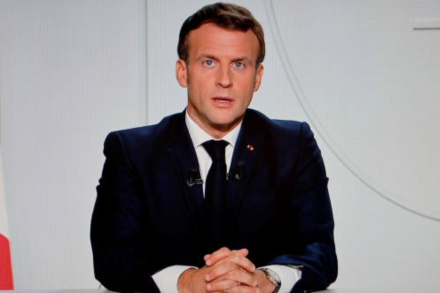
Emmanuel Macron: Why France is locking down again

The virus is now circulating at a speed that even the most pessimistic predictions had not anticipated. The number of contaminations has doubled in less than two weeks. Unlike the first wave, all regions are now at the alert threshold. In many places, we have started to postpone heart or cancer operations, sometimes already postponed until spring. We had sought to control its circulation by relying on our capacities to test, alert and protect. This is what we have been doing since August. Have we done everything right? No. We can always improve. We could have gone faster at the beginning with the testing. We should have been more respectful of barrier gestures, at home, with friends, places where we are most contaminated.
The SNP’s Orwellian Hate Crime Bill

Scottish nationalists have never been keen on Orwell. For decades, his ‘Notes on Nationalism’ has been quoted at them, with its description of their tendency as ‘power-hunger tempered by self-deception’ and the observation that ‘all nationalists have the power of not seeing resemblances between similar sets of facts’. Not to mention, at risk of getting into indelicate matters, that some of the SNP’s early leading lights were on the other side of the old fascism question. But I’m happy to report a rapprochement between the two. Indeed, the Nationalists have so thoroughly warmed to their former foe that they are putting some of his ideas into practice.

Can Boris Johnson resist a national lockdown?

12 min listen

SAGE warned that the second wave of Covid-19 could be worse than the first, and that the whole of England could be in Tier-3 by Christmas, reports today claim. With Emmanuel Macron also expected to announce another national lockdown in France tonight, can Boris Johnson continue to resist doing the same? Cindy Yu speaks to James Forsyth and Isabel Hardman. Tell us your thoughts on our podcasts and be in for a chance to win a bottle of Pol Roger champagne by filling out our podcast survey. Visit spectator.co.uk/podcastsurvey.

‘This is how freedom dies’: The folly of Britain’s coercive Covid strategy

During the Covid-19 pandemic, the British state has exercised coercive powers over its citizens on a scale never previously attempted. It has taken effective legal control, enforced by the police, over the personal lives of the entire population: where they could go, whom they could meet, what they could do even within their own homes. For three months it placed everybody under a form of house arrest, qualified only by their right to do a limited number of things approved by ministers. All of this has been authorised by ministerial decree with minimal Parliamentary involvement. It has been the most significant interference with personal freedom in the history of our country.

The BBC needs a reality check

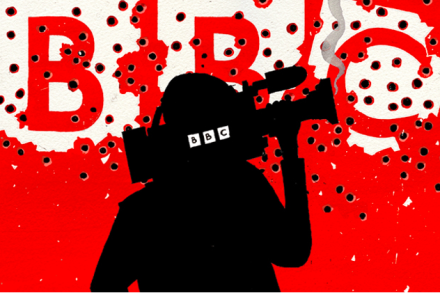
One of my favourite moments of viewing in this strange and dark year was the outgoing director-general of the BBC, Tony Hall, explaining why the Corporation had decided to drop the singing of Rule Britannia and Land of Hope and Glory from the Last Night of the Proms. The BBC had already, needlessly, dug itself a capacious hole and Tony had turned up with a big spade to continue the work. 'The fact is we have come to the right conclusion, which is a creative and artistic conclusion,' his emollience announced, his nose growing fractionally longer with every second of the interview.

Is levelling up still viable in the age of Covid?

10 min listen

More than 50 Tory MPs have signed a letter organised by Jake Berry's Northern Research Group, urging the government to not forget its pledge to level up the North. But does Boris Johnson need to recalibrate his ambitions in the age of Covid? Cindy Yu talks to James Forsyth and John Connolly. Tell us your thoughts on our podcasts and be in for a chance to win a bottle of Pol Roger champagne by filling out our podcast survey. Visit spectator.co.uk/podcastsurvey.

Boris Johnson’s Blue Wall rebellion isn’t going away

Boris Johnson must have been hoping that his troubles in the north were over, after his scrap with Andy Burnham was resolved last week and Greater Manchester moved into Tier 3 coronavirus restrictions. It appears though that it’s not only the metro mayors in the north that have the capacity to cause the Prime Minister headaches. Last night, the newly formed Northern Research Group – a ‘trade union’ for northern Tory MPs founded by the former minister Jake Berry – wrote to the Prime Minister, calling on him to not forget his promises to ‘level up’ the region.

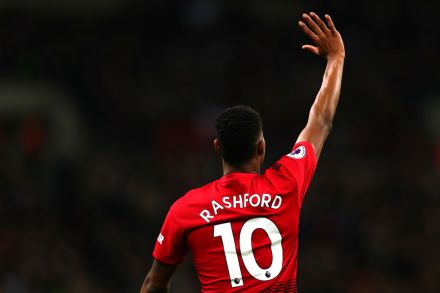
Do the Tories even know why they’re fighting Marcus Rashford?

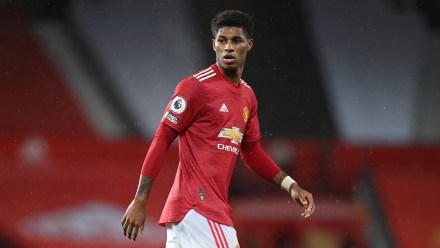
What is the Conservative case for facing down Marcus Rashford on free school meals during the holidays? Ask a handful of Tory MPs, including the Prime Minister, and they'll throw out a contradictory mess of answers. Many of those who are most uneasy with the way the government has refused to U-turn on the matter suspect it is merely the Treasury trying to draw the line after an endless splurge of spending over the past few months. But they are uncomfortable that this is where the line has been drawn. Rows about children always get cut-through in politics. Rows about children and food even more so. You don’t have to have a particularly long memory or good knowledge of niche facts about the 1970s to recognise the line ‘Margaret Thatcher, Milk Snatcher’.

Why Boris shouldn’t back down on free school meals

How easy it has been for the government’s opponents to leap on the bandwagon of Marcus Rashford’s campaign to extend free school meals through the holidays. Nothing is more guaranteed to stir up emotion than the Dickensian charge that the government is out to ‘starve’ children – while MPs guzzle down subsidised booze in the House of Commons. Yes, the amount of money required to provide meal vouchers throughout the holidays pales into insignificance when compared with the shameless waste of Boris Johnson’s government – not least the £12 billion frittered on a test and trace system which government scientists say is making only a marginal difference on infection numbers.

Covid or no Covid, social distancing could be here to stay

Throughout this year, the biggest worry for healthcare planners has been what happens if a second wave of Covid-19 coincides with a winter flu epidemic. We are now in what looks like a second wave of Covid-19 – and October is the month when flu cases tend to start rising. So are we on the edge of a vast deep abyss? Not if the experience of the southern hemisphere winter is anything to go by. A paper in the Lancet led by the Medical Research Institute of New Zealand analyses this year’s influenza season – and observes that it was virtually non-existent.  The researchers looked up cases of flu reported on FluNet, the global influenza surveillance and response system and found remarkably low levels of the disease this year.

Is it time for Labour to give up on the Union?

Is Labour finished in Scotland? There has been an assumption by many, particularly those in England, that the SNP behemoth will start to roll back at some stage; being in government in Holyrood will inevitably cause political gravity to take hold. Yet the SNP’s political humbling seems more remote than ever before, with a large gain in Westminster seats in December combining with huge polling leads for both themselves in Holyrood elections and for their side of the independence question itself. I believe Labour needs to strategically give up on Scotland – at least for now – if it wants to govern after the next general election and indeed, give themselves any prayer of winning big again in Scotland anytime in the future.

Covid-19 and the victory of quantitative easing

Crises often lead to new paradigms. The politicians of the day try to repair the damage, learn lessons and prevent recurrence. Frequently, they start by strengthening international institutions, or creating new ones. That has not happened over Covid. The international body which should have been most closely involved, the World Health Organisation, has been feeble. When he laid into the WHO, Donald Trump was criticised. For once, that was unfair. Even Mr Trump is not always wrong. That said, he is the most prominent example of the political-health epidemic which currently afflicts the West: weak leadership. None of the major Western countries has an effective head of government. This is depressing, and dangerous. But in the UK, one thing has gone right.

Was the NHS overrun by Covid during lockdown?

The decision to implement lockdown was inspired partly by the appalling scenes from Lombardy, where hospitals were overrun and dying patients left in corridors. In London, ministers were terrified by the prospect of the same happening here. Today's Sunday Times has published a long investigation from its Insight team looking at the Covid disruption in hospitals, which makes for disturbing reading. The NHS, it says, faced "an unmanageable deluge of patients" during lockdown, and it offers several examples of things going badly wrong. As we debate whether the NHS may be overwhelmed now - and what steps are needed to prevent this - it makes sense to ask how close the it come to finding Covid unmanageable the first time?

Sunday shows round-up: Brandon Lewis defends refusal to extend free school meals

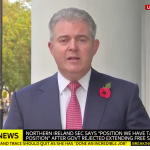
Brandon Lewis - Our position on free school meals 'is the right one' Manchester United footballer Marcus Rashford's campaign to extend the provision of free school meals over the school holidays has seen the government facing considerable criticism, with Labour forcing a vote on the issue in the House of Commons last Wednesday, which was defeated by 61 votes. A rift has even developed within the Conservative party itself, with Robert Halfon, chair of the Education Select Committee, writing in the Spectator on the conservative case for the extension. Sophy Ridge asked the Northern Ireland Secretary Brandon Lewis why the government was holding out against the campaign: https://twitter.com/RidgeOnSunday/status/1320299437730746370?

Keir Starmer needs a reshuffle to win back the Blue Wall

The most important fact about British politics is also the most mundane: the next general election is an awfully long way off. Given the extraordinary events we are living through, it is sometimes tempting to forget this and to suppose that a big political moment in any given week is going to have transformative consequences. I have previously referred to outbreaks of this syndrome as flare-ups of ‘that bloke who drove to Durham that time’. This is in honour of all those pundits and MPs (including Tories) who claimed, ridiculously, that the Dominic Cummings saga was a game-changer that was bound to feature as a top cause of voter outrage with the government come the next election. In fact, we all need to slow down.

Will there be a ‘special relationship’ under a Biden presidency?

19 min listen

Many on this side of the pond and on the stateside believe that there is a natural affinity between Boris Johnson and Donald Trump. So what will Anglo-American relations be like under a President Biden? Cindy Yu talks to James Forsyth and Sir Christopher Meyer, former Ambassador to Washington, about the opportunities and the pitfalls.

Moonshot testing is the only way to escape this mess

On Covid, there is a basic question: what is the government's strategy? No one seems to know what ministers are doing and why. But how could we? Neither do they. The lockdown approach is based on a premise, which has turned out to be false: that we could suppress and eliminate the virus – or at least keep it under control until the arrival of a vaccine. But there is no reason to believe that there will be a vaccine any time soon. Pharmaceutical companies have spent billions on research into vaccines for HIV and the common cold. Thus far, those efforts have been unavailing. If a Covid vaccine were discovered – and that is a huge if – it might become available among the ruins of the British economy.

The conservative case for extending free school meals

What do Conservatives care about? First, high-quality education and academic attainment. Second, value for money for the taxpayer. Third, (unless you are an arch-libertarian) recognition that the battle that must be won is not between big government or small government, but good government. Combating child hunger should, therefore, be a cause that all Conservatives can embrace. That should include the temporary extension of free school meals over the holidays while (and only while) the economic impacts of the pandemic continue to be felt. That’s why I voted against the government on Wednesday evening in favour of the proposal.