Politics

Read about the latest political news, views and analysis

Boris Johnson is the big winner in this presidential election

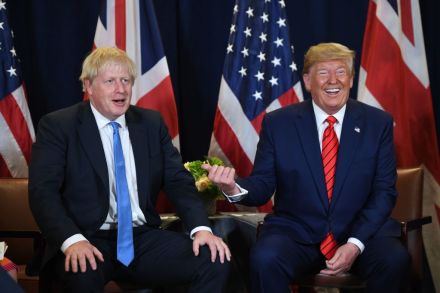
The US presidential election currently sits on a knife’s edge. It could go either way, and if you were in Trump’s camp right now, you might be justified in feeling optimistic. It wasn’t supposed to be this way – the polls yesterday had Biden up nine points nationally, and ahead in almost every major battleground state. But it could have real repercussions for British politics. When the dust settles – regardless of whether Biden or Trump is declared the eventual winner – this result should be very good news for Boris Johnson. Not because of Brexit or US-UK relations, but because of something much more basic and long term. First of all, let’s address the polling issue.
Lame-duck Trump has plenty of time to cause trouble

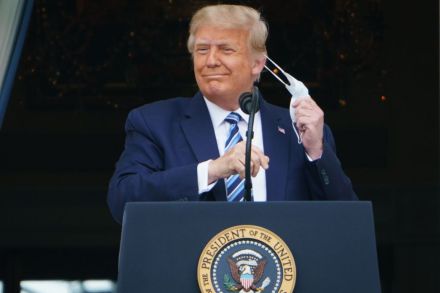
Making political predictions can be about as foolhardy as walking into a Las Vegas casino and predicting success at the blackjack table – better to pipe down, be humble, and watch how the action develops. But if there is one thing we can bet our money on, it’s that a defeated Donald Trump (assuming, of course, he will be defeated tonight) will still have quite a lot of time to enact policies and make history before vacating the Oval Office. There is a popular assumption that U.S. presidents who will return to normal life in late January are lame-ducks twiddling their thumbs for the remainder of their terms. History, however, demonstrates how wrong that assumption is.

The BBC chairman stitch-up

The best way to understand contemporary Britain is to stop thinking of it as a liberal democracy. If we lived in Russia, Hungary or Venezuela we would have few problems in understanding the manoeuvrings around the BBC. The governing clique wants the state broadcaster to be run by a fellow traveller, who has paid his dues by giving it money, and shown a willingness to conform by subscribing to its ideology. What else do you expect? In the case of Britain, the Johnson government is briefing it wants to appoint one Richard Sharp as chair of the BBC. Never heard of him? Then, dear reader you clearly don’t move in the right, right-wing circles. Its first choice, until he dropped out, was Charles Moore, of this parish.

Douglas Ross’s criticism of Boris is no mistake

It's not uncommon for Conservative politicians to complain privately that Nicola Sturgeon has proven herself to be a better communicator than Boris Johnson during the pandemic. However, it is unusual for a Tory to say so publicly. This is what Douglas Ross did this week in an interview for ITV News.

Is mass testing the way out of lockdown?

16 min listen

As England heads into a second lockdown, today brings a glimmer of hope. Liverpool will be the first UK city to undergo mass testing, including a fast turnaround saliva test. John Connolly talks to Katy Balls and James Forsyth about whether Moonshot, this time around, is more realistic. Tell us your thoughts on our podcasts and be in for a chance to win a bottle of Pol Roger champagne by filling out our podcast survey. Visit spectator.co.uk/podcastsurvey.

Mark Drakeford still has the support of Welsh voters

In the current circumstances it is strange to recall that, until very recently, a common complaint of devolved politicians in Wales – as well as academics studying devolved politics – was a lack of media attention and profile. The ill-wind of Covid-19 has blown few people much good, but has unquestionably done a lot to raise awareness of some of the realities of devolved government. There has been plenty of evidence in the past that many people in Wales were unaware that even health – on which the Welsh Government spends the majority of its budget – was devolved. Meanwhile, for his first year in the job Welsh First Minister Mark Drakeford was ‘Dr Who?

What do the final polls say?

20 min listen

With Americans heading to the polls on Tuesday, the final polls continue to give Joe Biden a clear lead. What do they say, and what are the early signs on the night that his support might not be as strong as expected? Freddy Gray speaks to YouGov's Marcus Roberts.

Johnson lays out the lockdown exit strategy

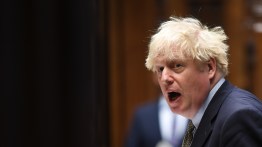
Boris Johnson’s statement to the House of Commons this afternoon was a reminder of how much more difficult this second lockdown will be politically for the government. Before he could begin, he had to sit through the Speaker ticking the government off for the fact that news of the lockdown had leaked to the media on Friday night. Johnson’s statement was very similar to what he had said at Saturday’s press conference. But at the end, he was clearer about what the government’s exit strategy was. He said that its plan was to use mass testing to stay on top of the virus once this England-wide lockdown has ended. Now, given that test and trace was meant to help prevent a second lockdown, there is understandable scepticism about this plan.

If anything is essential, it’s worship

That the Church of England shall be free, and shall have all her whole Rights and Liberties inviolable. There are few clauses of Magna Carta that are still in force today. Most have been whittled away by the stultifying hands of generations of bureaucrats. But one clause still stands in its in 800-year-old majesty: that the Church of England shall be free. (I realise that my Roman Catholic readers might quibble about what was meant by the Church of England in 1217, but I ask you to bear with me). Freedom of religion is a cornerstone of a free people. It stands at the heart of every declaration and charter of rights. It should be dispensed with only under the gravest of circumstances and with the heaviest of hearts.

Why Labour are focusing their attacks on Rishi Sunak

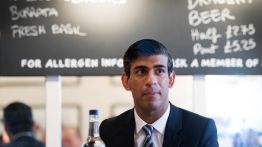
Which Tory politician is Labour most afraid of? While it's Boris Johnson who Sir Keir Starmer most regularly goes up to bat against at the despatch box, these days Her Majesty's Opposition appear most focused on criticising Rishi Sunak. Take Starmer's speech this lunchtime to the Confederation of British Industry. While the Labour leader criticised the Prime Minister for failing to learn from coronavirus mistakes, it was Sunak who bore the brunt of his attack lines: 'Make no mistake, the Chancellor’s name’s all over this. His decision to block a circuit breaker… will now mean that businesses have to close for longer. More people will lose their job. And the public finances will be worse than they needed to be.

Farage will make Boris regret his panicky second lockdown

During the 2015 general election campaign, when I was directing operations at the London HQ for Ukip, I had an 'absolutely brilliant' idea. The next day Nigel Farage would be campaigning on the Isle of Thanet, in Kent, where he was standing for election. On our grid, it was earmarked to be Small Business Day – designed to showcase the party’s manifesto focus on the self-employed and SMEs, aka 'the backbone of the British economy'. My plan? During his campaigning, Nigel should visit a butcher, a baker and a candlestick-maker (as mentioned in the nursery rhyme ‘Rub-A-Dub-Dub’). A suitable butcher’s shop and a bakery near to his route were swiftly identified.

Farage’s Reform party won’t succeed – but may end Boris’ time as PM

Nigel Farage has decided to soft reboot the Brexit party. This 'new' party will be anti-lockdown, anti-quango, anti-House of Lords, with a lot of talk about illegal immigration along the way. Particularly in an age where populism appears to be on the wane, the Reform party will only appeal to a niche audience. Will it get more than eight per cent in the polls? It's hard to see how. The party will struggle to manage to scale the boundaries the voting system pits against small parties and win a seat in the House Commons. Even at local level, they won't do all that well. But as Ukip did, Reform might just change everything in British politics. Passionate anti-lockdown sentiment is only felt by a small minority.

Farage’s anti-lockdown party spells trouble for Tories

As the Tory rebellion over the government's lockdown plan grows, Nigel Farage has entered the fray. The former Ukip leader is to relaunch the Brexit Party as a new force in the coronavirus debate. The outfit will be renamed Reform UK and promises to provide a counter-voice to the two main parties' support for lockdown as a way of tackling coronavirus. Farage's party will instead argue for a policy of 'focused protection' from coronavirus for the vulnerable.  The news of Farage's plans has been met with surprise — and even laughter — in some quarters. Several Tory MPs have been quick to dismiss it as Farage needing a hobby on the basis that his ally Donald Trump could be out of the White House soon.

Why has Boris closed the churches?

This morning, my son, who’s 17, was turned away from our local church. The designated spaces for people attending mass were full. He tried to book online at the church down the road - they were full too (and last week they turned my daughter away). It was too late to make an online booking for the lunchtime mass at the London Oratory, but the reservations system for the tea-time mass was still open, so he’s booked that, on a system that hilariously resembles the booking system for a commercial theatre, except that it concludes, which they don’t, with God Bless You.

Backsliding on a lockdown end-date has begun already

Will England’s lockdown end on 2 December? Even before this morning’s media round there was good reason to suspect it might not. The first national lockdown - we were originally told - would be for three weeks, with the explicit aim of building more capacity in the National Health Service. But the goalposts shifted and three weeks turned into more than three months: despite daily Covid deaths peaking in April, pubs and restaurants didn’t reopen until early July. Weeks later gyms and other leisure sectors followed, and public transport guidance changed to encourage employees back to their offices.

Instead of lockdown, let’s create a National Shielding Service

So what would you do? That was the question that cropped up on my Twitter timeline after I’d sent out various tweets condemning the shambolic decision by Boris Johnson to order another England-wide lockdown. I noticed the same question in the replies to an anti-lockdown tweet sent out by the Mail on Sunday’s Dan Hodges too. And it is a fair one that I think deserves an answer from commentators used to throwing rotten tomatoes at the stage but seldom willing to climb up on it. So here is mine: First, it is too late to call off the lockdown now, as preparations for another approach will take some time. So point one is that we must now go with the lockdown until December 2, but we should assert that it will end then and it will be the last one.