Politics

Read about the latest political news, views and analysis

Can Goodwill defeat the Brady bunch?

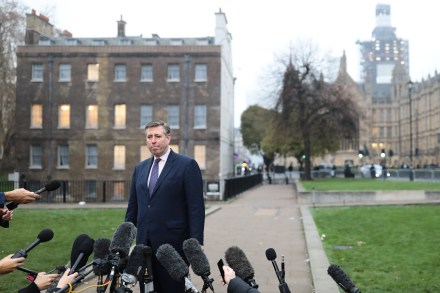
There have been few constants in British politics this past decade but Sir Graham Brady has been one of them. Elected chairman of the 1922 committee of backbench Tory MPs in 2010, Brady has served continually ever since – barring a brief moment of madness to consider a leadership bid back in the crazy days of 2019. Tough, independently-minded, experienced – he is to many what a 1922 chair should be. But now Brady faces a challenge in the form of onetime immigration minister Robert Goodwill. The latter is seen as a more congenial figure to some, in contrast to Brady’s very public past interventions on Europe, HS2, the badger cull and now Covid lockdowns.
Boris’s Tory enemies don’t know how lucky they are

It is often said that most Conservative MPs have a highly ‘transactional’ relationship with Boris Johnson. The inference is that in an ideal world they would not choose to be led by someone they regard as having far too many foibles and shortcomings and will only tolerate him being PM while he continues to be a winner. The Times political commentator Rachel Sylvester set this out fluently during an appearance on Channel 4 News at the height of the ‘curtaingate’ affair last month.

In praise of Kate Forbes’s Christian faith

Politics tends to attract people who consider themselves and their every mundane word and deed an example of great bravery. Like journalism and entertainment, it is an industry constructed around the pleasing myth that, whatever level you’re working at, you are engaged in the business of saving the world. Yet few politicians say much today that is courageous, or even all that original. When every dissenting view, colourful remark, or provocative thought brings with it the threat of cancellation, you have to console yourself with the fiction that saying the same thing as everyone around you is a courageous feat. So when I say that Kate Forbes has done something courageous, I say it because she has done something no one around her is doing.

Pro-choice activists shouldn’t celebrate Roe v Wade

A striking curiosity of American life is that the names of legal cases can insinuate themselves into everyday dialogue. None more so, of course, than Roe v Wade, the 1973 decision where a majority-liberal Supreme Court extracted from the Constitution’s protection of life, liberty and property a constitutional right to abortion: absolute in the first trimester, qualified in the second, and, in rare cases, even in the third. In a 1992 fine-tuning exercise, the rule was re-written as a right to abortion unless and until the foetus was viable at about 24 weeks. But the principle remains. Southern and rural states always saw Roe v Wade as a liberal aberration. Three years ago, Mississippi, where public opinion remains obstinately pro-life, threw down the gauntlet.

A nuclear crisis is closer than you think

It has long been widely accepted as orthodoxy that the world was saved from nuclear war during the Cuban Missile Crisis because of the wisdom of John F. Kennedy and the diplomatic backchannel his aides had with Soviet leader Nikita Khrushchev. But this is only half true. The Soviet sources that have emerged since the end of the Cold War as well as recently declassified KGB archives suggest that, more than anything, we were saved from nuclear annihilation by sheer luck. In the late hours of 27 October 1962, the crucial day of the crisis, American ships targeted a Soviet nuclear-armed submarine with practice depth charges, forcing it to surface. A negotiation by means of searchlight signals began.

The future looks bleak for Tory free-marketeers

The free-market Tory right’s victory on the Australia trade deal obscures the fact that the economic direction of the party has turned against them since the Brexit vote. As I say in the Times today, this is a big-spending Tory government that believes in an active role for the state in fostering innovation and driving growth. As one cabinet minister puts it, 'It is a kind of Faustian bargain. The Tory right defeated the One Nation Tories on Europe but had to become One Nation Tories on the economy.' There are several reasons why Brexit hasn’t ushered in the shift to the right on economics that many hoped (or feared). The electoral coalition that delivered both the referendum and the Tory majority in 2019 is not a libertarian one.

Why Boris shouldn’t be optimistic about the Bolton Covid data

I am bemused by Boris Johnson’s optimism about the prospects for full unlocking on 21 June, based on the data he says he is seeing. Because the government’s own daily published data is showing worrying trends for the Indian variant. For example, there were 280 Covid infections reported for Bolton alone yesterday, 10 per cent of the UK total, and as you can see here the trend is steeply upward: That would be less worrying if there was also a steep rise in Covid testing in Bolton. But there isn't. As you can see here, the ratio of positive test results to tests carried out in Bolton – the positivity ratio – is holding fairly steady at about 7.5. It is obviously encouraging that there has not been a sharp associated rise in hospitalisations.

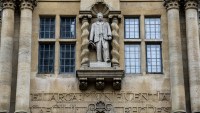
The Oriel dons are right: Rhodes should not fall

Cecil Rhodes’ contemporary, Rudyard Kipling, put it best: 'If you can keep your head when all about you are losing theirs…' That Rhodes’s statue will not fall is the result of a serious, difficult, but careful collegiate decision by the board of 47 fellows of Oriel College. It is good that Oriel dons kept their collective heads, for all about them – as Policy Exchange’s History Matters Project has documented in recent months – are institutions far too readily acquiescing to noisy activism, demanding that condemnation, denunciation and erasure is the only way to go. 'Retain and explain' is a far better path to follow than the one known as 'cancel culture'. What does 'retain and explain' mean in practice?

More devolution won’t save the Union

Yesterday, Lord Dunlop – the author of the Dunlop Review into the British state and devolution – appeared before a joint meeting of four Select Committees. It was the first time the Public Accounts and Constitutional Affairs Committee (PACAC), Scottish, Welsh, and Northern Irish committees had sat together, which was fitting given his remit. But the resultant Q&A only highlighted the ongoing tensions in the government’s approach to the Union. Dunlop is an advocate of what he calls a ‘cooperative Union’. His emphasis is on getting the various parts of the governments of the UK to work together, and building on the past two decades of devolution.

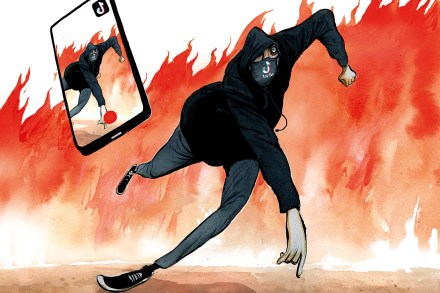
TikTok intifada: what’s the role of new media in old conflicts?

34 min listen

In this week’s podcast, we talk to James Ball, author of this week’s cover story on the ‘TikTok Intifada’ about the themes he uncovers in his analysis of the impact of social media on the conflict in the Middle East. The conversation with James continues with our next guest, Professor Gabriel Weinmann of Haifa University in Israel, the author of an in-depth report on the rise of incendiary, unregulated material on TikTok. As Arab and Israeli youngsters create and consume violent footage on the app, is it time that it was reined in - or is it a lost cause? (00:55)'This is a platform that targets young audiences.

Have the Lidl free marketeers won the day?

12 min listen

Despite some misgivings in Cabinet, free marketeers seem to have won the argument on the Australia trade deal, one of the first major deals to be struck after Brexit. Katy Balls talks to James Forsyth and Isabel Hardman about the latest discussions in government.

Brussels should give ground on the Northern Ireland Protocol

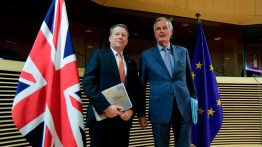
The dominant issue in UK/EU relations in the coming months is going to be Northern Ireland. The UK is trying to ‘sandpaper’ down the protocol to lessen its impact on the ground in Northern Ireland. But the EU is resisting, pointing out that the UK signed up to the deal in the first place. In an interview in this week’s Spectator David Frost admits that ‘The problem we’ve got is that the boundary for trade purposes is proving more of a deterrent to trade and more of a generation of trade diversion than many people expected.’ Frost’s deliberate use of the phrase ‘diversion’ is significant.

The rail revolution is nothing of the sort

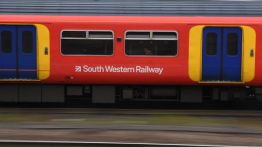
The government says it is ending a quarter of a century of the ‘fragmentation’ of the railways by gathering all mainline services into an entity called Great British Railways. That will please some critics of privatisation, but has the government actually renationalised the railways, as the unions, the Labour party and – to judge by some opinion polls – the public want? No, but it might superficially look like it. Gone will be the plethora of liveries, along with names such as Arriva, Great Western Railway and East Coast. The familiar old British Rail symbol of an arrow pointing in two directions will return. But anyone calling for the common ownership of the means of production will be left disappointed.

Has India’s second Covid wave peaked?

While the Indian variant continues to dominate the headlines, India itself seems to have dropped out of the news a bit. What is going on there?  It was reported yesterday that India notched up a record number of Covid deaths on Tuesday – 4525 – which indeed was the record of any country during the pandemic. However, that number needs to be put in the context of the country’s population of 1.3 billion. Grim as it is, it works out at 3.5 deaths per million. This is a fraction of the 27.6 deaths per million recorded in Britain on 20 January 2021. Tuesday’s figure is likely to be the high tide mark in India’s second wave of Covid Tuesday’s figure is also likely to be the high tide mark in India’s second wave of Covid.

Why is this Labour MP attacking police for enforcing the law?

The most outlandish political joke of the moment is the idea that the Labour party believes in strong border controls. Keir Starmer gave it a run out in PMQs yesterday, berating Boris Johnson by observing:  'Our borders have been wide open pretty much throughout the pandemic.' Yvette Cooper, chair of the Home Affairs select committee, has also been unleashing her trademark owlish looks of disapproval at ministers over an alleged lack of stringency in Covid-related immigration measures. During the Queen’s Speech debate she complained:  'For months on end there were no public health border measures in place at all.

Why minsters are more optimistic over June 21 unlocking

Will the Indian variant derail the government's roadmap for ending lockdown? That's the question that has been asked multiple times in Whitehall this week. After an increase in community transmission was reported in parts of the North West including Bolton, the Prime Minister set the cat among the pigeons on Friday by suggesting it could impact the planned easing for June 21. Since then, there have been plenty of scientific advisers taking to the airwaves to warn of trouble ahead. However, as I write in this week's magazine, there is increasing optimism across government that the roadmap will be able to proceed. As things stand, Johnson is unpersuaded that the data suggests there will have to be a delay. Instead, he thinks some of the gloom has been overdone.

Trans offenders are skewing crime statistics

Tonia Antoniazzi’s speech in the House of Commons this week was remarkable, not because of what she said – the need for accurate recording of crimes according to sex – but because she had the courage to actually say it. After the ongoing intimidation of Rosie Duffield, it is a brave Labour MP who stands up and defends the right of members of her sex not to be blamed for the crimes of the other sex. Antoniazzi pointed out that where particular offences are very rarely committed by women, the addition of just one or two people can have a significant impact on data. Antoniazzi alluded to the case of transgender fell-runner Lauren Jeska who was jailed in 2017 for the attempted murder of Ralph Knibbs, UK Athletics' head of human resources and welfare.