Politics

Read about the latest political news, views and analysis

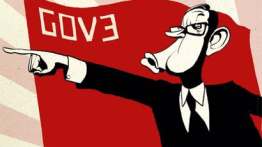
Can Gove remake conservatism?

16 min listen

Michael Gove has been tasked with transforming levelling up from a soundbite to an agenda. What will this look like? And what Michael Gove will we get, the liberal reformer or big state lockdown supporter? Katy Balls is joined by Fraser Nelson and James Forsyth to discuss.
Michael Gove’s big challenge

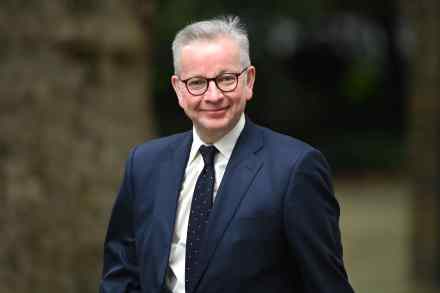
Michael Gove is now in charge of one of the government’s biggest short-term problems: what to do about its proposed planning reform, which are facing huge opposition from Tory backbenchers, as well as levelling up, the government’s long-term aim. Remember that there were more second homes bought in the decade after the financial crisis than there were new homes built I write in the Times today that those MPs who have discussed planning with Gove in recent weeks have been struck by his emphasis on the fact that only 15 per cent of the house-price inflation of the last two decades comes from a lack of supply. This suggests Gove thinks that tweaking rules on credit and buy-to-let is as important, if not more so, than using more land for development.

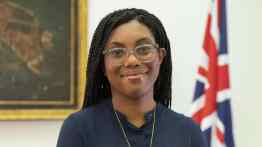
Is Kemi Badenoch’s leaked audio a set-up?

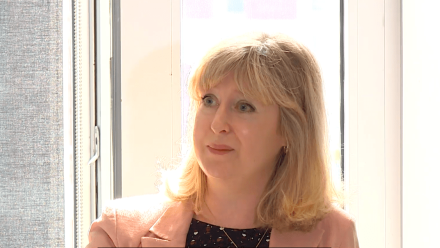
The headline reads, ‘UK Equalities Minister Goes on Anti-LGBTQ Rant in Leaked Audio'. Oh dear, I thought. As a lesbian and a harsh critic of the Tory government, I wondered what had been said. I scoured the piece in Vice, expecting something along the lines of ‘pervert’ and ‘unnatural’ and something about how we will be marrying our vacuum cleaners next. But it was all rather tame and boring. Badenoch said: It’s now, you know like, it’s not even about sexuality now, it’s now like the whole transgender movement, where, OK well we’ve got gay marriage and civil partnerships, so what are transsexuals looking for?

The vanishing presidency

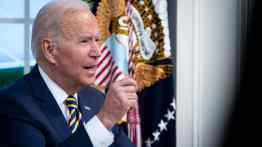
Joe Biden is beginning to feel like an ex-president after only nine months in office. The last two Democrats to occupy the White House, Bill Clinton and Barack Obama, arrived with a spirit of renewal, not to mention tremendous legislative ambitions. Biden came in with a spirit of reversal: he was not Trump. His selling point was ‘competence’. Like Warren Harding a century before, he was meant to usher in a ‘return to normalcy’. After Covid and its economic consequences, after the riots that raged in the summer of 2020, normal sounded good enough. Yet that was more than Biden could deliver. What everyone had hoped would be the end of Covid has turned into an endless war on Covid instead: more masks, more shots, more closures.

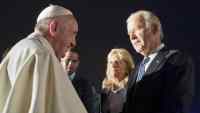
Has Pope Francis just thrown Joe Biden under the bus on abortion?

18 min listen

Say what you like about Pope Francis, but he's incapable of giving a boring in-flight interview. On Wednesday, coming back from Hungary and Slovakia, he was asked about the problem of pro-abortion Catholic politicians receiving Holy Communion. He immediately launched into a ferocious denunciation of abortion, describing it as homicide, saying there was no middle way and stating that support for abortion was grounds for 'excommunication'. Francis then slightly qualified this by explaining that these 'excommunicated' Catholics needed to be lovingly shown the error of their ways, but it was hard to escape the obvious conclusion.

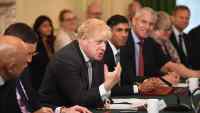
Boris chairs the new Cabinet – what’s next?

10 min listen

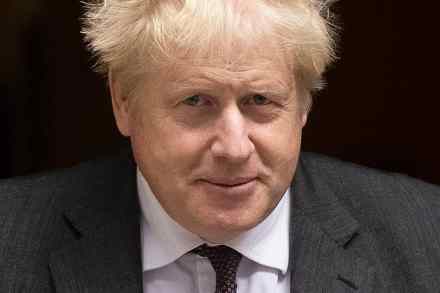
As Boris Johnson today chairs the first meeting of his new cabinet, he's focused on delivering on his levelling up agenda. What's the plan? To discuss this, the ongoing junior ministerial appointments and the Liberal Democrat conference this weekend, Katy Balls speaks to James Forsyth and Isabel Hardman.

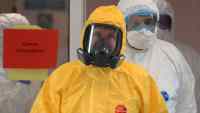
Putin’s Covid cocoon is a sign of his terror

Although he has been vaccinated, Vladimir Putin is self-isolating for at least a week after ‘dozens’ in his entourage came down with Covid. He is apparently showing no signs of being infected. And perhaps no wonder, as even by the standards of his usual presidential protection, since the start of the pandemic Putin has been shielded within a formidable bio-security regime. Those due to meet him face-to-face are tested, required to isolate beforehand, and – if visiting him either in the Kremlin or his mansion outside Moscow – has to pass through a tunnel fogged with aerosolised disinfectant and bathed in germ-killing ultraviolet light.

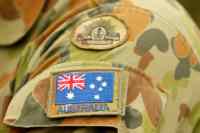
Australia and the new special relationship

The awkwardly-named AUKUS agreement reflects Washington’s escalating concern about China’s dominance in the Indo-Pacific. It signals London’s determination to be more, not less, involved in the global community after Brexit and the retreat from Afghanistan. Ultimately, however, this deal is about Australia. Few countries are as pivotal to regional security yet so poorly understood as such, at home and abroad, among commentators, politicians and policymakers. Australia’s standing in security terms is intimately linked to its alliance with the United States, but this relationship is not as one directional as some Australian critics believe.

Boris Johnson’s government shake-up continues

After a rather quiet day, the reshuffle is back on, and Boris Johnson is proving to be even more brutal with the more junior ministerial jobs than he was in his clear out of the cabinet. So far, the following have left government: Jesse Norman Caroline Dinenage Luke Hall Graham Stuart James Duddridge Matt Warman John Whittingdale Nick Gibb And these are the moves and promotions within government:TreasuryLucy Frazer is financial secretary, moving from Justice. Helen Whately is exchequer secretary, moving from Health and Social Care. Home OfficeRachel Maclean has been made a parliamentary under sectary at the Home Office, having been moved from Transport. EducationRobin Walker is a minister of state, moving from Northern Ireland.

What the Aukus pact says about Britain’s foreign policy

12 min listen

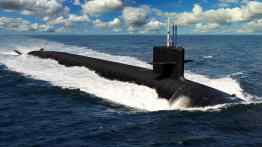
With the Commons still reeling from the reshuffle, the UK, US, and Australia have formed a new security alliance, the Aukus pact. Many have seen this as early preparation for a more aggressive China, as the US nuclear submarines being gifted to Australia will be able to reach territories like Taiwan without refuelling. To discuss the pact, and the fallout from yesterday's reshuffle, Isabel Hardman talks to Katy Balls and James Forsyth.

What MPs drank as Kabul burned

There were many fine speeches made in last month's emergency debate on Afghanistan. Peers and MPs queued up to deliver their musings on the Taliban takeover, in spite of twenty years of blood and treasure. From rising stars to extinct volcanos, backwoodsmen to bootlickers, the tributes poured fourth with liberal mentions aplenty of Vietnam and betrayal. But such speech-making is thirsty work it seems. For while the bars of the House of Commons remained closed on the day of the debate, no such restrictions existed in the Lords where peers and MPs could freely wander in throughout the afternoon's oratorical marathon.

Payday: who’s afraid of rising wages?

45 min listen

In this week’s episode: is Brexit to blame for the rise in blue-collar wages? With labour shortages driving wages up, many have blamed Britain’s removal from the single market. However, this week in The Spectator, Matthew Lynn argues that shocks and price signals are how the free-market economy reorganises, and that we are experiencing a global trend just like America and Germany. Simon Jenkins, columnist for the Guardian, joins Matthew to discuss. (00:45)Also this week: the British Medical Association has dropped its opposition to assisted dying, but is euthanasia really a dignified and painless process? Dr Joel Zivot asks this question in The Spectator magazine, drawing upon his own experience as an expert witness against the use of lethal injection in America.

What the Aukus pact says about Britain’s foreign policy

While the foreign secretary changed in the last 24 hours, the most important announcement regarding the direction of UK foreign policy yesterday came outside of the reshuffle. Overnight, the UK, US and Australia announced a new defence arrangement – known as the Aukus pact – in the Asia pacific, which will see Australia build nuclear-powered submarines using US technology as well as collaborate on other technologies.  The Chinese government has been quick to criticise the move The purpose of this new arrangement? While the respective governments have not specifically said it, it's viewed as a counter to China that will see the three countries team up against Chinese aggression in the Indo-Pacific.

Watch: SNP health secretary slips up (again)

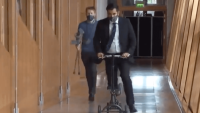
It's not been a great week for Humza Yousaf. The under-fire SNP health secretary has been a fixture of newspaper headlines this week over ambulance waiting times after telling long-suffering Scots to 'think twice' about ordering one amid pressure on the country's health service.  Humiliatingly, First Minister Nicola Sturgeon has today been forced to call in the British Army to provide 'targeted assistance' to alleviate such delays – an option that would not of course be available in an independent Scotland.To add injury to insult, the SNP apparatchik is currently forced to use crutches and a scooter since rupturing his achilles playing badminton during his self-isolation.

Is Harry and Meghan’s Time profile a parody?

Of course the Duke and Duchess of Sussex are named in Time magazine’s 100 most influential people of 2021. And of course their listing, which makes the publication’s front cover, is accompanied by a lavish citation and photos of the pair put together by Hollywood A-list stylists. Did we really expect anything less? Time truly has it all. First there are the photos. The couple are groomed beyond the imagining of mere mortals, their clothes carefully co-ordinated. They are artistically positioned in order to comprise both a beautiful image and a political statement. Yes, indeed! These are no ordinary celebrity snaps. They are Harry and Meghan’s meaningful portraits. The cover shot symbolises equality.

Sadiq offers Gove the trip of his life

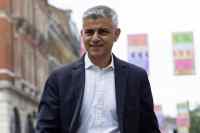
It's been quite the few months for Michael Gove. The Tory party's answer to Angela Rayner yesterday bagged himself another new title: Secretary of State for Housing, Communities and Local Government with added cross-government responsibility for levelling up and retaining ministerial responsibility for the Union and elections.  This comes after a summer where he announced his forthcoming divorce with longtime wife Sarah Vine and was spotted raving in an Aberdonian nightclub at 2 a.m. All this alongside a busy schedule of Whitehall commitments and evening receptions, where Gove is fond of making a joke or two. But now it seems the Great Poo-bah of the Whitehall jungle doesn't just get to dish it out; he has to take it too.

The aim of Boris Johnson’s reshuffle

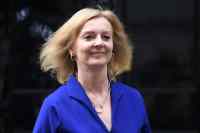
What was the purpose of Boris Johnson's third reshuffle since becoming Prime Minister? His first reshuffle on entering 10 Downing Street back in the summer of 2019 was all about sending a message over Brexit. The one in February 2020, after Johnson won a majority of 80 in the December snap election, was aimed at getting his new look government in place. This week's was about reform. The new foreign secretary Liz Truss is the big winner from the reshuffle The headlines over the reshuffle have largely focussed on who is in and who is out – of which there is plenty to digest.

The Tories need a new purpose

One of the things that distinguishes Boris Johnson from the last three Tory prime ministers is that he has a comfortable majority. This gives him a lot of flexibility. Unlike David Cameron, Theresa May or John Major, Johnson can handle a parliamentary rebellion of quite some size. Indeed, the 25 Tory MPs who in July voted against the cut to foreign aid would have wiped out any Conservative majority since the 1992 election. Until recently, Johnson hadn’t used his 80-seat majority much. He did take on large Tory rebellions over Covid powers, but the significance of these revolts was reduced by the fact Labour either abstained or backed the government on virus measures. ‘In the past it has appeared we don’t know how to use our majority,’ says one secretary of state.