Politics

Read about the latest political news, views and analysis

Will Boris’s crime crackdown backfire?

13 min listen

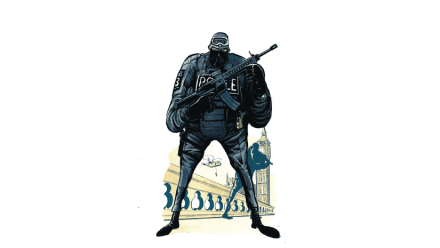
Boris Johnson is launching a week of crime-related government announcements. Tackling middle-class drug use tops the agenda today, and the Prime Minister watched police raid a home in Liverpool this morning as part of 'Operation Toxic' to infiltrate county lines drug dealing.But with a report from the Sunday Times revealing that traces of cocaine were found in several of Parliament's lavatories, and some Cabinet ministers having previously been asked about their own drug use before entering politics, could the plan backfire? Katy Balls speaks to Isabel Hardman and James Forsyth. On the podcast, James says: 'It is inevitably going to turn into every Cabinet minister and minister who does interviews on this being asked about their own personal drug use.

Exclusive: Tory Shropshire councillor defects to Reclaim

The Tories retained Bexley and Sidcup last week without too much trouble, holding the longtime safe seat despite the government's current troubles. But now, another by-election looms in a Conservative stronghold, where a shock upset may be even more likely.   For next Thursday is the contest in North Shropshire to find Owen Paterson's replacement, following the former cabinet's minister resignation in a high-profile sleaze scandal. And Mr S hears there is considerable discontent now building on the ground amid anger in the Tory shires over recent party blunders, rising taxes and an anti-politics sentiment gaining ground.

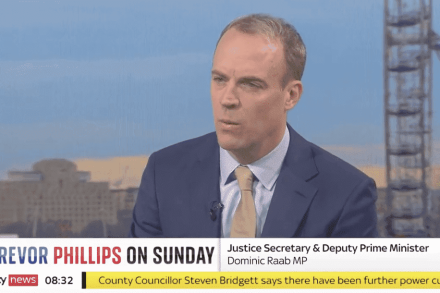
Sunday shows round-up: abused children need ‘maximum protection’ says Raab

Dominic Raab – Abused children like Labinjo-Hughes need ‘maximum protection’ The Justice Secretary undertook the government’s media round this morning. On Sky, Trevor Phillips began the interview by asking Raab about the tragic case of six-year-old Arthur Labinjo-Hughes, who was tortured and murdered by his father and stepmother last year.  Raab told Phillips that there would be a review as a result of the incident, amid the revelation that the safeguarding authorities in Solihull had not reported any concerns about Labinjo-Hughes’s situation. He also confirmed that there would also be a review into the sentences handed to Thomas Hughes and Emma Tustin, to ensure that they were not too lenient: https://twitter.

Why there is more Omicron than we know

Yesterday the UK Health Security Agency (UKHSA) announced it had identified another 26 Omicron cases, and the total number of cases in the UK had reached 160. The rate of increase from zero in little over a week seems significant. But the one thing we know is these official figures are a significant underestimate of how many cases are actually in the UK. Here’s why. Omicron is already with us in much greater size than we know. There will already be significant transmission within communities.

The SNP’s desperate bid to save sterlingisation

‘I hope the sterlingisation zombie now has a stake through the heart,’ tweeted SNP delegate Tim Rideout after getting his resolution on ‘The Scottish Reserve Bank Establishment Bill’ passed at his party’s conference last weekend. Rideout sits on the SNP’s policy committee and is part of a faction challenging the SNP leadership’s plan for Scotland to informally use the pound for a prolonged period after secession – a policy known as sterlingisation. This faction wants to see Scotland establish a new currency, controlled by a new Scottish central bank, as soon as possible after exit day. In his conference speech, Rideout was blunt.

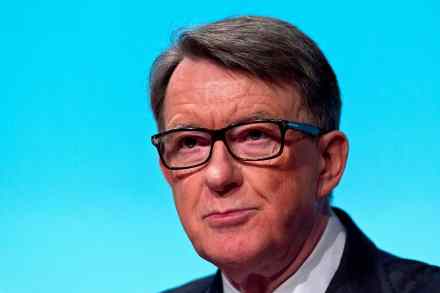
Lord Mandelson’s City outreach

‘We are intensely relaxed about people getting filthy rich’, once drawled Peter Mandelson, ‘as long as they pay their taxes.’ And it seems the socialist Svengali is practising what he preached, with his latest appointment at a new British bank. William Hague famously mocked the New Labour spin doctor for his many honorifics during the dying days of Gordon Brown’s government – ‘it would be no surprise to wake up in the morning and find that he had become an Archbishop’ – and now Mandelson has a new title to add to his collection.

The SNP’s mountain of mendacity

The Scottish National Party’s great and continuing success has been to mobilize a large part of the Scottish population to see England and the English as a more or less malign force. In this, the party has connected with and deepened strong currents of thought and belief in Scots culture, especially in the 20th century. The country’s most famed and lauded poet, Hugh MacDiarmid (Christopher Grieve), its most influential ideologist, Tom Nairn and its most prominent literary novelist, James Kelman have all adopted long-running acidic views of the southern neighbour.

Wolfgang Munchau, Andrew Watts, Hannah Tomes

19 min listen

On this week's episode, we’ll hear from Wolfgang Munchau on the political situation in Germany. (00:49)Next, Andrew Watts on his year long battle against a parking ticket. (11:01)And finally, Hannah Tomes on her love of Baileys. (15:33)Produced and presented by Sam HolmesSubscribe to The Spectator today and get a £20 Amazon gift voucher:spectator.

Should you snog a stranger this Christmas?

15 min listen

With the Omicron variant putting everyone on edge, there has been quite a bit of mixed messaging from the government about how we should all be conducting ourselves this festive period. With a bizarre emphasis placed on snogging - some preaching caution, others saying snog away.'I don't think I've ever heard people say the word snogging this much in my entire life.' - Isabel HardmanKaty Balls talks to Fraser Nelson, Isabel Hardman, and James Forsyth about the cabinet's conflicting advice and the politics of public displays of affection.Subscribe to The Spectator's Evening Blend email, from Isabel Hardman and Katy Balls, for analysis of the day's political news and a summary of the best pieces from our website. Go to spectator.com/blend to sign up.

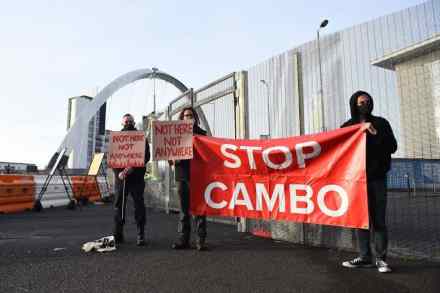
Why has Shell really decided to ditch the Cambo oil field?

One of the unfortunate side effects of a steeply rising oil price this year is that it seems to have undermined the potential profitability of the Cambo oil field off the Shetlands. Announcing this morning that it was pulling out of the project, in which it had a 30 per cent share, Shell said it had re-examined the figures and ‘concluded the economic case for investment in this project is not strong enough at this time.’ No, it doesn’t make much sense to me, either. If Shell was happy to go ahead with the Cambo project this time last year, when oil was $40 a barrel it is hard to see what has changed to make it less economic with oil at $70 a barrel and the longer-term outlook for oil prices much higher.

What’s behind the reduced majority in Old Bexley and Sidcup?

10 min listen

The by-election last night was a result for the Tories. However, their majority for this seat fell dramatically. Labour tried to badge it as good news for them, claiming that they are 'back in business'. But the poor voter turnout was more likely the reason for the fall in Tory votes rather than a swing in Labour's direction.With this win, will the Conservatives move on from the difficult month they’ve had? Perhaps not with more scandals appearing. Tory peer, Michelle Mone has just been accused of racism after some leaked WhatsApp messages show she told a man of Indian heritage that he was a ‘waste of a man’s white skin’.

Tories hold Old Bexley and Sidcup – with reduced majority

Boris Johnson can breathe a sign of relief this morning after the Conservatives held Old Bexley and Sidcup. In a by-election triggered by the death of the former MP and cabinet minister James Brokenshire, Tory candidate Louie French won over 50 per cent of the vote, with Labour coming in second. However, despite this victory, the Tory majority has been reduced from 19,000 to 4,478. Even taking into account the reduced turn out, the Tory vote share has fallen Both the Tories and Labour are claiming the result as a success this morning – with members of the shadow cabinet pointing to the swing towards Labour as proof they are back in business.

The Bridget Phillipson Edition

27 min listen

Bridget Phillipson is the shadow education secretary and MP for Houghton and Sunderland South. On this episode, recorded just before Labour's last reshuffle where Bridget was promoted, she talks to Katy about what it was like to go to Oxford from a humble upbringing, how Labour can win the next election, and why she didn't take career advice from school telling her to be a fence-builder.

Hospital pass: The NHS is on life support

41 min listen

In this week’s episode: Is the current NHS crisis a bug or a feature? In the Spectator’s cover story this week, our economics editor Kate Andrews writes about the state of the NHS and why even though reform is so clearly needed it's nearly politically impossible to try to do so. She joins the podcast with Isabel Hardman who is currently writing a book on the history of the NHS. (00:53)Also this week: How is the nation feeling about the Omicron variant? The news of the Omicron variant has not only worried the public about what may become of their Christmas plans, but the government has also reacted by bringing in new travel restrictions and mask mandates.

Boris’s festive fear

Until a few days ago, ministers could see how the government might regain its footing after several weeks of self-inflicted damage. The argument, as I say in this week's magazine, went like this: as Christmas approaches, voters will see that life in Britain — and specifically England — carries on with very few Covid restrictions whereas elsewhere in Europe more draconian measures have been imposed. This scenario seemed plausible. Austria was in lockdown and heading for compulsory vaccination; there had been rioting in Holland after the announcement of an 8 p.m. curfew and several German states had cancelled Christmas markets.

Will the UK copy Europe with new Covid restrictions?

11 min listen

A lot of news coming out of Europe this week. From French President Emmanuel Macron calling Boris Johnson a clown, to more extreme Covid prevention methods rolling out in Germany. Will Anglo-French tensions cool, boil or simmer? Are we going to see the return of talks about Covid passports and vaccine mandates? Isabel Hardman looks for answers to these questions with James Forsyth and Katy Balls. Subscribe to The Spectator's Evening Blend email, from Isabel Hardman and Katy Balls, for analysis of the day's political news and a summary of the best pieces from our website. Go to spectator.com/blend to sign up.

How will Boris respond to Macron’s insult?

French president Emmanuel Macron is reported in this week’s Canard Enchaîné – the French equivalent to Private Eye – to have called Boris Johnson a ‘gougnafier’. Gougnafier is an intriguing term with many linguistic roots. It is a nightmarish word to translate. Can you find one word in English to convey someone both rude and useless? That is what gougnafier means. A gougnafier is a boor. A cock-up artist. Someone vulgar. Someone lacking manners. This wasn’t merely a drive-by insult. It was a carefully judged expression of contempt. What does this presidential insult say about the degradation of the Anglo-French relationship to Cold War?