Music and Opera

Our curation of music and opera reviews

Music to write books by

I have been writing a book this summer, in the usual mad tearing hurry. (Much as I admire those who take four or five years to write one, I have to ask, how do you eat? This isn’t by any means a sensible way of making a living.) Intense workload, though, means music, and lots of it. Many writers simply cannot work with tunes blaring out of nearby speakers; I cannot work without them. Music masks my tinnitus and distracts the part of my brain that would otherwise be trying to distract me from my work. You know, the Facebook part. The videos-of-cats part. The Marks & Spencers chocolate-covered shortbread
I wish the cult of Frank Sinatra would end

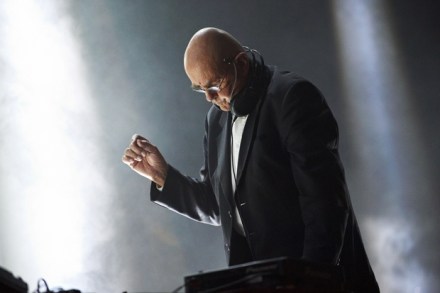
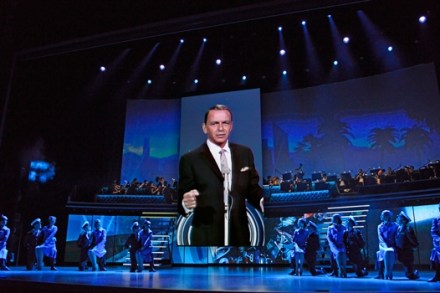
Walking around central London, I’ve been struck by how many shows Frank Sinatra has been performing in town recently. He played a string of concerts in July at the Royal Albert Hall (which as any schoolboy knows was actually named after Sinatra’s middle name), and he is currently performing an extended summer season at the London Palladium. Quite how Frank is going to cope this Friday evening, when this eternal Sinatra séance requires his spirit to put in an appearance as his life and music is celebrated at the Proms, at the same time as he gigs at the Palladium, I’m not sure. The good news for Sinatra fans is that

Orchestral infallibility

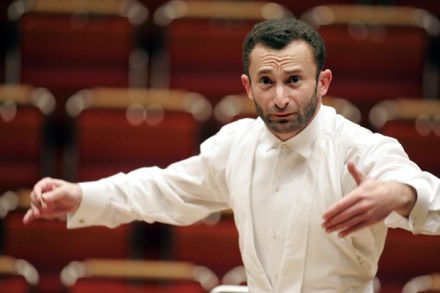
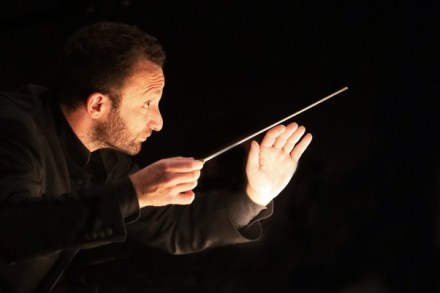
Watching the Berlin Philharmonic going into conclave to choose a successor to Simon Rattle — after countless hours of secret discussion they have chosen Kirill Petrenko — reminds one of little less than the election of a pope. In both cases the expectation is the same: the organisations are so iconic that they must continue into the future without a hitch and without question. Whatever sort of job they are doing, or have done, they have become too much a part of normal life to be abolished. Why is it that symphony orchestras of any standing are expected to survive indefinitely, where smaller musical organisations, though they may be just

Slash at 50: why is this rock god so underappreciated?

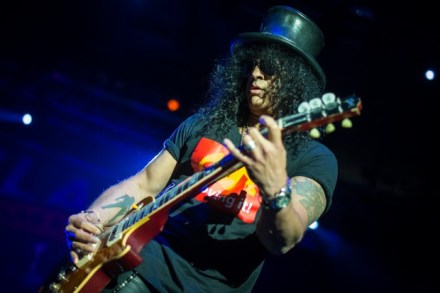
Saul Hudson, more commonly known by his childhood nickname ‘Slash’, turns 50 today. It is safe to say that the next 50 years of his life are unlikely to be quite as hectic as the first. The heroin-addicted lead guitarist of Guns ‘n’ Roses has settled into a routine of philanthropy and Angry Birds. He is always mentioned in magazines as one of the greatest guitarists of all time. The opening to ‘Sweet Child o’ Mine’ is routinely voted the best guitar riff ever. But the true extent of his genius — which stretches far beyond his ability to produce a nice tune — is still not fully recognised. Many in fact think he’s overrated. They say he didn’t do enough to transform the

Wish list

Compilation schompilation. Having been in music for as long as I have you would think I had a good idea how record companies work. I’ve made two compilations before. But it’s a whole new big thing now in the music world. Ministry of Sound have offices of people whose full-time jobs are about clearing tracks and licencing them for compilations. These are usually for dance music albums, very expertly mixed by specialist DJs. Mine was to be a bit different, spanning 50 years of music. We’d agreed on a three CD release. Ministry said just give us a wish list of around 100 or 150 tracks, and we’ll check on

He wuz robbed!

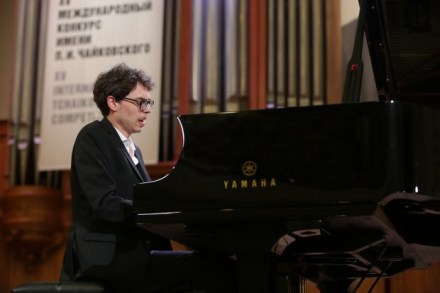
Lucas Debargue, a 24-year-old French pianist, came fourth in the finale of the Tchaikovsky competition in Moscow on 30 June, yet he’s the only competitor anyone is talking about. Why? The main reason is that they’re riveted by his backstory. Have you noticed how we all say ‘backstory’ these days, instead of boring old ‘background’? It’s defined as ‘the things that have happened to someone before you first see or read about that person in a film or story’. Neal Gabler wrote a book called Life: The Movie, about our entertainment-obsessed society’s urge to stretch and squash everything from terrorist attacks to an argument at the checkout into an imaginary

Rihanna's latest offering is the perfect anthem for contemporary feminism

Popular culture is all about the shock factor, especially when it involves female popstars. The late Eighties set a precedent for women making statements in their music videos. In 1989 Madonna broke taboos with an interracial love story, complete with burning crosses and a crying saint. A year later Sinead O’Connor was the first woman to cry in a music video. Since then pop-feminism has produced a steady stream of provocation, from the Spice Girls kicking girl-power in our faces, angry man-hating from Alanis Morissette to the independent women of Destiny’s Child. The noughties were pretty much a romp through string bikinis in preparation for Lady Gaga borrowing an outfit

Première league

This year the Proms are to stage 21 world premières and 11 European, UK or London premières. It is good to see the corporation continuing its mission to encourage new music, though some think they overdo it. I heard one of our leading keyboard players say that when he was asked to première a piece recently, he replied that he would rather dernière it. Clearly the BBC takes a more hopeful view. The most eye-catching new work in the series, leaving Whitacre out of it for now, will surely be the Fourth Symphony of our latest musical knight, Sir James MacMillan. MacMillan has described the piece as ‘abstract’ and ‘infused

The beat goes on

It’s rare that I see a piece about music that makes me want to cheer from the rafters and shake the perpetrator by the hand, but one such appeared in these pages last week on the subject of Ringo Starr, 75 this week. James Woodall, who may or may not be a Beatles tragic of the first water, argued that Ringo was a genius and that the Beatles were lucky to have him. True Beatles fans know this to be true and are enraged when anyone suggests otherwise. For years an urban myth had it that John Lennon, when asked if Ringo was the best drummer around, said that he

'A lot of bands know how to rock. Not many know how to roll': AC/DC at Wembley reviewed

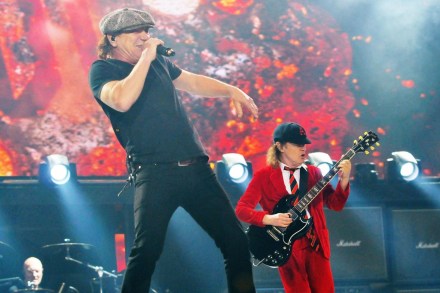
The main thing that strikes you as you watch AC/DC whip 70,000 people into a frenzy at Wembley stadium is, of course, how very similar they are to David Hockney. And Peter O’Toole, come to think of it. Not to mention Beryl Bainbridge, Eric Morecambe and Sheridan Smith. What all these people share in common is perhaps the most important quality any artist or performer needs: the ability to take your work seriously without taking yourself seriously. It is very, very difficult to play guitar as well as Angus Young, or to hold an audience as well as Brian Johnson. Watch a pub band cover ‘Highway to Hell’ and you’ll

The self-taught French pianist who wowed the Tchaikovsky music competition

Vladimir Putin was sitting a few rows in front of me last Thursday evening in Moscow listening patiently to three hours of classical music without interval. I could not imagine David Cameron or HMQ doing the same – Britain’s Got Talent is more their cup of tea. But then classical music is as much a part of Russian politics as its attitude to neighbours and this was the winners’ gala of the monumental four-yearly Tchaikovsky music competition, which never ceases to be a political event. That was why I went, after all – to see how today’s politics would play on the choice of top prizes, whether Russia would sweep

Glastonbury knight

I had meant to write a dispassionate account of this year’s Glastonbury, really I had. But I’m afraid my plans were ruined by a chance encounter on the final day with my old friend Michael Eavis — the distinctively bearded dairy farmer who founded it 45 years ago. Rather sweetly he has got it into his head — long story — that I once helped him save the festival. Gosh, I hope this is true because it would annoy so many people: suck on that, all you Guardian readers, you lefty stand-ups, you Greenpeace activists. Every time you go to Glasto from now on you must offer a silent prayer

Maestro maker

When Margaret Thatcher imagined perfect power, she thought of the orchestral conductor. ‘She envied me,’ said Herbert von Karajan, ‘that people always did what I requested.’ Power, however, is a mirage that fades as you get close. What Mrs Thatcher saw were the trappings, never the essence. Great conductors might get the glory, but someone else pulled the strings. Behind every power there is a greater force. Behind every conductor, there was Ronald Wilford. It is hard to think of Wilford, who died last week, aged 87, without a sneaking admiration. A self-schooled Machiavellian, a Mandelson of music, he invented a chimera of ‘the great conductor’ and, as president of

The world belongs to Taylor Swift now. There will be no free-trial period

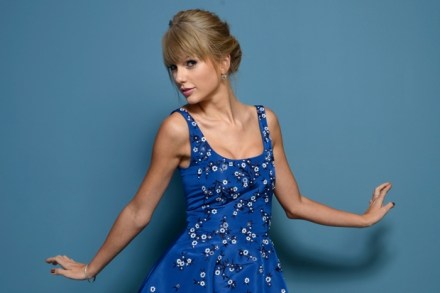
All hail Taylor Swift. How she must give baby boomers the fear. Not just baby boomers. Also those who came next, the Generation Xers, who seemed to define themselves culturally mainly via goatees, apathy and heroin. And my own rather listless, half-generation thereafter, with our bigger beards and binge-drinking. Taylor Swift makes us all look old. Because we are old and the world will be hers. You will have heard about her victory over Apple this week — you must have heard about it, because an opportunity to put Taylor Swift on the front of a newspaper is an opportunity not to be missed, particularly now that Elizabeth Hurley is

The new head of the Berlin Philharmonic was no-one's first choice

Let’s face facts. Kirill Petrenko was no-one’s first choice as music director of the Berlin Philharmonic Orchestra. His name came into the reckoning only after 124 orchestra members split fatally down the middle in an all-day election on May 11, half of them voting for the German favourite Christian Thielemann and the other half for the blazing young Latvian, Andris Nelsons. By nightfall, the players were at each other’s throats and wiser heads knew they had to seek a third candidate, a compromise. But who? The Venezuelan Gustavo Dudamel, who set the orchestra alight last week, had ruled himself out. So had Daniel Barenboim, Mariss Jansons, Yannick Nézet-Séguin and other

Country house opera

I stole a blanket last night. Rather a nice one, in fact. I feel bad about it, of course, but guilt is less inconvenient than pneumonia; and after trying to blow-dry my waterlogged dinner jacket with the winds howling through Garsington Opera’s ‘airy’ pavilion, it seemed like pneumonia or the blanket were the options. Forgive the melodramatic, self-justificatory tone. That, too, has its roots in the evening’s diversions, which included a performance of Intermezzo, Richard Strauss’s melodramatic and self-justificatory autobiographical account of a marital misunderstanding. It’s an odd piece, lovely in some ways, trite and misogynistic in others. Some decades ago, after a May Day ball in Oxford, I learned

Forward thinking

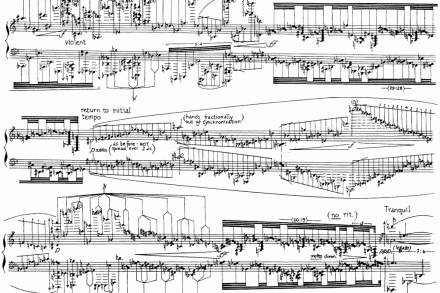
The award of a knighthood to the composer James MacMillan will have ruined last weekend for lots of unsavoury people: the Guardian arts desk, which decided he’d lost his mojo as soon as he turned his back on the left; Kirsty Wark, whose squawking is mimicked in MacMillan’s Scotch Bestiary; the SNP, which he detests; and, most of all, the Nats’ religious front organisation, the Scottish Catholic Bishops’ Conference. OK, enough point-scoring. MacMillan has been honoured because he turns out glorious music. He’s also rare among living composers in having worked out an answer to the question raised when John Cage pushed sound to the point where nothing short of

The pretenders

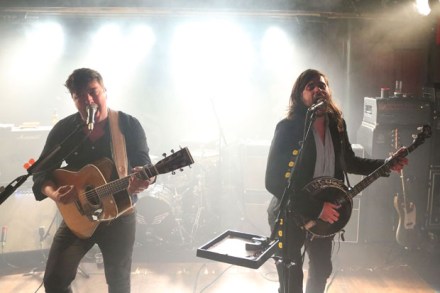
Like a lot of essentially cautious people, I like my music to take some risks, play with fire and damn the consequences. In truth, of course, most musicians are every bit as conservative as the rest of us: they do whatever it is they do and if it sells, they keep on doing it until they drop. Three small cheers, then, for Mumford & Sons, who with their recently released third album took a completely unexpected swerve away from the phony banjo-intensive folk that had made their name and their fortune, into the stadium rock’n’roll they have obviously always wanted to play. As may have been gently hinted at in

Simply Macnificent

‘I can’t tell you what a thrill it is to get this chance in life,’ said Christine McVie, as the opening jangle to ‘Everywhere’ rang out. Judging by their ecstatic reaction, the audience felt much the same way. Look, I’ll be honest. I’m not going to give you a dispassionately critical review of Fleetwood Mac, together again in their classic line-up — Lindsey Buckingham, Stevie Nicks, Mick Fleetwood, John McVie and, for the first time in 16 years, Christine McVie. But then, who would give you that? A puritan arrived on a time machine from the 16th century? A shadow minister for work and pensions? Who could possibly be so

Evolutionary road

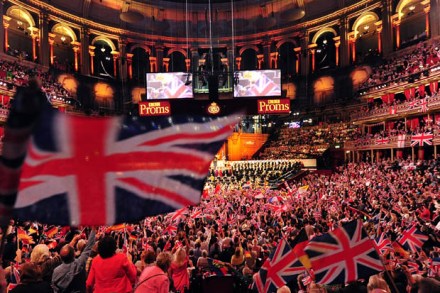
As Sepp Blatter has so affectingly remarked, the organisation he formerly headed needs evolution, not revolution. There is a consensus that this is also what David Pickard will bring to the Proms, when he takes over after this season. Of course, Pickard’s job is going to be more complex than Blatter’s ever was. The challenge for Pickard is that however hard he tries to please most of the people most of the time, the modalities of running the Proms mean that he cannot be friends with everyone — and for him there will be no short cuts. What do we expect from the Proms these days? Despite all the flurry