Life

Gen Z is falling for the Soviet Union

The USSR is striking back. Nearly forty years after its collapse, there are a growing number of young people in the West who are now avid enthusiasts of the Soviet Union. Curiously, this is a somewhat apolitical phenomenon. Lenin and Stalin apologism still remains the preserve of the chubby, the slobby, the grizzled and the graduate student, no matter how avidly they wave their flags at protests. Instead, Soviet culture and style have become decidedly in vogue, whether that be the resurgence of the Slavic doll look, schoolboys making TikToks to the USSR national anthem, or viral videos of abandoned Communist buildings. Defanged and denuded of its political belief system, Soviet aesthetics are decidedly cool.

There is a logic to a tourist tax in Britain

As if the British hospitality industry hadn’t experienced enough government abuse, September saw yet another blow: permission for cities to levy a tourist tax on hotel stays. But not quite so fast. Such a tax need not be bad news: it depends on how you levy it. Done cleverly, a tax on hotel rooms could boost revenues for the classier end of the hotel industry. And I have a few ideas on how to do it. Wine-drinkers know that, within reason, spending a few pounds more gets you much more Barolo for your buck The first rule is that you must not levy the tax as a percentage of the room cost – in which case, it will have a downward effect on people’s propensity to spend. Instead, it must be a flat fee.

tax

Why continuation novels need to end

Sir Arthur Conan Doyle was, at the end of his life, a committed Spiritualist, and so knew all about authors writing posthumously from the Other Side. But he might still have been taken aback by Sherlock, a book of short stories which has a profile of the great man on the cover in his distinctive deerstalker and meerschaum. Closer inspection shows it to be “authorized by the Conan Doyle Estate” rather than authored by A. Conan Doyle, but the reader’s first response is, goodness, is there more Sherlock out there? It’s a bid by the literary estates of the authors to squeeze more from their authors once the original copyright expires At second glance, you see: “Ten New Stories, Ten Incredible Writers; the Game is Afoot…Again.

RIP Jennifer Lawrence’s face

It was another Jennifer – Jennifer Grey of Dirty Dancing fame – whose desire to tamper with the face that the good Lord gave her made her the object lesson in not fixing what ain’t broke; especially, in her case, one’s nose.  At the age of 26 Miss Grey was pretty enough to be believable as the teenage paramour of heart-throb Patrick Swayze in the wildly popular film, but not so pretty that she alienated the female majority of the potential audience. She was the perfect rising star. But a totally pointless nose-job two years later, and a second procedure to allegedly fix an issue with the cartilage, so altered her appearance that it made her unrecognizable.

jennifer lawrence

Help! I’ve got an earring at 41

Back when I was 20, my hair cascading down to my shoulders, jeans shredded at the knee, I thought it wise to complete the look with a lip ring. Two years later, there I was, supine in an emergency room, surrounded by doctors craning their necks to look and laugh, while I desperately rued my life choices. As the local anesthetic took hold, my mind returned to the night before: four pints deep and finding the ring broken at the join, I had squeezed the two ends together, clamping it tighter than my lip could ever accommodate. By morning, it had turned blue. With a mouth swollen like I’d kissed a wasp nest, I went for a post-op pint, only for it to dribble out of the existing hole. No more piercings ever again, I swore.

British craftsmanship on tour

In a country renowned for its traditional craftsmanship and impeccable style, being able to claim the title of Britain’s oldest luxury label is quite the accomplishment. Swaine London proudly holds that title. A favorite of the Royal Family since the mid-1700s, Swaine’s specialty is leather and intricate hand craftsmanship. It originally made whips and saddlery (including exclusively for King George III), then pivoted to luggage – primarily for well-to-do automobile enthusiasts in the 19th century. Later, it turned its attention to attachés, handbags and document cases. Today, Swaine’s output is pleasingly diverse, but with the very same old-school and quintessentially British DNA.

Why the summer season never ends

Summer’s over – so say the Cape, the Shore and the Sound. But summer homes in the country remain wide open. Is summer a season? Obviously. It’s also a vibe. And in seasonal towns, both end hard and fast on Labor Day – no more white, no more linen, certainly no more white linen. Morning frost creeps into the garden, much to caterers’ dismay, and the beach – never quite that warm, even in August – becomes a non-starter. We all take the cue that the fun is over, it’s time to return to real life. Two weeks drinking on a boat off Italy gives me the ick. Don’t tell that to my friends in Corporate America The line between season and vibe blurs more incongruously in the country, however. The most noticeable tell is the traffic.

summer
sick cuba

What’s it like to get sick in Cuba?

I have dengue, a vile and potentially life-threatening virus given to me by an Aedes mosquito. For good reason, it used to be called breakbone fever. It’s not the first time. I last felt my eyes swell and my joints being crushed five years ago, almost to the day. Dengue is common in Cuba, increasingly so since the government ran out of the money to fumigate for mosquitos. The first time was worse – so far. It arrived like a cloud of poison gas; I barely got up the stairs before collapsing. I was more naive then and what followed, in the fug of fever, taught me a lot about my Cuban family and the Cuban state. People are selling water door to door. We’re hearing of dysentery. How far away is cholera?

Looking on the bright side of life with Eric Idle

Provence “Would you like to meet Eric Idle? Don’t worry, he and his wife Tania are smashing.” This was 2009. I was visiting my old art teacher from school, Frank Docherty, and his wife, Chrissie, in the village of Montfort-sur-Argens. Eric had a house nearby, they said. They’d got to know one another a few years before when Eric had begun buying Frank’s surrealist paintings. I was too wee for early Python but as a teenager knew every line of The Life of Brian. And all the voices. I apologize now to anyone who was on late-night double-decker buses from Paisley to Glasgow in 1982.

bodega cat

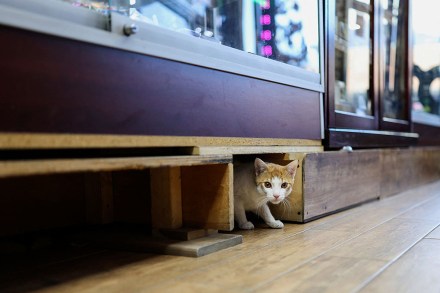
Meet Parker the bodega cat, the feline Bryan Johnson

You’ve probably heard of Bryan Johnson, the questionably rational entrepreneur and venture capitalist famous for his “don’t die” philosophy and for peddling anti-aging techniques that range from the psychedelic to the vampiric. Johnson, who’s 49 and bears more than a passing likeness to Data from Star Trek: The Next Generation (if Data was into Korean facial treatments), recently made headlines for using the duration and hardness of his nighttime erections as gauges of biological health. If you’re an internet rabbit-hole kind of person, then – good lord! – Johnson is the gift that keeps on giving. That’s all well and good, but have you heard of Parker the bodega cat? The reason I ask is that I thought of Johnson recently when I encountered said beast.

Rural France is fighting a boar war

The hunting season began in Burgundy last Sunday. The first couple of weeks are dedicated to the pursuit of small game: pigeons, partridges and hares. Call it the hors d'oeuvre to the main course: the hunting of wild boar, which gets underway in earnest at the start of October. My neighbor, a farmer, hunts, and so does his son and most of their friends. They spent much of Sunday blazing away in the adjacent fields. I felt like I was in the gunfight at the O.K. Corral. Not that I mind. I was a townie in another life but now I’m what the French call a plouc (yokel), and in rural France hunting is sacrosanct. It’s also imperative, specifically the culling of wild boar. Their numbers have exploded in recent years and the damage they do is immense.

One love

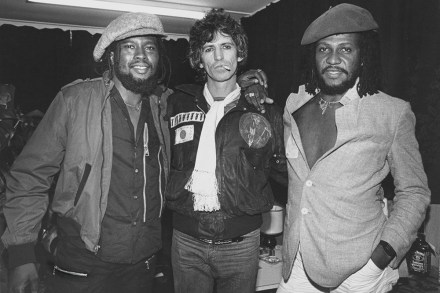
1972 was a watershed year for the Rolling Stones. On the face of it they should have been riding high: they had released Exile on Main Street to great critical acclaim and healthy sales – nearly a million copies in the first week alone – and undertook a lucrative US tour that became as famous for its off-stage excesses as for the music. The Tucson Citizen described one of the shows thus: “Outrageous. Picaresque. Jaunty. Flagitious. Taunting, teasing, tempting… an hour and a half of bad influence on your daughter and exquisite bacchanal rock from Mick Jagger and his band.

High art

A pair crosses in front of the backdrop of the famous Teatro Antico, the Greek amphitheater in Sicily’s Taormina, to take their seats. This is David Glickman, the American CEO of private investment firm Glickman Capital and his daughter Riley, an archaeologist. Both are wearing decidedly Italian looks – he in a black blazer over a burgundy sports shirt and she in a red silk shirt over a colorful printed skirt featuring motifs inspired by Sicilian folk art. [Alex Dobé] Glickman, a New Yorker who counts Italian cashmere house Malo and Leeds United among his investments, says, “I buy a lot of their furniture, so I guess that’s why I’m on their radar.

A strong character

As a young actor, Mark Strong says he learned some simple lessons. “Don’t believe the hype. Firstly, remember why you became an actor. For me it was about mastering the work, not becoming famous.” That’s the least interesting bit, he says – something he discovered quickly. Strong is one of Britain’s most respected actors, working pretty much nonstop on stage and film for nearly 40 years. With little appetite for celebrity, despite working alongside the breadth of Hollywood royalty, his credentials may be A-list but, refreshingly, he operates on a strictly no-list policy. Instead, he’s quite possibly one of the most down-to-earth people you could meet. And I really don’t think he was acting that part when I met him last month.

Superiority complex

American biker culture is dominated by the idea of extensive stretches of blacktop, straight and open, which leads to motorcycle design that produces machines suited to long, steady rides. The British tradition, which imagines its bikes navigating twisting country lanes and cities where the only grid is the electrical one, means that the products that roll off the line in Blighty are, to borrow an equestrian phrase, more “skittish”. The difference between, say, a Harley Davidson and a Triumph owes much to this contrast of road geography. Riding position, cornering, acceleration, breaking, comfort and the rest are all influenced by the idea that one is made for cruising the Pacific Coast Highway and the other the A303 and its web of B roads.

Walk this way

New York has always evoked a great sense of excitement for me. What I love most about the city is the energy of its eclectic people. On one of my very first trips, I met the legendary Diana Vreeland, who was then editor-in-chief of Vogue. I was armed with my portfolio of theatrical sketches and in a complete state of nerves. She took one look, zeroed in on a sandal decorated with ivy and cherries, and said: “Focus on the extremities, young man! Do shoes!” Her advice changed my life forever and set me on a path that I am still walking today.

Mixed heritage

Andy Warhol, John F. Kennedy, Pablo Picasso, and Frank Sinatra all had something in common – and it’s not just celebrity. They all, at one time, walked in a pair of Berluti shoes. And if shoes communicate something personal about their wearer (as Olga Berluti, third generation of the shoemaking dynasty, once asserted), what might we have learned by looking at these men’s footwear? For example, the bespoke, square-toed loafer commissioned by and designed for Warhol in the 1960s reflects the American artist’s famously subversive attitude. That loafer design, by the way, has since entered Berluti’s permanent collection, appropriately called the Andy, and become a house classic.

Empire of taste

If TikTok is your gospel, you’ll be aware that New York’s new Ambassadors Clubhouse has a waitlist ranging from 10,000 to 50,000 people, depending on the night. Spanning two floors and 8,000 square feet beneath film company A24’s NoMad headquarters, this thunderous Punjabi restaurant has captured a moment. A cultural mélange drawing on both sides of the Indo-Pakistani divide, it’s the first big swing from British brand JKS in New York City, and the second American venture after Gymkhana landed in Las Vegas last December – more on that later. These two restaurants and the many international offshoots are all owned and operated by the British-born Sethi siblings, Jyotin, Karam, and Sunaina.

Push the boat out

Deterrents are rarely so precise. Gazing through the sights of a communist clifftop canon, its rusting barrel pointing due west towards former capitalist foes, my eyes perfectly align with the dying sun as it bleeds into the Adriatic. “This feels like the end of the world,” sighs my ponytailed guide, Pino Vojković. “We waited but nobody came.” They certainly do now. Vis, home to the abandoned Cold War base on the outer edge of the Southern Dalmatian Archipelago, enjoys A-list status among foodies, conservationists, and movie location scouts. One of the most secluded of Croatia’s 1,200-plus islands, it blends pristine, crystal-clear waters and hidden bays with raw, authentic local culture.