World

Isolationist? Donald Trump appears to be assembling a war cabinet

Is the third time the charm? President Trump has already run through Mike Flynn, who enjoyed the shortest tenure in history of any national security adviser. Next came three-star General H.R. McMaster. Now John Bolton, the former George W. Bush ambassador to the United Nations who has been angling for the job ever since Trump won the 2016 election, has gotten the nod. Bolton’s ascension is temporarily eclipsing other events such as the 700 point stock market plunge today thanks to the imposition of tariffs on China or the resignation of Trump’s lawyer John Dowd. No one personifies the hawkish wing of the GOP better than Bolton whose appointment is being greeted with hosannas by neocons such as Senator Marco Rubio. Diplomacy, in Bolton’s mind, is for wussbags.

John Dowd’s departure raises all kinds of questions

John Dowd, a personal attorney of Donald Trump, stepped down today from his role as head of the legal team representing the president in the special counsel’s investigation of possible collusion with Russia. The news came just as the House Intelligence Committee was set to vote on whether to release a report from Republicans in the group that recommends ending the committee’s investigation into the same subject. If, as House Republicans insist, there’s nothing to see there, why would Dowd resign just before evidence backing up that insistence was about to be made public? As is common with departures connected to President Trump, there are conflicting stories circulating as to the circumstances that led to it.

Not my president: meet the Chinese students standing up to Xi Jinping

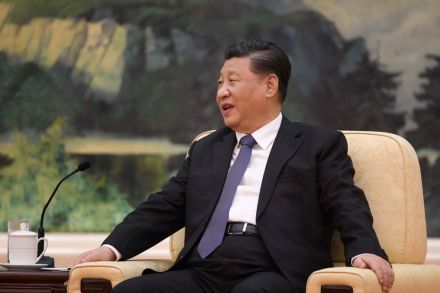
At last, some students in the West are campaigning for freedom and democracy. Following years of supposedly rad students banning pop songs about sex, and force-fielding their campuses against offensive speakers, and even expelling certain newspapers from their common rooms as if they were heretical abominations, a group of students has emerged to demand more liberty, not less. They’re Chinese students, studying in Western universities, and the target of their youthful liberal ire is Chinese President Xi Jinping. This week, Xi convinced the annual sitting of China’s parliament, the National People’s Congress, to scrap the two-term limit on presidency. They didn’t take much convincing, by the looks of things.

Why Trump could regret targeting Mueller

Throughout the course of the inquiry on Russian interference in the 2016 U.S. presidential election, White House lawyers have attempted to drill a message into the president’s head. It is a simple one: whatever you do, don’t go after Robert Mueller personally or suggest in any way that you will shut down the investigation.  You can go after the probe’s integrity, attack the congressional Democrats making political hay over the probe, and push your own counter-narrative about the silliness of it all, but leave the special counsel alone. It is smart, conventional advice that most conventional politicians would take into serious consideration. But Donald Trump, to state the obvious, is not a conventional politician. He does not respond well to being told to be restrained.

Meet Boris Titov: the man who wouldn’t be president

Boris Titov is running to be president of Russia, but he’s eager to talk himself out of the job. ‘I am not a good politician,’ he says, over breakfast at the Lanesborough hotel in Knightsbridge, London. ‘To be a president means you need to be wise, a big politician like Thatcher, Deng Xiaoping, Lee Kuan Yew. Russia needs a tough politician in the presidential chair and I am not that man.’ Titov knows that on Sunday, Vladimir Putin, the toughest politician of our age, will be re-elected as Russia’s Supreme Commander-in-Chief. ‘Everybody understands that,’ he says. ‘We are not stupid. I have common sense.’ Which prompts the question: why run?

Donald Trump finally announces sanctions against Russia

Donald Trump today called it a ‘very sad situation.’ The ‘it’ in question is of course the chemical weapons attack in Salisbury, a fresh indicator, if one were needed, of malign Russian intentions toward the West. Even as Theresa May plays, or tries to play, Margaret Thatcher, Trump has been no Ronald Reagan. He doesn’t want anyone 'Russian to judgment', as the joke has it. Instead, when it comes to Moscow, he’s been missing in action, no friend of the United Kingdom. He’s sounded in fact more like the equivocating Jeremy Corbyn than anyone else when it comes to the brouhaha over Salisbury.

Is Donald Trump, like Bush, being taken over by neocons?

The Trump administration’s foreign-policy team is beginning to look a lot like a Marco Rubio foreign policy team. It’s not hard to imagine a generally hawkish Republican like Mike Pompeo serving as Secretary of State under Little Marco, and John Bolton - widely tipped to replace H.R. McMaster as national security adviser - would have turned up sooner or later in any GOP administration, except one led by Sen. Rand Paul. Nikki Haley at the United Nations, meanwhile, has been hailed by neoconservatives as heartily as Bolton was when he served as George W. Bush’s UN ambassador from 2005-6. The hawks don’t like to be called 'neoconservatives', but the neoconservative worldview is their worldview.

The Special Relationship still trumps Putin

For a president who usually tweets first and asks questions later, Donald Trump’s initial reaction to the Salisbury attack has been curiously slow. Eleven days on from the poisoning of a former Russian agent, Trump’s Twitter account remains silent on the subject. But now that Theresa May is ramping up the rhetoric against Russia – ordering 23 Russian spies to leave Britain – the Trump administration is finally riding firmly behind May, and pointing the finger at Putin in a way it never has before.The White House issued a statement last night saying it ‘stands in solidarity with its closest ally, the United Kingdom’.

Democrats should look closer to home to find collusion with Russia

For Donald Trump, yesterday was a bad day to bury good news. While Rex Tillerson’s resignation as Secretary of State dominated the headlines, the biggest and most important story of the day came from Devin Nunes and the Republicans on the House Intelligence Committee. Their news was good for Trump, and very bad indeed for the Democrats and their supporters in the media. For over a year, Nunes' committee has searched for evidence of Russian interference in the 2016 election. During that time, the majority of American media have pushed the story that agents of Vladimir Putin not only stole the election and gave it to Trump, but that Trump and his circle ‘colluded’ with them.

Rex Tillerson’s sacking isn’t about Russia

Sometimes it’s almost as if Donald Trump wants the world to think he’s a Russian patsy. Yesterday, Rex Tillerson, as Secretary of State, warned Putin that Russia’s alleged assassination attempt on British soil would trigger ‘a response’. Today he’s been sacked. Mike Pompeo, Director of the CIA, will become our new Secretary of State. He will do a fantastic job! Thank you to Rex Tillerson for his service! Gina Haspel will become the new Director of the CIA, and the first woman so chosen. Congratulations to all! — Donald J. Trump (@realDonaldTrump) March 13, 2018 But the firing almost certainly isn’t about Russia. It seems Trump asked Tillerson to go on Friday, a day after Trump agreed to meet Kim Jong-un.

What is behind the British PM’s threat to Russia?

British Prime Minister Theresa May has given Russia until Wednesday to explain why a nerve agent that it has developed was used in an attack in Salisbury, Wiltshire. She told the House of Commons that it was ‘highly likely’ that Russia was responsible for the poisoning of Sergei Skripal and his daughter. She said that Foreign Secretary Boris Johnson had summoned the Russian Ambassador and put it to him that were only two explanations for what had happened, one that the Russian government itself was responsible or that Moscow has lost control of its stock of deadly nerve agents. I think it is safe to assume that no explanation, at least not one that would satisfy a reasonable observer, will be provided before Wednesday.

At last, an American president grasps the North Korean nettle

Donald Trump’s acceptance of Kim Jong-un’s invitation to meet is a master stroke. It’s exactly the kind of thing Ronald Reagan liked to do. Reagan, you may recall, announced his pursuit of a missile defence system in March 1983 on national television without alerting his advisors beforehand. Liberals went crazy. Then he decided to end the Cold War by reaching out to Mikhail Gorbachev. Conservatives went bonkers. Reagan, we were told, had become a useful idiot. Today he is hailed as a visionary by all and sundry. Whether Trump’s move will work depends in part on how eager the North Korean regime is to escape the increasingly draconian sanctions that have been imposed upon it.

Why Trump’s ‘trade war’ makes strategic sense

Has Donald Trump sparked off a trade war? His plans for a 25 percent tariff on steel imports and 10 percent tariff on aluminum have shocked friend and foe alike. China is outraged; so are Canada, Japan, and South Korea—allies that in fact export more steel to the U.S. than China does. They stand to be hurt worst if they aren’t granted exemptions or cut special deals by the president. Trump accuses the Chinese of 'dumping' steel into the American market, while the legal grounds for his new tariffs rest in the idea that strategically critical manufacturing is endangered by a diminished U.S. metals industry.

Rolling tanks, plastic flowers and madness on parade: A visit to North Korea

As Kim Jong-un might blow up the world next year, if not this, and people are forever trying to work out what is going on in his country, perhaps it is worth describing a military parade I attended in Pyongyang a few years back. The occasion was the centenary of the birth of the current Kim’s grandfather, Kim Il-sung, the founder of the Marxist monarchy who, despite his death more than two decades ago, remains Eternal Leader of the nation. Other attendees included some flotsam and jetsam of the Cold War, a reunion of the Axis of Evil and representatives from various other rogue states and immiserated nations. Presuming it to be one of the better covers under which to pass as an admirer of the regime, I claimed to be a schoolteacher from England.

Sharia law and the relative mercies of French justice

For many years, the grandson of the founder of the Muslim Brotherhood, Tariq Ramadan, has been one of my closest enemies. In Switzerland and France this Islamist dauphin had a slightly hard time establishing his reputation. This was not just due to his poor scholarship (the basis of which lay in a fawning book about his grandad) but also to his double-speak in public debate and (at best) borderline Islamist views. In France these views were most famously exposed in a television debate with Nicolas Sarkozy in which Ramadan infamously could not bring himself to condemn the stoning of adulterers outright, merely calling for a ‘moratorium’ on the punishment.

China vs America: the espionage story of our time

Why aren’t spy stories sexy anymore? The revelations last year that Beijing destroyed America’s espionage ring inside China a few years ago, including executing a number of US informants, got a brief flurry of attention and then subsided beneath the waves. News reports of American bureaucrats arrested for passing information to the Chinese have also barely raised eyebrows. Now the ex-CIA agent suspected of being the mole that led to the collapse of America’s spy operations in China has been arrested, though on a lesser charge of simply possessing classified information. How long before Americans turn back to Donald Trump’s tweets or the latest #MeToo charges?

Meghan Markle and the return of American Anglophilia

Prince Harry's imminent wedding to Meghan Markle will reinvigorate the dying special relationship between Britain and America. It is a boost for the fading American regard for the monarchy.In America, the mother country is increasingly the forgotten country – and it has been fading for a century, ever since the First World War. As Sellar and Yeatman put it in 1066 and All That, after the allied victory 'America was thus clearly top nation, and History came to a full stop'.As the increasingly weaker party in the 242-year affair, we cherish the special relationship much more than the dominant partner. That great Anglo-American WH Auden – an exile to New York, born in York – got it right: 'If equal affection cannot be, let the more loving one be me'.

If China backs Trump on North Korea he won’t like the quid pro quo

The first election day since Donald Trump was elected president a year ago brought a funereal mood to Washington that you could feel on the streets. The swamp, apparently, remains undrained. Elections for governor in Virginia and New Jersey and for mayor in New York City cheered the locals a bit, producing the expected victories for Democrats. Virginia was the most consequential of these. It seemed a harbinger of the next presidential race. The moderate, decidedly un-Trumpian Republican Ed Gillespie was accused of making ‘ugly racial appeals’ — this for expressing the opinion that the statues of Virginia’s Civil War heroes should not be razed in a frenzy of revisionism.

The consequence of this new sexual counter-revolution? No sex at all

We are in the middle of a profound shift in our attitude towards sex. A sexual counter-revolution, if you will. And whereas the 1960s saw a freeing up of attitudes towards sex, pushing at boundaries, this counter-swing is turning sexual freedom into sexual fear, and nearly all sexual opportunities into a legalistic minefield. The rules are being redrawn with little idea of where the boundaries of this new sexual utopia will lie and less idea still of whether any sex will be allowed in the end. It is partly whipped along by the fact that each episode in the revolution is so grimly fascinating, and each has its own internal propulsions. For instance, nobody outside Hollywood could regret the disgrace of an overpraised toad who spent far too long surrounded by overly attractive people.

The consequence of this new sexual counter-revolution? No sex at all

We are in the middle of a profound shift in our attitude towards sex. A sexual counter-revolution, if you will. And whereas the 1960s saw a freeing up of attitudes towards sex, pushing at boundaries, this counter-swing is turning sexual freedom into sexual fear, and nearly all sexual opportunities into a legalistic minefield. The rules are being redrawn with little idea of where the boundaries of this new sexual utopia will lie and less idea still of whether any sex will be allowed in the end. It is partly whipped along by the fact that each episode in the revolution is so grimly fascinating, and each has its own internal propulsions. For instance, nobody outside Hollywood could regret the disgrace of an overpraised toad who spent far too long surrounded by overly attractive people.