World

Why Christopher Steele should spill the beans

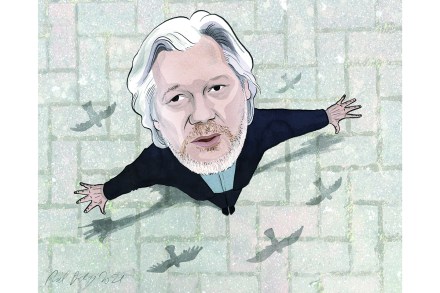
Lawyers representing the ex-spook-turned-private-investigator Christopher Steele were in action yesterday at London’s High Court. In a rather convoluted turn of events, BuzzFeed, who published Steele’s leaked dossier on links relating to Trump and Moscow, is now seeking to question the author “on the dossier as a whole” because of the document’s importance in the “public’s understanding of the ongoing federal investigations”. In other words, BuzzFeed wants Steele to spill the beans on some of his claims. And they’re right. Steele’s dossier is one of the keystones of the Mueller investigation.

Will Trump end the Mueller inquiry or will the Mueller inquiry end Trump?

May 17, 2017 started out as any other day in Donald Trump’s Washington. Men and women in suits with briefcases walked into work, ready to meet clients or do business. The day, however, proved to be the very beginning of Trump’s troubles, with the appointment of a special counsel to look into allegations of collusion between the president’s campaign and Russian operatives in the Kremlin. The White House, like everybody else in the country, was caught off guard; Trump found out about the Justice Department’s decision when he was meeting with candidates for FBI Director (Trump threw James Comey out of the building a week earlier). As one administration official told CNN at the time: "It's still sinking in. We were told about it. Not asked about it.

Does Mike Pompeo really think he can cut a good deal with North Korea?

It’s a busy time for America’s top diplomat, and perhaps the stress is getting to him. That’s one explanation, anyway, for some of the things uttered by Mike Pompeo over the last week.His most glaring goof came last Tuesday, as he spoke to reporters on board a flight to Japan. The secretary of state was briefing them on the upcoming meeting between President Donald Trump and North Korea’s Supreme Leader Kim Jong-un and said that the administration had started “to put some outlines around the substance of the agenda for the summit between the president and Chairman Un.

Is Trump preparing to sell out South Korea?

Maybe President Trump has finally given up on his cherished dream of Vladimir Putin as his new best friend. It seems that Kim Jong-un is supplanting him in his affections. Even as Trump tries to up the ante with Iran, his top officials are playing kissy-face with North Korea. Fears are swirling in Washington that in his desperation for a grand bargain, Trump may end up following a policy of appeasement toward the North with Singapore as the new Munich. It may not be long before Trump returns from Singapore brandishing a piece of paper, or at least issues a tweet, declaring “peace for our time.

America is in the middle of a Russian influence campaign – not at the end

Donald Trump's longtime personal attorney Michael Cohen is playing a starring role in a riveting drama featuring the President, Special Counsel Robert Mueller, Putin-connected oligarchs, shady vory v zakone-adjacent moneymen, and American and Russian corporations seeking influence with the Trump Administration. For Americans, this is a new lurid political drama, but it’s one London has seen up close for two decades. It’s the story of the inevitable consequences that result when Russian money, influence and corruption slither up on Western shores.

Putin shows off his ‘dagger’ on Victory Day

Then there’s the bravado that goes with it too. International Women’s Day is widely and actively observed in Russia, and though there is an official male equivalent in November, Victory Day is far closer to any actual celebration of masculinity. In the same year that I was wandering the streets of Petersburg trying to steer clear of drunken sailors, a friend of mine was invited to a dacha in the countryside by some of his male colleagues. What he had envisaged as a quiet weekend spent reading Tolstoy by the lakeside, turned out to be a testosteronic blaze of bare-chested rifle shooting and competitive drinking.

Peace in Korea doesn’t make war with Iran more likely

Readers of Spectator’s USA’s mothership, the venerable yet sprightly London Spectator, will know that one of the secrets of the Spectator’s endurance and popularity is the promiscuity—ideological, of course—of its columnists.Turn the page from Matthew Parris to Rod Liddle, and you undergo a whiplash of the most bracing kind. Parris is an ex-Conservative MP who, if not one of the ‘wets’ that Margaret Thatcher dismissed for ideological ploppiness, is certainly well irrigated with metropolitan manners. Rod Liddle, having worked at the BBC and being a member of the Labour Party, is on a Genghis Khan-like rampage against political correctness, Islamism and the decline of pop music.

Trump’s Korea pact could make a new war in the Middle East more likely

The Trump administration may be heading into an infinity war. Europe is gearing up to retaliate against American on the trade front. China is indicating that it will refuse to negotiate on several key Trump trade demands. The Iran deal may be ripped up on May 12. And national security adviser John Bolton seems intent on sabotaging any negotiations with North Korea, something he did in the George W. Bush administration when he helped to terminate the 1994 nuclear deal that the Clinton administration had negotiated with the North.This past weekend, Bolton proclaimed that North Korea should follow the precedent of Libya when it comes to denuclearization.

The 10 graphs that explain Vladimir Putin’s Russia

This is an edited version of a presentation given by Owen Matthews at The Spectator's What does Russia want? event. What I’d like to do is give a run-through of how we got to where we are with Russia. From the end of the Cold War onwards, focusing on the economy – and how the economy, in true Marxist fashion, has shaped the politics and political realities that we see in Russia today. The first metric is the big story of the post-Cold War world. Very simply, the graph above shows what’s happened between the collapse of the Soviet Union and the present day. It’s very clear: America's GDP has gone from $10 trillion to $18 trillion, China is catching up and Russia is flatlining.

The disturbing case of Alfie Evans shames Britain

There was never going to be a happy ending to the story of Alfie Evans, the 23-month-old boy treated at Alder Hey hospital, Liverpool, for an undiagnosed neurological condition that destroyed his brain. But somehow the British establishment has contrived to make a tragic situation worse – to the point where large swathes of European and American public opinion are convinced that this terminally ill child and his parents have been the victims of a grotesque injustice. Whether that is the case will remain a matter of opinion: the medical and ethical questions raised by Alfie's plight are not easily resolved. Alder Hey's specialists were quite certain that there was no hope of saving him.

Has Kim Jong-un finally grown up?

Given the mutual bluster, threats and sabre-rattling we got used to from Donald Trump and Kim Jong-un, it may be hard to credit the air of sweet reasonableness that has spread over the Korean peninsula in recent weeks leading to the weekend announcement of an end to weapons testing by the North. The potential for a reversion to confrontation is all too evident. Pyongyang has a long record of reneging on agreements and its announcement contained no mention of a reduction in its arsenal that includes missiles which can hit Japan and South Korea even if it stops development of ICBMs aimed at the USA.

Donald Trump is desperate for a North Korea deal

Uh-oh. President Trump is wading into diplomatic waters in North Korea that he may have trouble navigating. Yesterday, he proudly revealed that talks with North Korea have been taking place at the “highest levels.” He also gave his blessing to the prospect of a peace treaty between the two Koreas, which currently only enjoy an armistice. But Trump also indicated that he wants to try and keep his options open: “It'll be taking place probably in early June, or a little before that, assuming things go well. It's possible things won't go well, and we won't have the meetings and we'll just continue to go along this very strong path that we've taken. But we'll see.

Why hasn’t Italy joined the strikes on Syria?

Italy's caretaker government has refused to allow crucial bases to be used for intervention let alone Italy's armed forces. The stance of Italy's right is identical to Jeremy Corbyn's in Britain. The two populist parties - Five Star and Lega - currently negotiating to try to form a government - are anyway pro-Putin (like their soul mates Le Pen and Orban). Isn't it weird how the ‘far right’ in Europe is identical to the ‘far left’ in Britain on so much including Putin and Syria? It does not end there. The Italian public seem, to me anyway here in Ravenna, strongly against any intervention in Syria. Their stance is identical to Corbyn's. Catholic monks in Syria are broadcasting that there is no proof that Assad/Russians used gas.

Putin’s cronies take a hit from the US

“I’m afraid we no longer have oligarchs. That was a concept of the '90s,” Russia’s deputy prime minister Arkady Dvorkovich told Bloomberg TV earlier this year. The United States government disagrees, and one of its departments released a statement today with the stark headline “Treasury Designates Russian Oligarchs, Officials, and Entities in Response to Worldwide Malign Activity.

The perfect recipe for a Trump meltdown

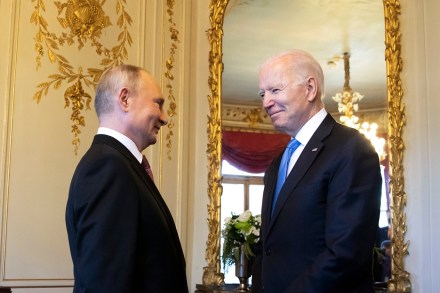
President Trump has invited Russian president Vladimir Putin to the White House. This news is rocking Washington, but it shouldn’t really come as a surprise, at least no more than Trump’s willingness to meet with the portly pariah of Pyongyang. I have long suspected that Trump would like nothing more than to hold a state dinner for Putin. Trump’s move has temporarily managed to displace his budding tariff war with China from the headlines, but it is of a piece with his embrace of what might be called his inner Trump. Recall that at the July 2017 Republican Convention in Cleveland, Trump declared that “I alone can fix it.” Now he is giving it a go. But what, exactly, is he fixing? When it comes to trade, Trump is manufacturing an artificial crisis.

Are you a winner or a loser in Trump’s trade war?

China’s imposition today of tariffs on 128 imports from the US was inevitable – and is no doubt exactly the reaction that Donald Trump wants, giving him the excuse to announce yet more tariffs in addition to those on steel and aluminium imports which he has already imposed.  After all he did say, even before China announced any form of retaliation:  “trade wars are good.  It should easy for the US to win one”.  A trade war is what he wanted, and what he has got. But does he have any more of a strategy for his trade war than George W Bush had a plan for winning the peace in Iraq? There is an argument for saying that China will come off worse – on the basis that it exports far more to the US than travels in the other direction.

A trade war with China sounds terrifying – but the US is doing the right thing

Nobody likes the sound of trade war, and rightly so. China’s new retaliatory tariffs against US products feel like the beginning of something bad: an escalating tit-for-tat trade conflict between the world’s richest countries which could choke the global economy. But there are good reasons to think that, far from being another silly move by a hothead president, Trump’s right about trade with China and that, as he has with North Korea, he is grasping a dangerous nettle that other presidents dared not touch. It may be scary, but it needs to be done. And it’s not just necessary for America, but perhaps the rest of the world as well. China is deeply protectionist, and is rapidly becoming the most powerful country on earth.

The diplomat expulsion game is a pointless charade

Diplomats are poker chips. The pomp and mystery that accrues to the diplomatic and intelligence services en poste overseas conceal a simple truth: in today’s world, journalists, bankers, NGOs and bloggers are, far more often than not, better informed than diplomats about the countries in which they operate. I know this to be true in Russia – I speak to senior British and US diplomats in Moscow regularly. Believe me when I say that I can think of half a dozen veteran foreign correspondents in Russia who have considerably more extensive, diverse and senior contacts in the Russian establishment than any Western diplomatic mission.

What are Kim Jong-un’s motives in meeting Xi?

Kim Jong-un surprised the world—once again—by making an unannounced trip to China earlier this week, and observers in the United States still haven’t come to any agreement on what it means. The North Korean leader traveled to Beijing by bulletproof train to meet with Chinese president Xi Jinping ahead of a planned meeting later this spring between Kim and American president Donald Trump. Georgetown University professor and American Enterprise Institute scholar Oriana Skylar Mastro told Vox it was “Kim’s desperation”—as well as both leaders’ fears of war—that precipitated the China meeting.

Why isn’t Donald Trump tweeting about expelling Russian diplomats?

“President Trump ordered the expulsion of 60 Russian officials from the United States and ordered the closure of the Russian consulate in Seattle, the White House announced Monday” was how NPR started its report on the surprise story that started the week in Washington, and most outlets followed suit. In this way, the press emphasised the White House’s preferred narrative of the news. Donald Trump hasn’t uttered a word on Twitter, his favorite medium of communication, about the attempted assassination in Britain of a former Russian spy with a Soviet-era nerve agent. Neither did he bring it up during his phone call to Vladimir Putin last week, in which he congratulated the Russian president on his recent reelection.